 Birch Bay Siding
 Building or Framing New at Cottonwood Beach? The Window Package Matters More Than You'd Think
Cottonwood Beach sits close enough to the water that every window opening on a new build is exposed to salt-laden air, wind-driven rain, and a moss season that can stretch from October into May. When we're called out for new-construction window work in this part of Birch Bay, we're not just setting units into rough openings — we're building the first line of defense against a climate that will find every weak seam within a few winters. A window package that would be perfectly fine forty miles inland, away from Whatcom County's coastline, often isn't the right call two blocks from Semiahmoo Bay.
New construction gives us an advantage that a remodel or retrofit doesn't: we get to build the water management system correctly from the studs out, before drywall, siding, or trim ever goes on. That's the whole reason this stage matters so much — mistakes made here get sealed behind finish materials and don't show up as a leak for years, by which point the damage is inside the wall cavity.
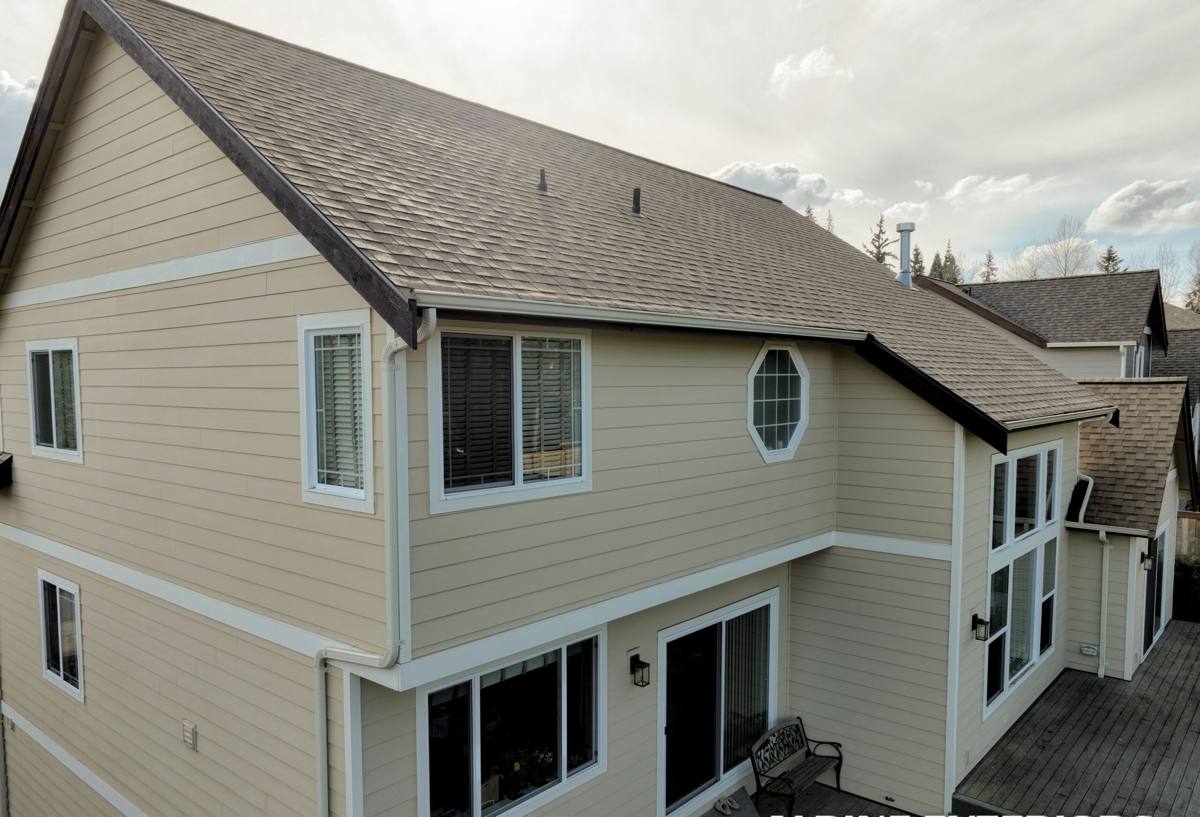
What "New-Construction Windows" Actually Means
New-construction windows have a nailing fin (sometimes called a flange) built into the frame, designed to be fastened directly to the sheathing before the weather-resistive barrier and siding go on. This is different from a "replacement" or "pocket" window, which is sized to slide into an existing frame without disturbing the exterior wall.
Why the distinction matters for Cottonwood Beach builds
Because a new-construction window fastens straight to the framing, it gives us full access to integrate flashing tape, the weather-resistive barrier, and sill pans as one continuous water-management system. On a coastal lot like this, that's not a nice-to-have — it's the difference between a window opening that sheds wind-driven rain for thirty years and one that starts showing stains on the interior sill within five.
- New-construction: nailing fin, installed before siding, full flashing integration possible
- Pocket/replacement: no fin, installed into an existing opening, relies on the original flashing underneath
- Cottonwood Beach new builds: almost always call for true new-construction units, installed correctly the first time
What a Correct Installation Involves
A window is only as good as the opening it sits in. On every new-construction job we run in Birch Bay, the sequence is the same regardless of brand or style:
- Rough opening is checked for square, level, and correct dimension against the window schedule
- Sill pan flashing is installed first, sloped to drain outward, so any water that gets past the window has somewhere to go besides the framing
- Self-adhered flashing tape is run up the jambs and across the head in the correct shingle-lap order — bottom, sides, then top — so water always sheds down and over the layer beneath it
- The window is set, shimmed plumb and square, and fastened per the manufacturer's schedule — not just "close enough"
- The weather-resistive barrier is integrated over the flanges so the whole assembly reads as one continuous water plane before siding goes on
- Interior and exterior sealant beads are placed only where the manufacturer's install instructions call for them — sealing the wrong spot can trap water instead of keeping it out
That head-flashing detail is where we see the most callbacks from other jobs around Whatcom County — usually because someone taped the head flashing before the jamb flashing, which sends water behind the tape instead of over it. It's a small sequencing error that's invisible at final walkthrough and obvious three winters later.
Frame Materials: What Holds Up on This Stretch of Coast
Salt air accelerates corrosion on hardware and fasteners, and constant damp shortens the life of anything that absorbs moisture. Here's how the common frame materials perform in that environment, based on what we see holding up on real Birch Bay and Cottonwood Beach homes over time:
| Frame Material | Salt Air / Moisture Behavior | Maintenance Load | Where It Fits Best |
|---|---|---|---|
| Vinyl | Won't corrode or rot; seals and hardware are the weak point over time | Low — occasional cleaning | Budget-conscious new builds, secondary structures |
| Fiberglass | Excellent — dimensionally stable, doesn't expand/contract with damp cycling | Low | Primary residences taking direct weather exposure |
| Wood-clad | Good if cladding is intact; exposed wood or failed seals invite rot | Higher — cladding and seals need periodic inspection | Homeowners set on a wood interior look, willing to maintain it |
| Aluminum | Poor without thermal break and marine-grade coating — prone to pitting near salt air | Moderate to high | Rarely our recommendation this close to the water |
We don't push one brand over another as a rule — the right call depends on budget, the home's style, and how much upkeep the owner actually wants to do. What we won't do is install a frame system in a direct salt-air, direct-rain exposure that we know will need babying within a few years. That's a maintenance burden we'd rather be upfront about before the windows go in, not after.
Glass and gas fill considerations
Double-pane, argon-filled units are standard for this climate and adequate for most Cottonwood Beach builds. Where a home faces open water or gets sustained wind exposure, we'll talk through upgraded seal systems and impact-resistant glazing — not because code requires it here, but because it reduces the long-term risk of seal failure from constant wind loading.
How We Handle a Cottonwood Beach New-Construction Job
Because we already work this neighborhood regularly, our process starts before the windows even arrive on site.
- Site walk during framing: we check rough openings against the window schedule while it's still cheap to correct a sizing issue
- Material staging: windows, flashing tape, and sill pan stock are on site and matched to the schedule before install day, so the crew isn't waiting on deliveries mid-sequence
- Install day: full flashing and fastening sequence per window, with each opening treated as its own water-management system
- Documentation: photos of flashing before it's covered by siding, so there's a record of what's behind the finish surface
- Final walkthrough: operation, sealant lines, and trim fit checked with the homeowner or builder before we consider the job done
Working this coastline regularly means we already know which lots catch the worst of the wind off the bay, which builders in the area we coordinate well with, and what inspectors here are looking for at the framing stage. That familiarity shortens the job and cuts down on rework.
Cost Factors on a New-Construction Window Package
Every new build is different, but the line items that move the price are consistent. We'll always give a written estimate before work starts — no surprise add-ons.
| Factor | Why It Moves the Price |
|---|---|
| Number and size of openings | More glass and larger units mean more material and labor per window |
| Frame material chosen | Vinyl, fiberglass, and wood-clad carry different unit costs |
| Exposure of the elevation | Sides facing open wind and rain often get upgraded flashing details |
| Access and staging | Second-story or hard-to-reach openings take longer to set safely |
| Coordination with other trades | Tight scheduling with framers and siding crews keeps the job efficient |
Common Mistakes We're Called In to Fix
Most of the callback work we see around Birch Bay traces back to a handful of repeatable errors, almost always from rushing the flashing sequence to keep a schedule:
- Head flashing installed before jamb flashing, reversing the shingle-lap and trapping water
- Sealant applied at the sill instead of leaving it open to drain, which turns the sill pan into a bathtub instead of a drain path
- Fasteners driven through the flange at the wrong spacing, leaving the unit unable to handle wind load properly
- Weather-resistive barrier not lapped over the flange correctly, leaving a gap for wind-driven rain to find
- Rough openings left slightly out of square, forcing the window frame to rack once it's fastened
Living With the Windows: Maintenance in a Marine Climate
Even a correctly installed window needs a little seasonal attention this close to the water. Rinse frames and hardware periodically to clear salt residue, especially after storms. Check exterior sealant lines once a year for cracking or separation — sealant is a wear item, not a lifetime feature. And during moss season, keep an eye on anything that channels runoff near a window opening, since standing moisture against a sill is the single biggest driver of long-term window problems in this area.
Why It Matters That We Already Work Cottonwood Beach
A crew that's installed windows across Birch Bay and this stretch of Whatcom County knows which details actually matter here versus what's fine in a drier climate. We know how sustained wind off the water stresses a flashing detail, how long moss season actually runs, and what a rough opening on a coastal lot needs that an inland one doesn't. That's not marketing — it's just what happens when you do the same climate-specific work repeatedly instead of treating every job as generic.
If you're framing a new home or addition at Cottonwood Beach and want the window package done right the first time, we're glad to walk the site, review your window schedule, and put together a straightforward, no-pressure estimate. There's a form below — reach out and we'll get back to you.