 Birch Bay Siding
 Cherry Point Roofs Face a Different Kind of Wear
Cherry Point sits close enough to the water that homes here take on a mix of problems that inland Whatcom County roofs don't deal with in the same combination: salt-laden air off the Strait, driving rain that comes in sideways during winter storms, and a moss season that runs long because the shade and moisture never really let up. Any one of those is manageable on its own. Together, they mean storm damage doesn't stay simple. A lifted shingle or a bent flashing that would sit quietly on a drier, more sheltered roof becomes an entry point for moisture almost immediately out here.
We work on roofs in this area regularly, which matters more than it might sound like. A crew that's repaired storm damage on Cherry Point roofs before knows which details tend to fail first in this specific environment, and that shapes how we inspect, how we repair, and what we tell homeowners to keep an eye on afterward.
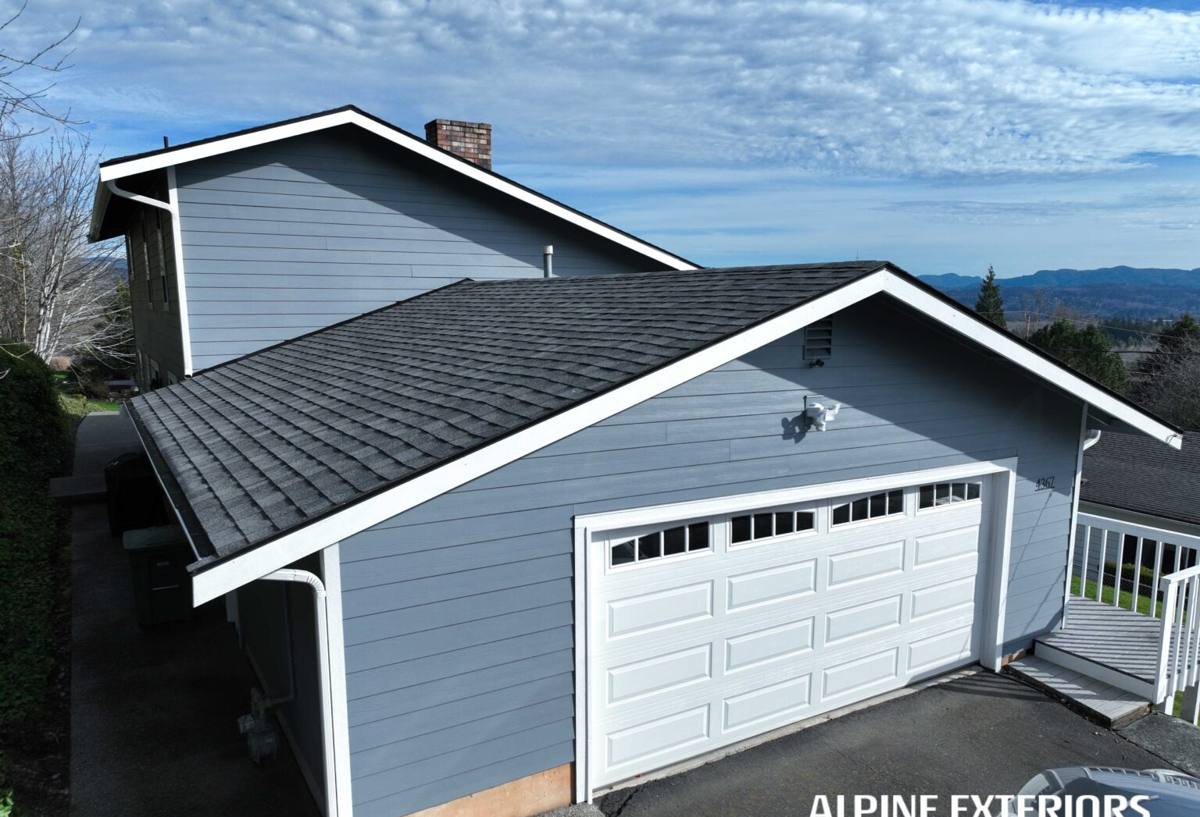
What Storm Damage Actually Looks Like Here
Not all storm damage announces itself with a missing shingle in the yard. Some of the most common issues we find after wind and rain events in this area are easy to miss from the ground.
Wind Damage
Sustained wind and gusts off the water can lift shingle edges without fully detaching them. The shingle looks intact but the seal is broken, which means the next rain gets underneath it. Ridge caps and hip shingles, being more exposed, are often the first to loosen.
Rain-Driven Damage
Wind-driven rain doesn't just fall on a roof, it pushes sideways and up under laps, flashing edges, and vent boots. On a roof with any existing wear, this is what turns a small gap into an active leak during a storm rather than weeks later.
Debris and Moss Interaction
Storms knock down branches, needles, and moss mats that were already loosening their grip on the roof. Where moss has been growing, it holds moisture against the shingle surface, so storm impact damage in a mossy area tends to be worse than the same impact on a clean section of roof.
Granule Loss
Heavy rain and hail-like impact from wind-blown debris can strip granules off asphalt shingles. This doesn't always leak right away, but it shortens the life of the shingle and is one of the more commonly overlooked forms of storm damage.
Why Waiting on Repairs Costs More Here Than Elsewhere
In a drier climate, a small area of storm damage might sit for a season without much consequence. That's not really true near Birch Bay. The combination of persistent moisture, salt air, and a moss season that gives fungal growth a long runway means small gaps turn into trapped moisture faster, and trapped moisture under shingles or flashing leads to rot in the decking below before most homeowners notice a ceiling stain. By the time interior damage shows up, the repair is no longer just a roofing repair — it can involve sheathing, insulation, and interior finish work too. Addressing storm damage promptly is less about urgency for its own sake and more about keeping a straightforward exterior fix from turning into a larger interior one.
What a Correct Storm Damage Repair Involves
A proper repair isn't just replacing what's visibly missing. It's a sequence, and skipping steps is how the same section of roof ends up damaged again in the next storm.
Full Inspection, Not Just the Reported Spot
We check the whole roof plane, not just the area a homeowner flags, because wind damage in particular tends to affect more of a slope than what's obvious from below. We also check flashing at chimneys, vents, and valleys, since those are common failure points that get overlooked when the focus stays on shingles alone.
Matching Materials, Not Just Similar Ones
Mismatched shingle profiles or granule colors are a cosmetic problem, but mismatched underlayment or flashing metal is a performance problem. We use materials that match the existing roof system's specifications wherever possible, and when an exact match isn't available, we explain the trade-off rather than making the call quietly.
Addressing the Cause, Not Just the Symptom
If moss contributed to the failure, the repair should include clearing the moss and addressing the conditions that let it establish, not just replacing the damaged shingles and leaving the same moisture trap in place. A repair that ignores the underlying cause is a repair that fails again on a similar timeline.
Sealing and Fastening to Local Wind Conditions
Fastening patterns and sealant choices matter more in an area that regularly sees sustained coastal wind. We fasten and seal to hold up against the wind loads this specific location sees, not a generic minimum.
Our Process for Cherry Point Homeowners
The steps stay the same whether the damage is minor or extensive, because a rushed process is where mistakes happen.
- Initial assessment of the full roof, documented with notes on every area of concern, not just the reported damage
- Clear explanation of what's actually wrong, what caused it, and what repair options exist — including when a small repair is genuinely sufficient
- A written estimate before any work starts, with no pressure to upgrade beyond what's needed
- Repair work performed to match the existing roof system and to hold up against the wind and rain patterns typical of this area
- Cleanup of debris, old materials, and moss removed during the repair
- A final walkthrough so you can see what was done and ask questions before we consider the job finished
Repair or Replacement: What Actually Determines the Right Call
Storm damage doesn't automatically mean a full roof replacement, and it doesn't automatically mean a quick patch is enough either. The right call depends on a few honest factors.
| Factor | Leans Toward Repair | Leans Toward Replacement |
|---|---|---|
| Roof age | Under roughly two-thirds of expected service life | Near or past expected service life |
| Extent of damage | Isolated to one section or slope | Spread across multiple slopes or widespread granule loss |
| Underlying decking | Sound, no rot found on inspection | Soft spots or rot found during inspection |
| Moss history | Minor, surface-level growth | Long-term moss with signs of moisture retention in decking |
| Prior repairs | Roof otherwise well-maintained | Multiple past patches stacking up |
We'll tell you plainly which side of that table your roof falls on, including if the honest answer is that a repair will hold up fine for years to come.
Insurance Documentation, Handled Properly
Storm damage repairs are often tied to an insurance claim, and the quality of documentation affects how smoothly that claim goes. We photograph and note damage clearly during the inspection, before any repair begins, so there's a record that matches what an adjuster will be looking for. We're happy to walk an adjuster through what we found, but the estimate and the work itself are built around what your roof actually needs, not around maximizing a claim.
What to Check After a Storm, Before We Arrive
A few things homeowners can safely check themselves while waiting for an inspection:
- Look for shingle pieces or granules collecting in gutters or on the ground around the house
- Check the attic (if accessible) for any new damp spots, staining, or daylight coming through the roof deck
- Note any new stains on interior ceilings, especially near chimneys, skylights, or where roof planes meet
- Avoid getting on the roof yourself after a storm — wet, moss-covered surfaces are genuinely unsafe underfoot
- Clear obvious debris from gutters and downspouts at ground level only, if it's easy to reach safely
Why It Matters That We Already Work This Area
A crew that only occasionally works near Birch Bay might repair storm damage to a general standard and move on. A crew that regularly works Cherry Point roofs has already seen how moss reestablishes itself in the shade patterns typical here, which flashing details tend to fail first under sustained coastal wind, and how quickly a small gap turns into a real problem given the local rain patterns. That familiarity shows up in fewer callbacks and repairs that are built for the conditions your roof actually faces, not a generic version of them.
If a recent storm left you with damage, or you're not sure whether what you're seeing is worth a repair, we're glad to take a look. Use the form below to request a free, no-pressure estimate and we'll walk the roof with you and tell you plainly what we find.