 Birch Bay Siding
 Why Cherry Point Homes Need a Different Approach to Siding
Cherry Point sits close enough to the water that salt air is a daily fact of life for anything on the exterior of a house — siding, trim, fasteners, even paint. Add Whatcom County's long wet season, wind-driven rain off the Strait, and the moss and algae growth that comes with months of shade and moisture, and you've got a climate that is genuinely hard on building materials. Siding here doesn't just need to look good; it needs to survive repeated wet-dry cycling, resist moisture intrusion at every seam and fastener, and hold its finish without chalking, cracking, or feeding mold and moss.
We install James Hardie fiber cement siding exclusively, and Cherry Point is one of the areas where that decision matters most. This page covers what a correct Hardie installation looks like for homes in this specific part of Birch Bay, what the climate actually does to siding over time, and how our process is built around those conditions rather than a generic install checklist.
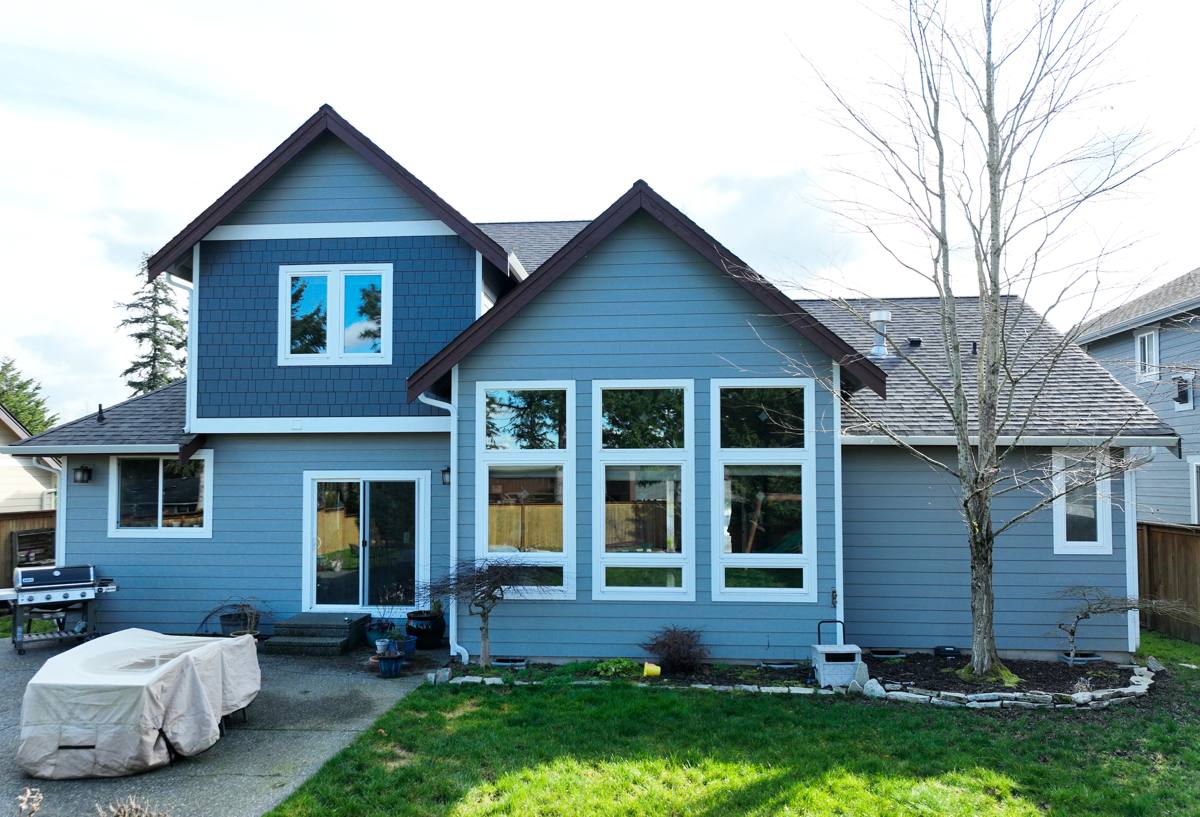
What Salt Air and Moss Season Actually Do to Siding
Salt Air
Airborne salt is corrosive to metal fasteners, flashing, and trim, and it accelerates the breakdown of many paint and coating systems. On wood-based or engineered wood siding, salt-laden moisture speeds up swelling, checking, and edge deterioration wherever the factory seal has been compromised — at cuts, joints, and fastener penetrations. Vinyl doesn't rot, but it does become brittle and fade faster under sustained coastal exposure, and it still relies entirely on the wall assembly behind it to manage moisture since it isn't a water-resistant barrier on its own.
Driving Rain
Wind-driven rain off the water doesn't fall straight down — it gets pushed sideways and upward into laps, joints, and any gap in the siding system. That makes flashing detail, lap coverage, and caulking at penetrations far more important here than in a sheltered inland lot. A siding job that would hold up fine 20 miles inland can fail years early on an exposed Cherry Point elevation if those details are cut short.
Moss and Algae Season
Whatcom County's long stretch of overcast, damp weather — often eight or nine months a year of some degree of moisture — gives moss and algae plenty of time to establish on north-facing and shaded walls. Porous or unsealed surfaces give moss something to grip into; a factory-cured, tightly sealed finish gives it far less to hold onto and makes periodic cleaning much easier.
Why We Install Only James Hardie
We made a deliberate decision not to install LP SmartSide, vinyl, Cemplank, Allura, primed spruce, or cedar. Each of those products has legitimate uses, but for a climate like this one, they each carry a trade-off we're not willing to put our name behind:
- Engineered wood siding (LP SmartSide): Wood-strand core products perform well when the factory seal stays intact, but any breach — a bad cut, a missed caulk joint, a fastener backing out — lets moisture into the substrate, and wood-based cores don't recover from that the way fiber cement does.
- Vinyl: Inexpensive and low-maintenance in the right setting, but it flexes, fades, and becomes brittle over time, and it doesn't add meaningful fire resistance or rigidity to the wall assembly.
- Other fiber cement brands (Cemplank, Allura): These are legitimate fiber cement products, but we've standardized on one manufacturer so our crews, flashing details, and warranty process stay consistent and we're not guessing at spec differences between brands.
- Primed spruce or cedar: Natural wood siding can look great, but it demands ongoing maintenance — repainting, caulking, moisture monitoring — that most homeowners don't want to keep up with in a climate this wet.
James Hardie fiber cement is non-combustible, dimensionally stable in wet climates, and comes with a factory-applied ColorPlus finish that's baked on and warranted against fading — not a field-applied paint job that starts breaking down the day it's exposed to salt air and UV.
The Right Hardie Product Line for This Location
James Hardie engineers its siding by climate zone (HZ zones), and Western Washington falls into the HZ5 line, engineered for wetter, more variable climates. For a location like Cherry Point specifically, we typically recommend:
| Product | Best Use | Why It Fits Cherry Point |
|---|---|---|
| HardiePlank Lap Siding (HZ5) | Primary wall siding | Engineered moisture resistance for the Pacific Northwest; wide color range in ColorPlus finishes |
| HardieTrim boards | Corners, window/door casing | Consistent expansion behavior with the lap siding; resists the swelling wood trim shows in wet climates |
| HardieSoffit panels | Eaves and overhangs | Vented options help manage moisture in the attic space, relevant given the region's humidity |
| ColorPlus Technology finish | All exposed siding and trim | Factory-cured finish resists fading and chalking better than field-applied paint under sustained UV and salt exposure |
The specific plank exposure, color, and trim profile still come down to the home's architecture and the owner's preference — but the product family for this location isn't really up for debate; HZ5 is what the climate calls for.
What a Correct Installation Involves
James Hardie siding is only as good as the installation behind it. The product is engineered to perform, but a rushed or generic install can undercut all of that. For a coastal-exposed property, the details that matter most are:
Weather-Resistive Barrier and Drainage Plane
A continuous, properly lapped weather-resistive barrier behind the siding, with a drainage gap where wall assembly and code call for it, so that any moisture that does get past the siding has somewhere to go instead of sitting against the sheathing.
Flashing at Every Penetration
Windows, doors, hose bibs, light fixtures, and vents all need proper head flashing and kick-out flashing where rooflines meet walls. This is the single most common place we see prior installations fail — not the siding material itself, but a missed or undersized flashing detail that let water track behind it.
Fastener Selection and Placement
Corrosion-resistant fasteners, placed and set to Hardie's specification (not overdriven, not underdriven), matter more in salt air than almost anywhere else. Overdriven fasteners crack the board's fiber cement edge and create an entry point for moisture; the wrong fastener metal corrodes and stains the face of the siding over time.
Caulking and Sealant Joints
Manufacturer-approved sealant at butt joints and trim intersections, applied to the right joints (not every seam needs it, and over-caulking can trap moisture rather than shed it).
Proper Clearances
Correct clearance from grade, roofing, decks, and other transitions so the bottom edge of the siding isn't sitting in standing water or splash-back, which is a common bottom-of-wall problem in areas with heavy seasonal rain.
Our Process for a Cherry Point Job
- On-site assessment: We look at existing siding condition, wall assembly, moisture damage (if any), and the specific exposure of each elevation — a west-facing wall taking direct weather off the water gets different attention than a sheltered side.
- Product and color selection: HZ5 plank profile, exposure, trim, and ColorPlus color, matched to the home and any HOA or neighborhood guidelines that may apply.
- Tear-off and substrate check: Removing old siding is also our chance to inspect sheathing for hidden moisture damage before it's covered back up — something that's genuinely more common in coastal Whatcom County homes than inland ones.
- Weather barrier and flashing installation: Done to manufacturer and code spec before a single piece of siding goes up.
- Hardie installation: Plank, trim, and soffit installed to Hardie's fastening and clearance specifications.
- Final detail and walkthrough: Caulking, touch-up, and a walkthrough so the homeowner understands what was done and what (if any) maintenance is expected.
Why a Crew That Already Works Cherry Point Matters
A contractor who mostly works drier, inland jobs can install Hardie siding perfectly well on paper and still miss the details that matter on a salt-exposed, rain-heavy site — because those details aren't in a generic install manual, they're learned from working this specific stretch of coastline repeatedly. A crew that already knows what wind-driven rain does to a north or west elevation here, what moss growth patterns look like on shaded walls, and where flashing tends to get skipped on older Whatcom County homes is going to make fewer assumptions and catch more problems before they're covered up.
What to Check Before Hiring Anyone for This Job
- Are they installing manufacturer-specified HZ5 product, or a generic/lower climate-zone version?
- Do they carry manufacturer certification for Hardie installation, and can they explain their flashing detail without hand-waving?
- Will they inspect and address sheathing condition during tear-off, not just cover it back up?
- Is the warranty explained clearly — what's covered by the manufacturer versus workmanship coverage from the installer?
- Do they have experience specifically with coastal or high-exposure sites, not just general siding work?
What This Costs and What Drives the Number
Every Cherry Point home is different, so we won't quote a number without seeing the site, but the main cost factors are consistent:
| Factor | Impact on Cost |
|---|---|
| Tear-off and disposal of existing siding | Adds labor and disposal cost, and can reveal substrate repairs that add scope |
| Home size and wall complexity | More corners, gables, and trim detail increase labor time |
| Sheathing or framing repair needed | Common on older coastal homes with prior moisture intrusion; adds cost but is essential to do right |
| Trim and soffit scope | Full trim/soffit replacement alongside siding costs more than lap siding alone but gives a more consistent, longer-lasting result |
| Color and finish selection | ColorPlus factory finishes vs. field-applied paint have different cost and long-term maintenance profiles |
If your Cherry Point home's siding is showing moss, moisture staining, cracked caulk lines, or you're just planning ahead for a replacement, we're glad to come take a look and walk you through what we'd recommend — no pressure, no obligation, just a straight assessment and a written estimate.