 Birch Bay Siding
 Cherry Point sits right up against the water north of Birch Bay, and that location shapes what "energy-efficient windows" actually needs to mean here. In a lot of the country, energy efficiency is mostly about insulation value and keeping heating and cooling bills down. That matters here too, but it's only half the job. A window on a Cherry Point home also has to survive salt-laden air, wind-driven rain coming off the Strait of Georgia, and a moss and mildew season that can run most of the year in shaded, damp spots. A window that's efficient on paper but poorly sealed or built from the wrong materials for this environment won't stay efficient for long — it'll start losing performance the first time water gets past a compromised seal.
Why Energy Efficiency Means Something Different in Cherry Point
Efficiency ratings on a window — U-factor, solar heat gain coefficient, air leakage — are tested under controlled lab conditions. They tell you how a window performs when it's new and installed correctly. They don't tell you how it'll hold up after five winters of driving rain and salt spray, or whether the seal will still be doing its job once moisture has had a chance to work into the frame edges. In Cherry Point and the surrounding Whatcom County coastline, that gap between lab performance and real-world performance is bigger than it is in a drier, inland market, because the conditions here are harder on hardware, seals, and finishes.
That's why we treat energy-efficient window work here as two connected problems, not one. The first is picking glass and frame specs that actually cut heat loss and drafts. The second is making sure the installation — flashing, sealant, hardware selection — is built to keep that performance intact for the long run in a marine climate, not just on install day.
What the Coastal Climate Actually Does to a Window
Salt air accelerates corrosion on hardware, fasteners, and lower-grade frame components, which is a slow process that shows up as stiff locks, pitted metal, or seals that lose their grip years before they should. Wind-driven rain off the water pushes moisture sideways into wall assemblies instead of letting gravity keep it out, which means any gap in flashing or sealant gets tested far more often than it would in a calmer climate. And the moss and mildew season — long, damp stretches where shaded sills and trim rarely fully dry out — holds moisture against wood and lower-quality composite components longer than a drier region ever would. None of this is exotic; it's just what living near the water in this part of Washington involves, and it's the backdrop every window decision here should account for.
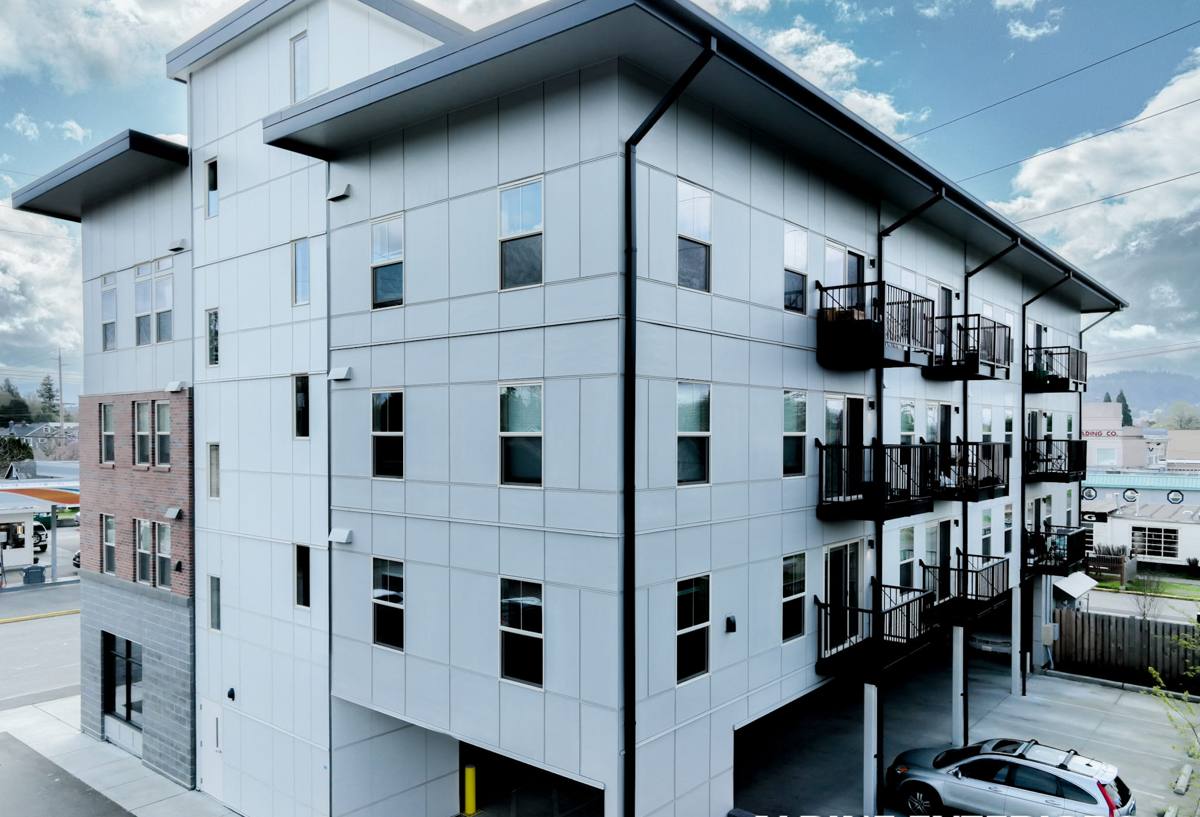
What a Correct Energy-Efficient Window Job Involves
Getting the energy performance right starts with the window itself, but a surprising amount of a window's real-world efficiency comes down to how it's installed. A well-rated window installed with a sloppy flashing job will leak air and, eventually, water — and once water gets behind the frame, insulation value is the least of your problems.
Glass and Frame Selection
For Cherry Point homes, we look at double- or triple-pane glass with a low-E coating suited to our climate, appropriate gas fill between panes, and a frame material that won't degrade in salt air. Vinyl and fiberglass frames generally hold up to sustained coastal moisture with less ongoing maintenance than an all-wood exterior finish, which is why we lead with them on weather-facing installs here. Wood-clad interiors with a protected exterior cladding can still be the right call when the interior look matters, but we'll walk through that trade-off honestly rather than defaulting to whichever option is easiest to install.
Sealing and Flashing
This is where a lot of the real efficiency gain — or loss — actually happens. A window's rated air leakage number assumes a correctly sealed installation. If the flashing sequence isn't right, or sealant is applied as an afterthought instead of as part of a planned water management path, air and moisture find their way in regardless of how good the glass package is. We build the flashing plan for each opening around directing water out and down, never trapping it behind the frame, which matters more in a driving-rain climate than in most of the country.
Hardware and Weatherstripping
Locks, hinges, and weatherstripping take the brunt of salt air exposure over time. We select hardware rated for coastal use rather than standard-grade components, because a lock that seizes or a weatherstrip that compresses permanently after a few damp seasons quietly undoes the efficiency gains the rest of the window was supposed to deliver.
Fit and Air Sealing Around the Frame
Gaps between the window frame and the rough opening are a common, avoidable source of drafts and energy loss. Proper shimming, insulation, and air sealing around the perimeter — not just caulking the exterior trim line — is part of what separates an installation that performs like its rating suggests from one that doesn't.
Checklist: What to Confirm Before You Sign Off on a Window Project
- Ask for the specific U-factor and SHGC ratings for the windows being quoted, not just a general "energy-efficient" label
- Confirm the frame material and why it was chosen for a coastal, marine-climate location like Cherry Point
- Ask how the flashing and water management plan works for your specific window openings
- Confirm hardware is rated for coastal or marine exposure, not standard interior-grade components
- Get clarity on what's covered under warranty — the window unit and the installation labor are usually separate
- Ask how long the crew has been installing windows specifically in this part of Whatcom County
Our Process for Cherry Point Homes
- On-site assessment — we look at existing window condition, orientation to wind and rain exposure, and any signs of past moisture intrusion around openings
- Honest product recommendation — glass package, frame material, and hardware matched to the home's exposure and your budget, explained with the reasoning behind each choice
- Measurement and ordering — precise field measurements, with a realistic timeline since higher-performance units often take longer to arrive than basic stock windows
- Removal and opening prep — old units come out carefully, and any rot, old flashing failures, or framing issues get addressed before a new window goes in, not papered over
- Installation and flashing — each window is set, shimmed, air-sealed, and flashed to a sequence built for wind-driven rain, not a generic inland installation guide
- Final check — operation, seal, and trim are confirmed before we consider the job done
Cost Factors: What Actually Moves the Price
We won't quote a number without seeing the openings and the home, but the factors that drive cost on an energy-efficient window project are consistent from job to job.
| Factor | Why It Matters |
|---|---|
| Glass package | Double-pane vs. triple-pane, and the specific low-E coating, change both cost and real-world performance |
| Frame material | Vinyl, fiberglass, and wood-clad options differ in upfront cost and long-term coastal maintenance |
| Number of windows | A whole-house project typically has better per-unit pricing than replacing one or two windows at a time |
| Opening condition | Rot, old flashing failures, or out-of-square framing add repair work before the new unit goes in |
| Size and configuration | Larger units, bay or picture windows, and operable styles with more hardware cost more than simple fixed units |
| Access and site conditions | Second-story or hard-to-access windows add labor time regardless of the window itself |
Efficiency Options: A Quick Comparison
| Option | Upfront Cost | Best Fit for Cherry Point |
|---|---|---|
| Standard double-pane, vinyl frame | Lower | Solid, budget-conscious choice for most exposures when properly installed |
| Triple-pane, vinyl or fiberglass frame | Higher | Worth considering on the most wind- and water-exposed walls, or for noise reduction near busier roads |
| Fiberglass frame | Mid to higher | Strong option where hardware longevity and minimal maintenance in salt air matter most |
| Wood-clad, low-maintenance exterior | Higher | Makes sense when interior wood appearance is a priority and the exterior cladding is properly protected |
Why It Matters Who Installs Them
A window's energy rating is only as good as the installation behind it. We've seen well-rated windows installed with rushed flashing details start showing drafts and moisture staining within a couple of wet seasons — not because the product failed, but because the installation didn't account for what this coastline actually throws at a building envelope. Manufacturer installation guides are written for average conditions, and Cherry Point's combination of salt air, driving rain, and a long damp season isn't average.
A crew that regularly works this stretch of Whatcom County knows which details in the manufacturer's guidance are worth extra time here — how much lap a flashing course needs under sustained wind-driven rain, which hardware grades actually hold up to salt exposure, where a standard sealant joint needs backup protection it wouldn't need inland. Those decisions don't show up in a sales pitch, but they're what determines whether your windows are still performing efficiently in fifteen years or starting to fail in five.
Signs Your Current Windows Are Costing You Money
Not every homeowner is starting from scratch — a lot of our Cherry Point work is replacing windows that are underperforming rather than failed outright. A few signs worth paying attention to:
- Noticeable drafts near the frame edges, especially during windy weather off the water
- Condensation forming between panes, which usually means a failed seal and lost gas fill
- Difficulty opening, closing, or locking windows — often a sign of corroded or worn hardware
- Visible staining, soft wood, or discoloration on interior or exterior trim near the window
- A noticeable temperature difference near windows compared to the rest of the room
Any one of those on its own isn't necessarily an emergency, but together they usually mean the window is no longer doing the job it was rated for, and continuing to run heating or cooling against that loss adds up over time.
Get a Straightforward Estimate
If your Cherry Point home has drafty windows, visible wear from the salt air and rain, or you're planning ahead for a full window replacement, it's worth having someone look at the actual openings and exposure before you start comparing quotes. We offer free, no-pressure estimates for energy-efficient window projects in Cherry Point and the surrounding Birch Bay area — use the form below to get a time on the schedule.