 Birch Bay Siding
 Windows in California Creek Take a Different Kind of Beating
California Creek sits close enough to the water that homes here deal with a version of weather most inland siding and window crews never have to think about. Salt-laden air off the bay works into any gap in a window's seal over time. Driving rain off Birch Bay doesn't just fall straight down — wind pushes it sideways into window frames, testing flashing and caulk joints that a calmer climate would never stress. And Whatcom County's long, damp moss season means anything wood-adjacent on the exterior stays wet longer than it should, which is exactly the condition that lets rot get started around a window opening before anyone notices.
None of that means windows here need to be exotic or overbuilt. It means the installation details — flashing, sealant choice, drainage path, frame material — have to be right, because this climate finds every shortcut eventually. A window that's installed correctly in California Creek will handle decades of this weather. One that's installed with generic technique borrowed from a drier region will show problems in years, not decades.
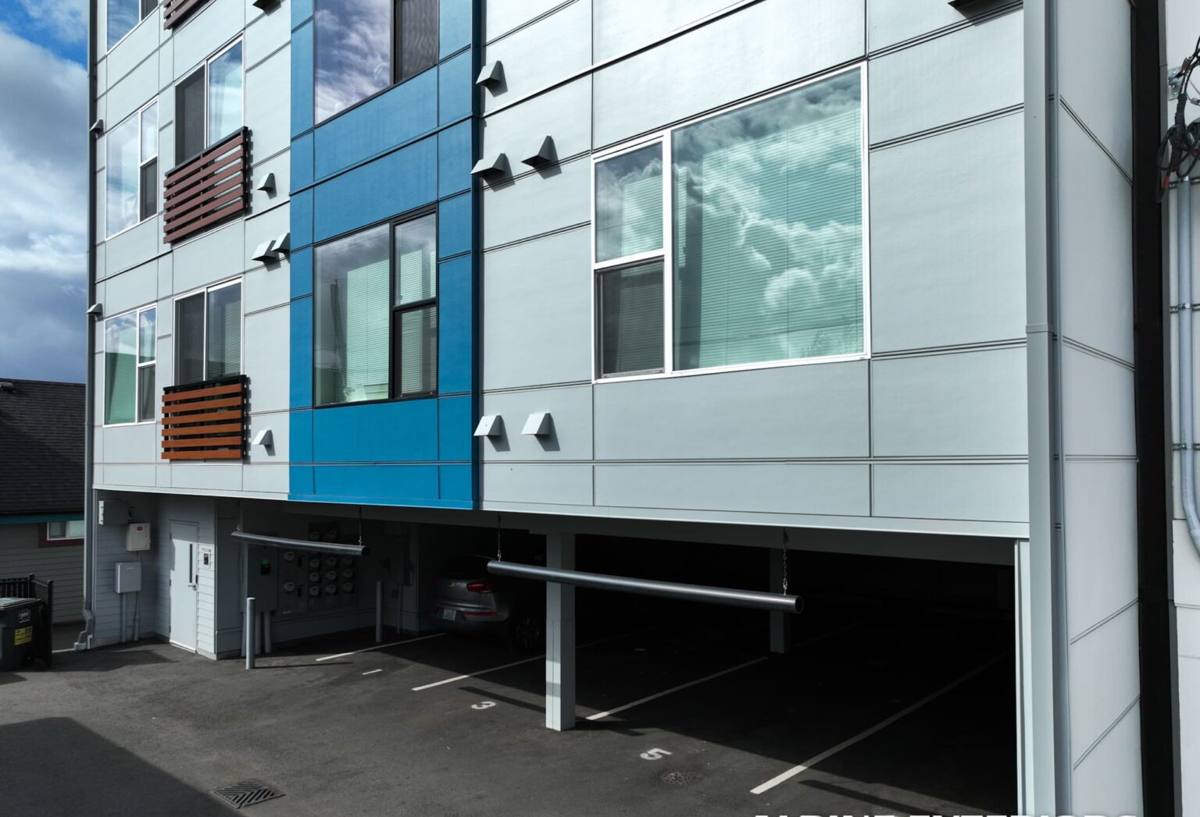
What Actually Fails First on Coastal Whatcom County Homes
When we get called out to look at failing windows in this area, the problems tend to fall into a short list. Knowing what they are helps homeowners understand what a good installation is actually protecting against.
Seal and Gasket Breakdown
Salt air is mildly corrosive and it accelerates the aging of rubber gaskets, weatherstripping, and some sealants faster than inland air does. Once a seal degrades, wind-driven rain finds the gap. This is a slow failure — it can take years — but it's steady, and it's one of the reasons product and sealant selection matters more here than in a dry climate.
Flashing and Drainage Mistakes
Almost every water intrusion problem we trace back on a window traces back to flashing — either missing, installed in the wrong order relative to the house wrap, or lacking a proper sill pan to direct water back out if it does get behind the trim. This is an installation issue, not a product issue. Even a premium window will leak if the opening around it isn't flashed to shed water outward and downward.
Wood Trim and Sill Rot
With moss season running long and humidity staying elevated for much of the year, any wood trim or sill that stays damp is on a clock. Rot usually starts small, hidden under paint or caulk, and isn't obvious until the wood is already soft. Proper drainage and the right trim material choice slow this down dramatically.
Condensation and Fogging
Older double-pane units, or units where the seal has already started to fail, will fog between the panes. In a marine climate with high humidity swings, this shows up sooner than it would in a drier region.
What a Correct Window Installation Involves Here
A proper installation in a coastal Whatcom County location like California Creek isn't a different product line — it's a more careful process. The steps that matter most:
- Full removal and inspection of the existing opening, including the sill and surrounding framing, to check for hidden rot before a new window ever goes in
- A sloped sill pan so any water that does get past the exterior seal drains back outside instead of pooling against the frame
- Flashing tape and house wrap integrated in the correct shingle-lap order — water always has to be directed down and out, never trapped behind a layer
- Sealant rated for exterior, marine-air exposure, applied at the right points (not everywhere — over-sealing can trap moisture instead of releasing it)
- Proper shimming and fastening so the frame is square and doesn't rack, which is what keeps the seal intact over time as the house settles
- Insulation in the gap between the window frame and the rough opening, without over-packing, which can bow the frame
- Interior and exterior trim reinstalled with materials suited to sustained moisture exposure
Skipping or rushing any one of these is usually invisible on installation day. The consequences show up two, five, or ten winters later, which is why this is a category where experience and process discipline matter more than the sticker on the window itself.
Choosing Window Materials for a California Creek Home
There's no single "right" window material for every home — it depends on the home's style, budget, and how exposed the specific wall is to wind and rain. Here's how the common options actually compare in this climate:
| Frame Material | How It Handles Salt Air & Moisture | Maintenance | Typical Trade-Off |
|---|---|---|---|
| Vinyl | Doesn't corrode or rot; handles humidity well | Low — occasional cleaning | Fewer color/finish options, can't be refinished later |
| Fiberglass | Very stable dimensionally, holds up well to temperature and moisture swings | Low | Higher upfront cost than vinyl |
| Aluminum | Corrosion-resistant coatings help, but bare aluminum near salt air needs a quality finish | Moderate | More prone to condensation without a thermal break |
| Wood (clad or unclad) | Unclad wood is the most vulnerable to this climate unless meticulously maintained | High — regular painting/sealing | Best classic appearance, but highest long-term upkeep in a marine climate |
| Wood-clad (exterior clad, wood interior) | Exterior cladding shields the wood from weather | Low exterior, some interior care | Good middle ground for homeowners who want a wood interior look |
For most homes in this area, vinyl or fiberglass frames give the best balance of durability and low upkeep against salt air and rain. Where we don't recommend unclad exterior wood, it's not because wood is a bad material — it's that maintaining a painted or sealed finish against this specific climate, on a regular schedule, is a real and ongoing commitment, and we'd rather tell a homeowner that upfront than sell a product that needs more attention than they're expecting to give it.
Full Replacement vs. Repair: How We Evaluate It
Not every problem window in California Creek needs full replacement. We look at a few things before recommending either path:
Signs a Repair or Re-Seal May Be Enough
- The frame and surrounding wood are still solid — no soft spots when probed
- The glass itself isn't fogged between panes
- The problem is isolated to failed weatherstripping, caulk, or hardware
Signs Full Replacement Is the Right Call
- Soft or rotted framing/sill material found during inspection
- Fogging or moisture between panes, meaning the seal itself has failed
- Visible daylight, drafts, or water staining on interior trim
- Windows original to an older home that predate current flashing standards
We'll tell you honestly which category a window falls into. There's no benefit to us in replacing a window that just needs a proper reseal — but there's also no benefit to patching something that's going to keep leaking behind the wall.
Our Process for California Creek Window Projects
Because this is a smaller, closely-built coastal community, most of our California Creek jobs follow a similar rhythm:
1. On-Site Assessment
We look at the existing windows and the surrounding wall assembly, not just the glass. This tells us whether we're dealing with a straightforward swap or whether there's hidden rot or flashing damage to address first.
2. Straightforward Written Estimate
You get a clear scope and price range before anything is scheduled — no vague allowances that turn into surprise add-ons mid-project.
3. Careful Removal
Old windows come out without damaging more of the surrounding wall than necessary, and we check what's behind them before anything new goes in.
4. Correct Installation
Sill pan, flashing, sealant, and fastening done in the right order, every time — this is the part that determines whether the job still looks and performs well in fifteen years.
5. Cleanup and Walkthrough
We walk the finished work with you so you know exactly what was done and what to watch for going forward.
Why Local Experience Matters for This Job
A window installer who mostly works inland doesn't build the same instincts as one who works the Birch Bay shoreline regularly. Knowing which direction the prevailing wind-driven rain hits a given wall, how fast moss and moisture build up on north-facing trim in this specific stretch of Whatcom County, and which sealant products actually hold up to sustained salt exposure isn't something you learn from a manual — it's something you learn from doing the work here, on homes like the ones in California Creek, season after season. That's the difference between an installation that looks fine on day one and one that's still tight and dry a decade from now.
Get a Free, No-Pressure Estimate
If you're dealing with drafty, foggy, or water-stained windows in California Creek, or you're planning ahead before the next wet season sets in, we're happy to take a look and give you an honest assessment — no obligation, no pressure. Use the form below to request a free estimate.