 Birch Bay Siding
 Metal Roofing Built for the California Creek Stretch of Birch Bay
Homes along California Creek and the surrounding Birch Bay shoreline sit in one of the more demanding roofing environments in Whatcom County. You've got salt-laden air coming off the water, long stretches of driving rain through fall and winter, and a moss season that can run most of the year under tree cover. A roof that would hold up fine twenty miles inland can wear out early here if it wasn't specified or installed with this microclimate in mind. Metal roofing, done correctly, is one of the better answers to that combination — but "done correctly" is doing a lot of work in that sentence, and it's worth understanding what that actually means before you sign a contract.
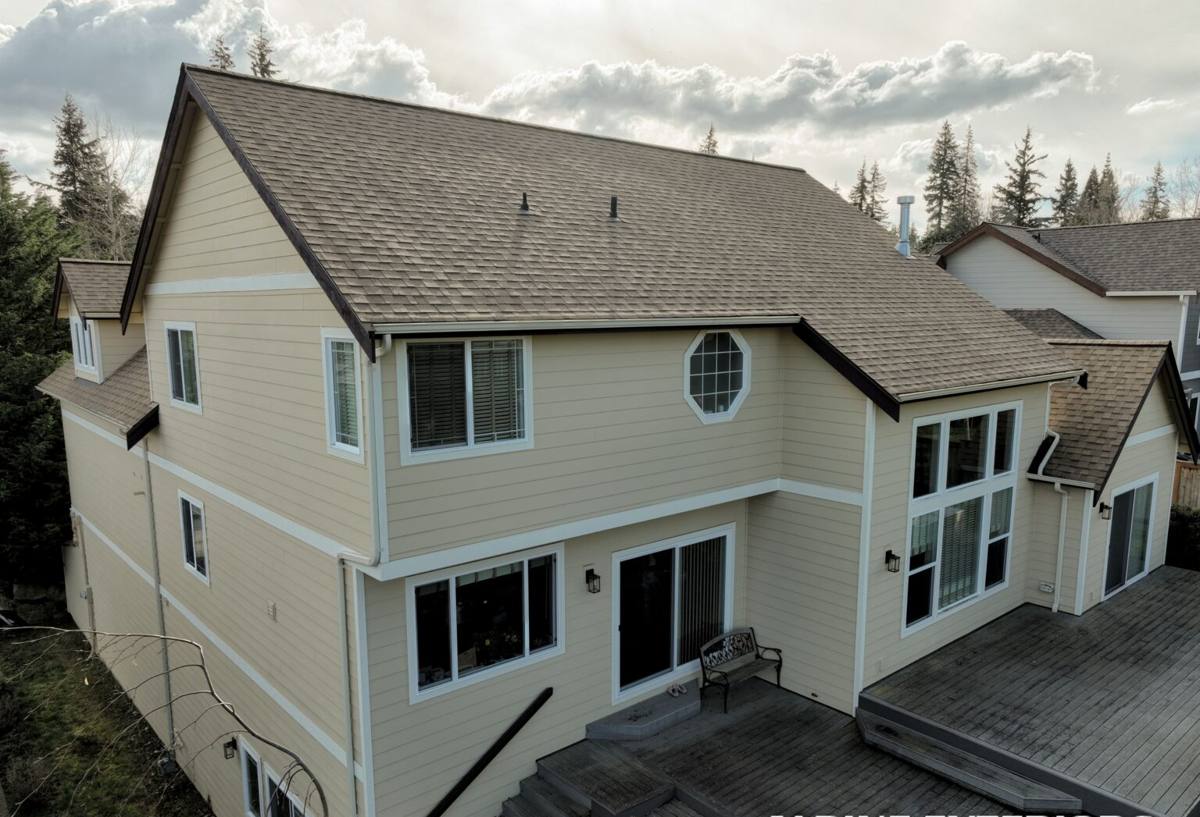
What This Climate Actually Does to a Roof
Salt Air and Corrosion
Proximity to the water means airborne salt settles on every exterior surface, including the roof. Bare or poorly coated metal fasteners, cut edges, and lower-grade flashing are the first things to show it — usually as rust streaking or pitting well before the panels themselves show any wear. This is a slow process, but it's constant, and it's the single biggest reason coastal roofing needs different material choices than the same roof built inland.
Driving Rain and Wind-Driven Water
Storms coming off the Salish Sea don't always drop rain straight down. Wind pushes it sideways and up under laps, edges, and penetrations that would shed water fine in a calmer climate. Any roofing system here has to assume water will be forced into places gravity alone wouldn't take it, and be detailed accordingly — underlayment, flashing laps, and fastener sealing all matter more here than they would in a drier, calmer region.
The Long Moss Season
Between the moisture and the shade from mature conifers common around Birch Bay, moss and algae growth is nearly year-round on north-facing and shaded roof planes. On asphalt shingles, moss lifts the mat and holds water against the granules. On metal, the risk is different but not zero — moss and debris buildup in valleys, at panel laps, and around penetrations can hold moisture against the surface long enough to compromise a coating or trap water where it can work into fastener holes.
Why Metal Holds Up Better Here — With Caveats
A correctly specified metal roof resists the moss, rot, and granule loss that plague other roofing types in this climate, and a quality finish resists salt corrosion far better than bare or lightly coated metal. That's the case for metal roofing in a place like this. The caveat is that "metal roofing" isn't one product — panel gauge, coating type, fastener spec, and installation detail all vary widely, and the cheaper end of that range doesn't hold up any better here than a poorly installed asphalt roof would.
| Metal Roofing Factor | Why It Matters on the Birch Bay Coast |
|---|---|
| Panel system: standing seam vs. exposed fastener | Standing seam has no exposed screws for salt air and rain to work on over time; exposed-fastener panels are more affordable but rely on gasketed screws that eventually need attention |
| Finish/coating (e.g. baked-on paint systems) | Determines how well the panel resists fading, chalking, and coastal corrosion over the roof's life |
| Fastener and flashing material | Mismatched metals (galvanic corrosion) or bare steel trim will rust well before the roof panels do |
| Underlayment type | A quality synthetic or self-adhered underlayment backs up the panels where wind-driven rain gets past the surface |
| Panel gauge (thickness) | Thicker gauge resists oil-canning and denting from limbs, debris, and foot traffic during install or maintenance |
What a Correct Installation Actually Involves
Deck Inspection and Prep
Before any metal goes down, the existing roof deck needs to be checked for rot, soft spots, and prior water damage — common on older Birch Bay homes where a roof has been quietly taking on moisture for years without an obvious leak inside. Any compromised sheathing gets replaced. Skipping this step to save time is the single most common shortcut we see on jobs we're called in to fix later.
Underlayment and Ice/Water Protection
A synthetic or self-adhered underlayment goes over the deck before the metal, giving the roof a second line of defense at seams, valleys, and penetrations. Given how much wind-driven rain this coastline sees, this layer isn't optional or cosmetic — it's what keeps a small flashing failure from becoming a leak inside the house.
Panel Layout and Fastening
Panels get laid out to minimize seams in the directions that catch the most wind and rain, with fastener spacing and torque set to manufacturer spec — overdriven or underdriven screws are a common source of early leaks on exposed-fastener systems. On standing seam, panel clips and seam engagement need to be correct for the wind exposure of the specific site, since an open shoreline lot takes more uplift load than a sheltered inland one.
Flashing, Valleys, and Penetrations
Chimneys, vents, skylights, and valleys are where the vast majority of roof leaks start, on any roofing material. Flashing at these points needs to be layered correctly with the underlayment and panels — not just caulked over — and matched in material to avoid galvanic corrosion between dissimilar metals.
Ventilation
Proper intake and exhaust ventilation keeps moisture from condensing on the underside of the roof deck, which matters even more in a wet, moderate-temperature climate like this one where condensation risk is present much of the year, not just in winter.
Our Process on a California Creek Metal Roofing Job
We walk every roof in person before we quote it — no estimate based on a satellite photo or a phone conversation alone. From there:
- On-site inspection of the existing roof, deck condition, and any active leaks or moisture damage
- Honest discussion of panel and finish options that fit the home's exposure, budget, and how long you plan to own it
- A written estimate that spells out material, underlayment, flashing details, and timeline — no vague line items
- Deck repair as needed, done before a single panel goes down, not patched around
- Full installation following manufacturer fastening and flashing specs, not shortcuts to save labor time
- Site cleanup, including a magnetic sweep for stray fasteners and debris
- A final walkthrough where we point out what we did and what to expect going forward
Maintenance in a Moss-Prone, Salt-Air Climate
Metal roofing needs less maintenance than shingles, but "less" isn't "none," especially this close to the water and under tree cover. A short annual check catches small issues before they become expensive ones.
- Clear moss, needles, and leaf debris from valleys and around penetrations, especially on shaded or north-facing slopes
- Check gutters and downspouts for the same debris buildup, since a clogged gutter backs water up under the roof edge
- Look for rust streaking at cut edges, fasteners, or flashing — an early sign a coating has been compromised
- Confirm sealant at penetrations (vents, chimneys, skylights) hasn't cracked or pulled away from age and UV exposure
- Trim back overhanging branches that keep a section of roof shaded and damp longer than the rest
What Metal Roofing Typically Costs to Factor In
Exact pricing depends on roof size, pitch, access, and how much deck repair is needed, but the honest cost drivers are worth knowing before you compare quotes.
| Cost Factor | Why It Moves the Price |
|---|---|
| Panel system chosen | Standing seam generally costs more than exposed-fastener panels, largely due to labor and concealed-fastener hardware |
| Roof complexity | More valleys, dormers, and penetrations mean more flashing labor, regardless of panel type |
| Deck condition | Rot or soft sheathing found during tear-off adds material and labor that can't be reasonably predicted from the ground |
| Access and pitch | Steep or hard-to-access roofs take longer and require more safety setup |
| Removal of existing roofing | Tear-off and disposal of the old roof adds cost versus installing over an existing deck where code allows it |
Be cautious of any quote that's dramatically lower than the others for the same panel system — it's usually a sign of a thinner gauge, a cheaper coating, or a plan to skip underlayment and flashing detail that won't show up until the first real storm season.
Why a Crew That Already Works This Area Matters
A metal roof installed correctly for a dry inland climate isn't automatically correct for a lot near the water. A crew that regularly works around Birch Bay and the California Creek area already knows which slopes hold moss longest, how much wind exposure a given orientation actually sees, and which flashing and fastener choices have held up over time versus which haven't. That local pattern recognition is different from general roofing experience, and it's the difference between a roof that just meets code and one that's genuinely built for where it sits. It also means faster response if something does need attention after installation — no waiting on a crew that has to drive in from well outside the area.
If you're weighing a metal roof for a home near California Creek or elsewhere around Birch Bay, we're glad to come take a look, walk the roof, and give you a straightforward, no-pressure estimate — use the form below to get started.