 Birch Bay Siding
 Why Roofs Wear Out Faster Near Blaine
Blaine sits close enough to the water that homes here deal with a different set of stresses than roofs further inland. Salt-laden air off the Strait of Georgia and Semiahmoo Bay accelerates corrosion on exposed metal fasteners, flashing, and vent stacks. Add in Whatcom County's long stretch of wet months, and you get roofs that hold moisture longer than they should, feeding moss and algae growth that most homeowners underestimate until it's already undermined the shingles underneath.
None of this means Blaine roofs fail faster because of bad luck — it means a roof here has to be built and maintained with these specific conditions in mind. A replacement done without accounting for salt exposure, driving rain, and moss pressure is a roof that will underperform its warranty, regardless of what material went on it.
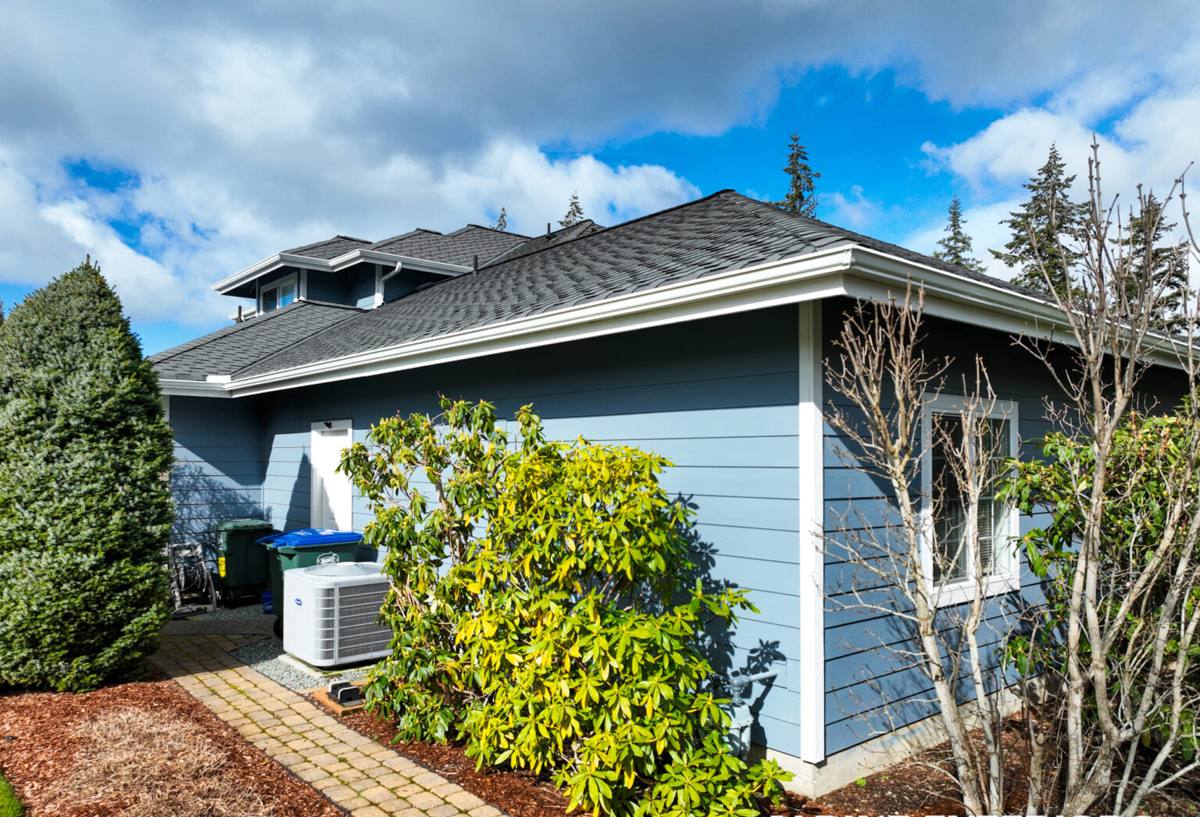
Signs a Blaine Home Needs a Roof Replacement, Not a Repair
Roof repair makes sense when the damage is isolated — a cracked pipe boot, a handful of lifted shingles after a windstorm. Replacement becomes the honest recommendation when the roof's underlying materials are failing broadly, not just at one spot. Common signs we look for on Blaine homes include:
- Granule loss heavy enough that you can see bare, shiny patches on asphalt shingles
- Moss colonies established at the ridge or in shaded valleys that have been there more than one season
- Soft or spongy decking felt underfoot during inspection, usually near valleys or eaves
- Daylight visible through the attic at roof boards, or water staining on rafters
- Shingles curling, cupping, or cracking across large sections rather than isolated spots
- A roof older than 18-20 years for asphalt, even if it "looks fine" from the ground
A roof that's approaching the end of its service life but hasn't failed yet is exactly the situation where a professional inspection earns its keep — replacing two years early wastes money, but patching a roof that's structurally tired just delays a bigger repair bill.
What a Correct Roof Replacement Actually Involves
Full Tear-Off, Not Overlay
We don't recommend installing new shingles over an old layer. Overlaying traps moisture between layers, hides deck problems, and voids most manufacturer warranties. A proper replacement means stripping the roof down to the deck so every square foot gets inspected and nothing gets buried.
Deck Inspection and Repair
Once the old roofing is off, the plywood or plank decking underneath gets checked for soft spots, delamination, and rot — problems that are invisible from above but common on older Blaine homes where a roof has been holding moisture longer than it should. Any compromised sections get cut out and replaced before anything new goes down.
Underlayment Built for Wet Climates
In a region with this much driving rain, the underlayment matters almost as much as the shingle itself. We use synthetic underlayment across the full field and self-adhered ice-and-water membrane at the eaves, valleys, and around every penetration — the places wind-driven rain is most likely to force its way under the roofing material.
Flashing That Won't Corrode
Because salt air speeds up corrosion on exposed metal, flashing details around chimneys, skylights, sidewalls, and vent stacks are done with corrosion-resistant materials and proper step-and-counter flashing techniques rather than caulk-and-hope shortcuts. Flashing failures are one of the most common causes of "mystery leaks" on otherwise sound roofs.
Ventilation That Matches the Home
Balanced intake and exhaust ventilation keeps the attic temperature and moisture level in check, which slows down moss regrowth and prevents the trapped condensation that rots decking from underneath. We calculate ventilation needs based on attic square footage rather than installing a generic vent count.
Material Options for Blaine's Coastal Climate
There's no single "best" roofing material — the right choice depends on budget, how long you plan to stay in the home, and how much maintenance you're willing to do. Here's how the common options stack up for this specific climate:
| Material | Typical Lifespan | Moss/Algae Resistance | Salt Air Considerations |
|---|---|---|---|
| Architectural asphalt shingle | 25-30 years | Good with algae-resistant granules | Standard fasteners fine when properly flashed |
| Standing seam metal | 40-50+ years | Excellent, sheds moss easily | Needs coastal-grade coatings and fasteners |
| Basic 3-tab asphalt | 15-20 years | Fair, more prone to moss holding | Lower upfront cost, shorter service life |
| Synthetic composite shingle | 30-40 years | Good, resists moisture absorption | Performs well but higher material cost |
Most Blaine homeowners land on architectural asphalt for the balance of cost and durability, or standing seam metal when they want to minimize moss maintenance and are planning to stay in the home long-term. Whichever material you choose, algae-resistant granules or coatings are worth the small upcharge given how much this area sees moss and algae pressure.
Our Roof Replacement Process
- On-site inspection — we walk the roof, check the attic, and document the deck condition, flashing points, and ventilation before quoting anything.
- Written estimate — a clear breakdown of material, labor, and any deck repair contingencies, so there are no surprise change orders mid-project.
- Material delivery and site protection — landscaping, siding, and gutters get protected before tear-off begins.
- Full tear-off — old roofing removed down to the deck, disposed of properly.
- Deck repair — any soft or damaged decking replaced and confirmed before underlayment goes down.
- Underlayment and flashing installation — ice-and-water membrane at vulnerable points, synthetic underlayment across the field, new flashing at every penetration.
- Roofing installation — shingles or metal panels installed to manufacturer spec, including proper nailing pattern and exposure.
- Ventilation check — intake and exhaust vents confirmed balanced for the attic size.
- Final walkthrough and cleanup — magnetic sweep for debris, gutters checked, and a final inspection with the homeowner.
Moss, Algae, and Moisture: The Long Game
A new roof doesn't make a home immune to moss — it makes moss easier to prevent and manage. Trees that shade a roof section keep it damp longer than the rest, which is exactly where moss tends to establish first. Where practical, trimming back overhanging branches after a replacement extends the life of the new roof significantly. Algae-resistant shingles help, but they work best alongside good airflow and periodic gentle cleaning rather than as a standalone fix.
We also pay attention to gutter and downspout condition during a replacement, since clogged gutters back water up under the roof edge — a common contributor to fascia and eave rot on homes throughout Whatcom County's wetter months.
What Affects the Cost of a Blaine Roof Replacement
| Factor | Why It Matters |
|---|---|
| Roof size and pitch | Steeper roofs take longer and require more safety setup, adding labor cost |
| Number of layers to remove | Tearing off two layers of old roofing costs more than one |
| Deck condition | Rotted or soft decking sections require replacement before new roofing goes down |
| Material choice | Basic asphalt costs less upfront than metal or premium composite |
| Roof complexity | Valleys, dormers, skylights, and chimneys each add flashing labor |
| Access | Difficult site access can add setup and material-handling time |
Broad ranges for a typical single-family home run from the lower five figures for a straightforward asphalt replacement up to significantly more for metal roofing or a complex roofline — but the only way to get a real number is a site inspection, since two roofs of the same size can differ a lot in condition and complexity.
Why Hiring a Crew That Already Works in Blaine Matters
A crew that regularly works Blaine and the surrounding Birch Bay area already knows what this climate does to a roof over time — which details tend to fail first, how much ventilation local attics actually need, and where moss pressure is worst based on tree cover and shade patterns. That local experience shows up in the details: flashing choices, underlayment placement, and ventilation calculations that account for what this specific coastline does to a roof, not a generic textbook answer.
It also matters for accountability. A roof replacement is a multi-day project with weather dependency, and a local crew has a reputation in the community to protect, along with the ability to respond quickly if a warranty question or minor issue comes up after the job is done.
After Your New Roof Goes On: A Maintenance Checklist
- Clean gutters at least twice a year, more often if you have overhanging trees
- Trim back branches that shade or touch the roof surface
- Do a visual check after major windstorms for lifted or missing shingles
- Watch shaded valleys and north-facing slopes for early moss growth
- Keep attic ventilation paths clear of stored items blocking soffit vents
- Schedule a professional inspection every few years, even without visible problems
A roof replacement done right, on a home in a climate like this, should be a decades-long investment rather than a recurring expense. If you're seeing wear on your Blaine home's roof or just want an honest read on where it stands, we're happy to take a look. Fill out the form below for a free, no-pressure estimate.