 Birch Bay Siding
 Blaine's Roofs Work Harder Than Most
Blaine sits right on the water at the top of Whatcom County, which means every roof in town deals with a combination most inland homes never see: salt-laden air off the Strait of Georgia, wind-driven rain that gets pushed sideways under poorly flashed edges, and a moss season that can run eight or nine months out of the year. None of these problems are dramatic on their own. What they do is work slowly, at the seams, fasteners, and flashing details that a rushed or generic installation skips over. By the time a homeowner notices a stain on the ceiling, the roof has usually been letting water in for a season or two already.
A new roof installed for Blaine needs to be built for that specific combination of conditions, not just installed to a generic manufacturer spec sheet. That's the difference between a roof that looks fine for five years and one that actually performs for its full rated life.
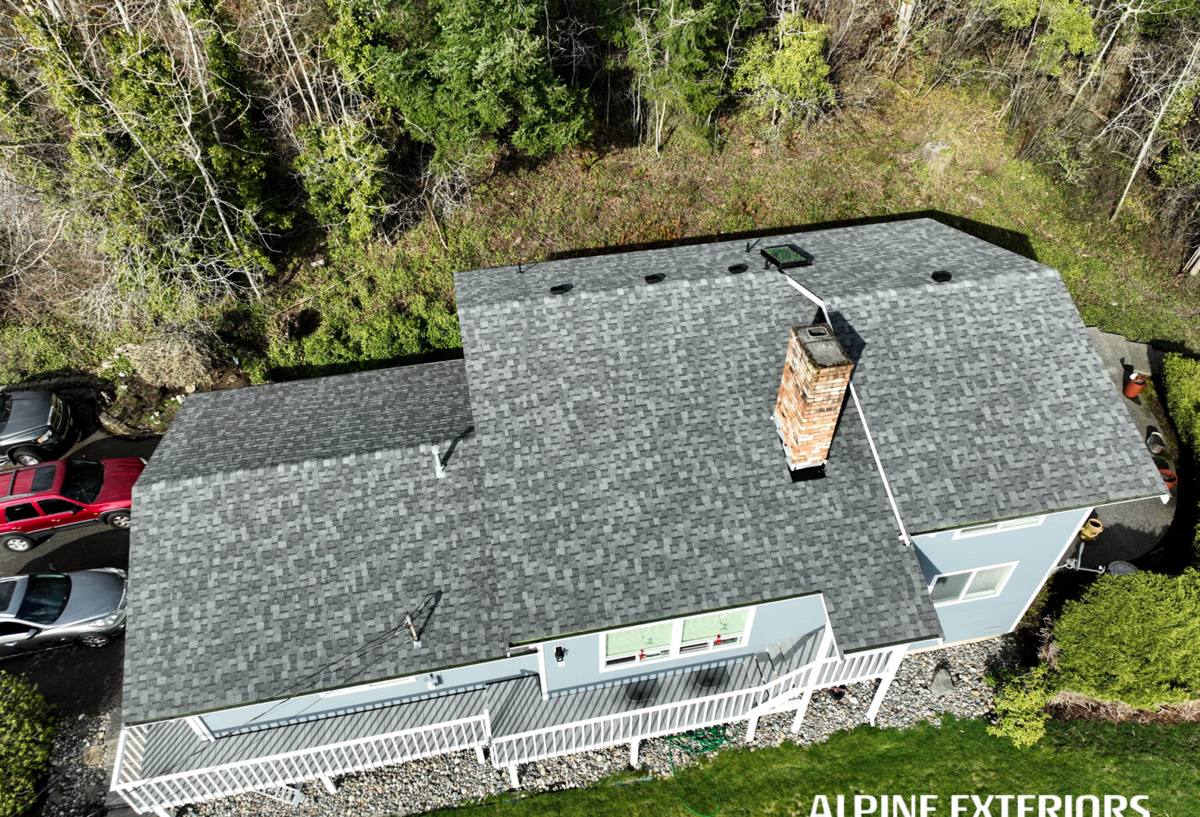
What Salt Air, Driving Rain, and Moss Actually Do to a Roof
Salt Air
Airborne salt accelerates corrosion on anything metal — nail heads, flashing, vent stacks, and gutter hardware. Standard fasteners that would last decades further inland can start rusting at the head within a few years this close to the water. This is why fastener and flashing material selection matters more here than in most parts of the county.
Driving Rain
Storms off the Strait don't just drop rain straight down — they push it sideways, which forces water up under shingle tabs, around vent boots, and into any flashing joint that isn't properly lapped and sealed. A roof that would shed water fine in a calmer climate can leak in Blaine simply because the wind direction is different.
Moss
Blaine's damp, shaded conditions are close to ideal for moss growth on north-facing slopes and anywhere tree cover blocks the sun. Moss isn't just cosmetic — its root structure lifts shingle edges, holds moisture against the roof deck, and accelerates granule loss. Left unchecked for years, it shortens the life of an otherwise sound roof.
Signs a Roof Needs Replacement, Not Another Repair
- Shingles that are cupping, curling, or missing granules across large sections rather than one spot
- Soft or spongy decking felt underfoot when walked, or visible sagging between rafters
- Repeated leaks in different locations after previous patch repairs
- Heavy, spreading moss growth that returns quickly after cleaning
- Flashing around chimneys, skylights, or valleys that's rusted, cracked, or separating
- A roof approaching or past the manufacturer's expected service life for its material and this climate
- Visible daylight through the attic decking or consistently damp attic insulation
A single missing shingle or one damaged flashing point is usually a repair. Multiple issues across the roof, or a roof already at the end of its expected life, is when replacement becomes the more honest recommendation — repairing an old roof piecemeal often costs more over a few years than a properly sequenced replacement.
What a Correct Installation Actually Involves
A new roof is more than shingles nailed to a deck. Every layer underneath does specific work, and skipping or shortcutting any of them is where most premature failures start.
Tear-Off and Deck Inspection
Old roofing comes off down to the deck so it can be inspected directly — not covered over. Any soft, rotted, or delaminated sheathing gets replaced before anything new goes down. This step matters more in Blaine than in drier climates, since damp conditions make deck rot easier to hide under old roofing.
Underlayment
A synthetic or self-adhered underlayment goes down as the roof's real waterproofing layer. In wind-driven rain conditions, we pay particular attention to lap direction and fastening pattern so water moving sideways doesn't find a gap.
Ice and Water Barrier at Vulnerable Points
Eaves, valleys, and roof-to-wall transitions get a self-adhered ice and water membrane. These are the spots where wind-driven rain is most likely to force its way under the roofing, so they get the extra layer of protection regardless of material choice.
Flashing
Chimneys, skylights, vent stacks, and valleys are where the majority of roof leaks actually originate — not the open field of shingles. Flashing is custom-fit and properly lapped with the underlayment, using corrosion-resistant material appropriate for a coastal environment.
Roofing Material Installation
The chosen roofing material goes down to manufacturer spec, with fastener placement, exposure, and nailing pattern matched to the wind and rain exposure of a Blaine roof, not just the minimum code requirement.
Ventilation
Proper intake and exhaust ventilation keeps the attic space at the right temperature and moisture level year-round. In a damp climate, poor ventilation traps moisture against the underside of the deck, which can cause rot from the inside even on a new roof.
Choosing a Roofing Material for This Climate
There's no single "best" roofing material — the right choice depends on budget, roof pitch, architectural style, and how much long-term maintenance a homeowner wants to take on. Here's how the common options compare for a Blaine home specifically:
| Material | Typical Lifespan | Moss Resistance | Coastal Wind/Rain Performance | Maintenance |
|---|---|---|---|---|
| Architectural Asphalt Shingle | 25–30 years | Moderate — benefits from periodic cleaning | Good with proper fastening and flashing | Low to moderate |
| Standing Seam Metal | 40–50+ years | High — sheds moss more readily than shingle | Excellent when properly fastened and sealed | Low |
| Synthetic/Composite Shingle | 30–50 years (varies by product) | Moderate to high | Good, product-dependent | Low |
| Cedar Shake | 20–30 years | Low without regular treatment | Fair — sensitive to sustained damp conditions | High |
We're upfront about trade-offs. Cedar shake has real appeal aesthetically, but its natural material behaves differently under Blaine's sustained dampness than it does in a drier climate — it needs more consistent upkeep to perform well here. Metal roofing costs more upfront but asks little of a homeowner over its life. Architectural asphalt remains the most common choice because it balances upfront cost, appearance options, and solid performance when the underlying installation is done right. We'll walk through what fits your budget and your roof honestly, without steering you toward whatever is easiest for us to install.
Our Installation Process
- On-site inspection. We walk the roof and attic, assess deck condition, ventilation, and existing damage, and take measurements.
- Written estimate. A clear scope of work and price, with material options explained so you understand what you're paying for and why.
- Scheduling around weather. Roofing in this climate means planning tear-off and dry-in around forecasted rain windows so the deck isn't left exposed longer than necessary.
- Tear-off and deck inspection. Old roofing removed, deck inspected and repaired as needed.
- Underlayment, ice and water barrier, and flashing installed. The waterproofing layers that do the real work.
- Roofing material installed to manufacturer spec with attention to the region's wind exposure.
- Ventilation checked and corrected as part of the same job, not treated as a separate add-on.
- Final walkthrough and cleanup, including a magnetic sweep for stray fasteners.
Permits, Warranties, and Inspections
Roof replacement in Whatcom County typically requires a permit, and we handle that process as part of the job rather than leaving it to the homeowner. A permitted, inspected installation matters for two practical reasons: it confirms the work was done to code, and it avoids complications later if you sell the home and a buyer's inspector asks for permit history.
Manufacturers offer warranties on the roofing material itself, and installers typically back their labor separately. We explain both in plain terms before work starts — what's covered, for how long, and what would void it (like skipping ventilation requirements or using incompatible accessory products).
What This Costs
Roofing costs vary based on roof size and pitch, material choice, number of layers being removed, deck repair needs, and the complexity of valleys, dormers, and penetrations. Rather than quote a number that doesn't apply to your house, here's what actually drives the price:
| Cost Factor | Why It Matters |
|---|---|
| Roof size and pitch | More surface area and steeper pitches mean more material and labor time |
| Material choice | Asphalt, metal, synthetic, and cedar carry very different material costs |
| Number of existing layers | Tearing off multiple old layers adds disposal and labor cost |
| Deck condition | Rotted or soft sheathing needs replacement before new roofing goes down |
| Roof complexity | Valleys, skylights, chimneys, and dormers each add flashing labor |
| Ventilation upgrades | Adding or correcting intake/exhaust vents adds modest cost but protects the investment |
We give a written, itemized estimate after seeing the actual roof — not a phone-quote guess.
Why a Crew That Already Works Blaine Matters
A roofing crew that regularly works this stretch of Whatcom County already knows which details to over-build for — the flashing points that need extra attention against driving rain, the fastener choices that hold up against salt air, and which roof orientations tend to grow moss fastest. That's knowledge you don't get from a general contractor passing through the area once. It shows up in fewer callbacks, fewer surprise leaks two winters after installation, and a roof that's actually built for where it sits rather than for an average climate somewhere else.
Questions Worth Asking Any Roofer Before You Hire
- Are you licensed and insured in Washington, and can you provide proof?
- Will you pull the required permit, or is that left to me?
- What underlayment and ice and water barrier do you use, and where does it go on my roof?
- How do you handle ventilation as part of a full replacement?
- What's covered under the manufacturer warranty versus your labor warranty?
- How do you plan around weather during tear-off?
- Can you give references from roofs installed in this area, not just anywhere in the region?
If your roof in Blaine is showing its age or you just want an honest opinion on what condition it's really in, we're happy to take a look. Request a free, no-pressure estimate using the form below and we'll walk the roof with you and explain exactly what we find.