 Birch Bay Siding
 Why Birch Bay Village Roofs Wear Differently
A roof in Birch Bay Village doesn't age the same way a roof twenty miles inland does. Sitting close to the water puts every shingle, nail, and flashing detail in contact with salt-laden air, steady wind off the Salish Sea, and a wet season that runs longer than most of Washington ever sees. None of that means asphalt shingles are the wrong choice here — they're still the most practical, cost-effective roofing material for the vast majority of Whatcom County homes. It means the installation has to account for conditions a generic roofing job in a drier, calmer part of the state never has to think about.
Salt Air and Metal Fatigue
Salt air doesn't damage the shingles themselves nearly as much as it damages the metal around them. Nail heads, drip edge, valley flashing, and vent boots all corrode faster near the water. Standard electro-galvanized fasteners can start showing rust streaks on a Birch Bay roof years before they would inland. That's a maintenance and appearance issue at best, and a leak point at worst once corrosion works through a flashing seam.
Driving Rain and Wind-Driven Water
Storms coming off the water tend to push rain sideways, not straight down. That changes how water behaves on a roof — it can find its way up under shingle tabs, around valleys, and into any gap that a calmer climate would never expose. A roof detailed for typical rainfall, rather than wind-driven rain, is the kind of roof that leaks in its first real Birch Bay storm.
The Long Moss Season
Whatcom County's mild, wet winters give moss and algae a long runway to establish themselves — often eight or nine months of the year where conditions favor growth. Moss isn't just cosmetic. It holds moisture against the shingle surface, lifts tabs as it grows, and works its way into every low spot on a roof, especially the north-facing slopes and shaded areas common in Birch Bay Village's tree cover.
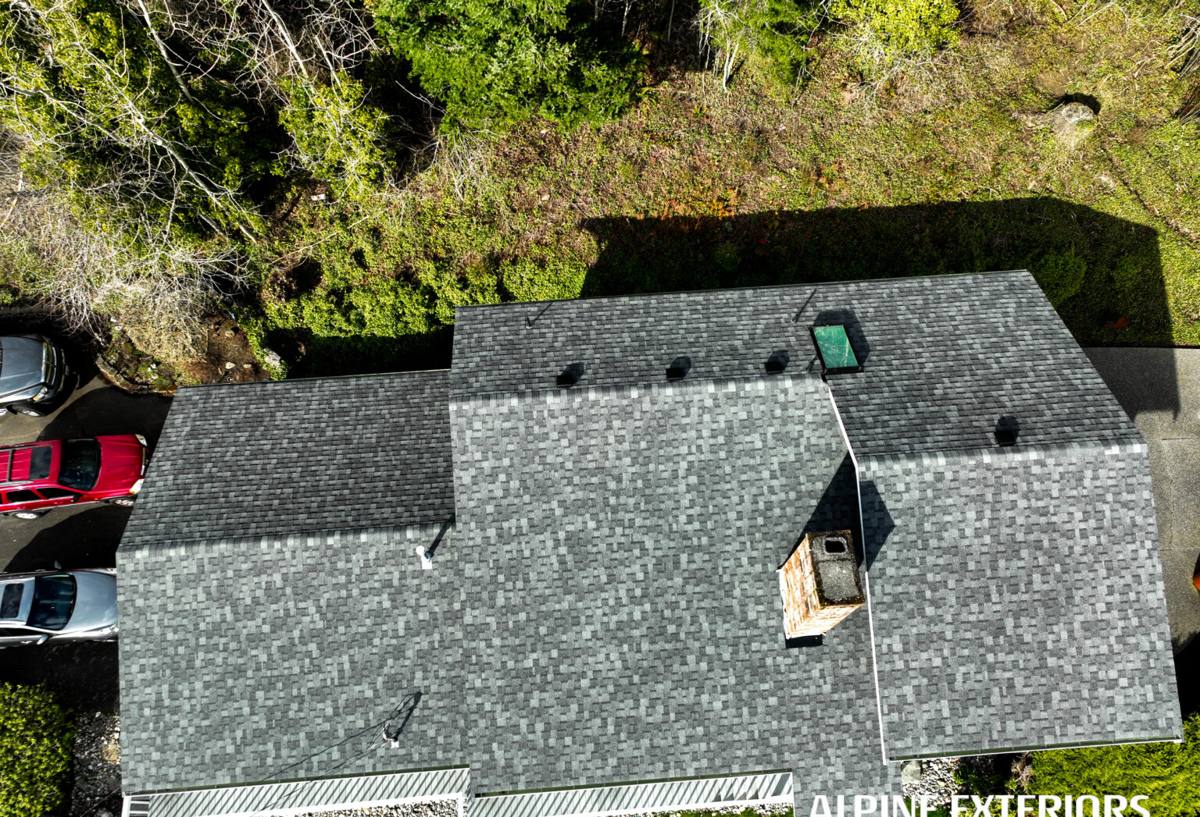
What a Correctly Built Shingle Roof Needs Here
Given all of that, a roof built for this specific stretch of coastline needs a few things a lot of "standard" installations skip.
A Wind Rating That Matches the Exposure
Not all asphalt shingles carry the same wind rating. Homes with open exposure toward the water should be spec'd with shingles rated for higher sustained winds, installed with the manufacturer's full nailing pattern — not the minimum nail count that passes inspection but leaves tabs vulnerable the first time a real windstorm rolls through.
Underlayment and Ice-and-Water Shield Where It Counts
We use synthetic underlayment across the full roof deck for its tear strength and water resistance, and we add self-adhering ice-and-water shield membrane at eaves, valleys, and around every penetration — chimneys, skylights, vent stacks. Those are the spots where wind-driven rain and moss-related water backup do the most damage, and they're exactly the spots a cut-rate install skimps on.
Corrosion-Resistant Flashing and Fasteners
On coastal jobs we favor flashing and fastener materials chosen for how they hold up against salt air over time, not just what's cheapest at the supply house. It costs a little more up front and pays for itself by not needing flashing repairs five years in.
Attic Ventilation That Actually Balances
Trapped heat and moisture in the attic accelerate shingle aging from underneath, and in a climate this damp, poor ventilation also invites condensation and rot in the decking. A correct install checks intake at the soffits and exhaust at the ridge, not just one or the other, so the roof breathes the way it's supposed to.
Choosing the Right Shingle for This Climate
Most Birch Bay Village homeowners are choosing between a few tiers of asphalt shingle. Here's how they actually compare for a home in this environment, not just on a spec sheet.
| Shingle Type | Typical Lifespan | Moss/Algae Resistance | Wind Performance | Best Fit |
|---|---|---|---|---|
| 3-tab (economy) | 15-20 years | Standard, no built-in resistance | Lower wind rating | Budget-driven projects, less exposed lots |
| Architectural / laminate | 25-30 years | Standard unless AR-rated | Higher wind rating, thicker profile | Most Birch Bay Village homes |
| Algae-resistant (AR) architectural | 25-30 years | Copper-infused granules resist streaking and growth | Higher wind rating | Shaded lots, north-facing slopes, water-facing exposure |
| Premium/designer laminate | 30+ years | Usually AR-rated | Highest wind rating in the asphalt category | Homeowners prioritizing longevity and curb appeal |
For most Birch Bay Village homes, we steer people toward at least a mid-grade architectural shingle with algae resistance built in. The upcharge over a basic shingle is modest, and given how much of the year this area spends damp and shaded, it's one of the few upgrades that pays for itself in reduced moss treatment and a cleaner-looking roof for longer.
Our Asphalt Shingle Roofing Process
- On-site inspection. We get on the roof, not just in the attic, to check deck condition, existing flashing, ventilation, and moss/algae buildup before quoting anything.
- Written scope and shingle selection. You get a clear breakdown of what's being replaced, what shingle and underlayment we're specifying, and why — no vague line items.
- Tear-off and deck inspection. Old roofing comes off down to the deck so we can actually see and repair any soft, rotted, or water-damaged sheathing before new material goes down.
- Underlayment and membrane. Synthetic underlayment across the field, ice-and-water shield at eaves, valleys, and penetrations.
- Flashing replacement. New flashing at valleys, chimneys, skylights, and walls — matched to conditions here, not just whatever's on the shelf.
- Shingle installation. Installed to the manufacturer's full nailing specification and wind-rating requirements, not a shortcut pattern.
- Ventilation check. Intake and exhaust balanced so the attic performs the way the roofing warranty assumes it will.
- Cleanup and walkthrough. Magnetic sweep for nails, full site cleanup, and a walkthrough so you know exactly what was done.
Full Tear-Off vs. Overlay: What We Actually Recommend
An overlay — installing new shingles directly over an existing layer — is sometimes offered as a cheaper shortcut. In most cases here, we don't recommend it. Overlays hide deck problems instead of fixing them, and in a climate where moisture works its way into small gaps over time, that's a bad trade. They also make it impossible to add the ice-and-water shield and flashing upgrades that matter most in a driving-rain, high-moss environment. A full tear-off costs more upfront but is the only way to actually know what condition your deck is in and to build the roof correctly from the ground up.
Signs Your Birch Bay Village Roof Needs Attention
- Moss or dark algae streaking on north-facing or shaded slopes, especially where it's thickened over more than one season
- Shingle tabs that look lifted, curled, or cupped, particularly on wind-exposed sides of the roof
- Granules collecting in gutters or at downspout outlets
- Rust staining running down from nail heads, flashing, or vent boots
- Soft spots, sagging, or visible daylight in the attic around the roof deck
- Water stains on interior ceilings after a heavy wind-driven storm, even if the roof "looks fine" from the ground
- A roof that's 18-20+ years old and has never had a full tear-off inspection
Any one of these on its own isn't necessarily an emergency, but a home showing two or three of them at once is worth a professional look before the next storm season.
Why a Crew That Already Works This Area Matters
A roofing crew that's worked Birch Bay Village and the surrounding Whatcom County coastline knows things a roofer coming in from a drier, inland market has to learn the hard way. That includes which slopes tend to hold moss longest based on tree cover and sun exposure, which flashing materials actually hold up against the salt air rather than just looking fine on installation day, and how to time a tear-off around this area's rain patterns so a home isn't left exposed overnight. It also means familiarity with local permitting and any neighborhood-specific requirements that can affect scheduling or material choices — details that are easy to miss for a contractor who doesn't work here regularly.
Maintenance After the New Roof Goes On
A correctly installed shingle roof still benefits from a little seasonal attention in this climate.
Keep Gutters and Valleys Clear
Fir and cedar needles collect fast in this region, and clogged gutters or valleys are one of the most common causes of water backing up under shingles that would otherwise be performing fine.
Address Moss Early, Gently
Soft-washing or zinc/copper strip treatments are far less damaging to shingles than pressure washing or aggressive scraping, which can strip granules and shorten the roof's life faster than the moss itself would.
Schedule a Periodic Check
A quick inspection every couple of years — especially after a notably windy winter — catches lifted flashing or a cracked pipe boot while it's a small fix, not a ceiling stain.
If your Birch Bay Village home is due for a new roof, showing signs of moss or wind damage, or you just want an honest read on what condition it's in, we're happy to take a look. Fill out the form below for a free, no-pressure estimate.