 Birch Bay Siding
 Why Bellingham Windows Wear Out Differently
Bellingham sits close enough to the water that homes here take a specific kind of beating: salt-laden air off the Sound, long stretches of driving rain that comes in sideways during fall and winter storms, and a moss season that can run eight or nine months out of the year on north- and west-facing walls. None of that is dramatic on any given day. It's the accumulation that wears windows down — corroding hardware, breaking down seals, and finding the small gaps in old flashing that a drier climate would never expose.
A window that would last decades in a dry inland town can fail early here if it wasn't installed with this climate in mind. That's true whether the window itself is a builder-grade vinyl unit from the 1990s or a higher-end wood window that wasn't maintained. The window replacement work we do in Bellingham is built around that reality, not a generic checklist.
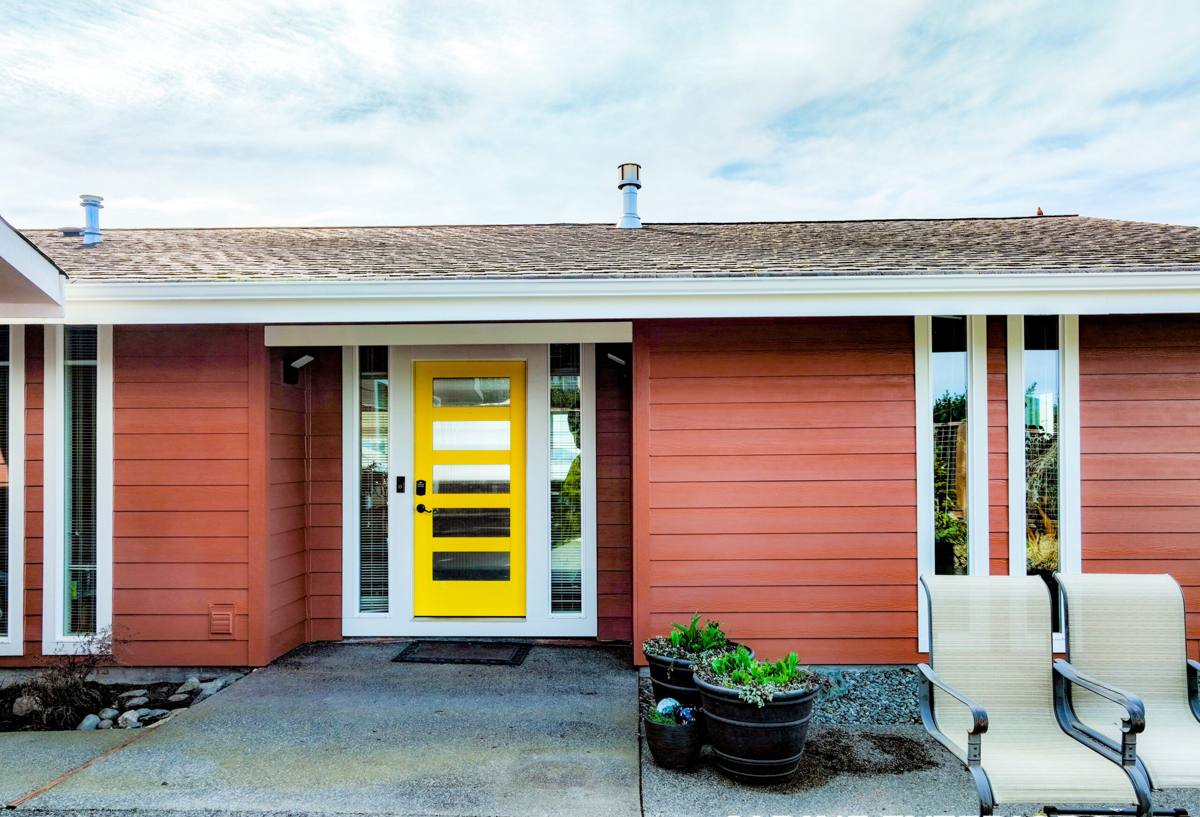
Signs a Bellingham Home Is Ready for New Windows
Most homeowners don't wake up one day and decide to replace windows — they notice a pattern of small annoyances that eventually adds up. Here's what we hear most often on service calls in this area:
- Condensation or fogging between the panes, which means the seal has failed and the insulating gas has escaped
- Visible moss, algae, or dark staining building up on the sill or frame even after cleaning
- Wood frames that feel soft, spongy, or show paint bubbling near the bottom corners
- Noticeable draft or cold spots near the window even when it's fully latched
- Windows that are difficult to open, close, or lock — often from swelling, warping, or corroded hardware
- Rising heating bills without an obvious explanation elsewhere in the house
- Visible daylight or gaps around the frame from outside
Any one of these on its own might just need a repair. Several of them together, especially on a home more than 20 years old, usually mean the windows have reached the end of their useful life.
What a Correct Window Replacement Job Actually Involves
Window replacement gets sold as a simple swap — old window out, new window in — but the part that actually determines whether it holds up in this climate is almost entirely in the details around the window, not the window itself.
Full-Frame vs. Insert Replacement
There are two basic approaches. An insert (or "pocket") replacement keeps the existing frame in place and fits a new window inside it — faster and less expensive, but only appropriate when the existing frame is still sound and properly flashed. A full-frame replacement removes the window down to the rough opening, which lets us inspect and correct the sheathing, flashing, and framing underneath. Given how much rain this area sees, we lean toward recommending full-frame replacement whenever there's any sign of past water intrusion, because an insert replacement installed over a compromised frame just seals the problem back in.
Flashing and Water Management
This is the step that gets skipped by crews in a hurry, and it's the one that matters most here. Proper flashing directs water that gets behind the siding down and out, away from the framing, rather than letting it pool at the sill. That means correctly lapped house wrap, sill pan flashing under the opening, and head flashing above it — installed in the right order, not just caulked over afterward. Caulk is a backup line of defense, not the primary one. A window that relies on sealant alone to stay dry will eventually leak in a place like Bellingham.
Air Sealing and Insulation
Once the window is set and shimmed level, the gap between the frame and the rough opening needs to be filled with a low-expansion foam or backer rod and sealant designed for that purpose — not stuffed with fiberglass insulation, which does nothing to stop air movement and can hold moisture against the frame.
Choosing Windows and Glass for a Coastal, Wet Climate
Material choice matters here more than in drier parts of the state. Salt air accelerates corrosion on hardware and fasteners, and constant moisture punishes any material that isn't dimensionally stable or properly finished.
| Frame Material | How It Handles This Climate | Trade-Offs |
|---|---|---|
| Vinyl | Won't rot or corrode; handles moisture well | Can expand/contract with temperature swings; color/style options more limited |
| Fiberglass | Very stable dimensionally; strong moisture and UV resistance | Higher upfront cost than vinyl |
| Wood (clad exterior) | Warm appearance, exterior clad protects from weather | Requires an intact clad layer; any breach exposes wood to rot |
| Aluminum | Strong and low-maintenance structurally | Poor insulator unless thermally broken; can corrode near salt air over time |
For most Bellingham homes we lean toward vinyl or fiberglass for the frame, both of which shrug off the moisture cycle better than bare wood or untreated aluminum. On glass, we generally recommend at least dual-pane with a low-E coating; on homes with more direct exposure to wind and driving rain, a triple-pane or upgraded gas-fill option is worth the added cost for the extra comfort and lower condensation risk. We'll walk through the honest trade-offs for your specific house rather than pushing whatever carries the biggest markup.
Our Window Replacement Process
1. On-Site Assessment
We look at more than the window itself — the condition of the siding around it, any staining or soft spots, and how the opening is currently flashed. This tells us whether an insert replacement is appropriate or whether full-frame work is the honest recommendation.
2. Straightforward Estimate
You get a written estimate that spells out window type, glass package, and whether the job is insert or full-frame — no vague line items.
3. Careful Removal
Old windows come out without unnecessary damage to surrounding siding or trim, and we check the opening for rot or water damage before anything new goes in.
4. Correct Installation
New window is set, leveled, shimmed, flashed, and air-sealed following manufacturer specifications — this is where the work described above actually happens.
5. Finish and Cleanup
Trim and siding are restored to match, hardware is tested, and the site is cleaned up before we consider the job done.
Why a Crew That Already Works in Bellingham Matters
We're based right up the coast in Birch Bay, and Bellingham and the surrounding Whatcom County area are part of our regular service territory — not a one-off trip. That matters for a few practical reasons. We already know which older neighborhoods tend to have original single-pane wood windows that need full-frame replacement, and which newer builds are more likely to just need insert replacements for failed seals. We're familiar with local permitting requirements and building department expectations, which keeps a project from stalling on paperwork. And because we're local, warranty callbacks and follow-up service aren't a logistics problem — we're not a crew that disappears out of the area once the invoice is paid.
What Affects Window Replacement Cost
Every home is different, but the main cost drivers are consistent. This isn't a price list — it's meant to help you understand what you're actually paying for when you compare estimates.
| Factor | Why It Moves the Price |
|---|---|
| Insert vs. full-frame | Full-frame requires more labor and often siding/trim repair around the opening |
| Frame material | Vinyl is generally the most affordable; fiberglass and clad wood cost more |
| Glass package | Triple-pane and upgraded low-E coatings add cost but improve comfort and condensation resistance |
| Window size and configuration | Larger units, custom shapes, and multi-pane assemblies cost more than standard single or double-hung windows |
| Existing damage | Rot or water damage found in the opening adds repair time before the new window can go in |
| Number of windows | Whole-house replacements typically bring a better per-window cost than one or two at a time |
As a rough starting point, individual window replacements commonly run from the low hundreds to a couple thousand dollars per opening depending on these factors, with whole-house projects scaling accordingly. We'll give you real numbers for your home during the estimate rather than a number pulled from a national average.
Keeping New Windows Performing in This Climate
New windows still need a little attention here to get their full lifespan out of them:
- Rinse frames and tracks periodically to keep salt residue and grit from building up in the hardware
- Check and clear weep holes on the exterior sill so water can drain instead of pooling
- Keep gutters and nearby vegetation clear so runoff and shade don't create a damp microclimate against the wall
- Re-caulk the interior and exterior trim if you notice cracking, as sealant is a maintenance item even on a correctly installed window
- Address any moss or algae on nearby siding promptly so it doesn't spread onto window trim
None of this is heavy maintenance, but skipping it is how a well-installed window still ends up with problems ten or fifteen years down the road.
If your windows in Bellingham are drafty, fogged, hard to operate, or just original to a house that's due for an update, we're happy to take a look and give you a straightforward, no-pressure estimate. Use the form below to get started.