 Birch Bay Siding
 Siding Installation in Bellingham: Built for a Marine Climate
Bellingham sits close enough to the water, and far enough into the Pacific Northwest's wet season, that siding here has to do more work than siding almost anywhere else in the state. Salt-laden air off the bay, long stretches of driving rain, and a moss and algae season that can run most of the year all combine to punish exterior materials that aren't built for it. When we install siding on a Bellingham home, we're not just matching a color or covering old boards — we're building a moisture-management system that has to hold up to conditions that break down cheaper products years ahead of schedule.
This page is specifically about siding installation for homes in and around Bellingham. If you're comparing materials or trying to decide whether replacement makes sense at all, our general siding pages cover that ground in more depth. Here, we're focused on what a correct installation looks like for this exact area, and why the details matter more here than they would somewhere drier and inland.
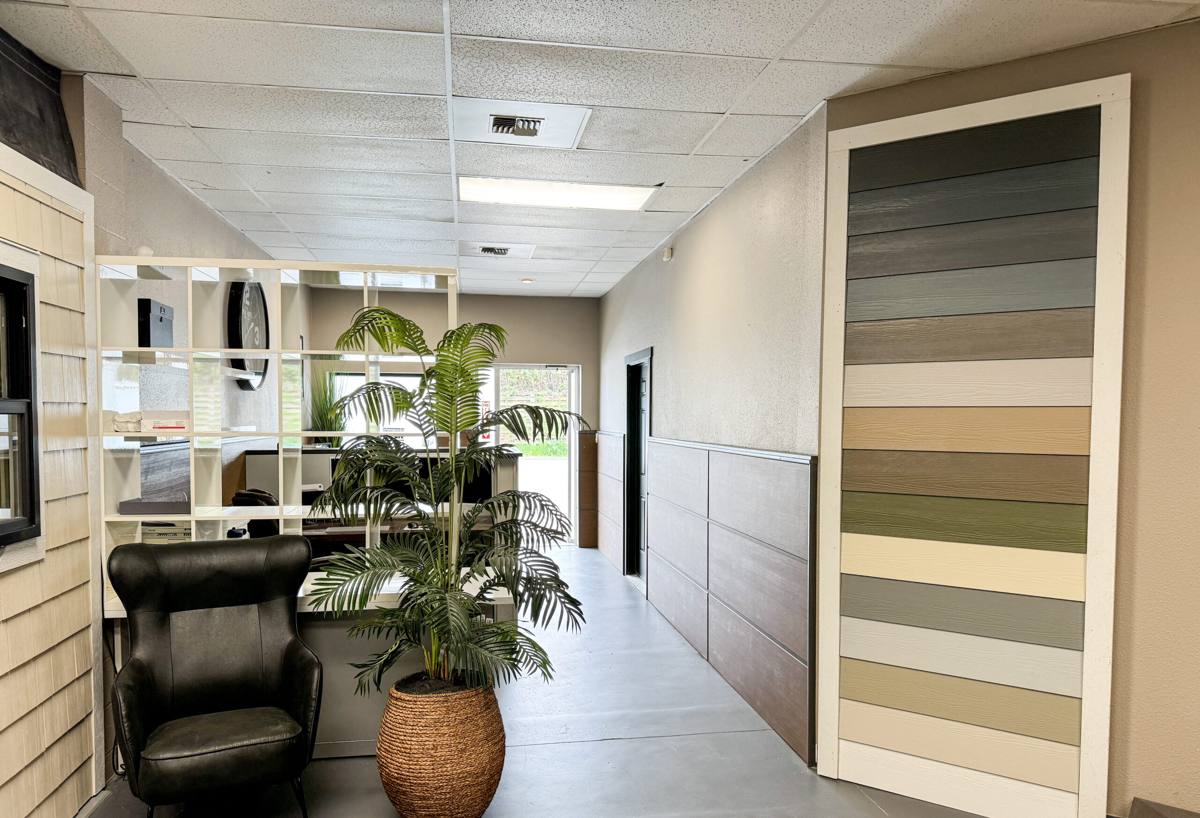
What Bellingham Homes Actually Need From New Siding
Moisture Management First
Whatcom County doesn't get occasional rain — it gets sustained, wind-driven rain that pushes water sideways into wall assemblies, not just straight down. Siding that relies on paint film or caulk alone to keep water out will eventually fail here. What actually protects a house is the system behind the siding: a properly lapped weather-resistive barrier, correctly flashed openings, and a rain-screen gap that lets any water that does get past the surface drain and dry out instead of sitting against the sheathing.
Salt Air and Corrosion
Homes closer to the water deal with airborne salt that accelerates corrosion on fasteners, flashing, and trim. Untreated or mismatched metal will rust and stain the siding face within a few seasons. Every fastener and flashing detail on a coastal Whatcom County install needs to be chosen with that exposure in mind, not just whatever is fastest to install.
Moss, Algae, and Constant Shade
Bellingham's tree cover and long damp season mean north-facing walls and shaded siding can stay wet for days at a time. That's ideal growing conditions for moss and algae, which hold moisture against the surface and accelerate rot in anything that isn't inherently resistant to it. Siding material and finish both matter here — a factory finish that resists moss growth and cleans up without stripping paint is worth far more in Bellingham than in a drier climate.
Why We Install Only James Hardie Fiber Cement
We made a deliberate decision as a company to install James Hardie fiber cement siding exclusively — not vinyl, not LP SmartSide, not Cemplank or Allura, not primed spruce or cedar. That's not a marketing position, it's a standard we set because of what we've seen hold up in this climate and what hasn't.
Fiber cement is non-combustible, dimensionally stable in wet-dry cycling, and doesn't absorb and swell the way engineered wood products can when a caulk joint or flashing detail eventually fails, as all of them eventually do somewhere on a house. James Hardie's ColorPlus factory finish is baked on under controlled conditions rather than field-applied, which matters directly for moss and mildew resistance and for how the color holds up under UV and salt exposure over time. Hardie also builds specific product lines engineered for different climate zones, which lets us match the product to what Whatcom County actually throws at a house rather than installing a one-size-fits-all board everywhere in the country.
We're upfront that other products have real advantages — lower material cost, lighter weight, faster installation in some cases. We just don't think those advantages hold up against the maintenance burden and moisture risk we've seen in this specific climate, and we'd rather turn down a job than install something we don't believe will perform here.
What a Correct Installation Involves
Preparation and the Water-Resistive Barrier
Before any siding goes up, the wall needs a continuous, properly lapped weather-resistive barrier with every seam and penetration sealed in the right order — house wrap first, then flashing integrated shingle-style so water always drains outward and downward, never into a seam. Skipping or rushing this step is the single most common cause of hidden rot behind siding that still looks fine from the street.
Rain Screen and Ventilation
Given how much sustained rain Bellingham gets, we install with a drainage gap behind the siding rather than fastening it flat against the wrap. That gap lets bulk water drain and lets the wall assembly dry out between storms instead of staying damp for weeks, which directly addresses the moss and rot risk that comes with the local climate.
Flashing, Fastening, and Clearances
Every window, door, deck ledger, and roof-to-wall intersection needs flashing detailed to shed water past the siding, not into it. Fasteners need to be corrosion-resistant and set to Hardie's specifications for depth and spacing — over-driven or under-driven nails are a leading cause of premature siding failure. Siding also needs proper clearance from grade, roofing, and decks so it isn't sitting in standing water or trapped moisture, which is an easy detail to get wrong and an expensive one to fix later.
Finish Work
Joints, trim, and any field-cut edges get sealed and touched up to manufacturer spec so the factory finish's warranty stays intact and the moss- and UV-resistant coating isn't compromised at the seams.
Our Process, Start to Finish
Inspection and Estimate
We walk the exterior, check for existing moisture damage or rot behind current siding, and look at drainage, grade, and roof details that affect how the new siding needs to be installed. You get a written estimate based on what we actually find, not a generic per-square-foot guess.
Tear-Off and Sheathing Check
Old siding comes off and the sheathing underneath gets inspected. Any rot or soft spots get addressed before anything new goes up — covering damaged sheathing with new siding just hides a problem that will keep spreading.
Weather Barrier and Flashing
This is where most of the long-term performance of the job gets decided. We take the time to get the water-resistive barrier and flashing details right before a single piece of siding goes on.
Installation
Hardie panels or lap siding go up to manufacturer fastening and clearance specs, with attention to the details that matter most in this climate: proper gaps, correct nailing, and sealed joints.
Final Detailing and Walkthrough
We caulk and touch up as needed, clean up the site, and walk the finished job with you so you know what was done and what maintenance, if any, to expect going forward.
Cost Factors for Bellingham Siding Installation
Every home is different, but the factors below are what actually move the price on a Bellingham siding installation up or down. We'll walk through all of these specifically for your home during a free estimate.
| Factor | Why It Matters Here |
|---|---|
| Home size and wall complexity | More corners, gables, and dormers mean more cutting, flashing, and labor time |
| Condition of existing sheathing | Rot from years of moisture exposure may need repair before new siding goes on |
| Siding profile and trim choice | Lap, panel, and shingle-style Hardie products carry different material and labor costs |
| Water and drainage detailing | Homes with more wind-driven rain exposure or shaded, damp walls need more careful flashing and rain-screen work |
| Access and site conditions | Tree cover, slope, and tight lot lines common in Whatcom County neighborhoods can add setup time |
| Removal and disposal of old siding | Vinyl, cedar, or older fiber cement all have different tear-off and disposal requirements |
Signs a Bellingham Home Needs New Siding
Because of the moss, moisture, and salt exposure typical here, siding problems in Bellingham often show up earlier and more visibly than they would in a drier climate. Watch for:
- Persistent moss or algae growth that returns quickly after cleaning
- Soft or spongy spots when you press on the siding, especially near the bottom courses or under windows
- Paint that's peeling, bubbling, or chalking well ahead of its expected repaint interval
- Visible gaps, warping, or buckling in boards or panels
- Staining that runs from fasteners or trim, suggesting corrosion behind the surface
- Rising utility bills or noticeably drafty walls, which can point to a failing moisture barrier
Why a Crew That Already Works in Bellingham Matters
Siding installed to a generic national standard, without accounting for how much wind-driven rain and shade this area gets, tends to look fine for a year or two and then start failing at the details — flashing, fastening, drainage — that don't get noticed until there's water damage behind the wall. A crew that regularly works Whatcom County homes already knows which walls take the worst weather, how much rain-screen ventilation actually matters here, and how to detail flashing so it holds up through a Bellingham winter, not just a mild one somewhere inland. That local track record is worth asking about directly when you're vetting any contractor for a job this consequential.
If you're considering new siding for a Bellingham home, we're happy to walk the exterior with you, point out anything we find, and put together a clear, no-pressure estimate. There's no obligation — just a straight assessment of what your home needs and what it would take to do the job right. Use the form below to get started.