 Birch Bay Siding
 Why Bellingham and Birch Bay Roofs Wear Differently
A roof in Bellingham or Birch Bay doesn't fail the way a roof does in a drier inland climate. Out here, the enemy isn't one big storm — it's the slow, steady combination of salt-laden marine air, months of driving rain off the Strait of Georgia and Bellingham Bay, and a moss season that can run nine or ten months out of the year. Whatcom County sits right where all three of those factors overlap, and it shows up in the roofs we get called out to inspect.
Salt air accelerates corrosion on exposed metal — fasteners, flashing, vent caps, and any hardware that isn't rated for coastal exposure. Driving rain, especially when it comes in sideways off the water, finds every gap in flashing and underlayment that a calmer climate would never expose. And moss doesn't just look bad; it holds moisture against the roofing material, lifts shingles at the edges, and works its way under flashing over time. None of this is exotic knowledge — it's just what happens to a roof that sits within a few miles of saltwater in the Pacific Northwest, year after year.
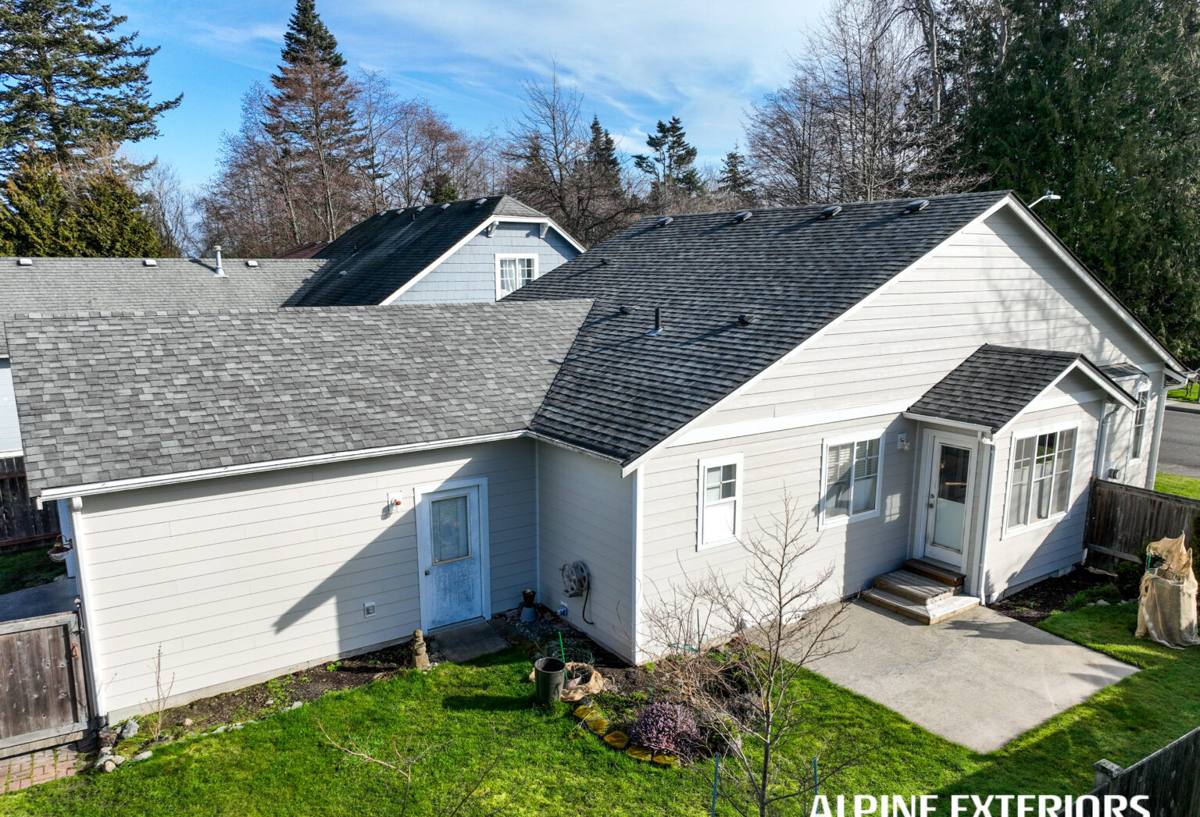
What a Correct New Roof Installation Looks Like Here
A roof designed for inland Washington or a drier climate isn't automatically wrong for Bellingham — but it's usually incomplete. The materials and installation details that matter most in this specific area include:
Underlayment That Actually Handles Wind-Driven Rain
Standard felt underlayment can work in mild conditions, but along the Whatcom County coastline we lean toward synthetic or self-adhered underlayment in vulnerable areas — valleys, eaves, and anywhere wind-driven rain is likely to push water uphill under the shingle line. This isn't an upsell; it's a response to how weather actually behaves here.
Corrosion-Resistant Fasteners and Flashing
Standard galvanized fasteners can start showing rust streaks within a few years this close to saltwater. We spec fasteners and flashing rated for coastal or marine exposure — stainless steel or heavier-gauge coated options — because replacing a roof's fasteners isn't something you want to do twice in one roof's lifespan.
Ventilation Sized for Moisture, Not Just Heat
Most roof ventilation guidance focuses on heat buildup in the attic. In our climate, moisture control matters just as much. A roof deck that can't breathe traps condensation, which softens sheathing and shortens the life of the roofing material from underneath — often before any problem is visible from the outside.
Moss-Resistant Materials and Details
No shingle is moss-proof, but material choice and installation details make a real difference in how fast moss takes hold and how much damage it does before it's caught. Zinc or copper strips near the ridge, proper granule-to-algae-resistant shingle selection, and tight, correctly lapped flashing all slow moss down and make it easier to manage between cleanings.
Our Installation Process, Step by Step
Every roof we install in Bellingham and Birch Bay follows the same disciplined sequence. Skipping or rushing any of these steps is where most premature roof failures start.
- On-site inspection and tear-off plan. We assess the existing roof, deck condition, and any moss or moisture damage before quoting, so there are no surprises once tear-off starts.
- Full tear-off to the deck. We don't install over existing layers. Every tear-off gives us a direct look at the sheathing, which is the only way to catch soft spots or rot hiding under old shingles.
- Deck repair. Any damaged or delaminated sheathing gets replaced before anything new goes down. Installing a new roof over a compromised deck just moves the problem forward a few years.
- Ice-and-water or synthetic underlayment. Applied with extra attention to valleys, eaves, and low-slope transitions where wind-driven rain concentrates.
- Flashing detail work. Chimneys, skylights, sidewalls, and valleys get new, correctly lapped flashing — this is the single most common source of leaks on roofs that "should" still be fine by age alone.
- Shingle or roofing material installation per manufacturer spec, with corrosion-resistant fasteners driven to the correct depth and pattern.
- Ventilation check and adjustment to make sure intake and exhaust are balanced for the finished roof system.
- Final walkthrough covering what was done, what to expect in year one, and any moss-prevention maintenance we'd recommend for the specific site conditions.
What We Look For Before We Quote
- Signs of moss or algae staining, and how far it's progressed at the edges vs. the field of the roof
- Rust streaking at fasteners, vents, or flashing — an early sign of coastal corrosion
- Soft spots or spring in the deck when walked, which usually means moisture has already reached the sheathing
- Condition of existing flashing at every penetration — chimneys, skylights, plumbing vents
- Attic ventilation and any signs of trapped moisture or condensation staining on the underside of the deck
- Gutter and drainage condition, since a roof is only as good as where the water goes once it leaves it
Material Options: What Fits This Climate
There isn't one "correct" roofing material for every home, but some hold up better than others against salt air, sustained rain, and moss pressure. Here's how the common options compare for a Bellingham or Birch Bay installation:
| Material | Moss/Moisture Resistance | Coastal Corrosion Exposure | Typical Lifespan Here |
|---|---|---|---|
| Architectural asphalt shingle (algae-resistant) | Good, with proper zinc/copper strips | Low — mainly fastener/flashing dependent | 20-30 years |
| Standard 3-tab asphalt shingle | Fair — more prone to moss lift at edges | Low | 15-20 years |
| Metal roofing (coated steel) | Excellent — sheds moisture, resists moss | Moderate — coating quality matters near saltwater | 40-plus years |
| Wood shake | Poor without diligent maintenance | Low (non-metal), but high maintenance burden | 15-25 years, moisture-dependent |
We're upfront about trade-offs rather than pushing one material as universally "best." Metal roofing performs exceptionally well against moss and standing moisture but carries a higher upfront cost and requires attention to fastener and coating quality this close to the water. Asphalt shingle systems, especially algae-resistant architectural lines, remain the most common and cost-effective choice for most homes in the area when installed with the coastal-specific details above.
Cost Factors for a Bellingham-Area Reroof
Every roof is priced on its own specifics, but the variables that move the number most in this region are consistent:
| Factor | Why It Matters Locally |
|---|---|
| Deck condition found at tear-off | Moisture-related sheathing damage is more common here than in drier climates |
| Roof pitch and complexity | More valleys and penetrations mean more flashing detail work, which is where leaks originate |
| Material selection | Metal and premium algae-resistant shingle lines cost more upfront but reduce moss-related maintenance |
| Fastener and flashing spec | Coastal-rated hardware costs more than standard galvanized but avoids early corrosion |
| Access and staging | Steep sites or limited driveway access near the water can add setup time |
We'd rather walk a homeowner through these factors honestly during the estimate than quote a number that doesn't reflect what the roof actually needs.
Why It Matters to Hire a Crew That Already Works Bellingham and Birch Bay
Roofing crews that work primarily inland or in drier parts of the state don't always account for the specific combination of salt exposure, wind-driven rain, and extended moss season that defines this stretch of Whatcom County. A crew that already works Bellingham and Birch Bay knows which fastener grades hold up, which flashing details actually stop wind-driven rain, and how aggressively to plan for moss based on tree cover and roof orientation — because they've seen the failures that happen when those details get skipped.
Local knowledge also means realistic timelines. We plan installations around this region's rain patterns rather than assuming dry-weather scheduling that doesn't hold up here, and we don't rush tear-off and dry-in on days when an exposed deck would be at real risk.
Maintenance That Extends the Life of a New Roof
- Schedule moss treatment or gentle cleaning on a regular cycle rather than waiting until growth is visible from the ground
- Keep overhanging branches trimmed back to reduce shade and debris buildup, both of which feed moss growth
- Clear gutters and downspouts before the fall rains start in earnest so water has somewhere to go
- Have flashing and fastener condition checked every few years, especially after the roof passes the ten-year mark
- Address any interior staining or attic moisture signs immediately rather than waiting for a visible roof leak
Get a Straight Answer About Your Roof
If your roof is showing moss, rust streaking, or you're just past the point where patch repairs make sense, we're happy to take a look and give you an honest assessment — not a sales pitch. Fill out the form below for a free, no-pressure estimate on a new roof installation built for what Bellingham and Birch Bay weather actually does to a house.