 Birch Bay Siding
 Building Decks That Actually Hold Up in Bellingham
Bellingham sits close enough to the water that homes deal with a specific combination of punishment most inland decks never see: salt-tinged air drifting off the Sound, long stretches of driving rain from fall through spring, and a moss season that seems to start earlier every year. A deck built with generic, one-size-fits-all methods might look fine the first summer. By year three, you're often looking at soft spots, green film on every horizontal surface, and hardware that's started to weep rust stains into the boards around it.
We build custom decks for homeowners in Bellingham and throughout Whatcom County with that reality in mind from the first sketch. That means picking materials that tolerate near-constant moisture, framing details that let water leave instead of pool, and fasteners rated for the coastal-adjacent air we actually have here — not the air in a manufacturer's warm-climate brochure.
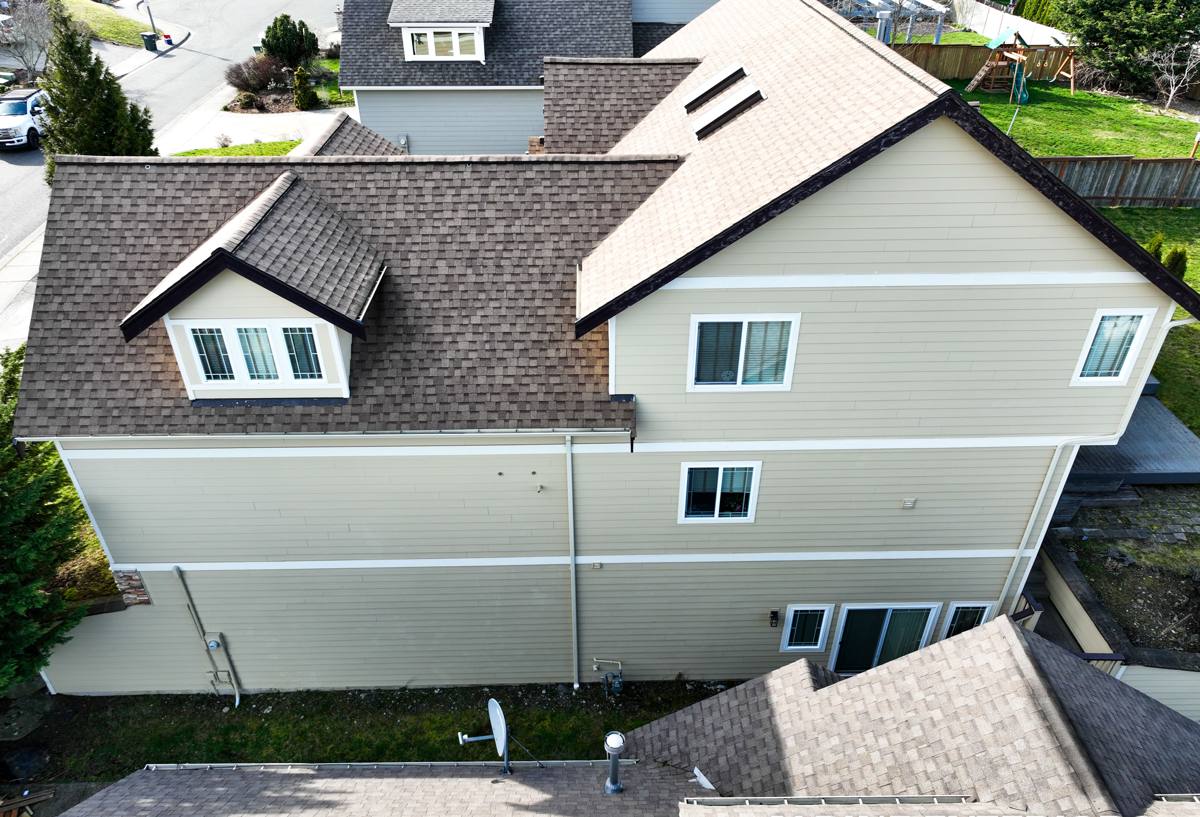
What Bellingham's Climate Actually Does to a Deck
Salt Air and Metal Fatigue
You don't have to live on the immediate waterfront to feel the effects of salt air. Moisture carried inland corrodes exposed fasteners, joist hangers, and railing hardware faster than most homeowners expect. Once a fastener starts rusting, it weakens, stains the wood or composite around it, and becomes a maintenance headache that's hard to fix without pulling boards.
Driving Rain and Standing Water
Whatcom County doesn't just get rain — it gets rain that comes in sideways during a good windstorm, working its way under railings, into end grain, and behind ledger boards if the flashing isn't right. A deck that isn't detailed to shed water at every joint will hold moisture exactly where it does the most damage: at fastener points and structural connections.
Moss, Algae, and Surface Buildup
Shaded decks under mature trees, or any deck that doesn't get much direct sun through the winter, will grow moss and algae if the surface material and drainage don't account for it. Beyond looking neglected, a mossy deck surface gets slick and dangerous, and constant moisture retention at the board surface accelerates rot in wood products.
What a Correctly Built Deck Looks Like Here
A deck that's going to hold up in this climate isn't about buying the most expensive materials available — it's about getting the details right. Here's what we consider non-negotiable on a Bellingham build:
- Proper ledger board flashing where the deck attaches to the house, so water is directed away from the band joist rather than trapped against it
- Stainless steel or coated, corrosion-rated fasteners and hardware throughout — not standard galvanized hardware that wasn't specified for coastal-adjacent exposure
- Joist tape or a comparable moisture barrier on top of framing members to keep standing water off exposed wood
- Adequate slope built into the decking surface (generally a small pitch away from the house) so water actually runs off instead of pooling
- Gapping between boards sized correctly for the specific decking material, since composite, cedar, and PT lumber all move differently with moisture
- Ventilation underneath the deck structure so the framing can dry out between rain events instead of staying damp for weeks
Choosing the Right Decking Material for This Area
There's no single "best" decking material — there's a best material for your specific deck, budget, sun exposure, and how much upkeep you're willing to do. We walk homeowners through the real trade-offs rather than pushing whatever has the best margin.
| Material | How It Handles Our Climate | Maintenance | Typical Lifespan |
|---|---|---|---|
| Pressure-treated lumber | Good if properly sealed and maintained; needs consistent upkeep to resist moisture and moss | Annual cleaning and re-sealing recommended | 15-20 years with maintenance |
| Cedar | Naturally rot- and insect-resistant, ages well with regular care; can gray or stain without maintenance | Periodic cleaning, sealing, or staining | 15-25 years with maintenance |
| Composite decking | Excellent moisture and moss resistance; won't rot, splinter, or need sealing | Occasional washing to prevent surface algae film | 25-30+ years, manufacturer-dependent |
| PVC decking | Fully synthetic, highly resistant to moisture, salt air, and staining | Low; occasional washing | 25-30+ years, manufacturer-dependent |
Composite and PVC products tend to make the most sense for homeowners who want to spend their weekends doing something other than deck maintenance, especially on decks with less sun exposure where moss is more persistent. Cedar and quality pressure-treated lumber remain solid choices for homeowners who like the natural look and don't mind staying on top of sealing every couple of years — the trade-off is honest maintenance time, not a flaw in the material itself.
Structural Considerations Specific to Bellingham Lots
A lot of Whatcom County properties have sloped grades, mature tree cover, or proximity to drainage that affects how a deck should be framed and footed. We evaluate footing depth and placement based on local frost line requirements and soil drainage on your specific lot, not a generic template. On sloped or wooded lots, we also look at how much direct sun the deck surface will realistically get through the year, since that directly affects moss growth and which material will perform best.
Where a deck sits low to the ground or over a marginally sloped yard, we pay close attention to under-deck drainage and airflow. A deck that traps moisture underneath is one of the more common causes of premature structural failure we see when we're asked to inspect or repair an older deck in this area.
Permitting
Most custom deck projects in and around Bellingham require a building permit, particularly for decks attached to the home, elevated structures, or anything involving structural modifications. We handle the permitting process as part of the project so you're not left navigating city or county requirements on your own.
Our Process, Start to Finish
- On-site consultation: We walk your property, discuss how you actually plan to use the space, and evaluate sun exposure, drainage, and structural factors specific to your lot.
- Design and material selection: We put together a design that fits your home and budget, and walk you through material options with honest pros and cons for your situation.
- Permitting: We prepare and submit the necessary permit documentation and coordinate any required inspections.
- Construction: Our crew builds to the structural and moisture-management details outlined above — not just to minimum code, but to what actually holds up here.
- Final walkthrough: We go over the finished deck with you, cover any maintenance recommendations specific to your chosen material, and make sure every detail meets our standard before we call the job done.
Repair and Rebuild Work, Not Just New Builds
Plenty of the calls we get in Bellingham aren't for brand-new decks — they're for decks that were built without this climate in mind and are now showing it: soft or spongy boards, rusted-out hardware, railings that have started to lean, or a persistent moss problem that pressure washing alone won't solve. We assess whether a deck needs targeted repair, a partial rebuild of the surface and railings while keeping sound framing, or a full replacement. We'll always tell you honestly which category your deck falls into rather than upselling a full rebuild when a repair will genuinely hold up.
Simple Maintenance That Extends the Life of Any Deck
Whatever material you choose, a few consistent habits make a real difference in how long your deck lasts in this climate:
- Sweep leaves and debris off the surface regularly, especially in fall — trapped organic matter holds moisture and feeds moss growth
- Rinse or wash the deck surface a couple of times a year to remove algae film before it becomes established
- Check railings and stair connections annually for movement, which can signal hardware corrosion underneath
- Keep gutters and downspouts near the deck clear so runoff isn't dumping extra water onto or under the structure
- Re-seal wood decking on the manufacturer's recommended schedule rather than waiting until it visibly needs it
Why Local Experience Matters for This Project
A deck built from a generic national plan set, without adjustments for Whatcom County's rain volume, salt exposure, and moss pressure, is more likely to need early repairs. We work on homes throughout this area regularly, which means we've already seen how different materials and details perform here over years, not just on paper. That experience shapes every material recommendation and structural detail we build into your deck, rather than us learning what doesn't work at your expense.
If you're ready to talk through a custom deck project for your Bellingham home, we're happy to come take a look, walk the site with you, and put together a straightforward plan and estimate — no pressure, no obligation. Use the form below to get started.