 Birch Bay Siding
 Why Lummi Island Asks More of a Roof Than a Typical Mainland Job
An asphalt shingle roof on Lummi Island works harder than the same roof a few miles inland. The island sits out in the Salish Sea, so every home on it gets a steady dose of salt-laden air, wind that has nothing to slow it down before it hits the eaves, and a wet season that runs long even by Whatcom County standards. None of that means asphalt shingles are the wrong choice — they're still one of the most practical, cost-effective roofing systems available here — but it does mean the details of the job matter more than they would in a drier, more sheltered location.
Salt Air and Metal Components
Salt air speeds up corrosion on anything metal: nail heads, drip edge, step flashing, and vent stacks. On an exposed island lot, a roof built with basic galvanized fasteners and flashing will show rust and pitting years before the shingles themselves are due for replacement. That's a maintenance headache and, eventually, a leak point, since corroded flashing fails at the seams long before the field of the roof does.
Wind-Driven Rain Off the Water
Rain out here doesn't always fall straight down. Storms moving across open water regularly push rain sideways and upward under shingle laps, which is a different stress than most inland roofs deal with. A roof that's only built to shed rain vertically can still leak in a wind-driven storm if the underlayment and flashing details weren't built for that scenario in the first place.
Shade, Moss, and a Slow-Drying Deck
Many island lots keep heavy fir and cedar cover for privacy and as a windbreak, and that's a reasonable trade-off — but it also means roofs stay shaded and damp longer after every rain. Moss and algae take hold fastest on roofs that don't get a chance to dry out between storms, and once moss establishes itself under shingle tabs, it holds moisture against the shingle and slowly lifts the edges, which shortens the roof's life well before its rated lifespan runs out.
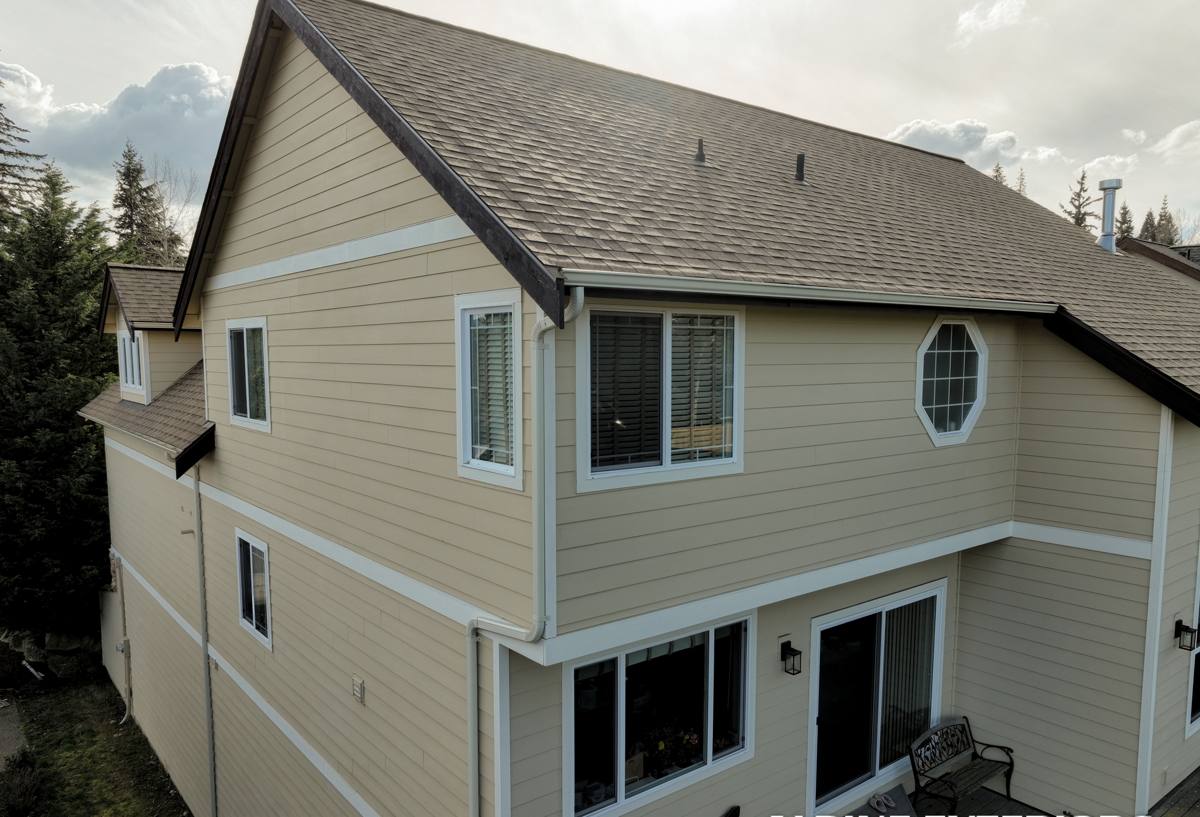
What a Correctly Built Asphalt Shingle Roof Includes Here
A roof built for Lummi Island's conditions isn't a different product than a standard asphalt shingle roof — it's the same system, installed with the exposure in mind at every layer, not just the shingles on top.
Shingle Selection for Shaded, Coastal Lots
For lots with heavy tree cover, we lean toward architectural shingles with algae-resistant granules built in. These use a small amount of copper or zinc in the granule coating that slows algae and moss growth over time, which matters a lot more here than it would on a sun-exposed, inland roof. For more open, wind-exposed sections of the island, wind rating and proper fastening pattern matter as much as the shingle line itself.
Underlayment and Flashing Details That Actually Matter
This is where a lot of the real protection lives, and it's mostly invisible once the job is done. We use synthetic underlayment across the full deck, with self-adhered ice-and-water membrane at eaves, valleys, and around every roof penetration — chimneys, skylights, vent stacks — since those are the spots where wind-driven rain finds its way in first. Flashing gets installed in corrosion-resistant material and properly stepped and counter-flashed against walls and chimneys, not just caulked and hoped for.
Ventilation That Keeps the Deck Dry From Underneath
A roof can be doing everything right on the outside and still stay damp underneath if the attic isn't ventilating properly. Balanced intake at the soffits and exhaust at the ridge lets warm, moist air escape instead of condensing on the underside of the deck. In a marine climate like this one, that balance does real work in keeping moss and rot from getting a foothold from the inside out.
Shingle Options for a Marine, Moss-Prone Climate
There's no single "correct" shingle for every roof — the right choice depends on how shaded the lot is, how exposed it is to wind, and what the homeowner wants to budget for over the life of the roof. Here's how the common options stack up for this specific climate.
| Shingle Type | Typical Lifespan | Moss/Algae Resistance | Wind Performance | Best Fit |
|---|---|---|---|---|
| Standard 3-Tab | 15-20 years | Low unless treated | Adequate on sheltered lots | Budget-focused projects on sheltered, sunnier lots |
| Architectural (Laminate) | 25-30 years | Moderate; better with algae-resistant granules | Good; higher wind ratings available | Most Lummi Island homes, especially exposed sites |
| Premium Algae-Resistant Architectural | 30+ years | High — built-in copper/zinc granules | Good to excellent | Heavily shaded, tree-covered lots prone to moss |
In practice, most homes on the island end up in the architectural or premium algae-resistant category once shade and exposure are factored in — the upfront cost difference is modest compared to the cost of a moss-related re-roof a decade early.
Our Process for a Lummi Island Roof Replacement
The steps themselves aren't unusual — what changes is the attention paid to the details that matter in this climate.
- Inspection of the existing roof, deck, and ventilation to confirm scope before any tear-off begins.
- Full tear-off to bare deck, with any soft or water-damaged sheathing identified and replaced rather than covered over.
- Ice-and-water membrane installed at eaves, valleys, and all penetrations, followed by synthetic underlayment across the field.
- New flashing installed in corrosion-resistant material at all walls, chimneys, and penetrations.
- Shingles installed to manufacturer spec for fastening pattern and exposure, matched to the wind and shade profile of the lot.
- Ridge vent and soffit intake checked and corrected so the attic can actually exchange air.
- Full site cleanup, including a magnetic sweep for nails, and a final walk-through covering warranty paperwork.
None of these steps are optional shortcuts we skip to save time. Skipping the ice-and-water shield at a valley or reusing old flashing are exactly the kind of shortcuts that hold up fine on an inland roof for a season or two and then fail here first, in the next wind-driven storm off the water.
Why an Island-Familiar Crew Makes a Real Difference
Getting materials and equipment to Lummi Island takes more planning than a mainland job. Deliveries, dump runs, and crew scheduling all need to work around the ferry, which means a crew that hasn't worked the island before can end up making extra trips, running short on material mid-job, or leaving a torn-off roof exposed overnight because a supply run didn't make the last crossing. In a climate where wind-driven rain can show up with little warning, that kind of delay is more than an inconvenience — it's the difference between a dry deck and a soaked one.
A crew that already works Lummi Island regularly has that logistics figured out before your job ever starts: what to bring in one trip, which suppliers can actually deliver to the island, and how to sequence the work so the roof isn't left open longer than it has to be. That's not a sales pitch — it's just what it takes to do the job right out here without wasting your time or ours.
Maintenance That Extends the Life of a Coastal Roof
Even a well-built roof needs some upkeep in this climate, and most of it is simple if it's done on a regular schedule.
- Clear needles, leaves, and debris from valleys and gutters at least twice a year — shaded lots need this more often.
- Trim back overhanging branches to let more light and air reach the roof surface, which slows moss growth.
- Check pipe boots and rubber seals around vents every few years; these dry out and crack well before the shingles wear out.
- Walk the roofline (or have it checked) after major windstorms for lifted, cracked, or missing shingles.
- Address moss with a proper low-pressure treatment before it thickens — never pressure-wash asphalt shingles, which strips protective granules.
- Keep gutters and downspouts flowing freely so water isn't backing up under the eave edge.
Repair or Replace? What to Look For
Not every roof problem means a full replacement, but on a coastal, shaded lot the signs can build up quietly before they show up as an actual leak.
Signs a Repair Still Makes Sense
A handful of shingles lifted or cracked after a windstorm, an isolated flashing leak around one penetration, or minor granule loss on an otherwise sound, newer roof are all reasonable candidates for a targeted repair rather than a full tear-off.
Signs Replacement Is the Better Investment
Widespread curling or cupping, moss established under multiple tabs across the roof, bald patches where granules have washed away, or a roof already near the end of its rated life are all signs that repairs will be short-lived patches on a system that's fundamentally worn out. On an exposed, moss-prone lot, that point tends to arrive sooner than the shingle's stated lifespan would suggest.
Get a Straight Answer From a Local Crew
If you're weighing a repair against a replacement, or just want an honest read on how much life is left in your current roof, we're happy to take a look and give you a clear answer — no pressure, no upsell. Reach out for a free estimate using the form below, and we'll walk the roof with your home's exposure, shade, and age in mind before recommending anything.