 Birch Bay Siding
 Roofing in Ferndale Isn't the Same Job as Roofing Inland
Ferndale sits close enough to the Puget Sound and the Strait of Georgia that homes here deal with a combination most inland Washington towns don't: salt-laden air, long stretches of driving rain off the water, and a moss season that can run from October well into spring. Any one of those on its own is manageable. Together, they wear on an asphalt shingle roof faster than a standard installation is built to handle. A roof that would hold up fine in Spokane can start showing granule loss, moss colonization, and soft decking within a few years out here if it wasn't detailed for this climate from day one.
We install and repair asphalt shingle roofs across Whatcom County, and Ferndale roofs get the same attention to moisture management and airflow that we'd put into a job on the water in Birch Bay. That's not marketing language — it's because the failure modes are the same. Trapped moisture, undersized ventilation, and moss left to grow into the shingle mat are the three things that shorten a roof's life here more than anything else.
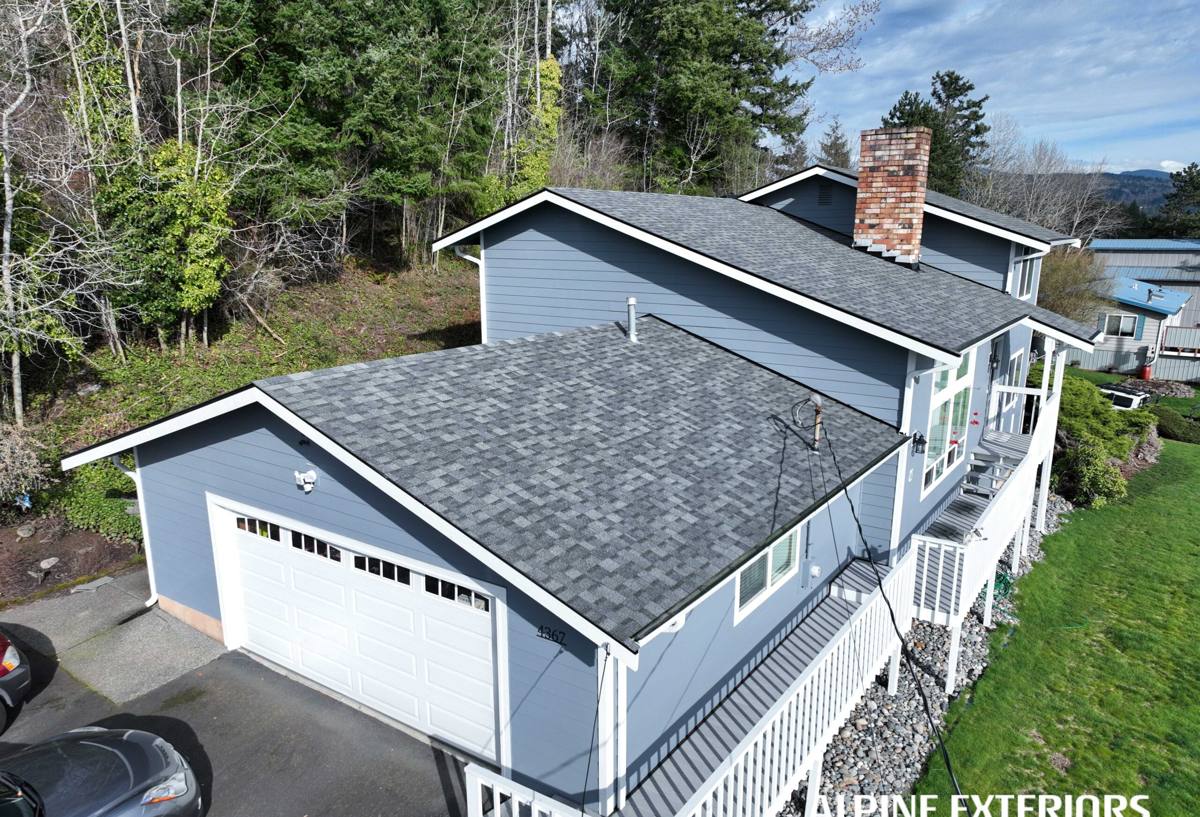
What Salt Air, Rain, and Moss Actually Do to a Roof
Salt Air
Airborne salt doesn't just affect metal flashing and fasteners near the immediate shoreline — it travels with the prevailing wind and settles on roofing materials miles inland, including Ferndale. It accelerates corrosion on exposed nail heads, drip edge, and any lower-grade flashing metal. Over time that corrosion can create small leak points long before the shingles themselves are worn out.
Driving Rain
Wind-driven rain off the water doesn't fall straight down — it gets pushed sideways under shingle tabs, around chimneys, and into valleys. A roof detailed for calm-weather rain (standard nailing pattern, minimal underlayment overlap, basic flashing) can pass fine for years and then start leaking the first time a real windstorm rolls through. Sealing strips and underlayment lap direction matter more here than in a lot of the state.
Moss
Whatcom County's damp, shaded conditions are close to ideal for moss growth. Moss doesn't just look bad — its root structure lifts shingle edges, holds moisture against the roof deck, and works granules loose. Left unchecked for a couple of seasons, moss growth can shave real years off a shingle roof's service life.
What a Correctly Installed Shingle Roof Actually Includes
"Asphalt shingle roof" covers a lot of ground. A roof that's cheap to install and a roof that's built to last in this climate use a lot of the same materials — the difference is in details that aren't visible once the job is done. A correct installation includes:
- Ice-and-water shield membrane at eaves, valleys, and around penetrations — not just felt paper everywhere
- Synthetic underlayment lapped and fastened to shed wind-driven rain, not just gravity-fed rain
- Balanced intake and exhaust ventilation (soffit vents paired with ridge or box vents) so the attic can actually dry out between storms
- Step flashing and counter-flashing at every wall intersection, chimney, and skylight — not caulk used as a substitute for flashing
- Corrosion-resistant fasteners and drip edge, given the salt exposure this area gets
- Correct nailing pattern and placement per manufacturer specification, which is also what keeps the shingle warranty valid
- Proper starter strip and hip/ridge cap installation, which is where a lot of wind-related failures actually start
Skip any one of these and the roof can still look fine from the ground for a year or two. The problems show up later, usually as a leak that's hard to trace back to its actual cause.
Choosing a Shingle That's Built for This Climate
Not every asphalt shingle product handles moss and moisture the same way. Algae-resistant (AR) shingles use copper or zinc granules blended into the surface specifically to slow the black streaking and biological growth that's common in the Pacific Northwest. Given Ferndale's moss pressure, we treat AR shingles as close to a baseline requirement rather than an upgrade.
| Shingle Type | Typical Lifespan Here | Wind Rating | Notes for This Climate |
|---|---|---|---|
| 3-Tab (standard) | 15–20 years | Lower (60–70 mph) | Lowest upfront cost; less margin against driving rain and wind uplift |
| Architectural / Dimensional | 25–30 years | Higher (110–130 mph) | Heavier mat, better sealing performance in wind-driven rain |
| Algae-Resistant (AR) Architectural | 25–30 years | Higher (110–130 mph) | Best fit for Whatcom County's moss and algae exposure |
We don't push AR shingles because of a manufacturer relationship — we recommend them because homeowners who skip that upgrade in this climate tend to be calling about moss and staining within a few years, and by then the growth has already started working into the shingle surface.
How We Approach a Roofing Job in Ferndale
Every roof starts with an actual inspection, not a drive-by estimate. That means getting on the roof (or using the accessible vantage points when conditions don't allow it) to check decking condition, ventilation, flashing, and the state of the existing shingles before we quote anything.
| Step | What Happens | Why It Matters Here |
|---|---|---|
| 1. Inspection | Deck, flashing, ventilation, and moss/algae assessment | Catches soft decking or trapped moisture before it's covered up again |
| 2. Tear-off | Full removal down to the deck, deck repair as needed | Layering over old shingles traps moisture and voids most warranties |
| 3. Underlayment | Ice-and-water shield at vulnerable points, synthetic underlayment elsewhere | The main defense against wind-driven rain getting under the shingles |
| 4. Flashing | New step, counter, and valley flashing at every transition | Salt air corrodes old flashing faster than it corrodes shingles |
| 5. Shingle install | Manufacturer-spec nailing, starter strip, and cap installation | Keeps the wind and manufacturer warranties valid |
| 6. Ventilation check | Confirm intake/exhaust balance is adequate for the attic space | Poor ventilation is a leading cause of premature shingle failure in wet climates |
| 7. Final walk-through | Review the finished roof and cleanup with the homeowner | No surprises, no debris left behind |
Moss and Algae: What We Do Differently
Moss prevention starts at installation with AR shingles, but it doesn't stop there. Tree cover, roof pitch, and how much shade a section of roof gets all affect how fast moss returns. We talk homeowners through realistic expectations rather than promising a moss-free roof forever — that's not honest in this climate. What we can control is installing a roof system that resists moss longer, using corrosion-resistant flashing and fasteners so salt air isn't quietly working against the metal components, and pointing out early warning signs during any service call so small moss patches get addressed before they undermine shingle edges.
We don't recommend pressure washing shingle roofs — it strips granules and shortens shingle life faster than the moss itself does. Gentle, low-pressure treatment and manual removal is the safer approach when moss needs to come off.
Signs a Ferndale Roof Needs Attention
- Granules collecting in gutters or at downspout outlets
- Moss visible along the ridge, in valleys, or on the shaded slope of the roof
- Curling, cupping, or cracked shingle tabs
- Dark streaking that doesn't wash off with light rain
- Soft or spongy spots when walked on (worth having checked, not walked on repeatedly)
- Daylight visible through the attic decking or damp insulation after a storm
- Flashing that looks rusted, lifted, or gapped at chimneys and walls
- A roof approaching or past 20 years old that hasn't had a professional inspection recently
What Affects the Cost of a Shingle Roof
Every roof is different, so we won't quote a number without seeing the roof, but these are the factors that move the price up or down on most Ferndale jobs:
| Factor | Effect on Cost |
|---|---|
| Roof size and number of stories | More material and labor, more staging and safety setup |
| Roof pitch and complexity | Steep or cut-up roofs (multiple valleys, dormers) take longer to flash correctly |
| Deck condition | Rotten or soft decking found during tear-off adds repair cost, but skipping it isn't an option |
| Shingle grade | 3-tab is the lowest upfront cost; AR architectural shingles cost more but hold up longer here |
| Ventilation upgrades | Adding proper intake/exhaust venting where none existed adds cost but protects the whole roof system |
| Layers of old roofing | Multiple existing layers mean more tear-off labor and disposal |
As a rough range, a straightforward asphalt shingle roof replacement on a typical Ferndale home runs from the mid four figures to the low five figures, with complexity and shingle grade being the biggest swing factors. We'll give you an exact number after inspecting the roof — not before.
Why It Matters That We Already Work in This Area
A crew that mainly roofs drier, inland areas can still do competent work, but they're not necessarily thinking about salt corrosion on fasteners or the specific moss pressure that shows up in western Whatcom County. We're on Ferndale, Birch Bay, and the surrounding communities regularly, which means we're not guessing at how this climate treats a roof over time — we're seeing the callbacks and the roofs that held up, and building that into how we detail every new installation. That includes knowing which flashing details tend to fail first in wind-driven rain off the water and which shingle grades are worth the extra cost here versus where it's genuinely optional.
It also means we're a known, reachable local business if a warranty question or a storm-damage issue comes up years down the road — not a crew that worked the area for one season and moved on.
Warranty and Materials, Plainly Stated
Manufacturer warranties on shingles are only as good as the installation behind them — most require correct nailing, ventilation, and underlayment to remain valid, which is exactly why we follow spec rather than cutting corners to save time. We'll walk you through what's covered by the manufacturer versus what's covered by our own workmanship warranty before any work starts, in plain terms, so there's no confusion later about who's responsible for what.
If you're dealing with an aging roof, active leaks, or heavy moss buildup on a Ferndale home, we're happy to take a look and give you a straight assessment — no pressure, no inflated urgency. Request a free estimate through the form below and we'll get back to you to schedule a time.