 Birch Bay Siding
 Roofing for a Neighborhood That Sits Right on the Water
California Creek homes take a different kind of weather beating than houses even a few miles inland. Between the salt air coming off Semiahmoo Bay and Drayton Harbor, the driving rain that rolls in off the Strait, and the long, wet moss season that stretches from fall through spring, an asphalt shingle roof out here works harder than the manufacturer's warranty paperwork usually accounts for. We install and repair asphalt shingle roofs specifically with that combination in mind, not a generic Whatcom County spec.
This page covers what an asphalt shingle roof actually needs to hold up in California Creek, what we check and do differently because of it, and how our process runs from first look to final cleanup.
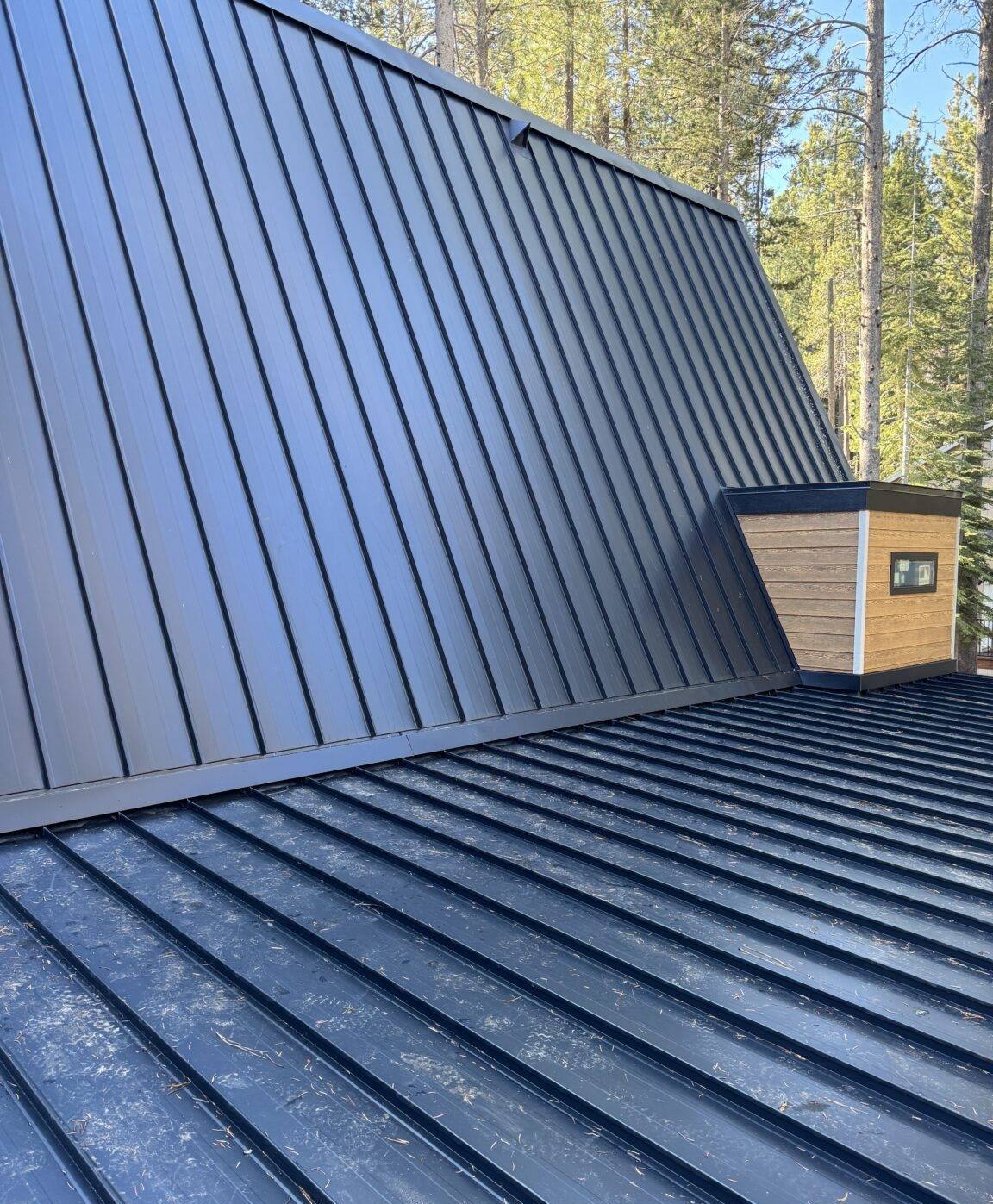
What Coastal Whatcom County Weather Does to a Shingle Roof
Three things drive almost every asphalt shingle failure we see in this pocket of Birch Bay:
Salt Air
Airborne salt doesn't just affect metal — it accelerates the breakdown of the granules on shingle surfaces and speeds up corrosion on exposed fasteners, flashing, and roof vents. A fastener or flashing spec that's fine twenty minutes inland can start rusting years early right along the water.
Driving, Wind-Driven Rain
Rain that comes in sideways off the water doesn't behave like rain falling straight down. It gets pushed up under shingle tabs, into exposed nail heads, and around flashing edges that would be perfectly adequate in a calmer climate. Most of the leaks we get called out for in this area start at a transition point — a valley, a chimney, a skylight curb, a wall-to-roof junction — not out in the open field of the roof.
Moss and Sustained Moisture
Whatcom County's wet season runs long, and shaded, north-facing slopes near the tree line around California Creek rarely get a full dry-out between storms. Moss and algae take hold in that kind of standing moisture, and once moss gets a foothold under shingle edges, it lifts them and lets water track backward under the roof covering instead of shedding off it.
What a Correctly Built Shingle Roof Needs Out Here
A shingle roof that's going to actually perform in this environment isn't just "shingles nailed to plywood." The components underneath and around the shingles matter as much as the shingle brand itself.
- Ice-and-water shield at eaves, valleys, and around every penetration — not just the code minimum, but extended coverage anywhere wind-driven rain has a realistic path underneath the shingles.
- Synthetic underlayment across the full deck, which holds up better than old-style felt when it gets wet during the install itself — a real possibility on a lot of our install days.
- Corrosion-resistant fasteners and flashing — hot-dip galvanized or better at minimum, given the salt exposure this close to the water.
- Balanced attic ventilation — intake at the eaves and exhaust at the ridge, sized to the attic, so moisture from inside the house isn't condensing against the underside of the deck all winter.
- Properly stepped and counter-flashed details at every chimney, skylight, and wall intersection, since these are exactly where wind-driven rain finds its way in.
Choosing a Shingle for This Climate
Not every asphalt shingle product is built with the same priorities, and the right choice depends on how much sun exposure, shade, and wind a particular roof slope gets in California Creek.
| Shingle Type | Best For | Trade-Off to Know |
|---|---|---|
| Standard 3-tab | Budget-conscious re-roofs, secondary structures | Lower wind rating and shorter service life in coastal exposure; less material to resist uplift |
| Architectural (laminated) shingle | Most California Creek homes — better wind performance, better look | Higher upfront cost than 3-tab, but far more common choice we recommend here |
| Algae-resistant (copper/zinc-granule) shingle | Shaded, north-facing, or tree-line slopes prone to moss and streaking | Slightly higher cost; doesn't eliminate the need for periodic moss treatment, but slows regrowth |
| Impact-rated shingle | Homeowners prioritizing long-term durability and possible insurance credit | Higher material cost; check with your insurer on whether it actually affects your premium |
We install shingles from major manufacturers such as GAF, Owens Corning, and CertainTeed, and we'll walk through the specific product lines that fit your slope, sun exposure, and budget rather than defaulting to one option for every roof.
Why We're Cautious About Certain Low-End Products Near the Water
Some lower-tier shingle lines are engineered around inland, moderate-climate performance. Near the water, thinner mat construction and lighter sealant strips can mean earlier granule loss and a shorter effective wind rating in practice than what's printed on the wrapper. It's not that these products are defective — it's that our standard here is matching the product to the actual exposure, and on an oceanfront-adjacent slope that usually means stepping up a tier from what we'd spec on a sheltered inland roof.
Our Process for a California Creek Roof
1. On-Site Inspection
We get on the roof, not just in the yard with binoculars. We check deck condition, existing ventilation, flashing details, moss and algae patterns by slope, and how the current roof has actually performed in this exact microclimate before we quote anything.
2. Written Scope and Estimate
You get a written breakdown of what's being replaced, what underlayment and flashing package is included, and what happens at every transition point — not just a single lump-sum number for "new roof."
3. Tear-Off and Deck Check
Full tear-off to the deck on replacements, with any soft or water-damaged sheathing replaced before anything new goes down. Covering a compromised deck with new shingles just hides a problem that will resurface.
4. Underlayment, Flashing, and Ventilation
Ice-and-water membrane at vulnerable areas, synthetic underlayment across the field, new flashing at every penetration and transition, and ventilation corrected if the existing setup isn't balanced.
5. Shingle Installation
Installed to manufacturer nailing and exposure specs, with attention to starter courses and hip/ridge caps — two areas that are especially exposed to wind uplift right along the water.
6. Cleanup and Final Walkthrough
Magnetic sweep for stray fasteners, debris hauled off, and a walkthrough so you know what was done and what to watch for going forward.
Signs a California Creek Roof Needs Attention
Because so much of the damage in this area starts underneath the visible shingle surface, it's worth knowing what to look for before a small issue becomes a ceiling stain.
- Granules collecting in gutters or at downspout outlets
- Dark streaking or green-black patches on shaded or north-facing slopes
- Moss visible along shingle edges or in valleys
- Curling, cupping, or lifted shingle tabs, especially on wind-exposed slopes
- Rust staining around vents, flashing, or fastener heads
- Daylight visible through the attic sheathing or soft spots felt underfoot in the attic
- Interior ceiling stains that appear or worsen after wind-driven storms specifically
What Drives Cost on a Shingle Roof Here
| Factor | Why It Matters in California Creek |
|---|---|
| Roof pitch and access | Steeper slopes and limited equipment access near the shoreline add labor time and safety setup |
| Number of existing layers | Tear-off of multiple old layers takes longer and can reveal deck damage from long-term moisture |
| Deck repair needs | Homes with a history of moss or slow leaks often need some sheathing replaced before re-covering |
| Flashing and penetration count | Chimneys, skylights, and multiple roof-wall intersections each add material and labor |
| Shingle tier selected | Algae-resistant and impact-rated products cost more per square than standard architectural shingle |
| Ventilation corrections | Adding proper intake/exhaust venting where it's missing is easier and cheaper during a full re-roof |
We'll show you which of these actually apply to your roof rather than quoting a flat per-square number that ignores your specific slope and exposure.
Why It Matters That We Already Work This Area
A roofing crew that mostly works dry, inland neighborhoods and occasionally takes a job near the water can miss the details that matter most here — under-spec'd flashing, standard fasteners in a salt-air zone, or ventilation that's fine for a sheltered lot but wrong for a California Creek exposure. Working Birch Bay and the surrounding Whatcom County shoreline regularly means we've already seen how roofs in this specific pocket age, where they fail first, and what actually holds up season after season through the moss cycle and the winter storm pattern. That's the difference between a roof that's technically up to code and one that's built for where it actually sits.
If your California Creek roof is due for a look — whether it's a full replacement, a repair, or just an honest opinion on how much life is left in it — we're glad to come out, walk the roof, and put together a straightforward, no-pressure estimate using the form below.