 Birch Bay Siding
 Siding Installation Built for Terrell Creek's Marine Climate
Terrell Creek sits in the low-lying, creek-drained country just inland from the Birch Bay shoreline, and homes here live with a combination of weather stresses that inland Whatcom County neighborhoods simply don't deal with year-round. Salt-laden air off the water works into every seam and fastener. Driving rain off winter storms doesn't just fall straight down — it hits siding sideways under wind pressure and finds any gap in the water management behind it. And the region's long, damp moss season keeps north-facing walls, shaded eaves, and tree-covered lots wet for weeks at a stretch. Siding that isn't installed with this specific combination in mind will show it early: cracked caulk lines, swollen board edges, chalky or streaked paint film, and moss creeping up from the ground line.
This page is about one job, done right, for this one area: replacing or installing siding on a Terrell Creek home so it actually holds up to what the neighborhood throws at it, not just what a general installation guide assumes.
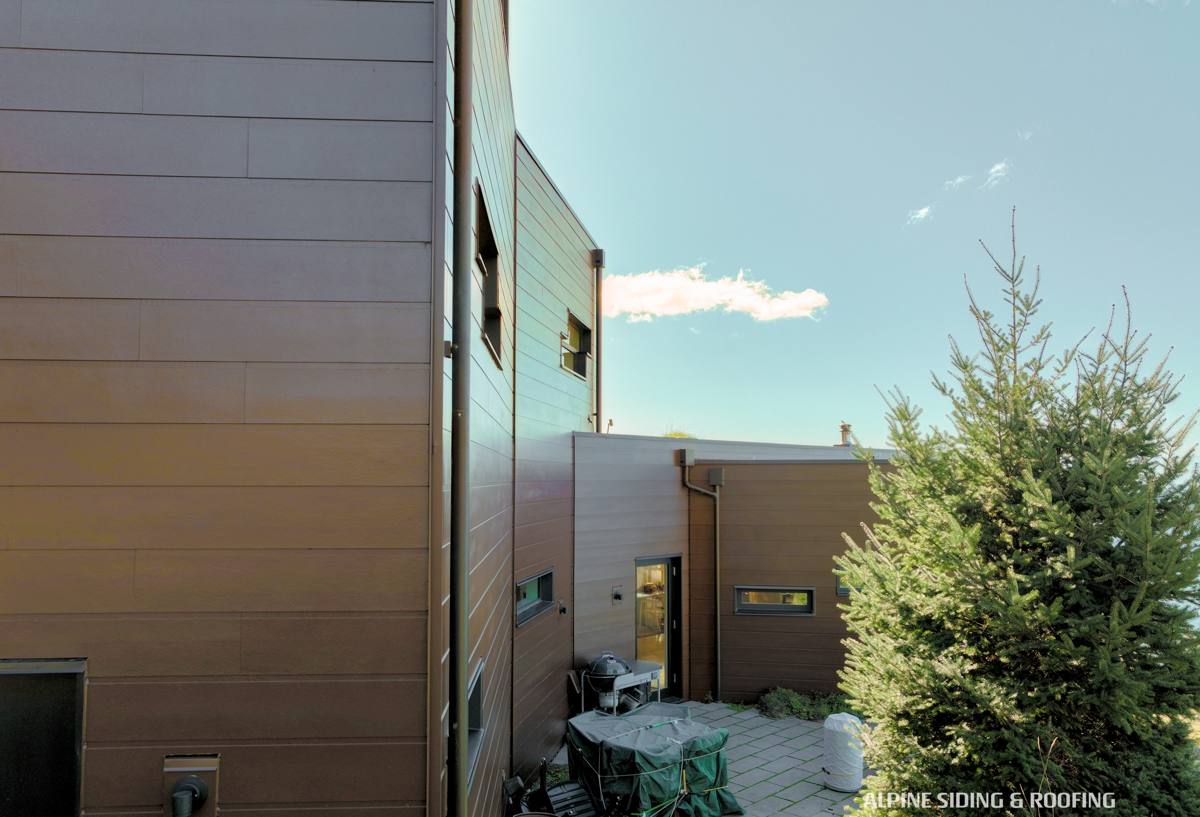
What Salt Air, Rain, and Moss Actually Do to Siding Over Time
Salt Air
Airborne salt is corrosive to metal and slowly degrades many finishes. Fasteners, flashing, and trim hardware that aren't rated for coastal exposure can start failing years before the siding field itself shows any wear. On products with a factory finish that isn't formulated for UV and salt exposure together, you'll often see fading or chalking on the ocean-facing elevation well ahead of the other three sides of the house.
Driving Rain
Wind-driven rain doesn't respect lap overlaps the way a straight-down rain does. It gets pushed up and under laps, into butt joints, and behind trim that isn't properly flashed. The siding material matters less here than the water management system behind it — house wrap, flashing, and drainage gap — but the material still has to tolerate being wet repeatedly without swelling, delaminating, or losing paint adhesion.
Moss Season
Whatcom County's wet months run long, and shaded or tree-lined lots around Terrell Creek stay damp far longer than open, sun-exposed sites. Moss and algae need sustained moisture to establish, and once they take hold on a wall they hold water against the surface even longer, accelerating whatever damage is already happening underneath. Siding with a dense, moisture-resistant core and a factory finish that sheds biological growth well is a real advantage here — not a marketing detail.
Why We Install James Hardie Fiber Cement — and Nothing Else
We standardized on James Hardie fiber cement siding and don't install vinyl, LP SmartSide, Cemplank, Allura, primed spruce, or cedar. That's not a marketing position — it's a decision we made after years of seeing which products actually perform on homes exposed to this kind of coastal weather, and which ones create recurring maintenance calls a few years down the road.
Fiber cement's core is cement, sand, and cellulose fiber — it doesn't absorb water the way wood-based or wood-fiber siding products can, and it doesn't expand and contract with humidity the way vinyl does. It's also non-combustible, which matters more every year given regional wildfire smoke and ember exposure concerns, even in a coastal area. Hardie's ColorPlus factory finish is baked on in a controlled environment rather than field-applied, which gives it better adhesion and UV stability than most site-painted finishes — a real factor on a wall that's taking direct salt spray and sun exposure.
Hardie also builds region-specific product lines engineered for different climate zones (their HZ5 line is formulated for areas with freeze-thaw and moisture exposure like ours), and backs the product with a strong, transferable non-prorated warranty on the material itself, plus a separate finish warranty on ColorPlus products. When we install it to Hardie's specification, that warranty stays intact — which is a meaningful backstop for a homeowner that a lot of alternative products simply don't offer at the same level.
What We're Not Saying About the Alternatives
Vinyl, engineered wood, and cedar all have legitimate uses and loyal followings, and none of them are "bad" products in the abstract. Vinyl is inexpensive and low-maintenance in mild climates. Engineered wood products can look good and install quickly. Cedar has a natural look many homeowners love. Our issue isn't that these products are defective — it's that in this specific combination of salt air, driving rain, and extended damp seasons, they carry maintenance burdens, moisture risks, or finish limitations that we're not willing to put our name behind. We'd rather build a business around one product we trust completely than sell five products with different trade-offs we'd have to explain away later.
What a Correct Siding Installation Actually Involves
The siding material is maybe 30% of how a wall performs. The other 70% is what's behind it and how it's installed. On a Terrell Creek home, that means:
- A code-compliant water-resistive barrier (house wrap) installed shingle-style so every layer drains outward and down, never inward
- Properly integrated window and door flashing, lapped correctly with the house wrap at every opening
- A drainage gap or rainscreen behind the siding on elevations that see the most wind-driven rain, so any moisture that does get past the cladding can drain and dry instead of sitting against the wall
- Correct fastener type, spacing, and penetration depth per Hardie's installation manual — under- or over-driven nails are one of the most common causes of early siding failure
- Proper clearance between the bottom of the siding and grade, decks, and roof lines, so splashback and ponding water don't sit against the material
- Caulked and sealed joints only where Hardie's specifications call for sealant — not as a substitute for correct flashing
Any one of these done wrong can undercut an otherwise good siding product. This is where a lot of "siding jobs" quietly go wrong — the visible product looks fine on installation day, and the problems don't show up for two or three wet seasons.
Our Process for a Terrell Creek Project
- On-site assessment — we look at your home's exposure (which walls take the most wind-driven rain and shade), the condition of the sheathing and framing underneath the existing siding, and any moss, rot, or moisture staining already present.
- Tear-off and sheathing check — old siding comes off and we inspect the sheathing for water damage before anything new goes up. Any soft or compromised sheathing gets addressed before we move forward, not covered over.
- Water management installation — house wrap, flashing, and drainage gap go in first, and this is the step that determines how the wall performs for the next 30-plus years.
- Hardie installation — panels or lap siding installed to manufacturer spec, with attention to fastener placement, clearances, and joint treatment.
- Trim, caulking, and final detailing — corners, trim boards, and penetrations sealed correctly so water has nowhere to get behind the new siding.
- Walkthrough — we go over the finished work with you before we consider the job done.
Choosing Products and Colors for This Microclimate
For homes exposed directly to wind and salt spray off the bay, we typically steer toward Hardie's HZ5 climate-engineered products, which are built for regions with more moisture cycling. ColorPlus finishes come in a range of factory colors that hold up better against fading and chalking than field-applied paint, which matters most on south- and west-facing walls that get the most direct sun and weathering. For homes tucked back under tree cover where moss and algae are the bigger concern, finish durability and a clean drainage plan behind the siding matter more than color selection — moss doesn't care what color the wall is, but it does care how long that wall stays wet.
What Siding Installation Typically Costs — and Why
Every project is different, but the factors below are what actually move the price on a Terrell Creek home, more than the siding material line-item alone.
| Cost Factor | Why It Matters Here |
|---|---|
| Tear-off and disposal of existing siding | More labor on homes with multiple layers of old siding or extensive moss/algae buildup to remove |
| Sheathing repair or replacement | Homes with a history of moisture intrusion often need sheathing work before new siding can go on |
| Drainage gap / rainscreen installation | Recommended upgrade on wind- and rain-exposed elevations; adds labor and material but meaningfully extends wall life |
| Home size and number of stories | More square footage and scaffolding/lift access on taller walls increases labor time |
| Trim and architectural detail | Homes with more corners, windows, and trim detail take longer to flash and finish correctly |
| Product line and finish | HZ5 climate lines and premium ColorPlus finishes cost more than base products but reduce long-term maintenance |
We give straightforward, itemized estimates rather than a single number with no explanation, so you can see exactly what you're paying for.
Why Local Experience in This Area Matters
A crew that's worked Birch Bay and the Terrell Creek area repeatedly knows which elevations take the worst of the wind-driven rain, which lots hold moisture long enough to grow moss on a north wall by midsummer, and how salt exposure changes fastener and flashing choices compared to a job twenty miles inland. That's knowledge that only comes from doing the work here, not from a general installation checklist. It also means we're not guessing at how Whatcom County's building department and inspection process works, or how local permitting timelines run — we've been through it before.
Signs Your Current Siding Is Losing the Battle
- Moss or algae establishing on north- or shade-facing walls, especially near the ground line
- Soft spots, bubbling, or visible swelling along board edges or seams
- Paint or finish that's chalking, peeling, or fading unevenly by elevation
- Caulk lines that are cracked, shrunk, or pulling away from joints
- Visible gaps at trim, corners, or window and door openings
- A musty smell or staining on interior walls near exterior corners after heavy rain
Any of these on their own isn't necessarily an emergency, but they're worth having looked at before another wet season passes.
If your Terrell Creek home is due for new siding, or you're just not sure whether what's on the walls now is holding up the way it should, we're happy to take a look and give you a straightforward, no-pressure estimate — use the form below to get started.