 Birch Bay Siding
 Siding That Has to Work in Terrell Creek's Climate
Terrell Creek sits close enough to the water that homes here deal with a different set of pressures than siding fifty miles inland. Salt-laden air moves in off Birch Bay and the Strait, wind-driven rain finds every gap in a wall system, and the long gray stretch from fall through spring keeps siding damp for days at a time. Add the shade from mature evergreens common around the creek corridor and you get near-ideal conditions for moss and algae to take hold on anything that stays wet longer than it should.
None of that is unusual for Whatcom County. But it does mean the siding choice and the installation details matter more here than they would in a drier climate. A product that's forgiving in Spokane can fail early in Terrell Creek if it isn't matched to the exposure, and a good product installed with the wrong details will still trap moisture behind the wall. We install fiber cement siding here because it holds up to this specific combination of salt, rain, and shade better than the alternatives, and we install it the way it's engineered to be installed — not the fast way.
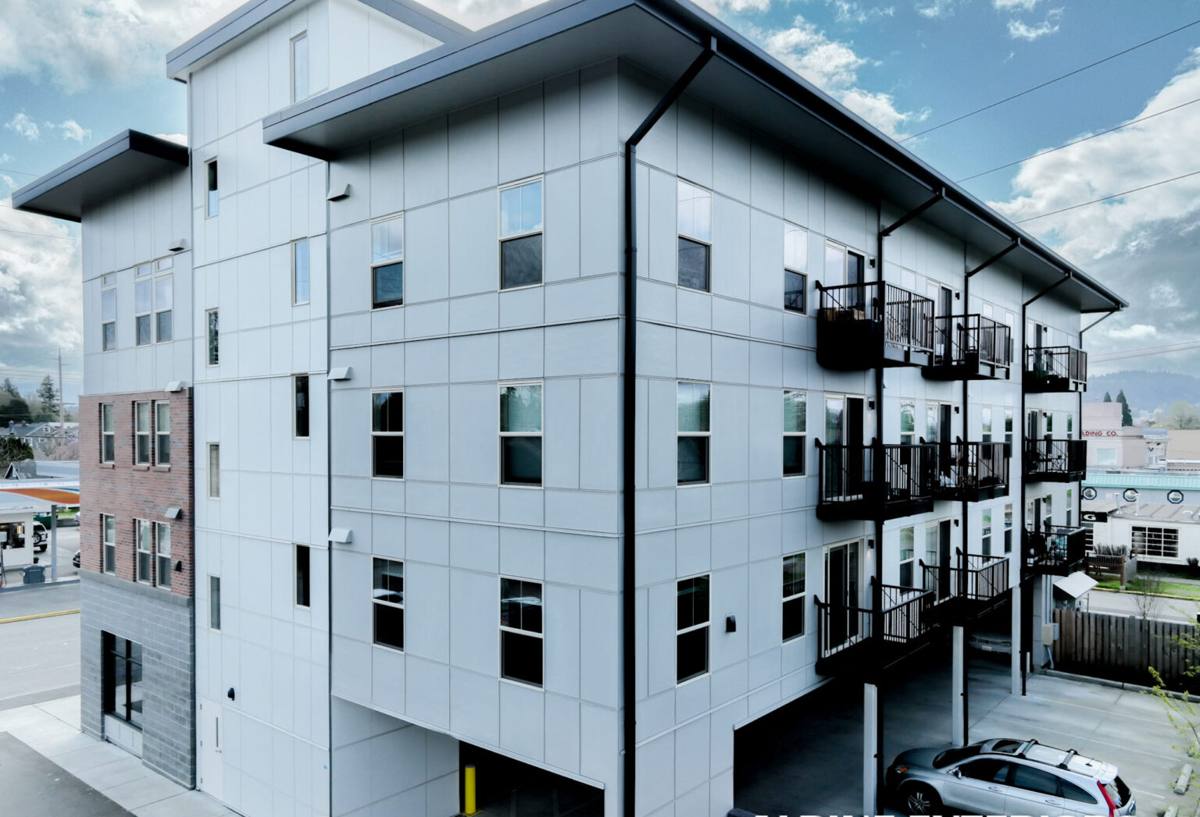
What Salt Air and Moss Season Actually Do to Siding
It helps to understand the failure modes before talking about the fix.
- Salt air accelerates corrosion on fasteners, flashing, and trim metal, and it can degrade certain paint finishes and adhesives faster than inland exposure would.
- Driving rain off the water pushes moisture sideways into wall assemblies, not just straight down — which is why lap orientation, caulking, and flashing details matter more here than on a sheltered inland lot.
- Shade and humidity from tree cover around the creek keep siding surfaces damp longer after a storm, which is exactly what moss and algae need to establish.
- Freeze-thaw cycling, while milder here than east of the mountains, still stresses any siding that has already absorbed moisture through a weak joint or crack.
Wood siding and primed spruce products are especially vulnerable to this combination — they absorb moisture, and once moss or rot gets a foothold, it spreads. Vinyl doesn't rot, but it can't be caulked or sealed at the seams the way fiber cement can, so wind-driven rain finds its way behind panels more easily over time. Fiber cement, installed correctly, resists all four of these pressures far better.
Why We Install Only James Hardie Fiber Cement
We standardized on James Hardie products for every job we do, including here in Terrell Creek, for reasons specific to this climate:
- Non-combustible core — a real advantage during dry summer stretches when wildfire smoke and ember risk become a regional concern.
- Engineered for moisture — Hardie's HZ5 product line is formulated for the exact wet, coastal-adjacent conditions found in this part of Washington, rather than being a general-purpose product stretched to fit every climate.
- ColorPlus factory finish — a baked-on finish that holds color and resists the fading and chalking that field-applied paint struggles with under constant damp-and-sun cycling.
- Dimensional stability — fiber cement doesn't swell, warp, or cup the way wood and some engineered wood products can once they take on moisture.
- Transferable warranty — a real factor for a neighborhood like Terrell Creek where homes do change hands.
We don't install LP SmartSide, vinyl, Cemplank, Allura, primed spruce, or cedar. That's not a knock on every homeowner who has one of those products on their house — it's that after years of doing this work in exactly this climate, Hardie is the one system we're willing to put our name behind and warranty our labor on.
What a Correct Fiber Cement Installation Involves Here
Fiber cement siding is only as good as the details behind it. In a high-moisture, salt-exposed area like Terrell Creek, we pay particular attention to:
Water Management Behind the Siding
A weather-resistant barrier and properly lapped flashing at every window, door, and penetration come before a single piece of siding goes up. Rainscreen furring, where the wall assembly calls for it, gives water a path to drain and dry instead of sitting against the back of the panel — important on walls that take direct spray off the bay.
Fastening and Fastener Selection
Corrosion-resistant fasteners, driven to the manufacturer's spec (not overdriven, not underdriven), matter more in salt air than almost anywhere else. Overdriven nails crack the board's fiber cement edge; underdriven ones leave the plank loose and vulnerable to wind uplift during winter storms.
Gaps, Caulking, and Clearances
Hardie's install specs call for specific gaps at trim, corners, and butt joints, sealed with a quality sealant rated for the exposure. Skipping this — or caulking joints that should be gapped instead — is one of the most common corner-cutting mistakes we see on redo jobs, and it's exactly the kind of detail that fails first in wind-driven rain.
Ground and Roofline Clearance
Six inches of clearance from grade and two inches from roof or deck surfaces keeps splashback and ponding water away from the bottom edge of the siding — the spot most prone to wicking moisture and growing moss in shaded, damp yards.
Our Process on a Terrell Creek Job
| Stage | What Happens |
|---|---|
| Assessment | We walk the exterior, check for existing moisture damage, moss buildup, and problem areas like north-facing walls or tree-shaded sections that hold dampness. |
| Product & color selection | We help match a Hardie plank, panel, or shingle profile and ColorPlus color to the home, factoring in sun exposure and how the color will read under the area's frequent overcast light. |
| Prep and tear-off | Removal of old siding, inspection and repair of sheathing, and correction of any water damage found underneath before new material goes up. |
| Weather barrier and flashing | Installation of the water-resistive barrier, window/door flashing, and rainscreen where called for — the layer that does the real long-term work. |
| Siding installation | Installed to Hardie's fastening, gapping, and clearance specifications, not shortcuts. |
| Final walkthrough | A joint inspection with the homeowner covering caulking, trim, and touch-up before we consider the job finished. |
Comparing Options for a Terrell Creek Exterior
| Material | Moisture/Moss Resistance | Salt Air Durability | Long-Term Maintenance |
|---|---|---|---|
| James Hardie Fiber Cement | Strong — engineered core, factory finish resists moss growth better than painted surfaces | Strong with corrosion-resistant fasteners and proper install | Low — occasional wash, no repainting for years |
| Vinyl | Moderate — won't rot but seams allow water intrusion over time | Can become brittle and fade faster in coastal sun/salt cycling | Low upfront, but early replacement common in harsh exposure |
| Cedar / Primed Spruce | Weak — absorbs moisture, prone to rot and moss in shaded, damp spots | Weak — accelerated weathering near salt air | High — regular repainting, sealing, and spot repairs |
| LP SmartSide | Moderate — engineered wood core still moisture-sensitive at cut edges and joints | Moderate, dependent on strict edge-sealing maintenance | Moderate — edge sealing and caulk checks needed regularly |
Maintenance That Actually Matters Here
Fiber cement cuts down on maintenance, but it doesn't eliminate it. In Terrell Creek's climate, we recommend homeowners keep an eye on:
- Annual rinse-down of siding, especially on shaded north- and east-facing walls where moss is most likely to start
- Checking caulking at trim and window joints every year or two for cracking or separation
- Keeping gutters clear so overflow doesn't run down and pool at the base of the siding
- Trimming back vegetation that keeps a wall section shaded and damp longer than the rest of the house
- Watching for any soft spots, staining, or discoloration near ground level, which can signal a flashing or clearance issue worth addressing early
Why Hiring a Crew That Already Works Terrell Creek Matters
Every neighborhood has its own quirks — which walls take the worst weather, where drainage tends to be a problem, how much shade a given lot actually gets through the year. A crew that's worked this specific area already knows which details to double down on before a problem shows up, rather than learning it from a callback. We've built our installation standards around Whatcom County's coastal-adjacent conditions specifically, which means the flashing, fastening, and clearance details on your home aren't generic — they're set up for what this stretch of Birch Bay actually throws at a house over a Pacific Northwest winter.
If you're planning a siding replacement or new build in Terrell Creek, we'd be glad to take a look at your home, talk through what your exposure actually calls for, and put together a straightforward, no-pressure estimate.