 Birch Bay Siding
 Why Terrell Creek Decks Wear Out Faster Than People Expect
Homes in Terrell Creek sit close enough to Birch Bay's shoreline that the same marine air that makes this part of Whatcom County beautiful also works against every deck built here. Salt-laden air corrodes fasteners and hardware from the inside out, long before the wood or decking on top shows obvious damage. Add driving rain that comes in sideways off the water during fall and winter storms, and you get moisture pushed into joints, ledger connections, and end grain that a typical deck design was never detailed to handle.
Then there's moss. Whatcom County's mild, wet winters and shaded, tree-lined lots around Terrell Creek give moss and algae months at a time to establish themselves on deck boards, stair treads, and railings. Beyond looking bad, moss holds moisture against the wood surface and turns a dry deck into a damp one almost year-round, which accelerates rot in ways a homeowner in a drier climate would never deal with. A deck repair here has to account for all three of these factors at once — salt exposure, driving rain, and moss — not just patch whatever board happens to be broken.
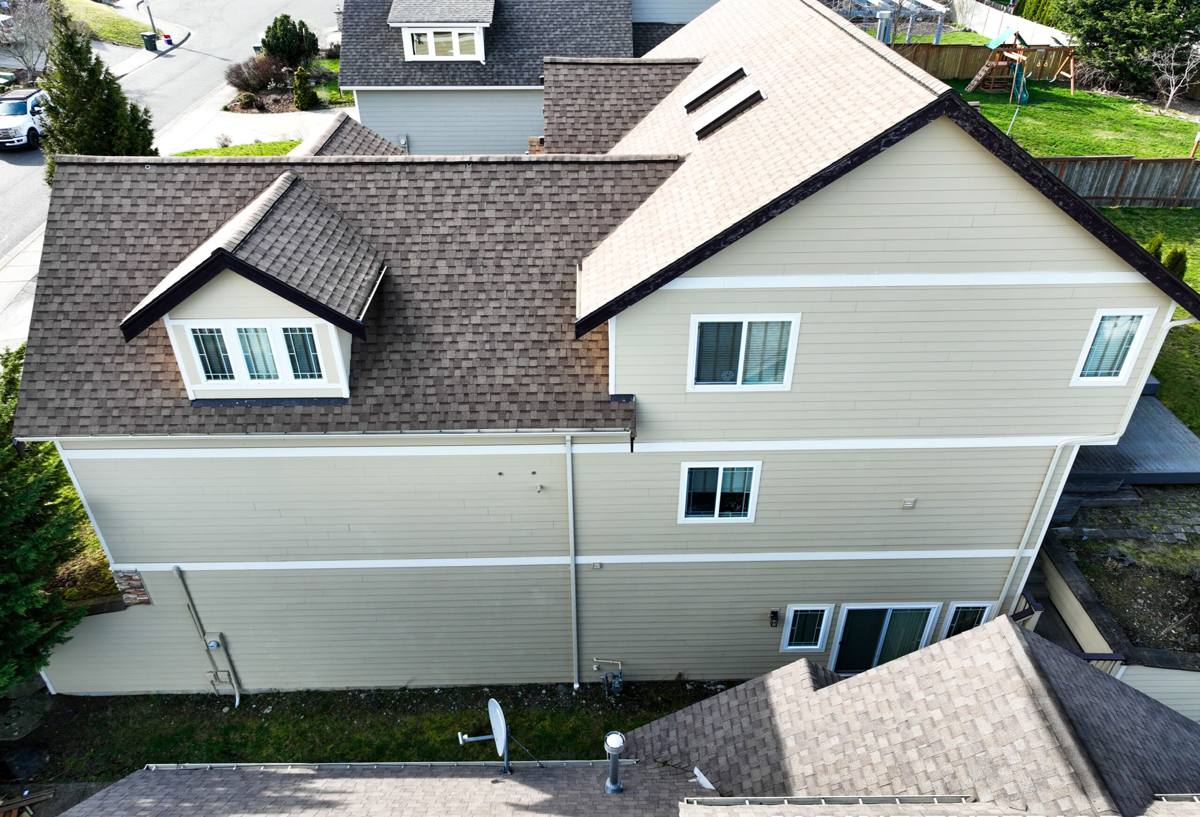
Signs Your Terrell Creek Deck Needs Repair
Surface-Level Warning Signs
Some problems are easy to spot if you know what to look for. Others hide until they've done real damage.
- Boards that feel spongy or flex underfoot, especially near the house or along the perimeter
- Persistent green or black staining that keeps coming back within weeks of cleaning
- Nails backing out or screw heads that have rusted and stained the surrounding wood
- Gaps opening up between boards, or boards cupping and holding standing water
- Railings that wiggle or stair treads that feel less solid than they used to
- Visible rot, soft wood, or dark discoloration where the deck meets the house
Structural Warning Signs
These matter more than cosmetic issues and shouldn't wait. Separation at the ledger board where the deck attaches to the house, rust streaking down from joist hangers, and posts that feel loose at the base are all signs the deck's structural connections are failing, not just the surface finish.
The Deck Problems We See Most Often in This Area
Ledger Board and Rim Joist Rot
The ledger board — where the deck bolts into the house — is the single most important structural connection on most decks, and it's also the piece most exposed to water intrusion if flashing was installed wrong or has failed. In a climate with this much driving rain, a poorly flashed ledger will rot from behind long before it looks bad from the outside.
Corroded Fasteners and Hardware
Standard zinc-coated screws, nails, and joist hangers don't hold up well against salt air over time. We regularly find hardware that's rusted through on decks that are otherwise in decent shape, which is a maintenance issue that's cheap to fix now and expensive to ignore.
Moss, Algae, and Trapped Moisture
Moss doesn't just sit on top of a deck — its root structure and the moisture it holds against the wood accelerate surface decay, especially on the shaded and north-facing sections of a deck that never fully dry out between rains.
Railing and Stair Stringer Failure
Railings and stair stringers take constant flexing and weather exposure, and they're often the first thing to loosen or rot because they're harder to keep coated and sealed than a flat deck surface.
What a Correct Deck Repair Actually Involves
Inspection Before We Touch Anything
A real repair starts with checking the framing, not just the decking. We probe suspect areas, check the ledger connection, and look at joist hangers and post bases before deciding what actually needs to come out. Replacing surface boards over a rotten frame just hides the problem.
Removing and Replacing Only What's Compromised
Good repair work means cutting rot back to solid wood, not stopping at the visible damage. Wood that looks fine two inches past visible rot can still be structurally weak, so we're conservative about how far a repair extends.
Upgrading Hardware to Coastal-Grade
Any repair we do near Birch Bay includes upgrading fasteners and connectors to stainless steel or hot-dip galvanized hardware rated for coastal and treated-lumber exposure. Reusing standard hardware on a repair in this environment just guarantees the same failure happens again in a few years.
Restoring Drainage and Flashing
Where rot traces back to water intrusion, we correct the cause — proper ledger flashing, corrected slope, or gaps for airflow — not just the symptom. A repair that doesn't fix drainage is a repair you'll be paying for again.
Decking Material Options for Repairs
When boards need to be replaced, homeowners usually have three practical choices. Each has real trade-offs in this climate, and there's no single right answer — it depends on your budget, how the existing deck is built, and how much upkeep you want to take on.
| Material | Upfront Cost | Moisture & Moss Behavior | Maintenance |
|---|---|---|---|
| Cedar | Moderate | Naturally rot-resistant but still needs sealing to resist moss and graying | Annual cleaning and re-sealing recommended |
| Pressure-Treated Lumber | Lowest | Resists rot when properly treated but end cuts and fasteners are weak points | Regular cleaning; re-seal every 1-2 years |
| Composite / PVC Decking | Higher | Doesn't rot, but can still grow surface moss/algae in shaded, damp spots | Periodic washing; no sealing needed |
Our standard on repairs is to match new material to the existing deck wherever it makes structural and visual sense, and to be upfront when a full material switch would cost more than it's worth for a repair versus a future full replacement.
Our Deck Repair Process
- On-site inspection of the decking, framing, ledger connection, and hardware — not just the area you called about
- A clear, written explanation of what's actually wrong and what's driving it, before any pricing is discussed
- An honest repair-versus-replace recommendation, including what happens if you defer the work
- A written estimate with the scope spelled out — what's being removed, replaced, and upgraded
- Repair work using coastal-rated hardware and materials matched to your deck
- A final walkthrough so you know what was fixed and what to watch going forward
What Affects the Cost of Deck Repair
Deck repair pricing varies a lot depending on what's actually wrong, which is why we don't quote a number over the phone. The factors below are the ones that move the price most.
| Factor | Why It Matters |
|---|---|
| Extent of rot or hidden damage | Framing repairs cost more than surface board replacement and often aren't visible until we open things up |
| Ledger board condition | A compromised ledger connection is a structural repair, not a cosmetic one, and takes priority |
| Material match | Matching existing decking or upgrading materials affects both cost and long-term maintenance |
| Accessibility | Decks over slopes, near water features, or with limited access take longer to work on safely |
| Hardware upgrades | Coastal-grade fasteners and connectors cost more than standard hardware but prevent repeat failures |
Why Hire a Crew That Already Works in Terrell Creek
A contractor who works this stretch of Whatcom County regularly already knows what driving rain and salt air do to a deck over time, so they're not guessing at what caused the damage or what will actually hold up going forward. That local familiarity shows up in small but important decisions — which hardware grade to spec, where flashing tends to fail first, and which repairs are worth doing now versus which are cosmetic and can wait.
It also means a straighter answer about repair versus replacement. A deck that's structurally sound but cosmetically tired doesn't need to be torn out, and a deck with hidden ledger or framing rot shouldn't be patched and left as-is. We'd rather tell you the truth about which situation you're in than sell you more work than the deck needs — or less than it needs.
Keeping Your Deck in Good Shape After Repair
A repair only holds up if the deck gets basic upkeep afterward, and in this climate that upkeep matters more than in drier parts of the state.
- Clean moss and algae off the surface at least once a year, more often on shaded sections
- Check and re-seal wood decking on the schedule appropriate to the product — don't wait until it looks gray and dry
- Walk the deck each fall and spring checking for soft spots, loose railings, and rusted fastener heads
- Keep gutters and downspouts clear so runoff isn't draining directly onto or under the deck
- Make sure vegetation isn't holding moisture against the deck's shaded or ground-level sections
If you're in Terrell Creek and dealing with a deck that's showing its age, or you just want an honest opinion on whether repair makes sense before it turns into a bigger job, we're glad to come take a look. Fill out the form below for a free, no-pressure estimate.