 Birch Bay Siding
 Why Sumas Roofs Wear Out Differently Than Roofs Inland
Sumas sits close enough to the water and open exposure around Birch Bay that roofs here take a beating most inland Whatcom County homes never see. It isn't one big storm that does the damage — it's the steady combination of salt-laden air, driving rain that comes in sideways more often than straight down, and a moss season that can run eight months or longer in a wet year. Any roofing material you put on a home in this area has to hold up against all three at once, not just one of them.
Salt Air and Coastal Exposure
Salt in the air accelerates corrosion on anything with exposed fasteners, uncoated cut edges, or thin-gauge metal. It works quietly — a roof can look fine for a few years while galvanic corrosion starts at fastener heads, panel seams, and flashing joints. By the time you can see rust bleeding through paint, the damage underneath is usually further along than it looks from the ground.
Driving Rain and Wind-Driven Moisture
Wind off the water pushes rain sideways and under roof edges, ridge caps, and anywhere flashing isn't lapped correctly. Standard installation practices that work fine forty miles inland can leak here because they were never designed to handle water moving horizontally, not just falling straight down.
Moss and Prolonged Dampness
Shade, moisture, and mild temperatures make Whatcom County a good environment for moss, and moss holds water against a roof surface far longer than open sun and wind would allow it to dry. On shingle roofs that means accelerated granule loss and rot at the deck. On metal roofing, the concern is different — moss and organic debris trapped in low-slope areas or against poorly flashed transitions can hold moisture against fastener penetrations and coatings long enough to cause problems that wouldn't happen on a clean, well-drained surface.
What a Correctly Installed Metal Roof Actually Involves
Metal roofing has a reputation for being nearly maintenance-free, and it can be — but only when the installation accounts for this specific climate. A metal roof that's installed the same way you'd install one in a dry inland climate will not perform the same way here.
Panel Type and Metal Gauge
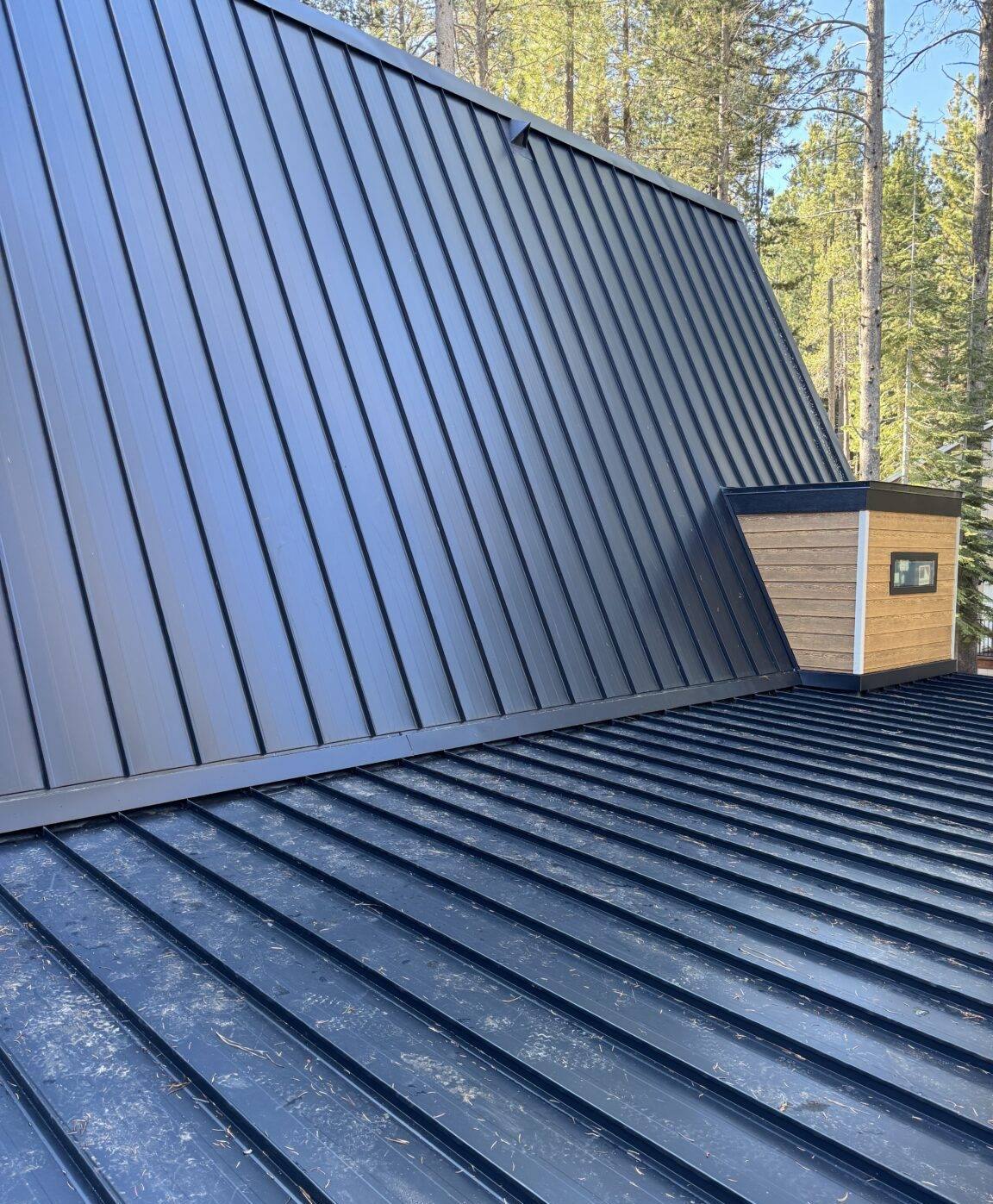
Standing seam panels with concealed fasteners are the right call for most homes in this area. Concealed fastener systems eliminate the exposed screw heads that are usually the first point of corrosion in a salt-air environment. Panel gauge matters too — thinner panels can oil-can (show visible waviness) and are more prone to denting, which then becomes a spot where coatings can fail early. We spec panel gauge based on roof size, slope, and exposure, not just on whatever is cheapest to move.
Underlayment and Deck Ventilation
A synthetic, high-temp underlayment underneath the panels is non-negotiable here. It's the backup layer that protects the deck if wind-driven rain ever gets past a seam or flashing detail — and given how much wind-driven rain this area sees, treating underlayment as an afterthought is a mistake. Proper ridge and soffit ventilation also matters more than most homeowners realize: trapped moisture under a metal roof condensates on the underside of cold panels, and over time that moisture reaches the deck from the inside, not just the outside.
Fastening and Flashing Details
This is where most roofing problems in this climate actually start. Flashing at valleys, chimneys, sidewalls, and roof-to-wall transitions needs to be lapped and sealed with the direction of wind-driven rain in mind, not just gravity. Any exposed fastener that is used (typically at trim, not the field of the roof) should be a coated, corrosion-resistant fastener with a proper washer — not a standard fastener that happens to be cheaper.
Metal Roofing Compared to Other Common Options
Homeowners in Sumas and around Birch Bay often ask how metal stacks up against asphalt shingles or a lower-cost metal option. Here's an honest comparison based on how each performs in this specific climate, not a generic sales pitch.
| Factor | Standing Seam Metal | Exposed-Fastener Metal | Asphalt Shingle |
|---|---|---|---|
| Salt-air corrosion resistance | Strong — no exposed fasteners in the field | Moderate — fasteners are the weak point over time | Not a corrosion concern, but granule and mat degradation instead |
| Wind-driven rain performance | Strong when flashed correctly | Moderate — depends heavily on fastener maintenance | Weaker at edges and low-slope transitions |
| Moss and moisture tolerance | Good — sheds water and dries quickly | Good, similar to standing seam | Poor — moss holds moisture against the mat |
| Typical service life here | Several decades with basic upkeep | Meaningfully shorter than standing seam in this climate | Shorter, especially with moss pressure |
| Upfront cost | Highest | Middle | Lowest |
We install and stand behind standing seam metal as our default recommendation for full roof replacements in this area, because it holds up to the specific conditions here with the least ongoing maintenance. Exposed-fastener metal and asphalt both have their place depending on budget, roof complexity, and how long a homeowner plans to stay in the home — we'll walk through the honest trade-offs for your specific roof rather than push one product for every job.
Our Process, Start to Finish
1. On-Site Assessment
We walk the roof (or use a drone where pitch or access makes that unsafe), check the deck condition, look at existing flashing and ventilation, and note anything specific to the site — tree cover, exposure to prevailing wind, drainage patterns. This is also when we confirm whether a full tear-off is needed or whether the deck is sound enough to build on.
2. Straight Answers Before Any Commitment
You get a written scope that says what panel system, gauge, underlayment, and flashing details we're proposing and why — not just a total price. If there are cheaper and more expensive ways to do the job correctly, we explain the difference instead of assuming you want the cheapest option.
3. Tear-Off, Deck Repair, and Underlayment
Old roofing comes off, the deck gets inspected and repaired where needed, and underlayment goes down before any metal is installed. Skipping straight to panels over a deck that hasn't been checked is how hidden rot gets sealed in rather than fixed.
4. Panel Installation and Flashing
Panels are installed with attention to seam direction relative to prevailing wind, and every flashing detail — valleys, penetrations, wall transitions — is built to handle wind-driven rain, not just standing water.
5. Final Walkthrough
We walk the finished roof with you, point out what maintenance (if any) it will need going forward, and make sure you know what a properly finished job looks like before we consider it done.
What Metal Roofing Costs in This Area
Every roof is different, and we don't quote a number without seeing the roof, but a few factors consistently move the price up or down for jobs in Sumas and the broader Birch Bay area:
- Roof complexity — the number of valleys, dormers, and penetrations increases labor time far more than square footage alone does
- Deck condition — hidden rot found during tear-off adds cost, but skipping repair to save money is what leads to early failure
- Panel gauge and finish — heavier gauge and better factory coatings cost more upfront and pay it back in corrosion resistance
- Access and pitch — steep or hard-to-access roofs take longer and require more safety equipment
- Tear-off vs. overlay — overlaying an existing roof (where code and roof condition allow it) is cheaper than a full tear-off, but it's not always the right long-term choice
As a broad range, metal roofing generally costs more upfront than asphalt shingles but less over the life of the roof when you factor in fewer replacements and less storm-related repair. We'll give you real numbers once we've actually looked at your roof — anything quoted without an on-site look is a guess.
Living With a Metal Roof Here: What Upkeep Actually Looks Like
One of the real advantages of metal roofing in a moss-heavy, salt-air climate is how little ongoing work it needs compared to shingles. That doesn't mean zero maintenance — it means different maintenance.
- Clear debris and organic buildup out of valleys and low-slope transitions once or twice a year, especially after fall leaf drop
- Check gutters and downspouts so water isn't backing up against roof edges during heavy rain
- Have flashing and sealant at penetrations (vents, chimneys) inspected every few years rather than waiting for a visible leak
- Watch for any scratches or chips in the factory finish near where ladders, satellite mounts, or solar racking have touched the panels, since bare metal is where corrosion starts
- Trim back overhanging branches that keep panels shaded and damp longer than the rest of the roof
Why It Matters That We Already Work in Sumas and Birch Bay
We Already Know What This Climate Does to a Roof
A crew that mostly works dry, inland jobs will design a roof to a generic standard. A crew that works Whatcom County's coastline regularly builds in the extra flashing attention, fastener choices, and drainage planning this specific area needs, because we've seen what happens when those details get skipped.
Scheduling Around This Area's Weather
Roofing work has to happen in dry windows, and this area's weather doesn't always cooperate on a convenient schedule. Working locally means we can plan around realistic weather patterns here instead of trying to force a install schedule built for a drier climate.
Permits and Local Code Familiarity
Whatcom County and local jurisdictions have their own permitting requirements for roofing work, and a crew that pulls permits in this area regularly doesn't have to relearn the process on your job.
Materials and Warranty Standards We Hold Ourselves To
We only install metal roofing systems with factory finishes and coatings rated for coastal or high-moisture exposure, not standard inland-grade product. We back our installation workmanship with our own warranty, separate from the manufacturer's material warranty, and we'll explain both in plain language before you sign anything — what's covered, for how long, and what would void it. If a manufacturer's warranty structure doesn't hold up well in salt-air conditions, we'll tell you that directly rather than let you find out after installation.
If you're weighing a new metal roof, a repair, or just want an honest read on what condition your current roof is really in, we're happy to take a look. Fill out the form below for a free, no-pressure estimate — we'll tell you what we actually see, not just what's easiest to sell.