 Birch Bay Siding
 Board & Batten Siding in Sumas: A Look That Has to Work as Hard as It Looks
Board and batten is one of the most requested siding profiles we install in Sumas, and for good reason. The vertical lines read as clean and modern on newer builds, but they also suit the farmhouses, barns-turned-homes, and rural properties that make up a lot of this part of Whatcom County. It's a look with real roots here — vertical board siding has been used on outbuildings and homes in this region for well over a century, because the profile sheds water differently than horizontal lap and gives a building a taller, more upright presence.
The catch is that board and batten is less forgiving than standard lap siding if it's installed wrong. The seams, the batten spacing, and the way water is meant to travel down the wall all depend on details that are easy to rush and hard to fix once the siding is up. On a Sumas property dealing with driving rain and a long moss season, those details aren't cosmetic — they're the difference between siding that looks good for thirty years and siding that's trapping moisture behind it by year eight.
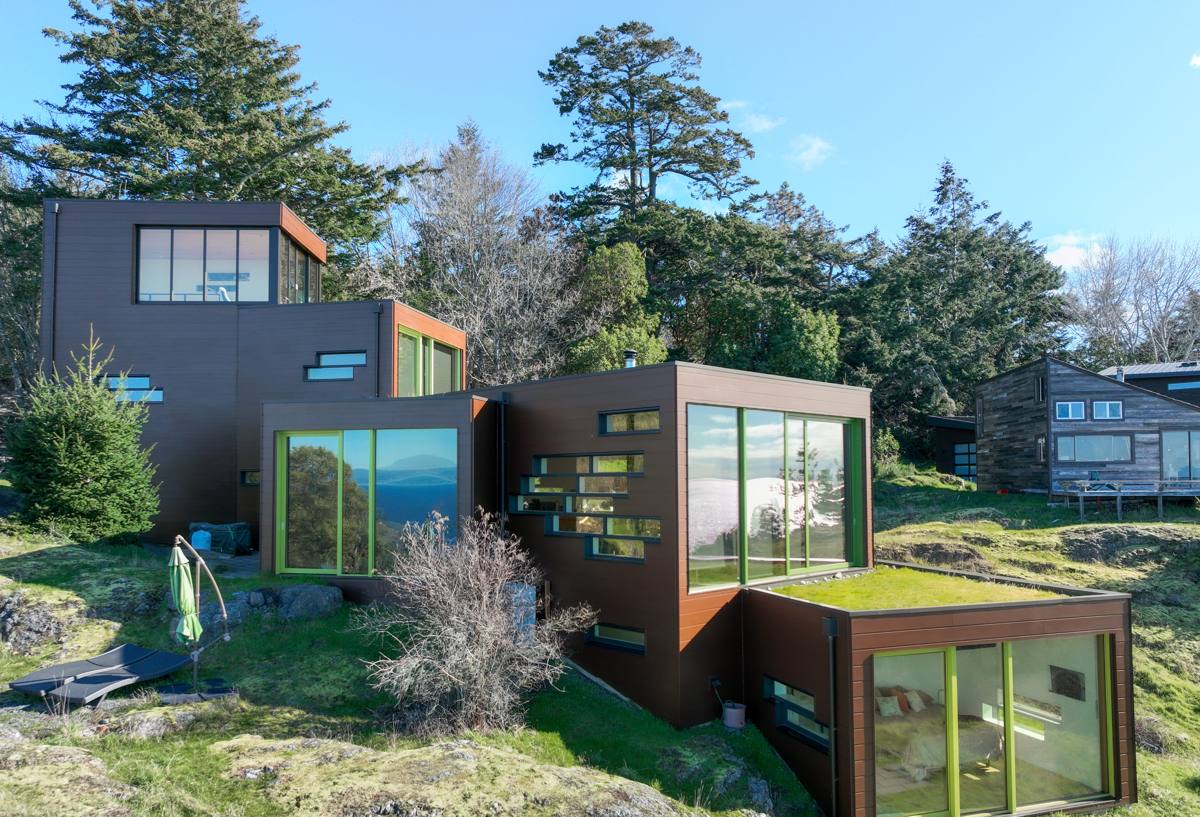
What Sumas' Climate Actually Does to a Vertical Siding Wall
Whatcom County sits in a wet corner of the Pacific Northwest, and Sumas gets the full package: long stretches of low-intensity rain through fall and winter, humid marine-influenced air pushing inland off the Salish Sea, and short winter days that don't give a wet wall much chance to dry out between storms. Add in tree cover and shaded north-facing walls, and you get the same moss and algae growth that shows up on roofs and fences all over this part of the county working its way onto siding too.
For board and batten specifically, this climate creates a few recurring problems we see on older installations:
- Moss and algae bridging the batten seams — organic growth holds moisture directly against the seam, keeping it wet long after the rest of the wall has dried.
- Caulk-dependent seams failing early — installations that rely on caulk instead of proper flashing and spacing lose their weather seal within a few seasons in this climate.
- Wood battens swelling and splitting — traditional wood battens absorb water at the end grain and along the face, then split as they dry, opening gaps that let more water in the next time it rains.
- Panel delamination on lower-grade products — engineered wood and OSB-based panel systems are especially vulnerable to the freeze-thaw-and-swell cycle common in this region.
None of this means board and batten is a bad choice for a Sumas home. It means the product and the installation both have to be matched to what this climate does to a wall, year after year.
Why Board & Batten Is More Installation-Sensitive Than Lap Siding
Horizontal lap siding is naturally forgiving — gravity does a lot of the work of shedding water down and off the wall. Board and batten flips that. Water runs down vertical seams and can find its way behind the battens if there isn't a real drainage path and correct fastening underneath. A few things matter more here than on a typical lap job:
Panel and Batten Spacing
Battens need consistent spacing and a fastening pattern that allows for the natural expansion and contraction of the material without binding it up or leaving gaps that widen over time.
What's Behind the Siding
A correctly built drainage plane — housewrap, flashing at every horizontal transition, and a rainscreen gap where called for — matters more on vertical siding because water has a shorter, straighter path down to the bottom of the wall and any penetration points along the way.
Fastener Placement
Face-fastening battens through the underlying panel in the wrong spot, or over-driving nails, is one of the most common causes of early cracking on board and batten jobs. It has to be done to the manufacturer's fastening schedule, not by eye.
The James Hardie Board & Batten System We Install
We install James Hardie fiber cement exclusively, and board and batten is one of the profiles where that decision matters most. Hardie's engineered wood alternatives — HardiePanel vertical siding paired with Hardie batten trim, or the Artisan vertical panel line for a more refined reveal — are built from fiber cement rather than wood or wood composite, which changes how the material behaves in a climate like Sumas'.
Why Fiber Cement Holds Up Where Wood-Based Products Struggle
Fiber cement doesn't absorb water the way wood, OSB, or wood-fiber composite panels do, so it doesn't swell, split, or delaminate from repeated wetting. It's also non-combustible, holds paint and factory finish far longer than wood substrates, and won't feed rot or insect damage the way wood battens can over a couple of decades in a damp climate. James Hardie's HZ5 product line is engineered specifically for the freeze-thaw and moisture cycles common in the Pacific Northwest, which is the version we spec for Sumas installations.
ColorPlus Factory Finish
Where budget allows, we recommend ColorPlus prefinished panels and battens over field-painted fiber cement. The factory finish is baked on under controlled conditions and carries its own finish warranty — it holds color and resists the fading, chalking, and moss staining that field-applied paint shows first, especially on shaded or north-facing walls where growth is worst.
What a Correct Board & Batten Installation Involves
| Step | Why It Matters in Sumas' Climate |
|---|---|
| Housewrap and flashing inspection or replacement | The drainage plane behind the siding does most of the real weatherproofing work — it has to be intact before new siding goes up |
| Rainscreen gap where wall assembly calls for it | Lets bulk water and moisture vapor drain and dry instead of sitting against the back of the panel |
| Flashing at every window, door, and horizontal joint | These are the highest-risk penetration points on a vertical wall during driving rain |
| Manufacturer-spec fastening pattern | Prevents cracking, popped fasteners, and panel movement over time |
| Correct panel and batten gapping | Allows for expansion without forcing water into the seam |
| Factory-finished or properly primed cut edges | Exposed cut edges are the fastest point of moisture entry if left unsealed |
Our Process for a Sumas Board & Batten Project
- On-site walkthrough. We look at the existing wall assembly, siding condition, moss and moisture patterns, and any problem areas — shaded walls, low overhangs, areas near grade — before recommending anything.
- Written estimate. You get a clear scope covering material line, finish option, any sheathing or wrap repair needed, and a firm price — no vague allowances.
- Prep and drainage plane work. Old siding comes off, the wall is inspected for hidden rot or moisture damage, and housewrap, flashing, and rainscreen components are installed or repaired as needed.
- Panel and batten installation to James Hardie's published fastening and spacing specifications, with attention to every window, door, and trim transition.
- Final inspection and cleanup, including a walkthrough with you before we consider the job done.
Board & Batten vs. Other Profiles: What to Weigh for a Sumas Home
| Factor | Board & Batten | Horizontal Lap |
|---|---|---|
| Water shedding | Vertical path, relies more on drainage plane and flashing detail | Naturally shedding, more installation-forgiving |
| Look | Taller, more modern or farmhouse character | Traditional, most common in the region |
| Moss/algae visibility | Growth tends to show along seams and shaded battens | Growth spreads more evenly across the wall |
| Installation sensitivity | Higher — spacing and fastening precision matter more | Moderate |
| Common uses locally | Accent walls, gables, farmhouse-style homes, outbuildings | Full-house siding on most homes in the area |
Plenty of Sumas homes mix the two — board and batten on gables or an accent section, lap on the main walls. That's a decision we can walk through on site rather than guess at from a photo.
Maintaining Board & Batten Siding in a Wet, Moss-Prone Climate
- Rinse siding gently once or twice a year, especially shaded and north-facing walls, to keep moss and algae from taking hold along seams.
- Keep gutters clear and downspouts directed away from the wall — overflow is one of the most common causes of localized rot on any siding profile.
- Trim back vegetation and tree cover that keeps a wall section damp and shaded for most of the day.
- Have caulking at trim and penetration points inspected every couple of years — this is the first thing to fail on any siding system, board and batten included.
- Watch for hairline cracks near fasteners or batten edges after the first few winters; catching them early is a small repair, ignoring them isn't.
Why Hiring a Crew That Already Works in Sumas Matters
A lot of siding problems we get called out to fix weren't caused by bad material — they were caused by an installer who didn't build for this climate. Fastening schedules, drainage details, and flashing choices that work fine in a dry region don't hold up under a Whatcom County winter. A crew that's already worked on homes in and around Sumas knows the wall assemblies that are common here, has seen how moss and driving rain actually behave on local siding, and installs with that in mind from day one rather than learning it on your house.
We also only install one product — James Hardie fiber cement — which means we're not weighing a cheaper wood-composite option against a better one to hit a budget number. Every board and batten job we quote in Sumas is built around the same standard: correct drainage plane, correct fastening, and a factory finish that's rated for this climate.
Getting Started
If you're considering board and batten siding for a home in Sumas, we're happy to walk the property, look at what's there now, and put together a straightforward estimate — no pressure, no inflated scope. Use the form below to request a free estimate.