 Birch Bay Siding
 Storm Damage Roof Repair for Sandy Point Homes
Sandy Point sits right where Whatcom County's exposure to the Salish Sea is at its most direct. Homes here take wind, salt-laden air, and driving rain off the water with less to slow it down than properties further inland around Birch Bay. When a storm rolls through, roofs on this stretch of coastline don't just get wet — they get tested. Loose shingles, stressed flashing, and roofs already softened by months of moss growth are the ones that fail first.
Storm damage roof repair is its own trade skill, distinct from routine roof maintenance or a full tear-off. It requires knowing what wind and water actually do to a roof system, spotting damage that isn't obvious from the ground, and repairing it in a way that holds up through the next storm — not just until the next one.
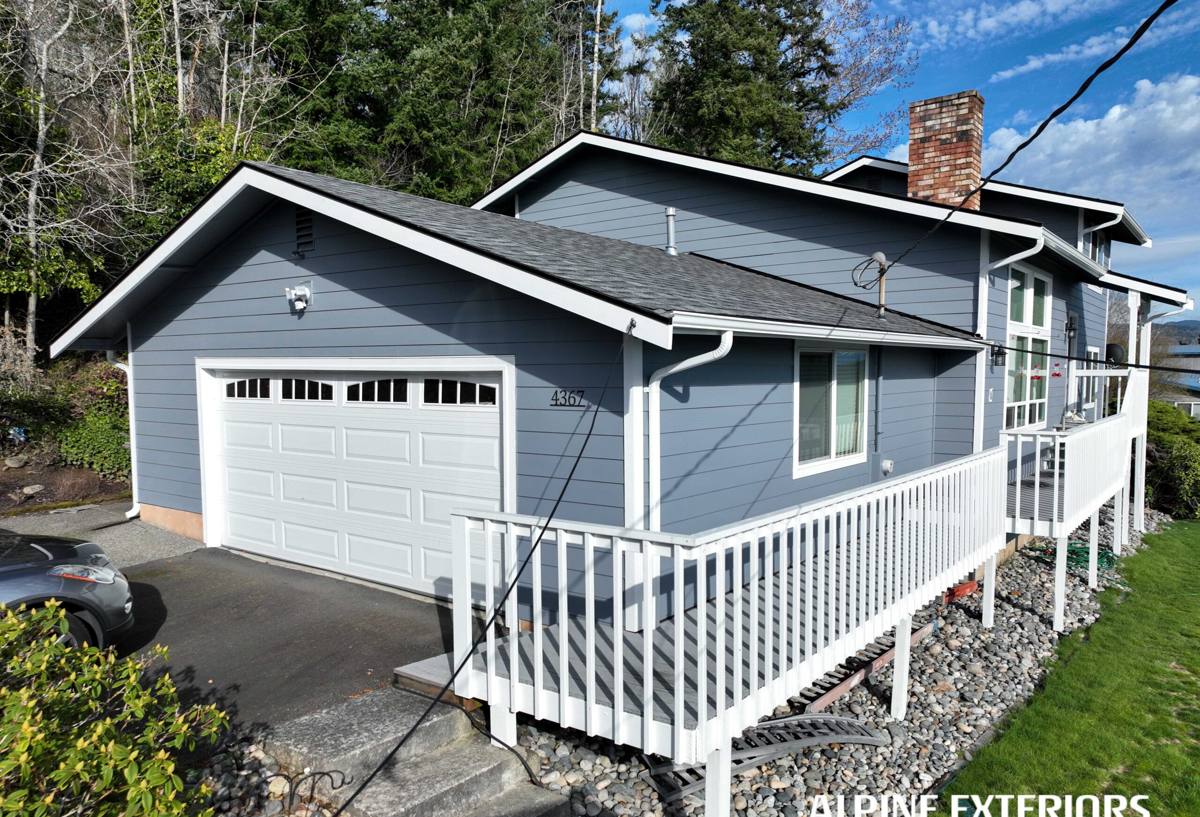
Why Sandy Point Roofs Take a Harder Hit
A few things make storm damage more common, and more serious, on homes in this part of Birch Bay than on roofs set back from the water:
Wind Exposure
Waterfront and near-waterfront lots have fewer trees and structures to break up gusts before they reach the roofline. That means more uplift force on shingle edges, ridge caps, and anything with a seam — vents, flashing, skylights. Once wind gets under one lifted shingle tab, it tends to peel the next one, and the next.
Salt Air
Airborne salt accelerates corrosion on exposed metal — flashing, fasteners, gutter hangers, and any hardware not rated for a marine-adjacent environment. A fastener that would last decades a few miles inland can start weeping rust streaks or losing grip years earlier out here.
Driving Rain
Storms in this area rarely come straight down. Wind-driven rain finds its way sideways under shingle tabs, around poorly sealed flashing, and into any gap that a calm-weather rain would never reach. That's why roofs that look fine after a light rain can still leak badly in a wind-driven storm.
Long Moss Season
Western Whatcom County's damp, mild climate keeps moss and algae active for most of the year. Moss holds moisture against the roof surface, works its way under shingle edges, and adds weight — all of which weakens a roof's ability to shed wind and water cleanly during a storm. A roof with heavy moss going into a storm is already at a disadvantage.
What Storm Damage Actually Looks Like
Storm damage isn't always a missing shingle you can spot from the driveway. Some of the most costly damage is the kind homeowners don't notice until there's a stain on the ceiling.
Visible Damage
- Shingles that are cracked, curled, torn, or missing entirely
- Lifted or bent ridge cap and hip shingles
- Dented, bent, or separated flashing around chimneys, vents, and skylights
- Gutters pulled loose, dented, or sagging away from the fascia
- Debris — branches, moss clumps, granule buildup — collected in valleys
Hidden Damage
This is the damage that causes the real headaches later. Wind can loosen a shingle's seal without tearing it visibly, leaving it vulnerable to the next storm. Water can travel under a lifted shingle and track sideways along the decking before it ever shows up as an interior stain. Flashing can shift just enough to open a gap without falling off completely. None of this is visible in a driveway walk-around — it takes someone on the roof, checking seals and seams by hand, to catch it before it becomes a leak.
What a Correct Storm Damage Repair Involves
Not all "storm damage repairs" are equal. A quick patch job might stop today's leak but leave the underlying vulnerability in place for the next storm. Here's the difference between a surface patch and a repair done right:
| Step | Quick Patch | Correct Repair |
|---|---|---|
| Inspection | Visual check of the obvious damage only | Full roof check including flashing, valleys, and decking condition |
| Shingle replacement | Individual shingle swapped, seal not re-checked | Damaged shingles replaced and surrounding tabs re-sealed for wind resistance |
| Flashing | Left as-is unless visibly broken | Checked for movement, corrosion, and proper lap; resealed or replaced as needed |
| Decking | Assumed fine if no leak yet | Checked for soft spots or moisture where shingles were removed |
| Fasteners | Standard nails, whatever's on hand | Corrosion-resistant fasteners suited to a coastal environment |
| Documentation | None | Photos and notes homeowner can use for insurance if needed |
The quick patch is cheaper today and more expensive over time — it tends to fail again in the next storm, in the same spot or nearby, because the root cause was never addressed.
How Our Process Works
1. Inspection First
We start by getting eyes on the roof itself, not just what's visible from the ground. That includes checking flashing, valleys, ridge lines, and any spots where moss or debris has collected. We look for both the damage that caused the immediate problem and anything else that's likely to fail in the next storm.
2. A Clear, Honest Plan
We tell you what actually needs to be done — repair versus replacement, what's urgent versus what can be scheduled — and why. If a patch is genuinely the right call for your situation, we'll say so. If a section needs more than a patch, we'll explain why before any work starts.
3. Documentation
If you're planning to file an insurance claim, we document the damage with photos and written notes before repair begins. Having this on hand makes the claims process smoother and gives you a record of the roof's condition at the time of the storm.
4. The Repair Itself
Work is done with materials and fasteners suited to a marine-air environment, not generic hardware that corrodes faster than it should this close to the water. Flashing is reseated or replaced with proper laps and sealant, not just caulked over.
5. Cleanup and Walkthrough
We clear debris, old materials, and stray fasteners from the yard and gutters, then walk the work with you so you know exactly what was done and what to watch for going forward.
Insurance and Storm Claims: What to Know
Many homeowner policies cover sudden storm damage — wind-lifted shingles, impact from falling debris, water intrusion from a specific storm event. Coverage details vary by policy and insurer, so we can't promise what your specific plan covers. What we can do is document the damage clearly and give you a straightforward written scope of the repair, which is exactly what most adjusters ask for. We recommend contacting your insurer promptly after a storm, before moss, further weather, or time make it harder to tell what damage came from the storm versus ongoing wear.
Signs You Should Have Your Roof Checked After a Storm
- Shingles or granules visible in the yard, gutters, or downspouts after high wind
- A new stain, damp spot, or musty smell on an interior ceiling or upper wall
- Gutters or downspouts pulled loose, bent, or hanging away from the roofline
- Visible daylight or gaps around a chimney, vent pipe, or skylight from inside the attic
- Heavy moss buildup combined with recent high wind or driving rain
- A roof that's more than 12-15 years old and hasn't been inspected recently
Any one of these on its own may be minor. Together, or after a significant storm, they're worth a proper inspection rather than a wait-and-see approach — a small gap left through one more storm season can turn into decking repair or interior damage.
Why It Matters to Hire a Crew That Already Works Sandy Point
Roofing crews who mostly work inland don't always account for how differently a roof ages this close to open water. Fastener corrosion, moss growth patterns, and wind-driven leak points all behave a little differently on a Sandy Point roof than they do a few miles inshore. A crew that regularly works this stretch of Birch Bay knows what to check first, what tends to fail here, and what materials actually hold up in salt air and driving rain year after year — not just what looks fine on installation day.
It also means faster response. After a storm, waterfront and near-waterfront communities like Sandy Point often need attention quickly, and a crew already familiar with the area's roofs and driveways can get there and get started without a long learning curve on your first visit.
Get a Free, No-Pressure Estimate
If your Sandy Point home has visible storm damage — or you're just not sure whether recent wind and rain did any harm — we're happy to take a look. The estimate is free, there's no pressure to move forward, and you'll get a straight answer about what's needed and what can wait. Use the form below to get started.