 Birch Bay Siding
 Why Point Roberts Siding Takes a Different Kind of Beating
Point Roberts sits on a small peninsula hanging off the bottom of Tsawwassen, cut off from the rest of Whatcom County by water and by the international border itself. That geography matters more than most homeowners realize when it comes to exterior siding. The peninsula catches wind and salt spray off the Strait of Georgia from multiple directions, with very little inland terrain to slow it down before it hits a house. Add in Whatcom County's long, wet winters and the moss and algae growth that comes with months of shade and moisture, and you have a exterior envelope that works harder here than it does even a few miles inland.
Homes in this pocket of Washington see the same driving rain and salt air that punishes Birch Bay properties, but often with less tree cover to break the wind off the water. Siding that isn't built for that combination — sustained moisture, salt exposure, and near-constant humidity during moss season — tends to show problems years before it should. That's the starting point for any honest conversation about siding replacement out here: the product and the installation both have to be matched to what the peninsula actually throws at a house, not to a generic weather assumption.
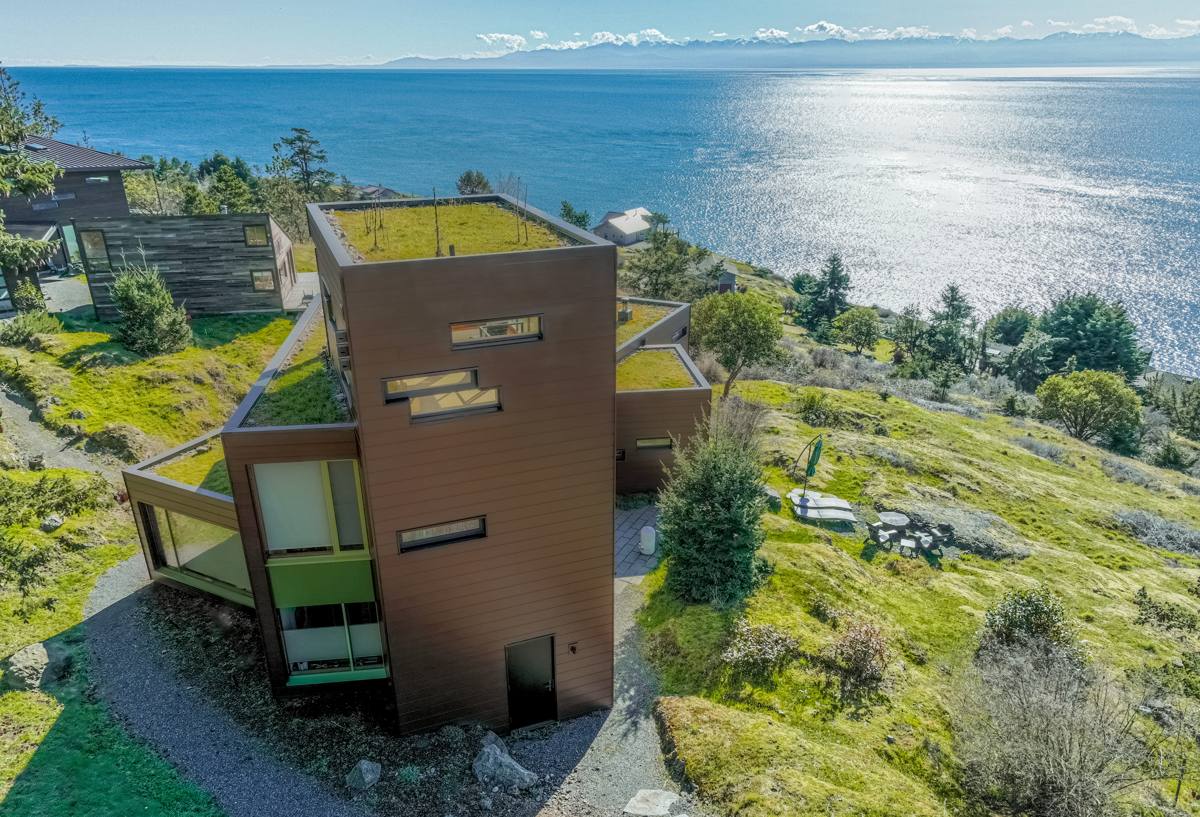
Signs Your Point Roberts Home Needs Siding Replacement
Siding failure is rarely sudden. It shows up as a pattern of small issues that add up over a few wet seasons. Before assuming a full replacement is needed, it's worth knowing what to actually look for:
- Soft or spongy spots when you press on siding panels, especially near the bottom courses and around window trim
- Visible swelling, bubbling, or delamination — common on wood-based and some engineered wood products after repeated wetting
- Persistent moss, algae, or black streaking that comes back within weeks of cleaning
- Paint that's peeling, chalking, or needing repainting more often than every 8-10 years
- Gaps opening up at seams, corners, or trim joints where caulk has failed
- Visible warping or cupping of individual boards or panels
- Rot at the bottom edge of siding near grade, decks, or downspouts
- Rising energy bills that hint at a compromised weather barrier behind the siding
Any one of these on its own might be a repair. Several of them together, especially on a home that's had the same siding for 15-20+ years in this climate, usually means the material has reached the end of its useful life and a patch job will just delay the inevitable.
Why We Install Only James Hardie Fiber Cement Siding
We made a decision a while back to install one siding system and stand fully behind it, rather than offer a menu of products and let price alone decide. For Point Roberts and the rest of our Whatcom County service area, that system is James Hardie fiber cement.
What the Product Gets Right
Fiber cement is a mix of cement, sand, and cellulose fibers, pressed and cured into planks and panels. It doesn't rot, it doesn't attract wood-boring insects, and it's non-combustible — a real advantage during the dry-season wildfire smoke and ember exposure the wider Pacific Northwest has seen more of in recent years. It also holds paint and factory finish far longer than wood-based products because it doesn't move with moisture the way wood does.
Climate-Engineered for This Region
James Hardie makes region-specific formulations, and the HZ5 product line is engineered for exactly the wet, temperate conditions found here — built to resist moisture intrusion and the freeze-thaw cycling that coastal Washington gets in winter. That's a meaningfully different product than a generic fiber cement board, and it's part of why we don't substitute in a cheaper, non-regional version to save money on a bid.
Factory Finish and Warranty
ColorPlus factory-applied finish is baked on under controlled conditions, which gives far more consistent, longer-lasting color than field-applied paint — and it comes with its own finish warranty separate from the substrate warranty. Combined, a correctly installed Hardie system carries a strong transferable warranty that protects the next owner too, which matters on a property near the water where resale often hinges on documented exterior condition.
None of this means other products are without merit — vinyl is inexpensive, engineered wood siding installs quickly, and cedar has genuine curb appeal. But each carries trade-offs — ongoing caulk and paint maintenance, moisture sensitivity at cut edges, or a shorter realistic service life in a salt-air, high-moisture environment — that we're not willing to install and then stand behind as our own work in this climate. Hardie is the product we've found holds up to the standard we want attached to our name.
What a Correct Siding Replacement Actually Involves
The siding itself is only part of the job. Most premature siding failures we see trace back to what's underneath, not the surface material. A correct replacement means addressing the whole wall assembly.
Tear-Off and Sheathing Inspection
Old siding comes off down to the sheathing, and that sheathing gets inspected for rot, soft spots, or prior water damage — especially around windows, at wall penetrations, and near grade. Any compromised sheathing gets replaced before anything new goes up. Skipping this step is the single most common shortcut that leads to callbacks a few years later.
Weather-Resistive Barrier and Flashing
A new weather-resistive barrier goes over the sheathing, with proper flashing at every window, door, and penetration, lapped correctly so water sheds outward and down rather than working its way behind the barrier. In a location that sees this much driving rain, flashing details matter as much as the siding choice itself.
Installation to Manufacturer Spec
James Hardie publishes specific installation requirements — fastener type and spacing, minimum clearances from grade and roof lines, proper caulking at butt joints, and correct overlap. Installing outside those specs can void the manufacturer warranty even if the product itself is right. We install to that written spec, not to a faster shortcut version of it.
Finish Details and Trim
Corner boards, trim, and caulking at penetrations are finished last, matched to the ColorPlus system so the whole exterior reads as one consistent, factory-finished surface rather than a patchwork of field-painted trim against factory-finished field panels.
Comparing Siding Options for a Point Roberts Home
| Siding Type | Typical Service Life Here | Ongoing Maintenance | Salt Air / Moisture Behavior |
|---|---|---|---|
| James Hardie fiber cement (HZ5) | 30-50+ years | Occasional wash; ColorPlus finish rarely needs repainting | Non-combustible, dimensionally stable, engineered for wet coastal climates |
| Vinyl siding | 15-25 years | Low, but prone to cracking and fading over time | Can warp in heat, brittle in cold snaps, seams can trap moisture |
| Engineered wood (e.g. LP-type products) | 15-25 years with diligent maintenance | Regular caulk and paint upkeep; vulnerable at cut edges | Sensitive to sustained moisture exposure if maintenance lapses |
| Cedar / primed wood | 15-25 years, often less near salt exposure | Frequent repainting or staining; caulk maintenance | Prone to swelling, cupping, and rot without consistent upkeep |
This isn't a claim that the alternatives fail on every home — plenty of homeowners maintain them diligently for years. It's a reflection of realistic maintenance demands versus what most homeowners actually have time for, especially on a property that isn't a full-time residence for every owner in this area.
Cost Factors on a Point Roberts Project
Every bid is specific to the house, but a few factors consistently move the number more than others:
| Factor | Why It Matters |
|---|---|
| Sheathing and framing condition | Hidden rot found at tear-off adds repair scope before new siding can go up |
| Home size and wall complexity | Dormers, multiple gables, and cut-up walls add labor and trim detail |
| Existing siding removal | Multiple layers of old siding or extensive caulk/paint buildup add tear-off time |
| Trim and accessory scope | Corner boards, frieze boards, and window trim replacement add to the total |
| Access and site logistics | Waterfront lots, tight setbacks, and limited staging space affect crew efficiency |
We don't quote a per-square-foot number without seeing the house — anyone who does is guessing at the sheathing condition sight unseen.
Why Working With a Crew That Already Knows Point Roberts Matters
Point Roberts is logistically unlike most of Whatcom County. It's only reachable by road through Canada, or by water and air, which means materials, crew scheduling, and timing all take more planning than a job a few miles away in Birch Bay. A crew that hasn't priced that reality into a bid, or hasn't planned for border-crossing logistics and weather windows on the drive in, tends to either underbid the job or let it drag.
We already run crews out to this stretch of coastline regularly, so material staging, scheduling around tide and weather windows, and border logistics are already worked into how we plan a job — not something figured out mid-project. Knowing the local wind exposure and rain patterns also shapes real decisions on site, like sequencing tear-off so open wall sections aren't exposed overnight during an incoming weather system.
Our Process From Estimate to Finished Job
- On-site assessment of existing siding, trim, and visible wall condition, with photos of problem areas
- Written estimate covering material, tear-off, sheathing contingency, and installation scope
- Scheduling built around weather windows appropriate for this stretch of coastline
- Tear-off and sheathing inspection, with any rot repair addressed before new material goes on
- Weather-resistive barrier and flashing installed at all windows, doors, and penetrations
- James Hardie fiber cement installed to manufacturer specification, including fastener and clearance requirements
- Trim, corner boards, and caulking finished to match the ColorPlus factory finish
- Final walkthrough with the homeowner before the crew leaves the site
Caring for Your New Siding After Installation
A correctly installed Hardie system is low-maintenance, not no-maintenance. A yearly rinse with a garden hose or low-pressure wash keeps salt residue and early moss growth from building up, especially on north-facing walls that stay shaded longer through Whatcom County's wet months. Keep an eye on caulking at trim joints and penetrations over the years, and address any gutter or downspout issues quickly — misdirected water at the base of a wall is one of the few things that can still cause problems even with the right siding installed correctly. Trim back vegetation that's grown up against the siding, since trapped moisture and debris against any material, including fiber cement, encourages moss and algae growth faster than open airflow.
If you're weighing a siding replacement on a Point Roberts property, we're happy to take a look and put together a straightforward, no-pressure estimate — no obligation, just an honest read on what your home actually needs.