 Birch Bay Siding
 Why Semiahmoo's Waterfront Location Is Hard on a Roof
Semiahmoo sits right where Whatcom County meets saltwater, and that location shapes everything about how a roof ages here. Salt-laden air corrodes exposed metal faster than it does even a few miles inland — nails, flashing, vent caps, and any fastener that isn't rated for coastal exposure will show rust years before it should. Add the driving rain that comes off open water during winter storms, often pushed sideways by wind, and you get water finding its way into laps, seams, and fastener holes that would stay dry on a more sheltered lot.
Then there's moss. The Pacific Northwest's damp, mild winters give moss and algae a long growing season, and north-facing slopes or roofs shaded by mature trees rarely get enough sun to dry out between rains. Moss doesn't just look bad — it holds moisture against the roofing material, lifts shingle edges, and works its way under laps over time. A roof built for a drier, less exposed climate simply doesn't hold up the same way out here.
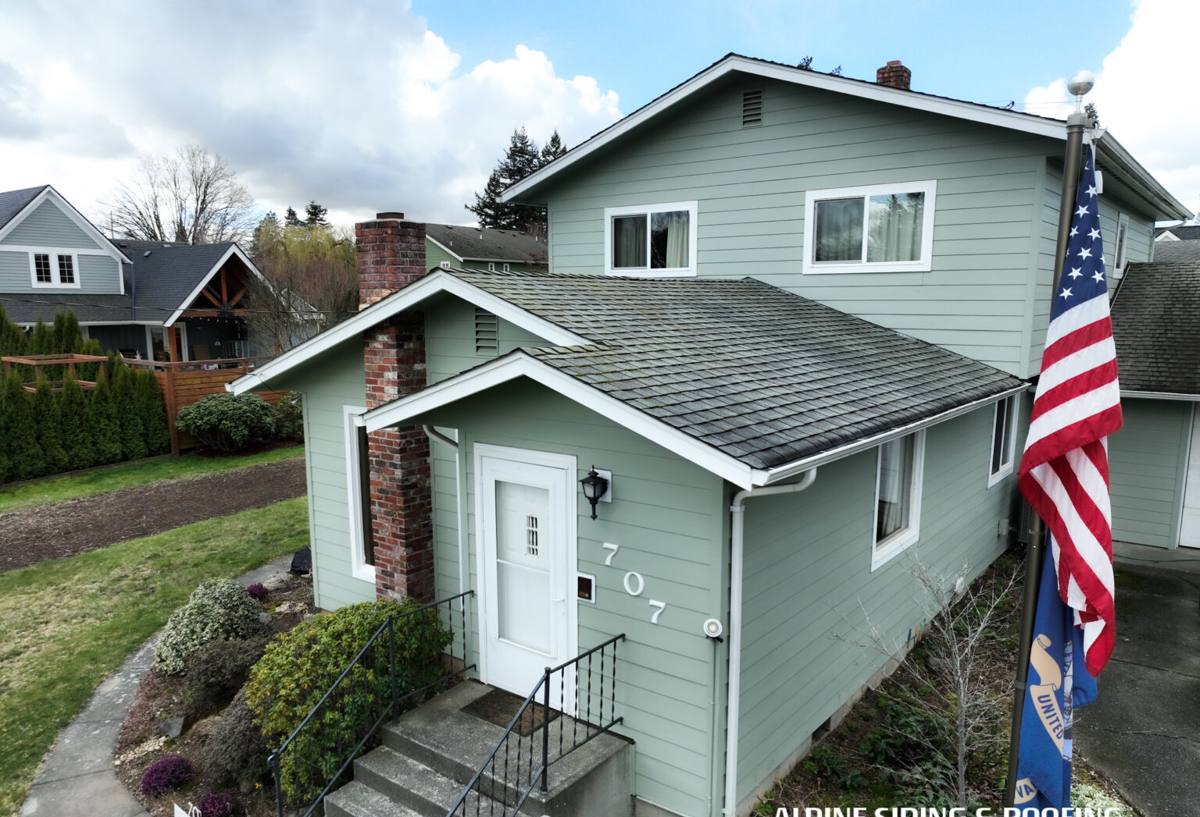
What a Correct New Roof Installation Actually Includes
"New roof" sounds simple, but the difference between a roof that lasts and one that fails early almost always comes down to details you can't see once the job is done. A correct installation on a Semiahmoo home includes:
- A full tear-off to bare decking so the installer can see the actual condition of the roof deck, not just cover up whatever is underneath
- Inspection and replacement of any rotted, delaminated, or soft sheathing before new material goes down
- Self-adhering ice-and-water membrane at eaves, valleys, and around every penetration — not just where code minimums require it
- A synthetic underlayment across the full field, rated for the wind and moisture exposure of a waterfront lot
- New step flashing, counter flashing, and pipe boots at every wall intersection, chimney, and vent — reused flashing is one of the most common causes of early leaks
- Correct nailing pattern and fastener count per the manufacturer's wind-rated installation instructions, not a generic pattern
- Balanced intake and exhaust ventilation so the attic can actually dry out between storms
Skip any one of these and the roof may look fine from the driveway for a year or two, but the underlying problems — trapped moisture, corroding fasteners, water tracking behind flashing — are already working against you.
Why Tear-Off Matters More Here Than Elsewhere
Some contractors will offer to install over an existing layer to save time and cost. On a coastal property, we don't recommend it. Trapped moisture between layers has nowhere to go, and a second layer traps heat and humidity against the deck — exactly the conditions moss and rot need. A full tear-off costs more up front, but it's the only way to actually inspect the deck and start clean.
Choosing a Roofing Material for Salt Air and Moss Exposure
There's no single "best" roofing material for Semiahmoo — the right choice depends on your home's exposure, budget, and how much maintenance you're willing to keep up with. Here's how the common options actually perform in this climate:
| Material | Typical Lifespan | Salt Air Performance | Moss Resistance | Relative Cost |
|---|---|---|---|---|
| Architectural asphalt shingles (algae-resistant) | 25–30 years | Good with coastal-rated fasteners | Good with copper/zinc strips | $ |
| Standard 3-tab shingles | 15–20 years | Fair — degrades faster in salt exposure | Fair, more susceptible without treatment | $ |
| Standing seam metal | 40–50+ years | Excellent with marine-grade coating | Excellent — sheds moisture quickly | $$$ |
| Composite/synthetic shake | 30–50 years | Good, resists corrosion by design | Good, low water absorption | $$ |
Costs shown are relative, not fixed quotes — actual pricing depends on your roof's size, pitch, and access. We'll walk through the honest trade-offs for your specific home during your estimate.
Architectural Shingles
Algae-resistant architectural shingles are the most common choice for good reason: reasonable upfront cost, a wide range of colors, and copper- or zinc-impregnated granule options that actively slow moss and algae growth. They're a solid fit for most Semiahmoo homes, especially when paired with a copper or zinc strip near the ridge.
Standing Seam Metal
Metal roofing sheds water and snow load fast, gives moss almost nothing to hold onto, and holds up exceptionally well against salt air when it's finished with a proper marine-grade coating. It costs more up front, but for a waterfront home where you want to install once and stop thinking about it, it's worth serious consideration.
Composite and Synthetic Shake
For homeowners who want the look of cedar shake without the maintenance burden that comes with real wood in a damp climate — ongoing treatment, splitting, and moss susceptibility — composite shake products give you the appearance with far better moisture resistance and a longer service life.
Ventilation and Moisture Control: The Part Most Homeowners Never See
An attic that can't breathe is one of the fastest ways to shorten a new roof's life, and it's especially true in a humid, marine climate like this one. Warm, moist air rises into the attic and needs somewhere to escape; without balanced intake (usually soffit vents) and exhaust (ridge or roof vents), that moisture condenses on the underside of the deck. Over a few seasons, that's rot, mold, and a roof deck that's failing from the inside while the shingles on top still look new.
Every new roof installation should include a ventilation assessment, not just a shingle swap. If your current attic is under-vented — common in older Whatcom County homes built before current ventilation standards — we'll price out the correction as part of the job, not as a surprise later.
Our Process for a Semiahmoo Roof Installation
1. On-Site Inspection and Estimate
We walk the roof and the attic, not just the exterior. That means checking the decking condition, existing ventilation, flashing details, and any signs of past leaks before we quote a number, so the estimate reflects what your roof actually needs.
2. Tear-Off and Deck Repair
Full removal down to the deck, disposal of the old material, and replacement of any compromised sheathing. We won't cover up a soft spot — if we find rot, we'll show you before we close it up.
3. Underlayment, Flashing, and Ventilation
Ice-and-water membrane at vulnerable areas, synthetic underlayment across the field, all-new flashing at every penetration and wall intersection, and any ventilation corrections identified in the inspection.
4. Installation
Material goes down per the manufacturer's coastal/high-wind installation specs — correct exposure, correct fastener count, correct pattern. This is what keeps a warranty valid and what actually keeps wind-driven rain out.
5. Cleanup and Walkthrough
Full site cleanup including a magnetic sweep for stray nails, followed by a walkthrough so you know what was done and what to watch for.
What Affects the Cost of a New Roof in This Area
| Cost Factor | Why It Matters |
|---|---|
| Roof size and pitch | More surface area and steeper pitches mean more material, labor, and safety equipment |
| Number of existing layers | Tearing off two layers takes longer and costs more in disposal than one |
| Deck condition | Rotted sheathing found during tear-off adds material and labor to replace it properly |
| Material choice | Asphalt, metal, and composite carry different material and installation costs |
| Ventilation upgrades | Adding or correcting intake/exhaust vents is a smart add during a full re-roof |
| Roof complexity | Valleys, dormers, chimneys, and skylights all add flashing detail and labor time |
| Site access | Waterfront lots with limited driveway or staging space can affect equipment and disposal logistics |
We give you a written estimate that itemizes these factors rather than a single lump number, so you can see exactly what you're paying for.
Signs Your Roof Needs Replacement, Not Another Repair
Not every roof problem calls for a full tear-off. But if you're seeing more than one of the following, patch repairs are usually just delaying a bigger cost:
- Shingles curling, cupping, or losing granules in patches, especially on north- or shade-facing slopes
- Persistent moss growth that comes back within a season or two of cleaning
- Visible daylight or water staining in the attic near the roof deck
- Rusted or lifting flashing around chimneys, skylights, or vent pipes
- Soft or spongy spots when walking the roof, a sign of deck rot underneath
- Your roof is 20+ years old and has never had ventilation or underlayment upgraded
If you're only seeing one of these and the roof is otherwise sound, a repair may still make sense — we'll tell you honestly if that's the case rather than push a full replacement you don't need yet.
Why a Crew That Already Works Semiahmoo Makes a Difference
A roofer who's worked waterfront properties in this part of Whatcom County knows things a crew from out of the area has to learn on the job: how exposed a given lot really is to wind off the water, which slopes hold moisture longest through the moss season, and how to schedule tear-off around the weather windows this coast actually gives you rather than the ones a general forecast suggests. That familiarity shows up in fewer surprises mid-project and a roof that's actually built for the exposure it's going to see, not a generic installation dropped onto a coastal lot.
It also matters for the practical side of the job — knowing local permitting expectations, coordinating deliveries and disposal on lots with tighter access, and being reachable afterward if a question comes up. A crew that plans to keep working in this community has every reason to get the details right the first time.
If you're weighing a repair against a full replacement, or you just want an honest look at what your roof needs before winter, we're glad to come take a look. The estimate is free, there's no pressure, and you'll get a straight answer either way — just fill out the form below to get started.