 Birch Bay Siding
 Why Sandy Point Roofs Wear on Their Own Schedule
Sandy Point sits close enough to the water that a roof here rarely fails the way a roof does twenty miles inland. The combination of salt-laden air, wind-driven rain off the Strait, and a long stretch of wet, shaded months adds up to a different wear pattern than what you'd see in a typical Whatcom County subdivision. A roof installed with inland assumptions — standard fasteners, minimal ventilation detailing, no real plan for moss — tends to show its age early. One that's built with the local exposure in mind holds up the way it's supposed to.
Salt Air and Corrosion
Airborne salt doesn't just affect boats and railings. It settles on metal flashing, fasteners, and vents, and over years it accelerates corrosion on anything that isn't rated for coastal exposure. Cheap electro-galvanized fasteners and thin flashing stock are the first things to show rust streaks on a Sandy Point roof, usually well before the shingles themselves are due for replacement.
Wind-Driven Rain and Wetting
Storms coming off the water don't fall straight down — they drive rain sideways and up under eaves, rakes, and anywhere the roofline breaks. That means the underlayment, the flashing laps, and the edge details matter more here than they would on a calmer, more sheltered lot. A roof that only handles vertical rain well is not enough for this exposure.
Moss Season Realities
Whatcom County's damp, mild winters and shaded tree cover give moss a long window to establish itself, and Sandy Point's tree lines and marine humidity make that window even longer. Moss holds moisture against the roof surface, lifts shingle edges, and works its way under flashing over time. A new roof is the best chance to build in real moss resistance rather than fighting it after the fact.
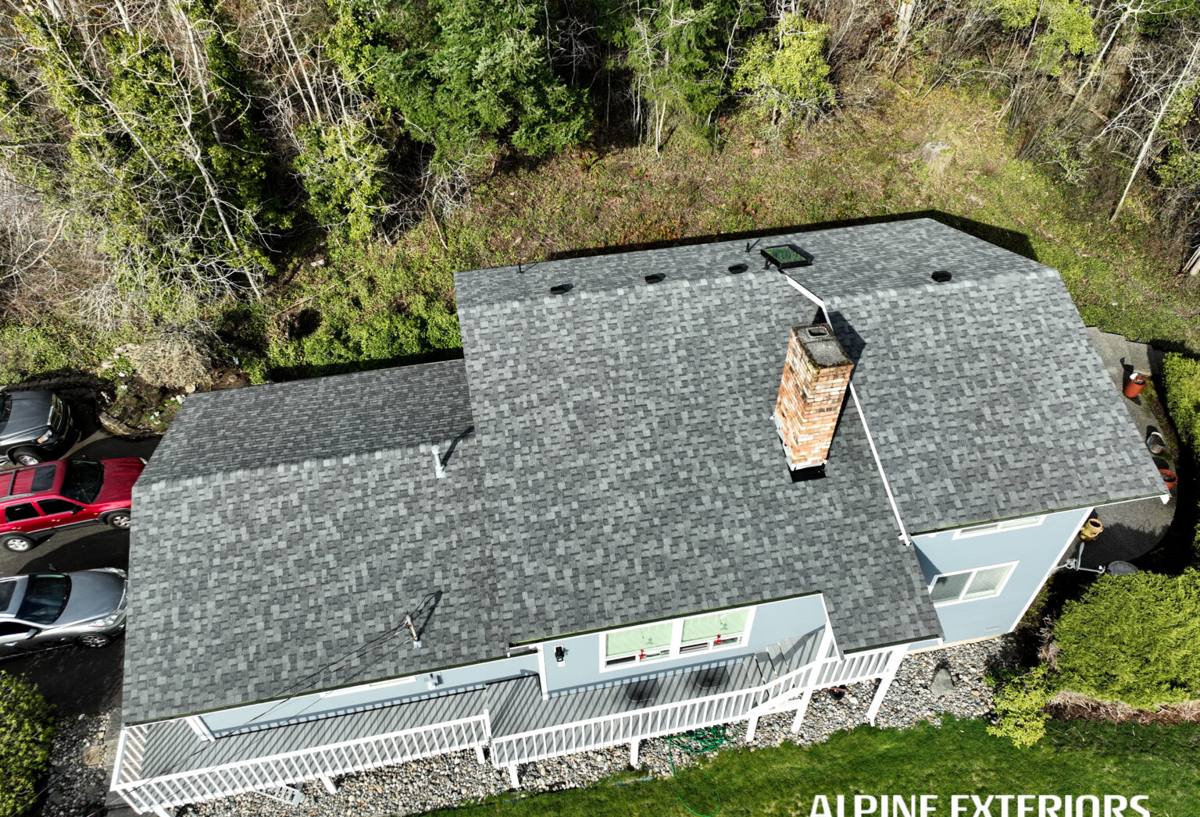
Signs a Sandy Point Home Needs Replacement, Not a Patch
Not every roof problem here calls for full replacement, but coastal wear tends to show up in ways that repairs can't fully solve. Before recommending a tear-off, we look for patterns like these:
- Granule loss heavy enough to expose the shingle mat, especially on south- and west-facing slopes
- Rusted or corroding flashing at chimneys, valleys, or roof-to-wall transitions
- Moss growth returning within months of cleaning, or moss established under the shingle tabs rather than just on top
- Soft spots or sagging in the decking when walked, which usually means moisture has already reached the plywood
- Curling, cupping, or cracked shingles concentrated on the ocean-facing side of the roof
- Interior staining on ceilings or in the attic after wind-driven storms specifically, not just heavy rain
- A roof approaching or past the manufacturer's rated lifespan, with multiple prior repairs already on record
If you're seeing two or more of these, it's worth a straightforward inspection before spending more on spot repairs that won't hold.
What a Correct Installation Involves in This Exposure
Tear-Off and Deck Inspection
We remove the existing roofing down to the deck rather than layering over it. That's the only way to actually see the plywood or OSB underneath — soft, delaminated, or water-stained sections get replaced before anything new goes down. Covering up a compromised deck is how a brand-new roof ends up with problems in three years instead of twenty.
Underlayment and Water Protection at Vulnerable Areas
Given how much wind-driven rain this area sees, we don't treat underlayment as an afterthought. Self-adhered ice-and-water membrane goes at eaves, valleys, and around penetrations — anywhere water is most likely to find a way in — with synthetic underlayment across the rest of the field for its tear resistance and water shedding.
Ventilation That Matches the Climate
Balanced intake and exhaust ventilation keeps the attic dry and temperature-stable, which matters twice over here: it prevents condensation buildup in our humid winters, and it helps the roof deck dry out faster after storms instead of staying damp long enough for moss and rot to take hold.
Flashing Details That Actually Shed Water Sideways
Step flashing, counterflashing, and valley metal are installed with extra attention to lap direction and sealant placement, since wind-driven rain will find any flashing detail that was built only for straight-down weather.
Roofing Material Options for Sandy Point's Exposure
There's no single "best" roofing material for every home — the right choice depends on your budget, your roof's pitch and complexity, and how much long-term maintenance you want to take on. Here's how the common options compare for a salt-air, high-moisture environment like this one:
| Material | Coastal/Salt Air Durability | Moss Resistance | Typical Lifespan | Relative Cost |
|---|---|---|---|---|
| Architectural asphalt shingle | Good, with coastal-rated fasteners and flashing | Moderate; benefits from added moss-resistant granules | 25–30 years | $ |
| Standing seam metal | Excellent, when finish and fasteners are marine-grade | Very good; sheds moss more readily than shingles | 40–50+ years | $$$ |
| Synthetic/composite shingle | Good; doesn't corrode, but check manufacturer's coastal rating | Good | 30–50 years | $$ |
| 3-tab asphalt shingle | Fair; more prone to edge lift in wind-driven rain | Lower without added treatment | 15–20 years | $ |
For most Sandy Point homes we recommend architectural shingle or metal, since both hold up well against salt exposure when installed with the right hardware. We'll walk through the honest trade-offs — upfront cost, maintenance, and how the roof will look on your specific home — before you decide.
Our Installation Process, Start to Finish
- On-site inspection and estimate. We look at the current roof, the deck condition where accessible, ventilation, and any problem areas specific to your home's exposure.
- Material selection. We go over options with real cost and lifespan differences, not just color and style.
- Permitting. We handle the permit application with Whatcom County so you don't have to track it down yourself.
- Tear-off and deck inspection. Old roofing comes off, the deck is inspected, and any damaged sheathing is replaced before moving forward.
- Underlayment and flashing installation. Ice-and-water membrane, synthetic underlayment, and all flashing go in with coastal exposure specifically in mind.
- Roofing material installation. Shingles or metal panels are installed to manufacturer spec, with attention to fastening patterns suited to wind exposure.
- Ventilation and detail work. Ridge and soffit ventilation, pipe boots, and penetration seals are finished and checked.
- Final walkthrough and cleanup. We inspect the completed roof with you, answer questions, and make sure the property is cleaned of debris and nails before we leave.
Fasteners, Flashing Metals, and Coastal-Grade Hardware
This is where a lot of roof installs quietly cut corners, and it's usually invisible until years later when rust streaks start showing up below flashing lines. We use fasteners and flashing metals rated for coastal or marine exposure rather than standard electro-galvanized stock, because standard hardware corrodes noticeably faster this close to salt air. It costs a little more up front. It's not optional if you want the roof to still look and perform well a decade in.
Building Moss Resistance Into the New Roof
You can't eliminate moss risk on a shaded, humid property, but you can reduce how aggressively it takes hold. Options we discuss with Sandy Point homeowners include moss-resistant shingle products with embedded copper or zinc granules, strategically placed zinc or copper strips near the ridge that release trace metals with each rain, and making sure the roof's ventilation and drainage don't leave standing moisture in shaded valleys or north-facing slopes. None of these replace periodic cleaning, but they meaningfully extend the time between treatments.
Permits, Timeline, and What to Expect During the Project
A full tear-off and replacement on an average Sandy Point home typically takes a few days to a week, weather permitting — wind-driven rain and rough marine weather can push that timeline, and we'll be upfront about it rather than rushing work in bad conditions to hit a date. Whatcom County requires a building permit for roof replacement, which we pull on your behalf. We'll also walk you through the manufacturer's warranty terms and our own workmanship coverage before the project starts, so there are no surprises about what's covered and for how long.
Why a Crew That Already Works Sandy Point Matters
Roofing crews that mostly work inland don't always think about coastal fastener grades, wind-driven rain at flashing laps, or how much longer moss season runs this close to the water — not because they're careless, but because it's not what they run into every day. A crew that already works Birch Bay and Sandy Point regularly has already seen how roofs here actually fail, and builds the new one to hold up against those specific conditions from day one instead of learning the hard way on your roof.
If your roof is showing its age or you're just weighing your options, we're happy to take a look and give you a straightforward, no-pressure estimate. There's a form below to get started.