 Birch Bay Siding
 Why Decks Wear Out Faster in Sandy Point Than a Few Miles Inland
Sandy Point sits right on the water, and that changes what a deck has to put up with compared to a similar house set back a mile or two inland. The salt air off the water works on fasteners, flashing, and any exposed metal year-round, not just during storms. Add in Whatcom County's long stretch of wet weather — driving rain that doesn't just fall straight down but gets pushed sideways into ledger boards, railings, and stair stringers — and you've got a structure that's fighting moisture intrusion almost every month of the year. Then there's moss. Shaded decks, north-facing decks, and decks with tight board spacing or poor airflow underneath stay damp long after a storm has passed, and moss doesn't just look bad — it holds water against the wood surface and accelerates rot from the top down.
None of this means a deck in Sandy Point is doomed to fail early. It means the deck has to be built with these specific conditions in mind, not built the same way you'd build one in a dry inland subdivision. That's the difference between a deck replacement that holds up for decades and one that starts showing problems again in five or six years.
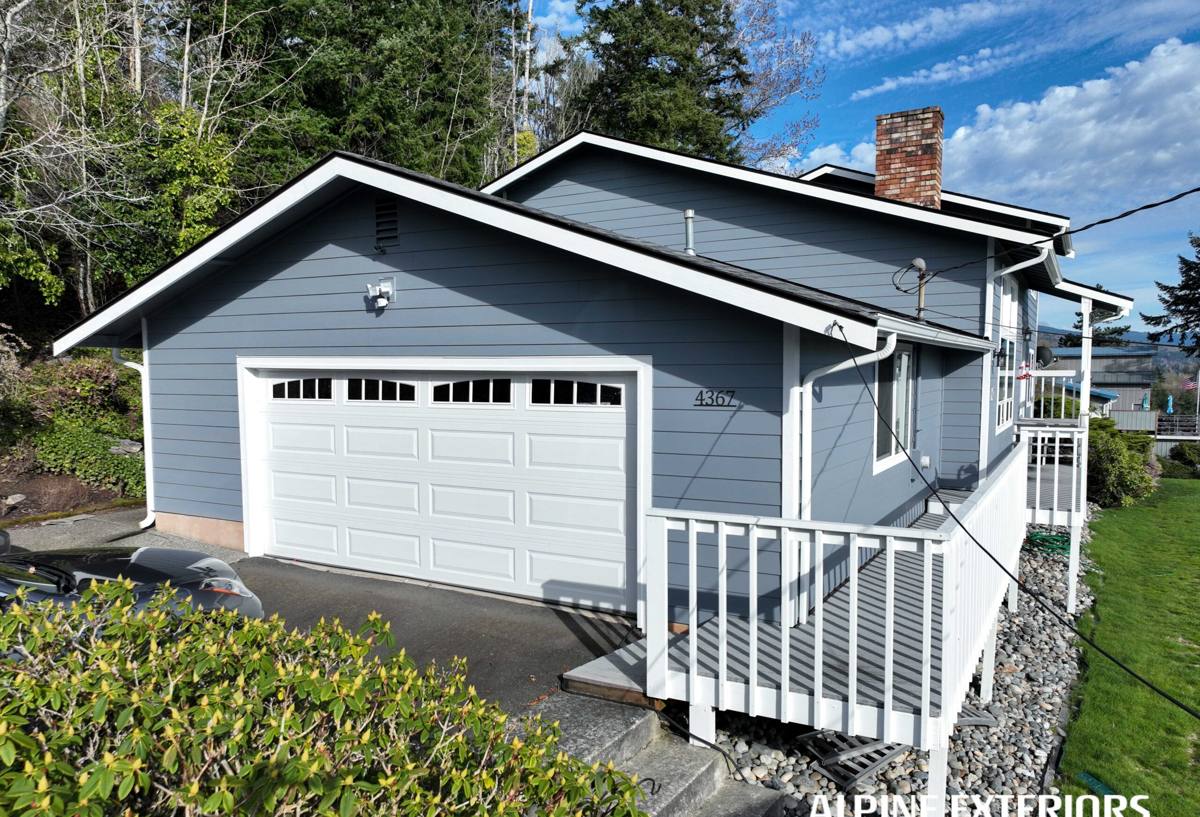
Signs a Sandy Point Deck Needs Replacing, Not Just Patching
A lot of homeowners call us asking for a repair when what they actually need is a replacement — and a fair number call us worried about a full rebuild when a repair would do the job. Here's how to tell which situation you're in:
- Soft or spongy decking when you walk on it, especially near the house or at board ends — usually means moisture has gotten into the wood fiber and rot has already started.
- Rust streaking down from fasteners or hardware — a sign the fastener itself is failing, which is common with standard hardware exposed to salt air over time.
- Ledger board separation — any daylight, gap, or movement where the deck meets the house is a structural red flag, not a cosmetic one.
- Wobbly railing posts or stair stringers — posts that move at the base usually mean the framing or post connection underneath has degraded.
- Persistent moss or algae staining that comes back within weeks of cleaning — this usually means the deck can't dry out properly between rains, which is a structural and design issue, not just a surface one.
- Boards cupping, splitting, or pulling away from fasteners across large sections rather than isolated spots.
If the problems are isolated to a few boards or one section of railing, a repair can genuinely extend the life of the deck. If you're seeing several of these signs at once, or the framing underneath is affected, replacement is usually the more honest recommendation — patching a failing structure just delays the cost and adds risk.
What a Correct Deck Replacement Involves in a Waterfront Climate
Ledger Board Flashing
The ledger board — where the deck attaches to the house — is the single most common failure point on any deck, and it's even more critical here because of how much driving rain gets pushed against the house band board. Proper flashing, installed correctly and sealed at the right layers, keeps water from getting behind the siding and into the house framing itself. This is not a place to cut corners, and it's not something you can verify from the ground once the deck boards are on.
Footings Sized for Local Soil
Sandy, well-draining soil behaves differently under load than denser inland soils. Footings need to be sized and set to the right depth for the actual soil conditions on the lot, not just built to a generic minimum. Undersized or shallow footings are one of the more common shortcuts we see on older decks in this area, and they show up years later as settling, tilting, or uneven decking.
Airflow and Drainage Underneath
A deck that can't breathe underneath stays damp longer after every rain, which feeds moss and accelerates rot in the joists. Proper joist spacing, deck height off grade, and grading away from the foundation all matter more here than they would on a dry, inland lot.
Fastener and Hardware Selection
Standard galvanized fasteners can corrode faster in salt air than their rated lifespan suggests, especially where they're in contact with treated lumber or dissimilar metals. We use stainless steel or marine-grade coated fasteners and hardware rated for coastal exposure — it costs more up front and it's the right call for a deck that's supposed to last.
Decking Material Options for This Climate
There's no single "best" decking material for every homeowner — it depends on budget, maintenance tolerance, and how the deck sits relative to sun and shade. Here's how the common options actually compare under Sandy Point's conditions:
| Material | Moss/Algae Resistance | Salt Air Durability | Maintenance | Typical Lifespan |
|---|---|---|---|---|
| Pressure-treated wood | Moderate — needs cleaning and sealing to resist moss buildup | Good if fasteners and hardware are upgraded | Annual cleaning, periodic re-sealing/staining | 15–20 years with upkeep |
| Cedar | Naturally more rot-resistant, but still needs cleaning in shaded areas | Good, especially with proper finish | Regular sealing to maintain color and rot resistance | 15–20 years with upkeep |
| Composite (e.g. Trex, TimberTech) | Strong — resists moisture absorption that feeds moss | Excellent — no corrosion, minimal salt-related degradation | Occasional washing, no sealing/staining | 25–30+ years |
| PVC decking | Strong — fully synthetic, low moisture absorption | Excellent | Lowest maintenance of the group | 25–30+ years |
Wood decking isn't a bad choice for Sandy Point — it's a real, honest option with a lower upfront cost — but it requires a homeowner who's willing to keep up with cleaning and sealing on a schedule. Composite and PVC cost more initially but largely remove moss and moisture maintenance from the equation, which matters more here than in a drier inland yard.
Our Process for a Sandy Point Deck Replacement
- On-site assessment — we check the framing, ledger connection, footings, and grading, not just the visible decking surface, so you know exactly what's driving the problem.
- Honest scope and estimate — you'll know upfront whether it's a full tear-out or whether part of the structure can be reused safely.
- Permitting — deck replacements in Whatcom County typically require a permit, and waterfront-adjacent properties can have additional setback or shoreline considerations depending on the specific lot. We handle this as part of the job so you're not chasing paperwork.
- Demolition — old decking, railing, and any compromised framing removed, with the site protected and debris hauled off.
- Structural rebuild — new or reinforced footings, joists, and ledger flashing installed to current code and to the standard this climate demands.
- Decking, railing, and stairs — installed with corrosion-resistant fasteners and attention to spacing and airflow to reduce future moss buildup.
- Final walkthrough — we go over the finished deck with you, including basic care so you get the full lifespan out of the materials.
Moss Prevention Is a Design Decision, Not Just a Cleaning Task
Most homeowners think of moss as something you power-wash off once a year. On a deck, that only addresses the symptom. The real fix happens during construction: correct board spacing so water and debris don't sit in the gaps, adequate clearance under the deck for airflow, and orienting or trimming back overhanging vegetation where it's within the homeowner's control. A deck built with these details in mind will still need occasional cleaning in this climate — that's just reality in Whatcom County's long wet season — but it won't be fighting a losing battle against moss that's trapped in poor design from day one.
Maintenance Checklist for a New Sandy Point Deck
- Rinse or sweep debris off the deck surface regularly, especially in fall when leaves and organic matter accumulate.
- Clean composite or PVC decking with mild soap and water once or twice a year to prevent surface algae buildup.
- Re-seal or re-stain wood decking on the manufacturer's recommended schedule — don't wait until it's visibly faded or graying.
- Check fastener heads and hardware annually for early signs of corrosion, especially near railing posts and stairs.
- Keep gutters and downspouts near the deck clear so runoff isn't draining directly onto or under the structure.
- Trim back vegetation that shades the deck or blocks airflow underneath it.
- Inspect the ledger board area at the house connection once a year for any signs of gapping or water staining.
Why Hiring a Crew That Already Works Sandy Point Matters
A deck built to a generic inland standard will underperform here, even if the workmanship looks fine on installation day. A crew that already works Sandy Point knows to spec corrosion-resistant hardware without being asked, to size footings for the sandy soil common in the area, and to build in the airflow and drainage details that keep moss from taking over a shaded deck. We also know the practical side of the job here — narrow waterfront access, protecting existing landscaping and shoreline areas during demolition and construction, and working around the salt-air corrosion that shows up in old fasteners and framing once we open a deck up.
That local familiarity isn't a marketing line — it shows up in fewer surprises during the job and in a deck that's actually built for the conditions it's going to face, not just the conditions on a spec sheet.
Cost Factors Homeowners Should Understand
Every deck replacement is different, but the biggest cost drivers on a Sandy Point project tend to be the same handful of things:
| Factor | Why It Affects Cost |
|---|---|
| Deck size and layout | More square footage and complex shapes (multi-level, angles, built-in seating) mean more material and labor. |
| Decking material choice | Wood costs less upfront; composite and PVC cost more but reduce long-term maintenance spending. |
| Framing and footing condition | If the existing structure can't be reused, a full structural rebuild adds cost but is often necessary near the water. |
| Railing style | Cable, glass, and custom railing systems cost more than standard wood or composite balusters. |
| Access and site conditions | Waterfront lots with limited access can add labor time for material staging and demolition. |
We'll walk through each of these specific to your property during the estimate, so you're pricing your actual deck — not a generic average.
If your deck in Sandy Point is showing its age, we're glad to take a look and give you a straight answer on whether it needs a repair or a full replacement. Reach out for a free, no-pressure estimate using the form below.