 Birch Bay Siding
 Building a Deck That Actually Holds Up in Sandy Point
Sandy Point sits right up against Georgia Strait, which means any deck built here is doing double duty from day one: it has to look good and function as an outdoor living space, and it has to survive conditions that are noticeably harder on wood, fasteners, and finishes than a typical inland Whatcom County lot. Salt-laden air off the water, wind-driven rain that gets under railings and skirting from angles a standard roof overhang never has to deal with, and a long, damp moss season that can run from October well into May all put real stress on a deck's structure and surface. A deck built to a generic spec sheet will show it within a few years — soft spots at the ledger, corroded fasteners, slick moss buildup on the walking surface, and railing posts that loosen before their time.
We build and replace decks specifically for this stretch of coastline, and the difference shows up in the details: which fasteners we use, how we flash the ledger board, what gap spacing we leave between boards, and how we handle the shaded, low-airflow spots that never fully dry out. This page covers what that actually looks like for a Sandy Point property.
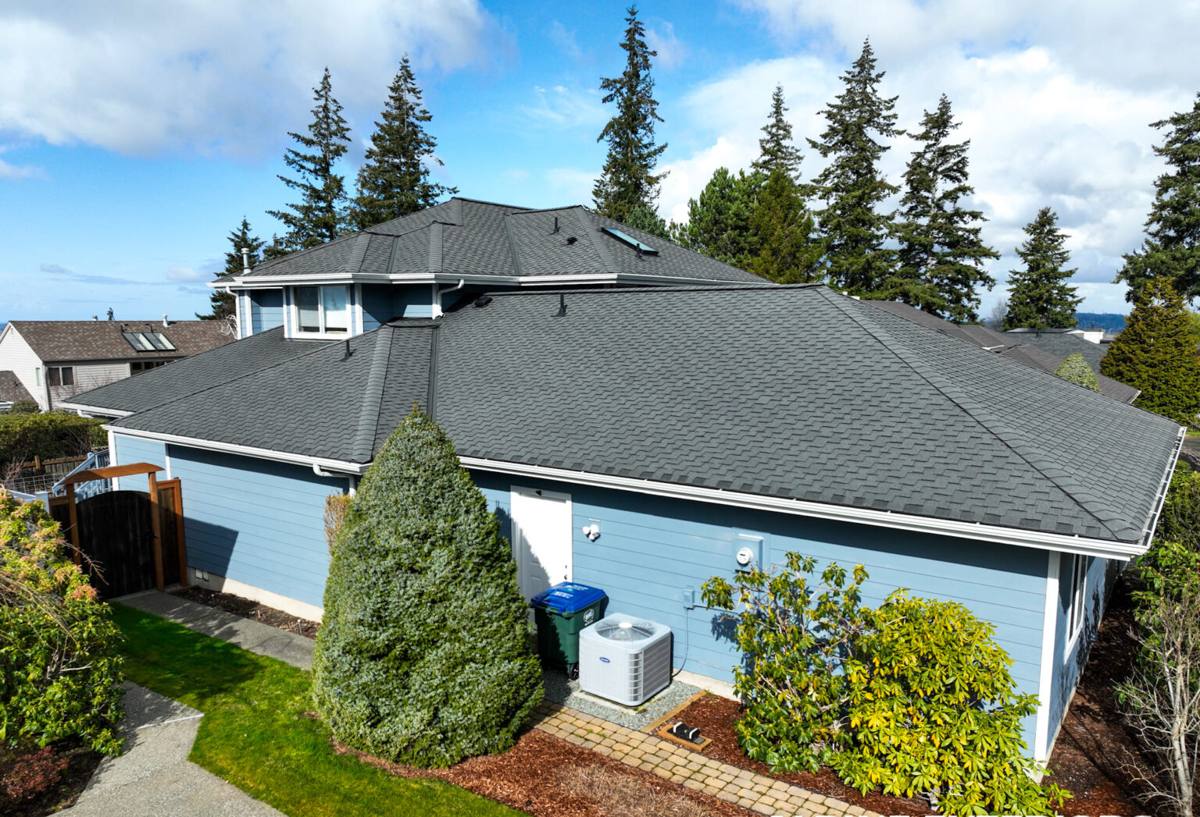
What Sandy Point's Climate Does to a Deck
Salt Air and Metal Fatigue
Airborne salt from the Strait accelerates corrosion on anything metal — nails, screws, joist hangers, post bases, and railing hardware. Standard galvanized fasteners that would last decades inland can start showing rust streaks and pitting in half that time this close to the water. Once a fastener corrodes, it loses holding strength long before it looks obviously bad, which is why so many deck failures trace back to hardware rather than the lumber itself.
Driving Rain and Hidden Moisture
Storms coming off the water don't fall straight down — they come in sideways, which pushes water into places a deck built to a "rain falls vertically" assumption never accounts for: behind ledger boards, up under railing base plates, and into end grain on stair stringers. Once moisture gets trapped against wood that can't dry out between storms, rot sets in from the inside, often invisible until a board or post is already compromised.
Moss, Algae, and a Long Wet Season
Whatcom County's wet season is long, and Sandy Point's proximity to the water keeps humidity and shade-driven dampness lingering even longer in spots that don't get much afternoon sun. Moss and algae take hold on decking that stays damp, and beyond being unsightly, a mossy deck surface is genuinely slick and dangerous underfoot — a real concern on stairs and near entry doors.
Material Choices That Make Sense Here
There's no single "best" decking material for every project — it depends on budget, how much upkeep the homeowner wants to take on, and how exposed the deck is to wind and salt spray. Here's how the common options actually perform in Sandy Point conditions.
| Material | Moisture & Salt Behavior | Moss Resistance | Maintenance |
|---|---|---|---|
| Pressure-treated fir/hem-fir | Good if properly sealed and re-sealed; end grain and fastener points are the weak spots | Needs regular cleaning; moss takes hold quickly if neglected | Annual inspection, re-sealing every 2-3 years |
| Cedar | Naturally rot-resistant but still needs sealing near the water; salt spray dulls the finish faster | Better natural resistance than PT, still needs cleaning | Sealing/staining every 2-3 years |
| Composite decking | Doesn't absorb moisture or rot; hardware and framing underneath still need proper treatment | Can still grow moss/algae on the surface film if shaded and damp — needs periodic washing | Low — occasional cleaning, no sealing |
| PVC/capped composite | Excellent moisture and salt resistance | Same surface-cleaning needs as composite | Low — occasional cleaning |
For Sandy Point specifically, we lean toward composite or capped composite decking on the walking surface for most homeowners who want to spend less time maintaining the deck and more time using it, while still framing the substructure in properly treated, correctly fastened lumber — because the framing is what actually carries the load, and it's what fails first if it's not built right regardless of what's on top of it.
What a Correctly Built Deck Involves
Footings and Structure
Everything starts below the deck. Footings need to be sized and set to local frost and soil conditions, not just "deep enough to look right." Posts need proper post bases that keep the wood off standing water rather than sitting directly in concrete or dirt, which is one of the fastest ways to introduce rot at the point of highest structural load.
Ledger Flashing
The ledger board — where the deck attaches to the house — is the single most common failure point on decks in wet coastal climates. It needs proper flashing that directs water away from the house band board and the ledger itself, not just caulk, which fails over time and traps moisture rather than shedding it. Given the driving rain this area sees, we treat ledger flashing as non-negotiable, not an upgrade.
Fasteners and Hardware
Given the salt air, we use stainless steel or heavy coated fasteners rated for coastal/salt exposure on connections that matter structurally, and hardware sized to the actual load, not the minimum code allows. This is one of the areas where cutting corners doesn't show up as a problem for a few years — and then shows up all at once.
Board Spacing and Airflow
Gap spacing between deck boards needs to account for this area's humidity and rain patterns — too tight and water and debris sit in the seams, encouraging moss and rot; too wide and it's uncomfortable underfoot and lets more debris fall through to the substructure. We also make sure there's real airflow underneath the deck itself, since a deck built low and tight to the ground with no ventilation is a moss and rot problem waiting to happen in this climate.
Railings and Stairs
Railing posts take a lot of wind load right on the water, so post attachment needs to be solid, not just code-minimum. Stair stringers are especially vulnerable to end-grain rot from driving rain, so we detail those connections carefully and choose materials and fastening that account for the extra exposure.
Our Process for a Sandy Point Deck Project
- On-site assessment — we look at sun/shade exposure, wind direction relative to the water, drainage on the lot, and the condition of any existing deck or ledger connection.
- Material and layout conversation — we walk through the material table above in the context of your budget, how the deck will actually be used, and how much maintenance you want to take on long-term.
- Design and permitting — footing layout, railing design, and stair placement are worked out and, where required, submitted for local permit.
- Site prep and footings — footings are set to proper depth and spec for this soil and frost condition.
- Framing — structure is built with salt-rated fasteners and correctly flashed ledger connections from the start.
- Decking, railings, and stairs — surface material installed with spacing and fastening appropriate to the climate.
- Final walkthrough — we go over basic maintenance expectations specific to the material you chose, so there are no surprises in year two or three.
Repair, Replace, or Rebuild?
Not every deck problem in Sandy Point means a full rebuild. We look at the age and condition of the structure separately from the surface. If the framing, footings, and ledger connection are sound, replacing decking boards and railings can be a legitimate, cost-effective option. If there's rot at the ledger, corroded structural hardware, or footings that were never adequate to begin with, patching the surface just delays a bigger problem — and on a coastal lot, that problem tends to move faster than homeowners expect. Part of our estimate process is being straight with you about which situation you're actually in.
Maintaining a Deck in This Climate
Whatever material you choose, a few habits go a long way toward keeping a Sandy Point deck safe and good-looking through the wet season:
- Sweep debris out of board gaps regularly — trapped organic matter is what moss and algae feed on
- Wash the deck surface at least once a year, more often on shaded sections that don't get direct sun
- Check railing posts annually for looseness, especially after windy winter storms
- Inspect the ledger flashing line where the deck meets the house for gaps, cracking, or staining
- Re-seal wood decking (PT or cedar) on the manufacturer's recommended schedule, not just when it looks dry
- Keep an eye on fastener heads for rust streaks — early corrosion is easier and cheaper to address than a failed connection
Why Hire a Crew That Already Works in Sandy Point
Deck-building advice that's correct for a dry inland climate can be genuinely wrong for a lot two blocks from the water. A crew that hasn't worked this coastline may default to standard fasteners, standard flashing details, and standard board spacing — all things that hold up fine elsewhere in Whatcom County and fail early here. We build and repair decks throughout Birch Bay and Sandy Point, so the coastal-specific choices — fastener grade, ledger flashing, airflow under the structure, moss-conscious spacing — aren't an upsell, they're just how we build here by default.
Cost Factors to Expect
Every deck project is different, but the main cost drivers on a Sandy Point job tend to be the same handful of things:
| Factor | Why It Matters |
|---|---|
| Decking material | Composite/PVC costs more upfront than PT lumber but requires far less long-term maintenance |
| Deck size and height | Larger decks and elevated decks (multi-story lots) need more structural framing and footings |
| Ledger and flashing condition | Replacing or properly flashing a ledger connection on an older home adds labor but is essential near the water |
| Railing style | Cable, glass, and custom railing systems cost more than standard wood or composite baluster railing |
| Site access and grading | Sloped or hard-to-access lots common near the shoreline can add to footing and equipment costs |
We give straightforward, itemized estimates rather than a single vague number, so you can see exactly where the budget is going and where there's room to adjust.
If you're planning a new deck, replacing an aging one, or just not sure whether your current deck's framing is still sound, we're happy to come take a look. Reach out for a free, no-pressure estimate using the form below.