 Birch Bay Siding
 Point Whitehorn Sits Right in the Weather's Path
Point Whitehorn sits out on the bluffs above the water, west of the main Birch Bay strip, and that location comes with a tradeoff. The views are part of why people build and buy out here — but the same open exposure that gives you those views also means wind, salt spray, and driving rain hit these roofs harder and more often than they hit a roof set back in town or inland. Add in Whatcom County's long, damp moss season and you've got a roof working against three kinds of stress at once: mechanical (wind uplift), chemical (salt corrosion on metal components), and biological (moss and algae holding moisture against the shingle mat). Storm damage repair out here isn't just "patch what blew off" — it's understanding which of those three stresses actually did the damage, because that changes how you fix it.
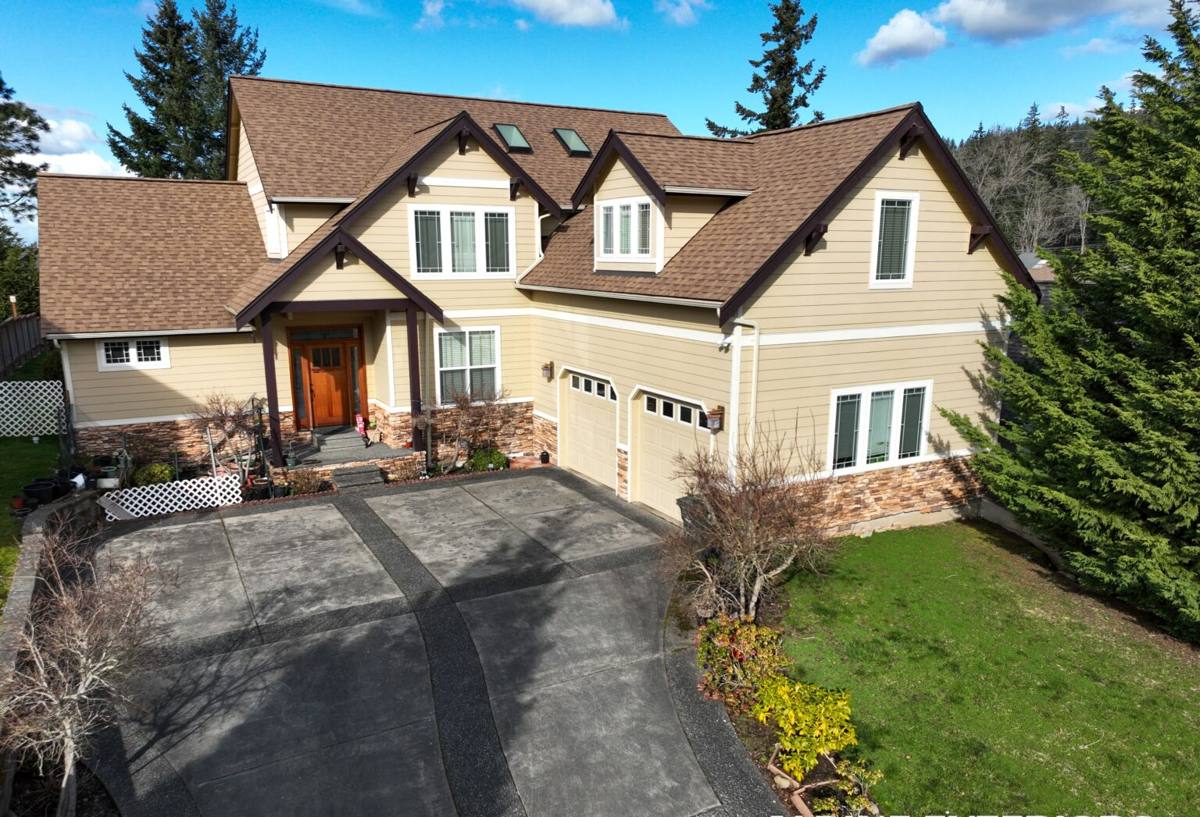
What Storm Damage Actually Looks Like on a Point Whitehorn Roof
Wind-driven damage
Because these roofs catch wind off open water with little to break it up, the failure pattern is often different from a sheltered roof back in the trees. We see shingles lifted or creased along their leading edge, ridge cap blown loose, and nails backed out where wind has been working a section back and forth over multiple storms rather than in one dramatic event. Sometimes the damage isn't a missing shingle at all — it's a seal strip that's broken loose and will let go the next time the wind picks up, even though the shingle still looks fine from the ground.
Water intrusion
Driving rain doesn't need a big hole to get in. On an exposed roof, wind can push rain sideways and up under laps, flashing, and vents that would shed water fine in calm conditions. We look at valleys, chimney and pipe flashing, and the spots where a roof plane changes direction, because that's where wind-driven rain finds the path of least resistance — and where a homeowner is least likely to spot a problem before it shows up as a stain on a ceiling.
Moss and organic buildup
Moss doesn't cause storm damage directly, but it sets a roof up to fail faster when a storm does hit. A moss mat holds water against the shingle surface, keeps that section wet longer after every rain, and can lift shingle edges just enough for wind to get a grip on them. A roof that's been neglected on the moss front for a few seasons is simply more vulnerable the next time a windstorm rolls through, which is common in a place with this much shade, humidity, and marine air.
Why a Quick Patch Isn't the Same as a Real Repair
After a storm, it's tempting to just get the visible problem covered and move on. The trouble is that visible damage is often a symptom, not the whole story. A single missing shingle patched in isolation doesn't tell you whether the surrounding shingles have compromised seal strips that'll let go in the next storm, or whether water already got under the underlayment during the event that caused the damage in the first place. We treat every storm repair call as a chance to actually inspect the roof, not just staple down what's obviously wrong, because doing that properly the first time almost always costs less than a second visit after the next storm finds the next weak spot.
How We Handle a Storm Damage Repair Call
- Inspection first. We walk the roof when it's safe to, or use a ladder and binoculars if it isn't yet, and check not just the obvious damage but the surrounding field of the roof, the flashing details, and the attic or ceiling below for signs water already got through.
- Emergency protection. If there's an active leak or open section, we get it covered and weathertight the same visit whenever possible, so a bigger storm forecast for later in the week doesn't turn a repair into a full loss.
- Written scope and photos. You get a clear explanation of what's damaged, what likely caused it, and what the repair involves, in plain language, not a vague line item.
- The repair itself. We match materials as closely as possible and tie the repair correctly into the surrounding roofing so it sheds water the way the rest of the roof does, rather than just moving the problem to the next seam over.
- Follow-up check. On bigger repairs, we like to look at the work again after it's been through at least one real rain event, especially during the wetter months.
Repair or Replace? What Actually Drives That Decision
Not every storm-damaged roof needs a full replacement, and not every roof that "just needs a patch" is actually a good repair candidate. Here's how we think through it:
| Factor | Leans toward repair | Leans toward replacement |
|---|---|---|
| Age of roof | Under roughly 12-15 years, still within useful life | Already near or past expected lifespan for the material |
| Extent of damage | Isolated to one slope, ridge line, or flashing detail | Spread across multiple slopes or repeated storm hits over several years |
| Underlying decking | Solid, dry sheathing under the damaged section | Soft spots, rot, or delamination found once shingles are pulled back |
| Moss/algae history | Light, surface-level growth, roof otherwise sound | Heavy, long-term growth that's degraded the shingle mat itself |
| Insurance involvement | Damage limited to a specific, documented event | Adjuster or inspection points to broader wear the storm just exposed |
We'll give you an honest read on where your roof falls on this table rather than defaulting to whichever answer is more profitable for us. Plenty of Point Whitehorn homes get several more good years out of a roof with a proper, targeted repair.
Materials and Methods That Actually Hold Up Out Here
Given the salt air and wind exposure specific to this stretch of coastline, a few details matter more here than they would on a sheltered inland roof:
- Fasteners and flashing metals chosen for corrosion resistance, since salt air accelerates rust on lower-grade metal fittings and exposed nail heads faster than most homeowners expect.
- Shingles rated for higher wind exposure, properly nailed to spec — under-driven or over-driven nails are one of the most common causes of repeat wind damage we find on repair calls.
- Self-adhering waterproof membrane at valleys, eaves, and around penetrations, giving a second line of defense where wind-driven rain is most likely to get pushed uphill under the shingle laps.
- Algae-resistant shingle products in shaded, moisture-prone sections of roof, to slow the moss cycle down rather than fight it from scratch every year or two.
- Correct flashing details at every transition — chimneys, skylights, wall intersections — since a storm rarely damages a well-flashed detail; it finds the one that had corners cut on it originally.
Why It Matters That We Already Work This Stretch of Coastline
A crew that already does roof work around Birch Bay and Point Whitehorn knows what a normal storm season here does to a roof versus what's actually unusual damage worth a closer look. We know which roof orientations catch the worst of the wind off the water, which types of original construction in this area tend to have thinner flashing details, and what a realistic repair timeline looks like when you're waiting between storm systems for a dry enough window to work safely. That local pattern-recognition is worth more than it sounds like — it's the difference between a repair built for average weather and one built for what this specific location actually sees.
After a Storm: A Homeowner's Quick-Look Checklist
You don't need to get on the roof yourself. From the ground or a window, here's what's worth checking after any significant wind or rain event:
- Shingle pieces, granules, or ridge cap fragments on the ground around the house
- Gutters overflowing, sagging, or pulling away from the fascia
- New water stains on ceilings, especially near chimneys, skylights, or where two roof planes meet
- Visible daylight or gaps in the attic, if you can safely check it
- Shingles that look curled, lifted at the edges, or a different color or sheen than the surrounding roof
- Debris buildup or moss clumps that have shifted or washed loose in a heavy rain
None of these guarantee a serious problem, but any of them is a good reason to have a roof looked at before the next storm rolls through rather than after.
Insurance and Documentation
If your damage is from a specific, identifiable storm event, it may be worth a call to your insurance carrier before repairs start. We can document what we find — photos, plus a written description of the damage and likely cause — in a way that's useful whether or not you end up filing a claim. We're not a public adjuster and won't promise a claim outcome, but a clear, honest record makes that conversation easier no matter which way it goes.
If you've got storm damage on a Point Whitehorn roof, or just want a second set of eyes on something after the last windstorm, we're happy to take a look. Fill out the form below for a free, no-pressure estimate — no obligation, just a straight answer on what we see and what it would take to fix it right.