 Birch Bay Siding
 Point Whitehorn's Exposure Is Different From a Typical Whatcom County Lot
Homes near Point Whitehorn sit close to the Strait of Georgia, which means they take on a combination most inland Whatcom County properties never see: near-constant salt-laden air, wind-driven rain that hits siding sideways instead of straight down, and long stretches of shaded, damp shoulder season that keep exterior walls wet longer than homes just a few miles inland. Siding that would hold up fine in a more sheltered Birch Bay yard can fail early here if it isn't rated for the exposure and installed with that exposure in mind.
This page covers siding replacement specifically for that environment — what it does to a wall system over time, what a correct replacement actually involves, and why the crew doing the work matters as much as the product going up.
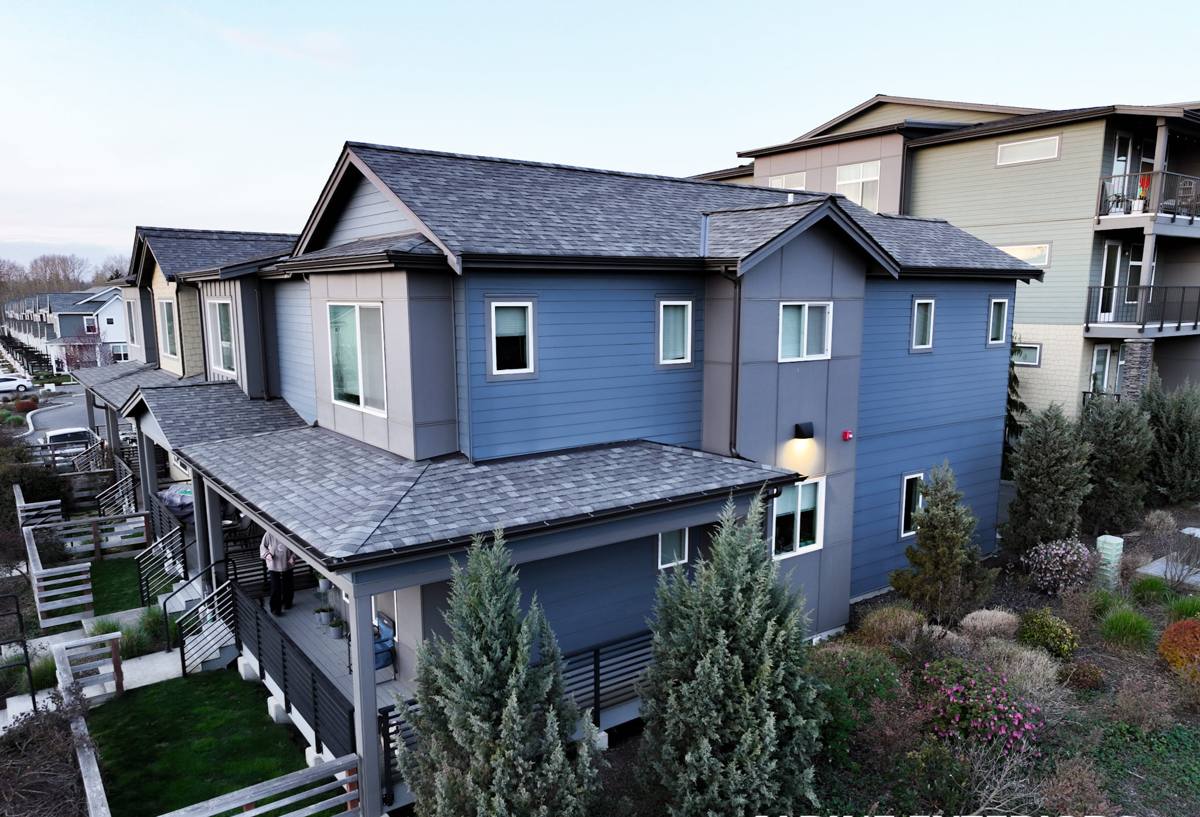
What Salt Air, Driving Rain, and Moss Season Actually Do to Siding
Salt Air
Airborne salt is corrosive to exposed metal fasteners, flashing, and trim connectors, and it accelerates the breakdown of paint films and some engineered wood coatings. Over years, salt exposure shows up as chalking, fastener staining, and premature finish failure on siding that isn't built or coated for coastal duty.
Driving Rain
Wind off the water doesn't just add rainfall — it changes its direction. Rain gets pushed up under laps, into butt joints, and around trim in ways vertical rain never would. Any weakness in flashing details, caulking, or panel overlap becomes a moisture entry point far sooner on an exposed Point Whitehorn wall than on a protected inland wall.
Moss and Prolonged Dampness
Northwest Washington's mild, wet winters already favor moss and algae growth on north- and shade-facing walls. Near the water, morning fog and marine moisture extend that damp window even further. Moss holds water against the siding surface, and on materials that aren't dimensionally stable or properly sealed at the edges, that sustained moisture is what starts rot, delamination, or paint failure.
Signs Point Whitehorn Homes Should Watch For
- Soft, spongy, or crumbling spots when you press on the siding, especially near the bottom courses and around window trim
- Persistent moss or dark streaking that comes back within weeks of cleaning
- Visible fastener rust or dark "bleed" streaks running down from nail heads
- Paint that's chalking, peeling, or bubbling faster than the label's rated repaint interval
- Warping, buckling, or gaps opening up at panel seams and corner boards
- A musty smell or interior wall staining near exterior walls, which can indicate moisture has already gotten behind the siding
- Siding that's more than 20–25 years old and has never been fully replaced or re-wrapped
Any one of these on its own might just need a repair. Several at once, especially on the weather-facing side of the house, usually means the underlying material or the original installation has reached its limit and a full replacement is the more honest answer than another round of patching.
What a Correct Siding Replacement Involves — Not Just New Panels
Swapping old siding for new panels without addressing what's underneath is the most common shortcut we see, and it's the reason houses in exposed coastal spots fail again within a few years of a "replacement." A job done right at Point Whitehorn includes:
Full Tear-Off and Sheathing Inspection
Old siding comes off completely so the sheathing underneath can be checked for rot, delamination, or soft spots — especially around window and door openings and at the base of walls, which is where driving rain does the most damage over time. Damaged sheathing gets replaced, not covered over.
A Proper Weather-Resistive Barrier
A correctly lapped and sealed weather barrier, with attention to how water is meant to drain down and out rather than pool behind the cladding, matters more on an exposed wall than on a sheltered one. This is also where rain-screen strategy (a small drainage gap behind the siding) earns its keep in a driving-rain environment.
Flashing at Every Penetration
Windows, doors, hose bibs, light fixtures, and vents all need flashing details that shed water outward, not details that rely on caulk alone. Caulk fails; flashing shouldn't have to.
Fastener and Hardware Selection
In a salt-air environment, fastener corrosion resistance isn't optional. Correct fastener type, spacing, and embedment — to the manufacturer's specification, not "close enough" — is what keeps panels secure and keeps rust streaking from showing up on the finish a few years down the road.
Correct Clearances and Joint Treatment
Proper ground clearance, gaps at butt joints, and factory-mitered or properly caulked corners all affect how much water the siding sheds versus absorbs. These are small details that are easy to skip and expensive to fix later.
Why We Install Only James Hardie Fiber Cement
We don't install vinyl, LP SmartSide, primed spruce, cedar, or other fiber cement brands. That's a deliberate standard, not a lack of options, and it matters even more in an environment like Point Whitehorn's:
| Consideration | Why It Matters Here |
|---|---|
| Non-combustible material | Fiber cement doesn't feed a fire the way wood-based or vinyl products can, which matters for insurance and long-term peace of mind on any coastal or wooded lot |
| Dimensional stability | Fiber cement resists the swell-shrink cycle that wood-based siding goes through in a wet-dry marine climate, which is a major factor in moss-related failure |
| Factory-applied ColorPlus finish | A baked-on finish resists salt-air fading and chalking far better than field-applied paint, and it's backed by its own finish warranty |
| Climate-engineered HZ product lines | Hardie's HZ10 line is formulated for wetter, harsher climates like ours, versus a one-size-fits-all product |
| Strong transferable warranty | A long product warranty that can transfer to a future buyer is a real asset on a coastal property, where buyers ask hard questions about exterior condition |
We're not going to tell you another product is junk — most of the alternatives perform reasonably well in the right setting. But we've made the call that Point Whitehorn's combination of salt air, wind-driven rain, and extended dampness is exactly the setting where those alternatives' trade-offs — repainting cycles, moisture sensitivity, coating durability — show up soonest. Hardie is what we've standardized on because it holds up to that combination with the least maintenance burden on you.
Our Replacement Process
- On-site assessment: we walk the exterior, check current siding condition, and look at sheathing access points to gauge what's underneath before quoting
- Scope and product selection: we recommend the Hardie profile and HZ specification suited to your wall's sun and wind exposure
- Tear-off and sheathing repair: old material comes off, damaged sheathing gets replaced, not papered over
- Weather barrier and flashing installation: installed and lapped correctly at every penetration before a single new panel goes up
- Hardie installation to manufacturer spec: correct fasteners, spacing, clearances, and joint treatment throughout
- Final walkthrough: we go over the finished job with you, including care and maintenance basics for a coastal setting
What Affects the Cost
| Factor | Why It Moves the Price |
|---|---|
| Sheathing condition | Rot or delamination found during tear-off means repair or replacement before new siding can go up |
| Wall complexity | Multiple gables, dormers, and trim details take more labor and material cutting than a simple rectangular wall |
| Siding profile and finish | Lap width, shingle-style panels, and specific ColorPlus finishes vary in material cost |
| Access and site conditions | Steep grades, limited staging area, or tree cover near the home can add labor time |
| Scope of tear-off | Full removal of old siding versus a smaller partial-wall replacement changes both labor and disposal costs |
We don't quote a number until we've actually looked at your walls — anything else is a guess. What we can say honestly is that a correctly installed Hardie system, done once, costs less over 20+ years than cheaper siding that needs repainting, patching, or early replacement in this climate.
Why Hiring a Crew That Already Works This Area Matters
A contractor who's worked exposed, water-adjacent sites throughout Whatcom County already knows which details get skipped on a "normal" install and can't be skipped here — how the weather barrier needs to lap given prevailing wind direction, where moss actually starts on these lots, and which flashing shortcuts show up as leaks two winters later instead of two months later. That's not something you can shortcut by reading a spec sheet; it's built from doing the work in this exact kind of weather, repeatedly.
If your Point Whitehorn home's siding is showing wear, or you just want a straight answer on whether it needs repair versus full replacement, we're happy to take a look. Reach out for a free, no-pressure estimate — the form below gets you started.