 Birch Bay Siding
 Point Whitehorn's Siding Problem Isn't Like Most of Whatcom County
Point Whitehorn sits right up against the water, and that changes what your siding is up against every single day. Homes a few miles inland deal with rain and cold. Homes out here deal with rain, cold, salt-laden air coming off the Strait of Georgia, and wind that drives moisture sideways into every seam, lap, and trim joint on the house. Add the shaded, timbered lots common around Point Whitehorn and Birch Bay, and you get long stretches where siding simply doesn't dry out between weather events. That combination — salt exposure plus persistent dampness plus limited sun — is what wears out the wrong siding material years before it should fail.
We install James Hardie fiber cement siding exclusively, and Point Whitehorn is one of the areas where that decision matters most. This page covers what a correct Hardie installation looks like for homes in this specific stretch of Birch Bay, why the climate here is harder on siding than people expect, and how we run the job from estimate to finish.
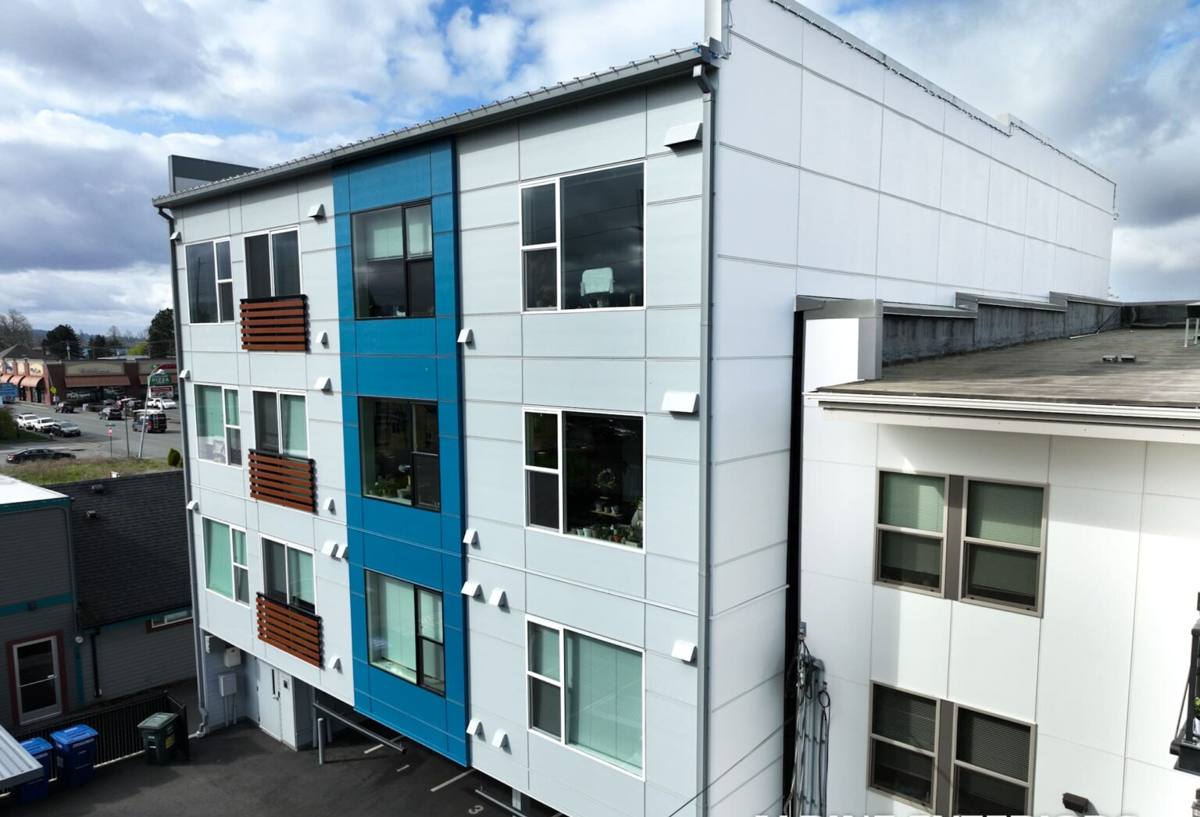
What Salt Air and Moss Actually Do to Siding
Salt Air
Airborne salt from the Strait doesn't just sit on the surface — it works its way into fasteners, flashing, and any exposed cut edge of a siding panel. On wood-based products, that moisture-salt combination accelerates rot at seams and around penetrations (hose bibs, vents, light fixtures). On metal fasteners and trim, it accelerates corrosion. Fiber cement doesn't absorb salt the way wood or wood-composite products do, and it isn't a food source for the organisms that break wood down, which is a big part of why we standardized on it for water-adjacent properties like these.
Driving Rain
Point Whitehorn's exposure means rain rarely falls straight down — it comes in at an angle, off the water, and hits vertical wall surfaces with real force. That puts extra load on every horizontal lap, every window and door flashing detail, and every inside and outside corner. If those details aren't built correctly, water finds its way behind the siding, and once it's behind the cladding, the sheathing and framing take the damage — not the siding itself.
Moss and Prolonged Dampness
Shaded, tree-lined lots near the water hold moisture longer than open, sun-exposed sites. That means longer moss season, more sustained humidity against the wall assembly, and more time for anything absorbent to stay wet. Moss itself doesn't destroy siding directly, but it's a marker: wherever moss thrives on a wall, that section is staying damp longer than it should, and whatever material is underneath is being tested constantly.
Why We Only Install James Hardie Here
We get asked fairly often why we don't offer vinyl, LP SmartSide, or cedar as options. The honest answer is that all three have real trade-offs that show up faster in an environment like Point Whitehorn than they would somewhere drier and more sheltered.
- Vinyl expands and contracts with temperature swings, and its seams and J-channels give wind-driven rain more opportunities to get behind the panel. It also softens and can distort with prolonged sun exposure on south and west elevations, and it's a petroleum product with a shorter realistic service life than fiber cement.
- LP SmartSide and other wood-strand products perform well when installed and maintained precisely, but they're wood-based — they need painted, sealed edges kept intact, and any breach lets moisture into the strand core, where it doesn't dry out quickly. In a salt-air, extended-dampness environment, that maintenance margin for error shrinks.
- Cedar and primed spruce are beautiful but demand a repainting and caulking schedule that most homeowners underestimate, and they're genuinely attractive to moisture and insects when that maintenance slips even one cycle.
James Hardie fiber cement is cement, sand, and cellulose fiber — it doesn't rot, it isn't a food source for insects or fungi, and it's non-combustible. The factory-applied ColorPlus finish is baked on under controlled conditions, which holds up better against salt spray and UV than field-applied paint. Hardie also engineers specific product lines (the HZ5 line, for example) for cold, wet climates like ours. None of this means Hardie is maintenance-free — it means the maintenance burden and failure modes are dramatically lower than the alternatives, which is exactly what a house exposed to the Strait needs.
What a Correct Installation Looks Like Out Here
Fiber cement siding is only as good as the water management system built behind and around it. This is where most siding jobs — regardless of brand — actually fail. For Point Whitehorn specifically, we pay close attention to:
Water-Resistive Barrier and Flashing
A continuous, correctly lapped weather-resistive barrier behind the siding, with flashing integrated at every window, door, deck ledger, and roof-to-wall intersection. In a driving-rain environment, sequencing matters — each layer has to shed water onto the layer below it, never behind it.
Rainscreen Gap
We install Hardie panel and lap siding over a drainage gap where conditions call for it, especially on north-facing and shaded walls that stay damp longest. That gap lets any incidental moisture drain and the wall assembly dry, instead of trapping water directly against the sheathing — a meaningful upgrade in a moss-prone microclimate like this one.
Fastener and Fastener Placement Standards
Corrosion-resistant fasteners, placed per Hardie's published fastening schedule, at the correct distance from panel edges. In salt air, using the wrong fastener — or the right fastener in the wrong spot — is one of the most common causes of premature staining and loosening.
Caulking and Sealant Discipline
Hardie's own installation guidance is specific about where sealant is required and where it isn't (over-caulking traps moisture just as badly as under-caulking). We follow those specifications rather than a generic "seal everything" approach.
Proper Clearances
Minimum clearance from grade, roofing, decks, and walkways so the bottom edge of the siding isn't sitting in standing water or splashback — a common problem on waterfront and near-waterfront lots where landscaping and drainage don't always leave the wall enough room.
Cost Factors for a Point Whitehorn Home
Every house is different, but the variables that move the price on a project out here are fairly consistent. We give firm numbers only after walking the property.
| Factor | Why It Matters Here |
|---|---|
| Existing siding removal | Older wood or vinyl siding on waterfront homes sometimes hides sheathing damage from years of moisture exposure that needs repair before new siding goes on |
| Rainscreen/drainage gap | Recommended on shaded and north-facing walls with heavy moss history; adds material and labor but extends service life |
| Number of penetrations | Vents, fixtures, and hose bibs each need individual flashing detail — homes with more of these take more time to do correctly |
| Product line and profile | Lap siding, panel siding, and shingle-style Hardie products carry different material and labor costs |
| Trim and accessory scope | Corner boards, fascia, and soffit work done at the same time affects total project size |
| Access and site conditions | Wooded, sloped, or waterfront-adjacent lots can affect staging and scaffolding needs |
How We Run the Job
- On-site walk-through — we look at current siding condition, moisture history (moss lines, staining, soft spots), sun/shade exposure on each elevation, and existing flashing details.
- Written scope and estimate — specific Hardie product line, profile, and color, plus any sheathing repair, rainscreen recommendation, and trim work, priced clearly.
- Sheathing and barrier inspection — once old siding is off, we inspect for hidden water damage before anything new goes up. This step gets skipped by crews trying to move fast, and it's the step that determines how the new siding will actually perform.
- Installation to manufacturer spec — fastening schedule, clearances, flashing sequence, and caulking per Hardie's published guidelines, not shortcuts.
- Final walk-through — we go over the finished work with you, including care and warranty registration.
What to Check Before Hiring Anyone for This Job
- Ask whether the crew installs Hardie regularly, or occasionally alongside several other siding brands — familiarity with the specific fastening and clearance requirements matters
- Ask what they do differently for waterfront or near-waterfront exposure versus an inland job
- Confirm in writing whether a rainscreen/drainage gap is included or optional, and why
- Ask how they handle sheathing repair if it's discovered mid-project, and whether that's priced up front or as a change order
- Confirm the manufacturer warranty will be registered in your name after completion
- Get the product line, profile, and color specified in writing, not just "James Hardie siding"
Why Local Experience in This Specific Area Matters
Point Whitehorn isn't a generic Birch Bay lot. The wind exposure, salt drift, and shaded, damp pockets found here call for judgment calls a crew only gets right by having done the work in this exact setting before — where to add a drainage gap, how much clearance to leave near a slope, which elevations need extra attention to flashing. A crew that's worked this stretch of Whatcom County knows what tends to fail here and builds around it from the start, rather than treating every job the same regardless of exposure.
Get a Straight Answer for Your Home
If you're planning a siding project in Point Whitehorn or elsewhere in Birch Bay, we're happy to walk the property, look at your specific exposure and existing siding condition, and give you a clear, honest scope and estimate — no pressure, no obligation. Use the form below to get started.