 Birch Bay Siding
 Decks in Point Whitehorn Face a Tougher Environment Than Most
Point Whitehorn sits close to the water along the Whatcom County shoreline near Birch Bay, and that proximity to the Strait of Georgia changes how a deck ages. Wind carries salt spray up onto exposed framing and decking, rain comes in sideways during winter storms instead of falling straight down, and the tree cover that gives many properties their privacy also keeps decks shaded and damp for long stretches of the year. Put those three things together — salt air, driving rain, and a moss season that can run from October into May — and you get decks that show wear years before a comparable deck would in a drier, more inland part of the county.
None of that means a deck in this area is doomed to fail early. It means the repair work has to account for moisture and corrosion from the start, not just patch the visible problem and move on.
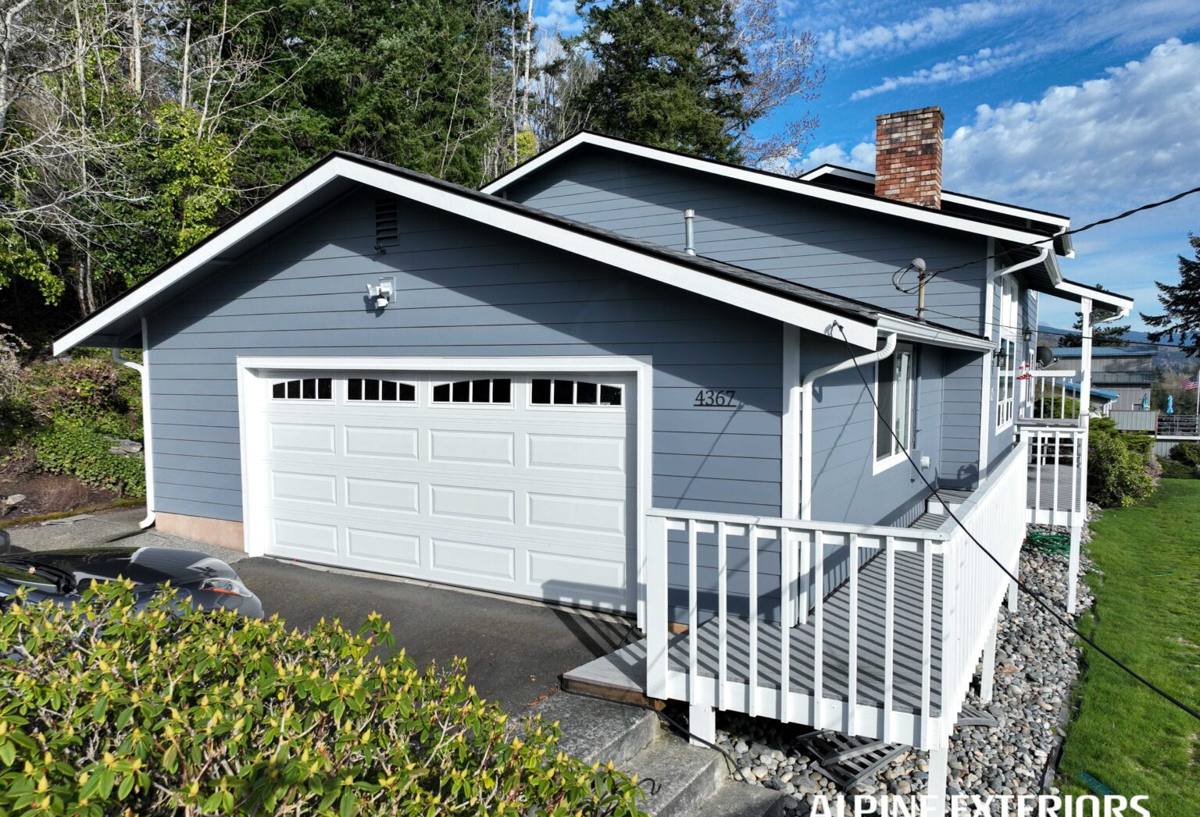
Signs a Point Whitehorn Deck Needs Repair
Most deck problems out here don't start with a dramatic failure — they start small and get ignored because the deck still "feels fine" to walk on. By the time it doesn't feel fine, the damage is usually more extensive than it needed to be. Homeowners in this area should watch for:
- Soft or spongy spots in the decking boards, especially near the house or in shaded corners that never fully dry out
- Rust streaks bleeding out from screw heads or joist hangers — a sign the hardware is corroding faster than it should
- Green or black film that keeps coming back within weeks of cleaning, which usually means the surface is staying wet too long, not just dirty
- Gaps opening up between the ledger board and the house, or visible daylight where the ledger meets the siding
- Railings or posts that flex or wiggle when you lean on them
- Fasteners backing out or "popping" above the board surface
- Stair stringers or landing posts that show cracking or soft wood near ground contact
Any one of these on its own might be minor. Several at once, especially involving the ledger board or support posts, usually means the structure needs a proper inspection before anyone climbs on it with confidence.
What a Correct Deck Repair Actually Involves
Structural Repairs
The parts of a deck you can't see are the parts that matter most. The ledger board connection to the house, the joists, the beam, and the posts carry the load — if any of those are compromised, refinishing the surface on top is cosmetic work on a structural problem. A correct repair starts by checking these components, not the decking boards, because a beautiful new surface over a weak frame is a liability, not a fix.
Surface and Board Repairs
Once the frame is confirmed sound, damaged decking boards get replaced individually where possible rather than resurfacing the whole deck unnecessarily. This keeps costs proportional to the actual damage. Where boards are cupping, splintering, or holding water, the fix has to address why — usually inadequate drainage or spacing between boards that has closed up over time as wood swells and contracts.
Railings and Guards
Railing systems take abuse from people leaning, wind load, and — in this area — corrosion at the connection points. A wobbly railing is almost always a hardware or post-attachment problem, not a railing problem, and it's a safety item that shouldn't wait.
Repair or Replace? The Honest Factors
Not every deck problem calls for a full rebuild, and not every deck is worth patching indefinitely. The table below covers the factors that actually drive that decision, rather than defaulting to whichever option is more profitable to sell.
| Factor | Leans Toward Repair | Leans Toward Replacement |
|---|---|---|
| Age of deck | Under 10-12 years, built to reasonable code | Older deck, unknown or undocumented construction |
| Ledger board & framing | Solid, no rot at the house connection | Soft wood or rust at ledger, joists, or beam |
| Extent of damage | Isolated boards, railings, or fasteners | Widespread rot or corrosion across the structure |
| Post/footing condition | Posts sound, footings stable | Posts soft at ground contact, footing movement |
| Original construction quality | Adequate spacing, flashing, fastener choice | Missing flashing, undersized framing, wrong hardware for the coast |
In practice, most deck calls in this area fall into the repair category — the frame is fine and it's the surface, railings, and hardware taking the brunt of the weather. Full rebuilds tend to happen on older decks that were never built with flashing or corrosion-resistant fasteners in the first place.
Material and Hardware Choices That Matter Near the Water
Fasteners and Hardware
This is the single most common shortcut we see on decks that have failed early in this area. Standard galvanized fasteners and joist hangers can start corroding within a few seasons this close to salt air, and once a fastener weakens, the board or connection it's holding starts moving — which accelerates wear on everything around it. For repairs and any new hardware installed, we use stainless steel or coating rated for coastal/ marine exposure, even when it costs more than the standard-grade option. It's not worth reopening the same repair in three years.
Wood vs. Composite Decking
Both wood and composite decking can hold up well here if they're installed and maintained correctly — the material isn't the deciding factor on its own. Pressure-treated and cedar decking need more consistent upkeep (cleaning, sealing, and moss control) to perform well in this climate, but they're often the right call for repair work matching existing decking or for owners who prefer a natural look and are willing to maintain it. Composite decking generally needs less surface maintenance and resists moisture absorption better, which is an advantage given how long this area stays damp, but it still needs proper drainage and spacing underneath — composite over a poorly ventilated frame will still trap moisture in the structure below, even if the boards themselves look fine.
Flashing and Drainage Details
A lot of "the wood just rotted" problems trace back to missing or improperly installed flashing at the ledger board, or decking laid without enough gap for water to drain and air to circulate underneath. On repairs, we address these details even when they weren't part of the original ask, because skipping them means the same damage comes back.
Our Deck Repair Process
- On-site inspection. We check the frame, ledger connection, posts, footings, and hardware — not just the surface — and walk you through what we find in plain terms.
- Honest scope and estimate. You get a clear picture of what's actually needed, what's optional, and what it costs, with repair and replacement options explained if both are reasonable.
- Repair work. Structural issues get addressed first, then surface boards, railings, and hardware — using fasteners and materials suited to this climate, not just whatever matches the existing (possibly undersized) hardware.
- Drainage and flashing check. We correct any details that are letting water sit against wood or framing, since that's what causes repeat failures here.
- Walkthrough and care guidance. Before we leave, we go over what to watch for and how to keep moss and moisture from undoing the work.
Why Local Experience in Point Whitehorn Matters
A deck repair crew that mostly works drier, inland jobs will often use standard hardware and standard timelines because that's what works where they usually operate. A crew that regularly works the Birch Bay and Point Whitehorn shoreline knows to spec corrosion-resistant fasteners by default, knows which framing details tend to fail first this close to the water, and knows not to schedule finish work during the stretch of the year when everything stays wet longer than the label on the sealant can says it should. That local pattern recognition is the difference between a repair that holds and one that's back on the schedule in two years.
Living With Moss and Salt Air After the Repair
A repaired deck still needs seasonal attention in this climate — that's true of every deck out here, not a defect in the work. A few habits go a long way:
- Sweep debris and standing leaves off the deck regularly through fall, since trapped organic matter feeds moss and holds moisture against the boards
- Clean visible moss or algae promptly rather than letting it establish, since it's far easier to remove early than after it's gripped into the wood grain
- Check that gaps between boards stay clear so water can drain instead of pooling
- Inspect fasteners and railings once a year for early rust or looseness, ideally before the wet season sets in
- Reseal or refinish wood decking on the schedule appropriate to the product — skipping a cycle in this climate shows up faster than it would inland
If you're noticing soft spots, rust, recurring moss, or a railing that doesn't feel as solid as it used to, it's worth having it looked at before winter rains make the problem worse. We offer free, no-pressure estimates for deck repair in Point Whitehorn and the surrounding Birch Bay area — fill out the form below and we'll take a look and give you a straight answer on what it needs.