 Birch Bay Siding
 Why Point Roberts Decks Wear Out Faster
Point Roberts sits on a peninsula with saltwater on three sides — Boundary Bay to the east, the Strait of Georgia to the west and north. That geography means decks here take a heavier beating than a deck twenty miles inland. Salt-laden air corrodes fasteners and metal connectors faster, wind-driven rain finds its way into every gap and seam, and the same marine climate that makes the area beautiful also keeps wood damp for long stretches of the year. Add Whatcom County's mild, wet winters and shaded or north-facing decks can carry moss and algae for months at a time.
None of that means a deck is doomed — it means a deck built or repaired here needs to be built or repaired with that exposure in mind, not with generic materials and generic assumptions.
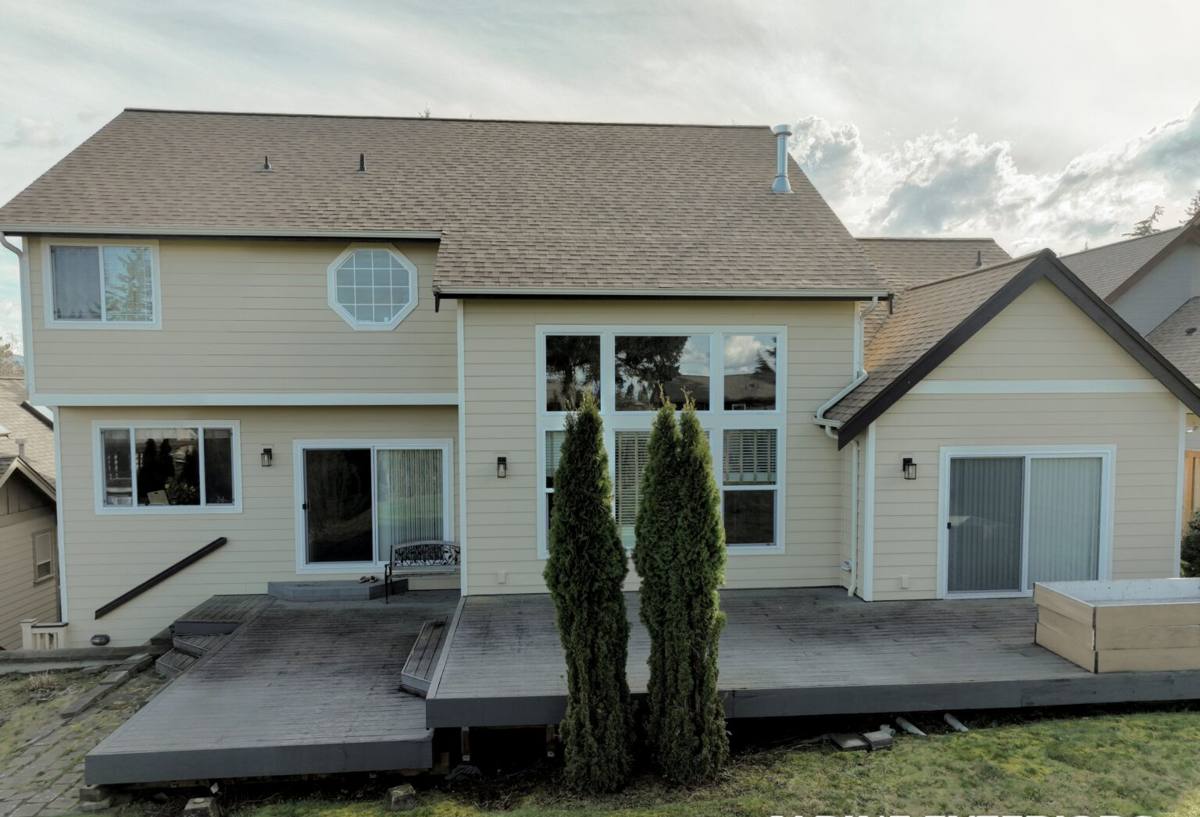
Signs Your Deck Needs Attention
Most deck failures don't happen all at once. They start small and get ignored because the deck still "feels fine" to walk on. Watch for these warning signs:
- Soft, spongy, or bouncy spots in the decking or framing underneath
- Gaps opening up where the deck meets the house (the ledger board)
- Rust streaks running down posts, joists, or decking near fasteners
- Railings or posts that wobble or flex under hand pressure
- Green or black growth that keeps coming back even after cleaning
- Wood at or near ground contact that's gone gray, punky, or crumbly
- Nails or screw heads backing out, or fastener holes that look enlarged
Any one of these on its own might be a minor fix. Several together, especially near the ledger or support posts, usually means the structure needs a closer look before anyone uses the deck hard.
What a Correct Deck Repair Actually Involves
The Ledger Board and Flashing
The ledger is the board that attaches the deck to the house, and it's the single most common source of hidden rot on attached decks. If it was installed without proper flashing, or if the flashing has failed over time, water gets trapped between the ledger and the house framing and rots both from the inside out — long before anything looks wrong on the surface. Any real repair has to check this connection, not just the boards people can see.
Joists, Beams, and Posts
These carry the actual weight of the deck. Rot at joist ends, beam pockets, or post bases near grade is a structural issue, not a cosmetic one. Repairing this correctly means sistering or replacing damaged framing members with lumber rated for the exposure, not just patching over soft wood.
Footings and Posts at Grade
Wood posts that sit in or near soil, or that were never set on a proper footing, are especially vulnerable in a climate that stays damp most of the year. A correct repair addresses drainage and post-to-footing connections, not just the wood itself.
Decking Boards and Railings
Surface boards and railings are what homeowners notice first, but they're also the easiest part to get wrong with a quick fix — replacing a rotten board without checking what it was fastened to just moves the problem down the road a season or two.
Repair or Replace? Weighing the Real Factors
Homeowners often ask us to "just fix the bad boards," and sometimes that's exactly the right call. Other times, spot-repairing a deck that's failing structurally just delays a bigger job and spends money twice. Here's how we think through it:
| Factor | Leans Toward Repair | Leans Toward Replacement |
|---|---|---|
| Age of the deck | Under 10-15 years, well-built originally | Original construction is old or unpermitted |
| Extent of rot | Isolated to a few boards or one connection point | Found at multiple structural points (ledger, posts, beams) |
| Framing condition | Solid when probed, damage is surface-level | Soft or punky wood in joists, beams, or posts |
| Code compliance | Railings, spacing, and fasteners already meet current code | Guardrails, stair rules, or connections are outdated |
| Cost pattern | Repair cost is a modest fraction of a full rebuild | Repair cost approaches what a rebuild would run |
We'll always give you the honest read on which side of that line your deck falls on, in writing, before any work starts.
How We Handle a Deck Repair in Point Roberts
Point Roberts is part of Whatcom County, but it isn't connected to the rest of Washington by road — reaching it means crossing the Canadian border twice, whether you're coming from Birch Bay, Blaine, or anywhere else on the mainland. That's a logistics detail that matters more than people expect. Crews and material deliveries have to be planned around border crossing and documentation requirements, and jobs that aren't scheduled with that in mind end up with delays, missed appointments, or half-finished work sitting exposed to the weather.
Our process:
- On-site inspection. We check the ledger connection, probe framing and posts for soft spots, and look at fastener condition — not just what's visible from the top.
- Honest scope. We tell you plainly whether you're looking at a targeted repair or something bigger, and why.
- Written plan and estimate. No guessing after the fact — you know what's being fixed and roughly what it involves before we start.
- Scheduled as a complete trip. Because of the border crossing, we plan materials, crew, and timeline together so the job gets done in as few trips as possible, minimizing the time your deck sits half-repaired.
- Cleanup and walkthrough. We leave the site clean and walk the finished repair with you.
Materials That Actually Hold Up to Salt Air
Not every fastener or finish sold at a hardware store is built for a peninsula environment. For deck repair work in this area, we favor:
- Stainless steel or hot-dip galvanized fasteners — standard electro-galvanized screws and nails corrode noticeably faster under sustained salt exposure
- Proper self-adhering flashing tape at the ledger — the single biggest defense against hidden rot at the house connection
- Framing lumber rated for the exposure, especially anywhere near grade or in ground contact
- Decking material matched to your maintenance appetite — see below
Wood vs. Composite Decking
Both have a place, and the right answer depends on your priorities, not on one being universally "better." Wood — cedar or pressure-treated — costs less up front and repairs board-by-board easily, but it needs regular cleaning and refinishing to shed water and resist moss in this climate. Composite decking resists rot and doesn't need staining, but it costs more initially, isn't repaired the same way wood is (damaged boards are typically replaced, not patched), and still needs proper flashing and ventilation underneath — composite decking doesn't fix a bad ledger connection or poor drainage. We'll talk through the honest trade-offs for your specific deck rather than push one material by default.
Keeping Moss, Algae, and Rot From Coming Back
A repair is only as good as the maintenance that follows it. Point Roberts' long damp season means moss and algae growth is an ongoing fact of life, not a one-time problem to solve. A simple annual routine goes a long way:
- Sweep leaves, needles, and debris off the deck surface regularly, especially in fall
- Keep gutters and downspouts directing water away from the deck, not onto it
- Trim back overhanging branches and nearby vegetation to let sun and air reach shaded areas
- Clean moss and algae gently — high-pressure washing can tear wood fibers and open the surface to more moisture
- Reapply a water-repellent finish or stain on a schedule appropriate to your material and sun exposure, typically every one to three years
- Check the ledger flashing and fastener condition once a year, before the wet season sets in
Permits and Code Considerations
Structural deck repairs — anything touching framing, footings, or the ledger connection — typically require a permit through Whatcom County, and guardrail height, baluster spacing, and stair details are governed by current residential building code. Codes and local amendments do get updated, so we confirm current requirements with the county before finalizing a scope rather than relying on what was standard when the deck was originally built. If your existing railings or stairs predate current code, a repair is often a practical time to bring them up to standard.
Why Local Experience in Point Roberts Matters
A contractor who mainly works inland can still do competent carpentry, but they may not plan for the border-crossing logistics that affect scheduling and material delivery here, and they may not have seen firsthand how fast an unprotected ledger or the wrong fastener fails on a peninsula exposed to salt air on three sides. Working this area regularly means knowing which failure points show up first, what materials are worth the extra cost, and how to plan a job so it gets finished in one efficient trip rather than dragging out.
If your deck in Point Roberts is showing soft spots, rust, persistent moss, or just doesn't feel as solid as it used to, we're glad to take a look. Reach out for a free, no-pressure estimate — we'll tell you honestly what we find and what it would take to fix it right.