 Birch Bay Siding
 Why Point Roberts Roofs Age Differently
Point Roberts sits out on its own peninsula at the northern tip of Whatcom County, exposed to open water on three sides. That exposure means roofs here take a different kind of beating than roofs even a few miles inland. Salt-laden air corrodes exposed metal faster, wind-driven rain gets pushed sideways into valleys and flashing details that a calmer inland roof would never test, and the shaded, damp lots common around Boundary Bay and the surrounding evergreens keep shingles wet longer after every storm. That combination — salt, wind-driven moisture, and a moss season that can run most of the year in the shadier lots — is the backdrop for every roofing decision we make out here.
A shingle roof that's correctly detailed for this climate isn't dramatically different in materials from a roof anywhere else in Western Washington. The difference is in the details: how the underlayment is lapped, how fasteners and flashing metals are chosen, how ventilation is balanced, and how much attention goes to the low-slope valleys and eaves where water and moss actually collect. Skip those details and even a good shingle brand will underperform its warranty life on a Point Roberts roof.
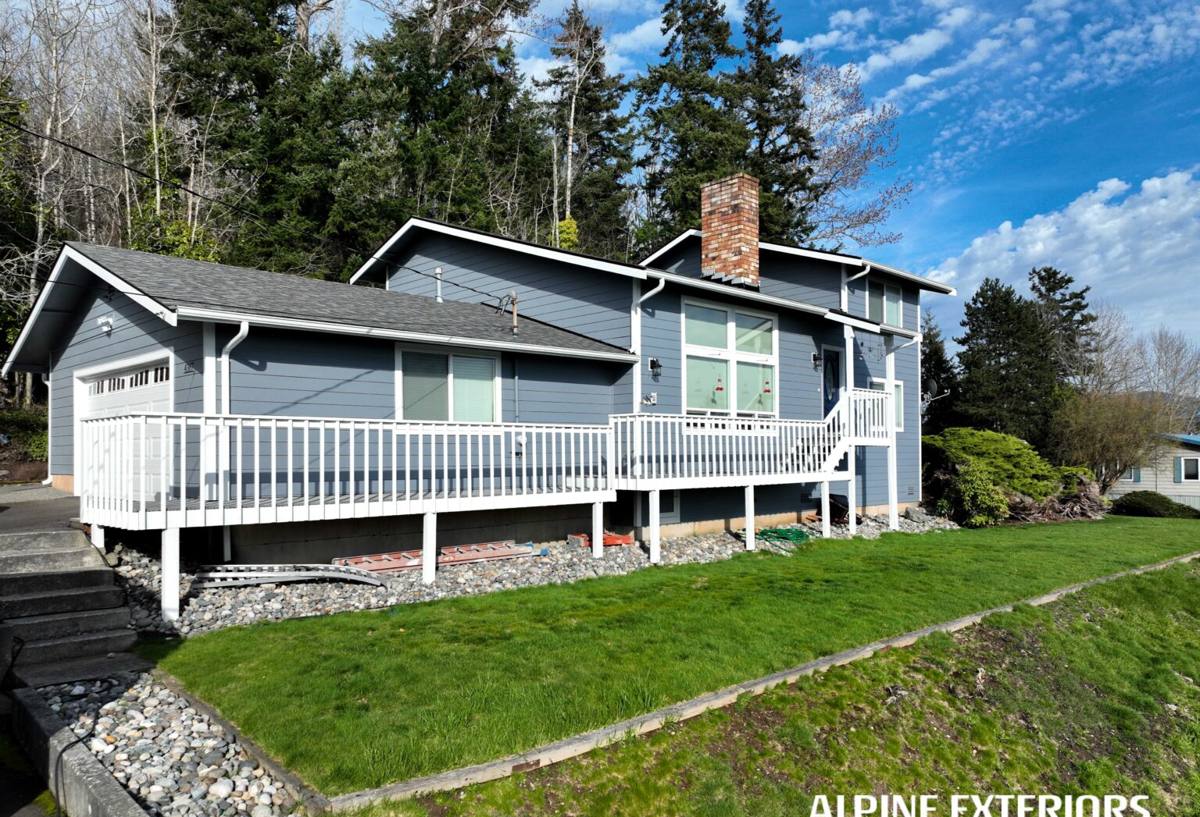
What Salt Air and Driving Rain Actually Do to a Roof
Salt Air
Airborne salt accelerates corrosion on any exposed metal — nail heads, drip edge, flashing, and vent stacks. Over years, corroded fasteners lose grip and corroded flashing seams open up small gaps that let water in long before a shingle itself fails. We spec corrosion-resistant fasteners and flashing metals for anything within reach of that salt air, which is functionally the whole peninsula.
Driving Rain
Wind off the water doesn't just fall on a roof, it pushes rain sideways and up under shingle tabs, especially around chimneys, skylights, and roof-to-wall transitions. Standard nailing patterns and underlayment laps that would be fine in a calmer location can let water track backward under those conditions. This is why lap direction, fastener placement, and self-adhered underlayment at vulnerable spots matter more here than they would on a sheltered inland roof.
Moss
Shaded, damp lots grow moss on roofs quickly, and moss does more than look bad — its roots lift shingle edges, and mats of moss hold moisture against the shingle surface far longer than normal rain runoff would. Left alone through a few wet seasons, moss growth measurably shortens a roof's service life.
What a Correctly Built Shingle Roof Includes
- Tear-off to solid decking, with any soft or delaminated sheathing replaced rather than roofed over
- Ice-and-water shield or self-adhered membrane at eaves, valleys, and any low-slope transitions
- Synthetic underlayment across the full field, properly lapped for the prevailing wind and rain direction
- Corrosion-resistant flashing at every roof-to-wall, chimney, and skylight intersection
- Balanced intake and exhaust ventilation, sized to the attic, not just a single ridge vent added as an afterthought
- Shingles fastened per manufacturer spec — not just per code minimum — since under-driven or over-driven nails are a common cause of early wind and rain intrusion
None of this is exotic. It's simply doing every step correctly instead of skipping the ones that don't show up in a driveway inspection.
Shingle Options: What We Recommend and Why
We install architectural (laminate) asphalt shingles on the large majority of Point Roberts homes. They carry more material per square, handle wind-driven rain better than older 3-tab styles, and generally carry a longer manufacturer warranty. For homes with heavier tree cover and a documented history of moss or algae streaking, we'll also discuss algae-resistant shingle lines, which use copper-infused granules to slow biological growth on the shingle surface itself.
| Shingle Type | Typical Lifespan | Best Fit | Trade-Offs |
|---|---|---|---|
| 3-tab asphalt | 15–20 years | Budget re-roofs, secondary structures | Lower wind rating, less resistant to driving rain at edges |
| Architectural (laminate) asphalt | 25–30 years | Most Point Roberts homes | Higher upfront cost than 3-tab, still needs periodic moss/debris upkeep |
| Algae-resistant architectural | 25–30 years | Shaded, moisture-prone lots | Slight cost premium; slows but doesn't eliminate moss, still needs cleaning |
| Impact-rated asphalt | 25–30+ years | Homes wanting extra hail/debris resistance | Higher material cost; benefit is durability, not moss resistance |
We don't push the most expensive option on every job. If a 3-tab roof makes sense for a shed, guest structure, or a tight budget, we'll say so. Where we won't cut corners is on the underlayment, flashing, and ventilation details underneath — those are what actually determine whether the roof survives this climate on schedule.
Our Process on a Point Roberts Roofing Job
- Inspection and honest scope. We walk the roof, check the decking, attic ventilation, flashing condition, and moss/algae extent before quoting anything. If a repair will genuinely hold for a few more years instead of a full re-roof, we'll tell you.
- Tear-off and deck check. Old material comes off down to the deck so we can see and replace any soft or water-damaged sheathing — not something you can catch from the ground or from photos.
- Underlayment and flashing. Self-adhered membrane at eaves and valleys, synthetic underlayment across the field, and new corrosion-resistant flashing at every penetration and wall transition.
- Shingle install. Manufacturer-spec nailing, proper exposure and offset, and attention to the details wind-driven rain exploits — hips, ridges, and low-slope sections.
- Ventilation check. We confirm intake and exhaust are balanced before we close the job out, since poor ventilation shortens shingle life from underneath, where you'd never see it.
- Cleanup and walkthrough. Magnetic sweep for stray fasteners, debris hauled off, and a final walkthrough so you know exactly what was done and what maintenance, if any, to expect.
Moss and Algae: Prevention, Not Just Cure
Once a shingle roof is installed correctly, the biggest thing that shortens its life in this area is neglected moss and debris buildup. A few habits go a long way:
- Keep gutters and valleys clear of needles and leaf litter, which hold moisture and give moss a place to start
- Have overhanging branches trimmed back where practical to reduce shade and debris drop onto the roof
- Consider zinc or copper control strips near the ridge on heavily shaded roofs — rain washing over them helps slow new moss growth on the field below
- Have moss removed by a professional using proper technique rather than pressure washing, which can strip granules and shorten shingle life faster than the moss itself
- Schedule a roof check every year or two, especially after a rough winter, so small flashing or fastener issues get caught before they become leaks
Why a Crew That Already Works Point Roberts Matters
Point Roberts is a peninsula that's only reachable by land through Canada, which affects scheduling, material delivery, and border-crossing logistics in a way that doesn't apply to most Whatcom County jobs. A crew that hasn't planned around that reality can show up late, run short on material mid-job, or simply avoid taking Point Roberts jobs altogether. We build our scheduling and material orders around that logistics reality up front, so a Point Roberts roof doesn't get treated as an afterthought squeezed between other jobs.
Just as important, a crew that regularly works this specific peninsula has already seen how salt air, wind direction, and shade patterns on these lots affect a roof over time. That's the kind of judgment that shows up in where we add extra underlayment, which flashing metals we choose, and which roofs actually need algae-resistant shingles versus standard architectural — decisions that are hard to make correctly from a one-time visit.
Cost Factors to Expect
Every roof is different, but the main variables that move a Point Roberts re-roof estimate up or down are consistent:
| Factor | Why It Matters |
|---|---|
| Roof size and complexity | More valleys, dormers, and penetrations mean more flashing detail and labor time |
| Decking condition | Rot or delamination found at tear-off adds sheathing replacement to the scope |
| Shingle grade chosen | 3-tab, standard architectural, and algae-resistant lines carry different material costs |
| Ventilation upgrades | Adding or correcting intake/exhaust vents is a smaller cost than a premature re-roof caused by trapped attic moisture |
| Existing moss/algae extent | Heavy buildup may require professional removal and treatment before or during the reroof |
We give a written, itemized estimate before any work starts, so you know exactly what's driving the number rather than a single lump figure.
Signs Your Point Roberts Roof Needs Attention
- Granules collecting in gutters or at downspout outlets
- Curling, cracked, or missing shingle tabs, especially on the side facing the water
- Moss mats thick enough to hold visible moisture after a dry day
- Daylight or water staining visible from inside the attic
- Streaking or discoloration that doesn't wash off with normal rain
- A roof approaching or past 20–25 years old that hasn't had a professional inspection recently
If you're seeing any of these, it's worth a look before the next storm season rather than after a leak shows up on a ceiling.
If you're weighing a repair versus a full re-roof, or just want an honest read on where your roof stands, we're glad to take a look. Fill out the form below for a free, no-pressure estimate — we'll walk the roof, explain what we find in plain terms, and give you a written scope so you can decide with real information.