 Birch Bay Siding
 Why Siding Near Nooksack Takes a Different Kind of Beating
Homes in the Nooksack area near Birch Bay sit in one of the more demanding siding environments in Whatcom County. You're close enough to the water to pick up salt-laden air off the strait, far enough inland to sit under heavier tree cover and shade, and squarely inside a stretch of Northwest Washington that stays damp for most of the year. None of that is dramatic weather in the way a hailstorm or a hurricane is dramatic — it's slow, steady, and it works on siding every single day it's not actively raining, too. Older homes, and homes with a lot of mature landscaping around them, tend to show the effects first.
Salt Air and Coastal Moisture
Airborne salt doesn't just affect metal fasteners and flashing, though it does accelerate corrosion there. It also holds moisture against exterior surfaces longer than dry inland air would, which matters more for how the wall assembly behind the siding performs than for the siding's face. Caulk joints, seams, and any spot where water can find a path behind the cladding are under more pressure here than they would be forty miles inland. Over years, that steady exposure is what turns a small gap into a real moisture path.
A Long, Wet Moss Season
Whatcom County's moss season isn't a few weeks — it's most of the fall, winter, and spring. Moss and algae need standing moisture and shade to establish, and a lot of Nooksack-area lots have both: mature trees, north-facing walls that never fully dry, and long stretches of low sun angle in winter. Moss on siding isn't just cosmetic. It holds water against the surface, and on materials that aren't built to tolerate that, it accelerates rot, delamination, and paint failure underneath it.
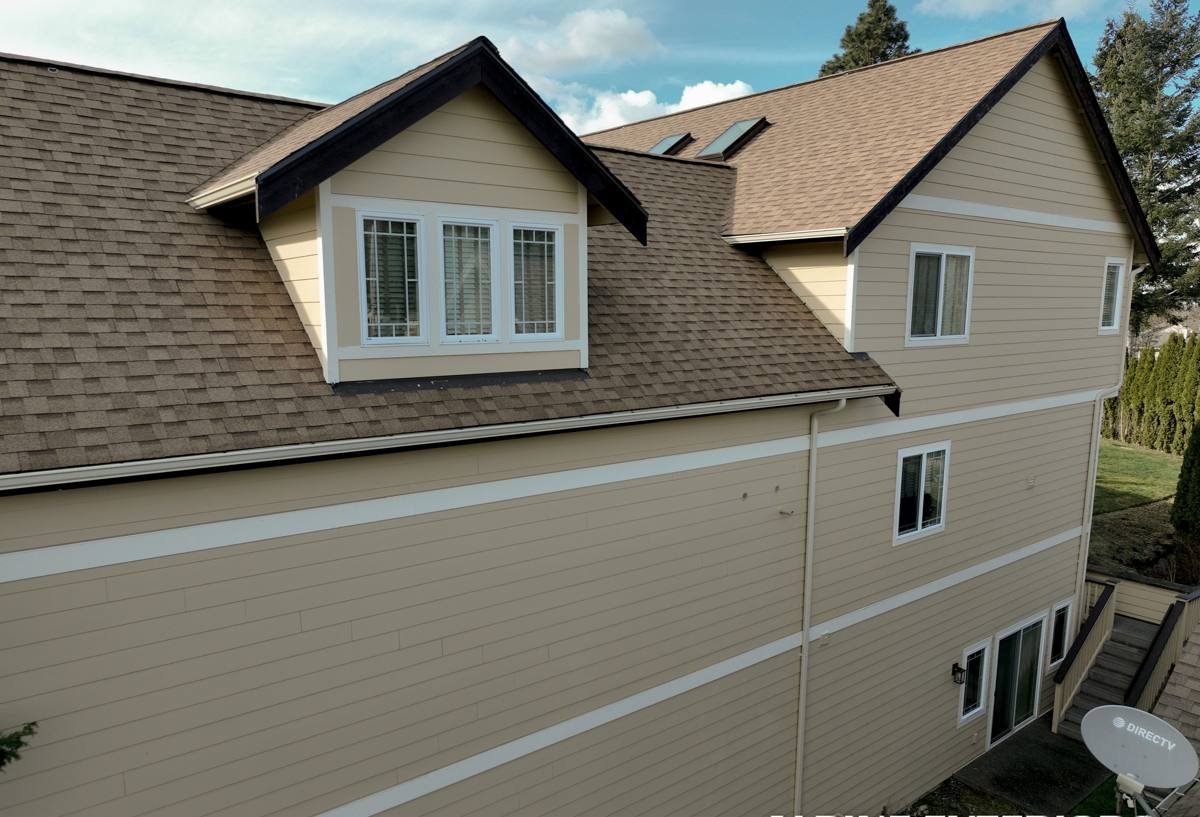
Signs Your Siding Needs Repair, Not Just Paint
A lot of siding problems get papered over with a fresh coat of paint because the symptoms look cosmetic from the ground. Paint doesn't fix a moisture problem — it hides it for a season or two. Before you decide whether a section needs repair, it's worth knowing what you're actually looking for.
- Soft or spongy spots when you press on the siding, especially near the bottom courses or under windows
- Paint that's bubbling, peeling, or alligatoring in the same spots year after year
- Visible gaps, cracks, or separated seams where water can track behind the cladding
- Dark staining or streaking that keeps returning even after cleaning
- Persistent moss or algae growth that comes back within a season of removal
- Warping, buckling, or boards that no longer sit flat against the wall
- Rust streaks below nail heads or trim fasteners
- Musty smell or visible staining on interior walls that back up to exterior siding
Any one of these on its own might be minor. Several together, especially clustered on one wall or elevation, usually points to a moisture path that's been active for a while. Wall orientation matters too — in this area, north- and west-facing walls that stay shaded and catch the prevailing weather tend to show problems well before the rest of the house does.
What a Correct Siding Repair Actually Involves
Diagnosing the Cause, Not the Symptom
The most common mistake in siding repair isn't bad workmanship on the patch itself — it's patching over a problem without finding what caused it. A cracked board near a window might be simple weather fatigue, or it might be the visible end of a flashing failure that's been feeding water behind the wall for two winters. A correct repair starts with pulling back enough of the damaged area to see the water-resistive barrier, the flashing details, and the framing underneath before deciding what actually needs to happen.
Matching Material, Profile, and Finish
Once the cause is addressed, the repair itself needs to match the plane, reveal, and finish of the surrounding siding. A patch that sits proud, uses the wrong exposure, or doesn't tie into the existing weather barrier correctly creates a new water entry point even if it looks fine from the curb. This is where a lot of quick, budget siding repairs fall short — they solve the visible damage but leave a new seam that fails again in a season or two.
Repair or Replace? How We Make That Call
Not every damaged section needs a full re-side, and not every problem is fixable with a patch. The honest answer depends on how far the damage has traveled and how old the existing siding already is.
| Situation | Repair Usually Makes Sense | Replacement Usually Makes Sense |
|---|---|---|
| Damage extent | Isolated to one or two boards or a single wall section | Spread across multiple elevations or recurring in the same areas |
| Underlying cause | One-time impact damage or a localized flashing gap, now corrected | Systemic moisture path affecting the water-resistive barrier broadly |
| Age of existing siding | Siding is well within its service life and otherwise sound | Siding is near or past the end of its expected life |
| Material condition | Surrounding material is stable, just cosmetically or locally damaged | Material is inherently prone to the moisture or rot issue found |
| Color and profile match | Repair section can be matched closely enough to blend in | Older material has faded or uses a discontinued profile that won't match |
We'll tell you honestly which category your home falls into. There's no reason to sell a full re-side to a homeowner whose siding is otherwise in good shape, and there's no reason to keep patching a wall that's going to keep failing in the same spot. A few practical factors shape the cost either way: how much of the wall has to come off to reach sound material, whether staging or ladders are needed for a second-story section, how much of the sheathing or framing underneath needs attention, and how closely an existing color or profile can realistically be matched.
Why Repaired Sections Get Rebuilt in James Hardie Fiber Cement
We install and repair exclusively with James Hardie fiber cement siding, which shapes how we approach every repair. If your home already has Hardie siding, matching an existing HZ5 product line panel or plank is straightforward — the material, texture, and ColorPlus factory finish are consistent and available, so a repaired section can blend in cleanly rather than standing out as an obvious patch.
If your home has a different siding material and the damaged section needs to come out entirely, we'll walk you through what a Hardie fiber cement replacement of that section involves rather than replacing rot-prone material with more of the same. Fiber cement doesn't absorb water the way wood-based products do, it's non-combustible, and it holds paint and factory finish far longer in a wet, salt-influenced climate like this one. We won't install LP SmartSide, vinyl, primed spruce, or cedar as part of a repair, because we'd rather tell you honestly that we don't think it's the right long-term fix than sell you a patch we don't stand behind.
Our Process for Nooksack-Area Siding Repairs
- On-site inspection. We look at the damaged area, the surrounding wall, and check for signs the problem has spread beyond what's visible from the ground.
- Opening up the area. We pull back enough siding to see the water-resistive barrier, flashing, and framing condition before quoting the scope.
- Honest scope and estimate. You get a clear explanation of what caused the damage, what needs to happen, and what it will cost — with repair and replacement both on the table if either is reasonable.
- Correcting the root cause. Flashing, sealant, or drainage details get fixed first, not just covered over.
- Installing and matching the repair. New material is installed to the same reveal and plane as the surrounding siding, with attention to how it will look and perform once it weathers in.
- Final check and cleanup. We confirm the repair is watertight and the site is left clean before we call the job done.
Why a Crew That Already Works This Area Matters
Siding repair done well is partly diagnosis and partly local knowledge. A crew that's already worked homes around Birch Bay and the Nooksack area knows which wall orientations tend to hold moss, where salt-driven corrosion shows up first on fasteners and flashing, and how the region's rain patterns push water into places a drier climate's siding details wouldn't need to worry about. That's not something you can fully substitute with a general contractor who's never worked Whatcom County's marine climate before — the failure points here are consistent enough that experience with them changes how a repair gets scoped and executed.
It also matters for scheduling and honesty about timing. This is a rainy climate for a large part of the year, and a crew that works here regularly plans repairs around weather windows rather than opening up a wall and leaving it exposed. That's a small thing that makes a real difference to how well a repair holds up long-term.
Keeping Repaired Siding Looking Right Afterward
Once a repair is done correctly, keeping it that way in this climate doesn't take much — but skipping it shortens the life of the fix. A yearly rinse-down to knock back early moss and algae growth, especially on shaded and north-facing walls, keeps organic growth from re-establishing and holding moisture against the surface. Keeping gutters clear and checking that downspouts still direct water away from the wall matters more here than in drier parts of the state, since a clogged gutter during a heavy Whatcom County rain event can overwhelm a wall section fast. A quick visual check after major windstorms — looking for lifted trim, new gaps, or fresh staining — catches small problems while they're still small. It's also worth checking caulked joints around windows, doors, and trim once a year, since sealant is usually the first thing to fail in a marine climate, well before the siding material itself shows any wear.
If you're seeing any of the warning signs above on a home in the Nooksack or Birch Bay area, we're happy to take a look and give you a straight answer about what's going on and what it will take to fix it — no pressure, no upsell, just an honest estimate. Use the form below to request a free evaluation.