 Birch Bay Siding
 Why Nooksack Roofs Wear Differently Than the Brochure Says
Manufacturers rate their shingles and warranties against a kind of average American climate that doesn't really exist in Whatcom County. Homes in the Nooksack area sit under heavy tree cover, close to the river valley's fog and standing humidity, and within the same weather system that pushes salt-laden air off the water at Birch Bay and drives it inland on winter storms. None of that shows up on a shingle's spec sheet, but all of it shows up on your roof after a few winters.
What that combination actually does to a roof: moss and algae get a longer growing season here than almost anywhere else in the state, driving rain finds every marginal flashing detail and pushes water sideways instead of straight down, and the moisture never fully leaves the wood framing and sheathing underneath because the air stays damp for months at a stretch. A roof replacement done for "average" conditions will underperform here. One built for this specific mix of moisture, shade, and salt exposure holds up the way it's supposed to.
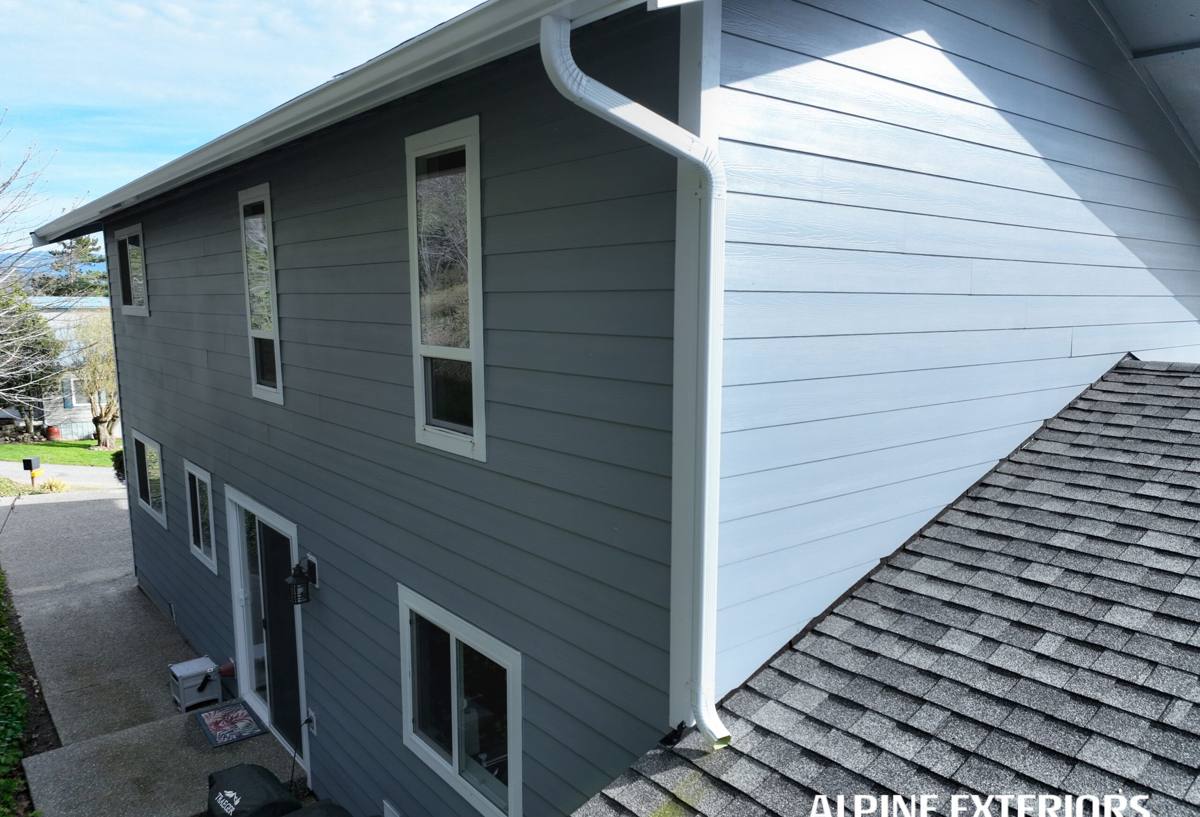
What a Correct Roof Replacement Involves
A roof replacement isn't just stripping old shingles and nailing down new ones. Done right, it's a sequence of decisions that each matter more here than in a drier climate.
Tear-off and deck inspection
Every old layer comes off down to the sheathing. This is the only point in the project where anyone can actually see the condition of the decking — soft spots, delaminated plywood, or water staining around old flashing points. In a climate this wet, skipping this step and roofing over questionable decking is how a "new roof" fails from underneath within a few years.
Underlayment
Synthetic underlayment, ice-and-water shield at eaves and valleys, and correct lapping direction matter more here than in places that only see a handful of rain events a year. Nooksack-area roofs deal with sustained wet weather, not isolated storms, so the underlayment is doing real work for months at a time, not just backing up the shingles during one afternoon squall.
Flashing details
Chimneys, skylights, valleys, sidewalls, and any roof-to-wall transition are where driving rain actually gets in. New shingles over old, worn flashing is a shortcut that shows up as a ceiling stain a year or two later. A correct replacement means new flashing at every one of these points, not just where it's easy to reach.
Ventilation
Balanced intake (soffit) and exhaust (ridge or box vents) keep the attic close to outdoor temperature and humidity. Get this wrong and you trap moisture under the deck, which shortens the life of the new roof from the inside and feeds the exact moss and mildew problems you're trying to solve on the outside.
Roofing Material Options for This Climate
There's no single "right" material for every Nooksack-area home — it depends on your roof pitch, tree cover, budget, and how much moss maintenance you're willing to keep up with. Here's how the common options actually compare under our conditions, not under ideal ones.
| Material | Moss/algae resistance | Driving-rain performance | Typical lifespan here | Trade-offs |
|---|---|---|---|---|
| Architectural asphalt shingle (standard) | Fair — needs occasional treatment under shade | Good with correct underlayment/flashing | 20-25 years | Most economical; shortest life under heavy tree cover |
| Algae-resistant (copper/zinc-granule) asphalt shingle | Good — granules slow algae growth | Good | 25-30 years | Modest upcharge; still benefits from periodic moss removal |
| Standing-seam metal | Very good — nothing for moss to root into | Excellent, especially on lower slopes | 40-50+ years | Higher upfront cost; installation quality matters a lot on fastener/seam details |
| Cedar shake | Poor without diligent maintenance | Fair — moisture retention is the core weakness | Varies widely with upkeep | We're honest with clients that this climate is hard on wood roofing long-term; it demands real maintenance commitment |
We don't push cedar shake replacements in this service area as a rule — not because it's a bad-looking product, but because a wood roof's biggest weakness (sustained moisture retention) is exactly what Nooksack's tree cover and fog produce in abundance. If a homeowner wants that look, we'll talk through what the maintenance schedule really needs to be so there are no surprises later.
The Moisture and Ventilation Problem Nobody Sees Coming
Most homeowners call about a roof replacement because of visible moss, a leak, or curling shingles. The deeper issue is usually attic moisture that's been building for years. Warm, humid indoor air rises into the attic; without enough intake and exhaust venting, it condenses on the underside of the roof deck. Over time that moisture:
- Softens and delaminates plywood or OSB sheathing from underneath
- Feeds mold and mildew that you'll never see unless you're up in the attic
- Undermines the nailing surface, which can void a shingle manufacturer's wind warranty
- Makes exterior moss and algae growth worse by keeping the whole roof assembly damper than it should be
A replacement is the right time to fix this, because the deck is already exposed. Adding or correcting ridge vents, soffit intake, and baffles at the eaves during tear-off costs a fraction of what it costs to retrofit later, and it's the single biggest factor in whether a new roof actually reaches its rated lifespan here.
Signs You Need Replacement, Not Another Repair
Not every roof problem needs a full replacement, and we'll tell you plainly when a repair is the honest answer. These are the signs that usually mean it's time to stop patching:
- Granule loss heavy enough that you can see bare asphalt in multiple spots, not just one worn patch
- Shingles that are cupping, curling, or cracking across large sections rather than isolated tabs
- Moss that's lifted shingle edges rather than just growing on the surface — once it's under the shingle, it's holding moisture against the deck
- Daylight visible through the roof deck from inside the attic
- Multiple past repairs in different areas within the last few years
- Soft or spongy decking discovered during any repair attempt
- A roof already past 20-25 years old with no major upgrades to underlayment or ventilation
Our Process, Start to Finish
- On-site inspection. We walk the roof and the attic, not just the ground-level view. Attic conditions tell us as much as the shingles do.
- Written estimate. Material options, ventilation plan, and any decking allowance are spelled out before any work starts — no verbal-only surprises later.
- Scheduling around the weather. Roofing in this climate means working the drier windows and having a plan (tarping, sequenced tear-off) if weather turns mid-job. We don't leave a deck exposed overnight without protection.
- Tear-off and deck inspection. Old material comes off, decking is inspected board by board, and any needed repairs are flagged and priced before covering it up.
- Underlayment, flashing, and ventilation installation. This is where the climate-specific details from above actually get executed.
- Shingle or panel installation per manufacturer spec, so your warranty is actually valid if you ever need it.
- Cleanup and magnetic sweep for nails and debris, and a final walkthrough with you before we call it done.
What Drives Cost on a Nooksack-Area Roof Replacement
Every roof is different, so we won't quote a number without seeing yours — but these are the real factors that move the price up or down, and they're worth understanding before you compare bids.
| Factor | Why it matters here |
|---|---|
| Roof size and pitch | Steeper roofs take longer and need more fall-protection setup, which affects labor |
| Decking condition | Rot or delamination found at tear-off adds material and labor not visible from the ground |
| Number of penetrations | Chimneys, skylights, and vents each need individual flashing work — more penetrations, more labor |
| Material choice | Standard asphalt vs. algae-resistant shingle vs. metal spans a wide price range |
| Ventilation upgrades | Adding proper intake/exhaust venting where none exists is inexpensive during tear-off, costly after |
| Access and tree cover | Heavy tree canopy common in this area can mean extra time for staging, debris management, and cleanup |
Be cautious of any bid that's dramatically lower than the others without explaining why — it's usually missing one of these line items, and it tends to reappear as a change order once tear-off starts.
Why a Crew That Already Works This Area Matters
Roofing in Whatcom County isn't the same job as roofing somewhere dry and flat. A crew based in Birch Bay and already working the Nooksack area brings a few practical advantages that are easy to overlook until they matter:
- Weather judgment. Knowing the realistic dry-weather windows in this part of the county means fewer schedule surprises and less exposed decking during a storm.
- Familiarity with local permitting. Whatcom County has its own permitting process for roof replacement work, and knowing it in advance avoids delays.
- Climate-appropriate defaults. A crew that roofs this specific mix of moss, moisture, and salt-air exposure every week doesn't have to relearn it on your house — the ventilation and flashing details described above become standard practice, not an upsell.
- Being reachable after the job. A local crew is still around next moss season if you have a question, not a phone number tied to a franchise territory that changes hands.
After Your New Roof Goes On
A correct installation buys you decades, but a little upkeep protects that investment in a climate like this one. Realistic maintenance for a Nooksack-area roof:
- Clean gutters at least twice a year — clogged gutters back water up under the eave line, which is exactly where driving rain already puts pressure
- Have moss growth treated or gently removed before it establishes under shingle edges, not after
- Trim back overhanging branches where practical to reduce shade and debris buildup, both of which extend the moss season on your specific roof
- Have the attic checked periodically for condensation signs, especially in the first year after replacement while you confirm ventilation is performing as designed
If your roof is showing its age, or you just want an honest read on whether it's a repair year or a replacement year, we're happy to take a look. Fill out the form below for a free, no-pressure estimate — we'll tell you what we actually see, not just what sells a job.