 Birch Bay Siding
 Fiber Cement Siding Built for Nooksack's Coastal Weather
Nooksack sits close enough to Birch Bay and the Strait of Georgia that homes here take on the same weather pattern the rest of northern Whatcom County deals with: salt-tinged marine air, long stretches of driving rain off the water, and a moss season that can run from October through May in a wet year. Siding that looks fine on a spec sheet in a dry climate often struggles here. We install fiber cement siding specifically because it holds up to that combination — and we do the install work in a way that accounts for how this corner of Washington actually behaves, not just how a national installation manual describes it.
This page covers what fiber cement siding needs to do for a Nooksack home, what a correct installation actually involves, and how our process works from first estimate to finished wall.
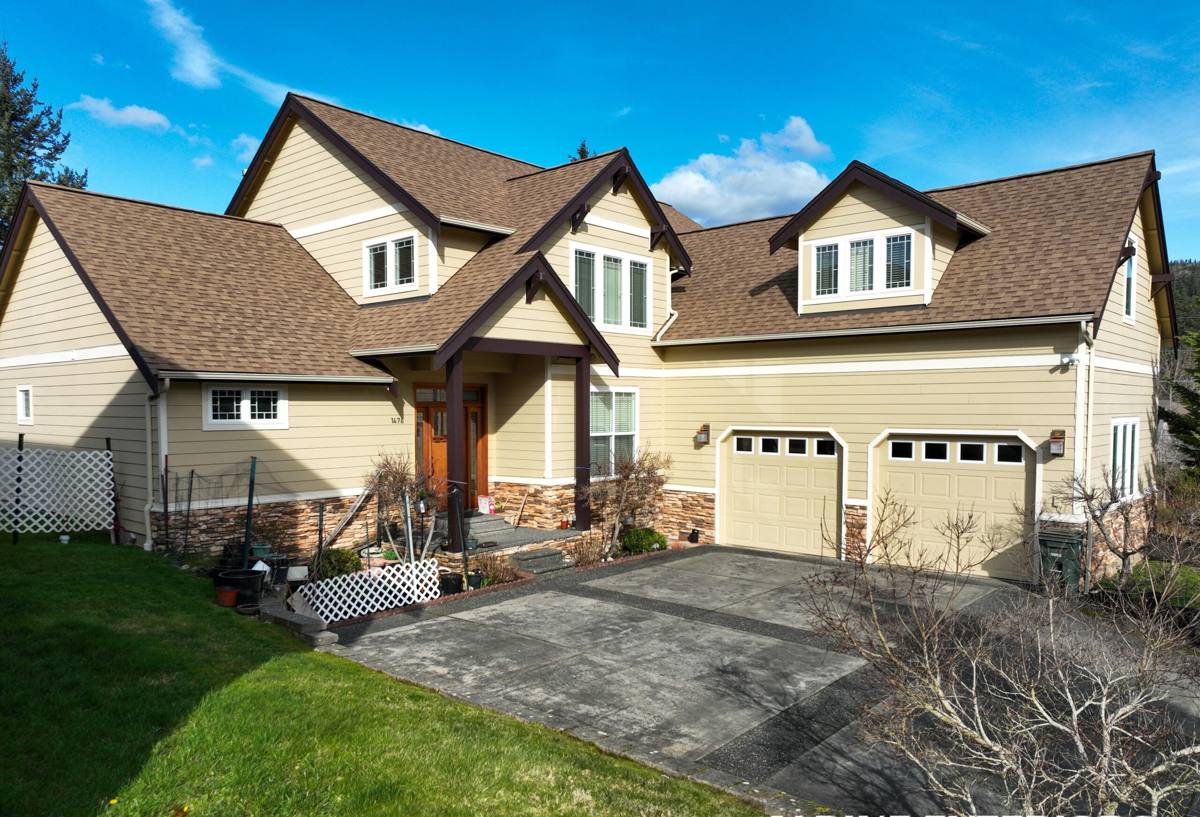
What Salt Air, Rain, and Moss Do to Siding Over Time
Three things drive most of the siding problems we see on homes in and around Nooksack and Birch Bay:
Salt-Laden Air
Even a few miles inland from the water, salt air accelerates corrosion on fasteners, trim metal, and any siding product that relies on painted-on protection rather than a material that's inherently resistant to moisture intrusion. Over years, that corrosion shows up as rust streaking, failing caulk joints, and fastener heads that back out or stain the surface around them.
Driving, Wind-Driven Rain
Rain that comes in sideways during a winter storm finds every weak seam, gap, and poorly lapped joint. Siding systems that depend on perfect caulking to stay watertight are the first to fail, because caulk is the first material to crack, shrink, or separate from the substrate. Water that gets behind siding and can't dry out is the root cause of the rot we get called out to fix most often.
Extended Moss and Mildew Season
Shaded north and east-facing walls in Whatcom County stay damp for months at a stretch. Wood-based products and some composite sidings absorb enough moisture in that environment to feed moss, algae, and mildew growth directly on the surface. Once organic growth takes hold on a porous surface, it holds moisture against the material even longer, which speeds up whatever decay process was already underway.
None of these are exotic problems — they're the normal cost of building on the Whatcom County coastline. The question is which siding material handles them with routine maintenance, and which one needs constant intervention to keep from failing early.
Why We Install Only James Hardie Fiber Cement
We don't offer vinyl, LP SmartSide, Cemplank, Allura, primed spruce, or cedar siding. That's not a marketing position — it's a standard we set because of what we've seen these products do on homes in this climate over time, and it's worth being upfront about why.
- Vinyl expands and contracts hard in temperature swings, can crack in cold snaps, and its seams are a long-term entry point for wind-driven rain.
- LP SmartSide and other engineered wood products are wood-based at the core. Even with resin treatment, a wood substrate that stays wet for weeks at a time in moss season is working against its own design life.
- Primed spruce and cedar are real wood, full stop. They need repainting or refinishing on a cycle that gets shorter, not longer, in a salt-air, high-moisture environment, and they're the most vulnerable to rot if a single joint fails.
- Other fiber cement brands (Cemplank, Allura) are legitimate products, but we standardized on James Hardie specifically for its ColorPlus factory-baked finish, its HardieZone engineering for regional climate exposure, and the depth of its installer network and warranty backing in this market.
James Hardie fiber cement is non-combustible, dimensionally stable in wet-to-dry cycles, and doesn't rely on a surface coating alone to keep moisture out — the material itself resists water absorption at a level wood-based and vinyl products can't match. That's the whole reason we put it on homes instead of the alternatives.
ColorPlus Finish for Salt Air
Standard field-painted siding is only as good as the paint job and the repaint schedule that follows it. James Hardie's ColorPlus finish is baked on at the factory under controlled conditions, which gives it better adhesion and fade resistance than a field-applied coat — a real advantage on a wall that's taking salt air and UV exposure year-round.
What a Correct Fiber Cement Installation Involves
Fiber cement siding is only as good as the install behind it. A rushed or generic installation defeats the material's advantages. On every Nooksack job we do, the details below aren't optional add-ons — they're the baseline:
- Proper water-resistive barrier and flashing at every window, door, and penetration, lapped correctly so water sheds outward and down, never inward.
- Correct fastener spacing and type — corrosion-resistant fasteners driven to Hardie's specification, not overdriven or underdriven, which affects both wind rating and how the panel handles expansion.
- Manufacturer-specified clearances from grade, roof lines, and decks so the bottom edge of the siding isn't sitting in standing water or constant splash-back.
- Correct joint gaps and caulking at butt joints and trim, using sealants rated for the exposure this area gets.
- Rainscreen or drainage plane detailing where the wall assembly calls for it, so any moisture that does get behind the siding has a path to drain and dry out.
Skipping any one of these doesn't show up as a problem on install day. It shows up two, five, or ten years later as a soft spot, a stain, or a section that has to be torn off and redone — usually after the damage has already spread to the sheathing underneath.
Our Process, Start to Finish
1. On-Site Assessment
We walk the exterior with you, look at current siding condition, note trouble spots (north-facing walls, areas with poor drainage, existing moisture damage), and talk through what's driving the replacement.
2. Written Estimate
You get a clear scope of work and pricing before anything is scheduled — what's being removed, what product and profile we're installing, and what happens to the substrate underneath.
3. Substrate Check and Repair
Once old siding comes off, we inspect the sheathing and framing underneath. Any rot or water damage gets addressed before new siding goes on — covering a compromised substrate with new siding just hides the problem.
4. Installation to Spec
Flashing, house wrap, fastening, and clearances go in per James Hardie's installation requirements for this climate zone, not a generic national standard.
5. Final Walkthrough
We go over the finished job with you, check trim and caulking lines, and make sure everything matches what was scoped.
What Fiber Cement Siding Costs Depend On
Every Nooksack home is a little different, so we don't quote a flat number sight unseen — but these are the factors that actually move the price:
| Cost Factor | Why It Matters |
|---|---|
| Existing siding removal | Tear-off labor and disposal add cost versus installing over new construction sheathing. |
| Substrate repair | Rot or water damage found underneath has to be fixed before new siding goes on. |
| Siding profile and trim complexity | Lap, board-and-batten, and shingle profiles, plus corner and window trim detail, affect labor time. |
| Home size and wall height | More square footage and multi-story walls mean more material and access equipment. |
| Moisture barrier or rainscreen upgrades | Adding a drainage plane where the current wall assembly lacks one is an added step worth doing right, especially on wet-exposed walls. |
| Color and finish selection | ColorPlus factory finishes vs. field-painted options can affect material cost and long-term repaint needs. |
Why Hiring a Crew That Already Works This Area Matters
A contractor who works Nooksack and the broader Birch Bay area regularly already knows which walls in this climate take the worst of the wind-driven rain, where moss builds up fastest, and how local moisture patterns tend to find weak points in a siding job. That's not something you can fully substitute with a generic install crew working from a national manual alone. It also means faster response if something needs a look after a hard storm season, and a crew whose installation habits have already been tested against the actual weather your house sees, not just a spec sheet.
Keeping Fiber Cement Siding Looking Right in Whatcom County
Fiber cement is low-maintenance compared to wood or vinyl, but "low-maintenance" isn't "no-maintenance" in a marine climate. A simple annual routine keeps it performing the way it's supposed to:
- Rinse siding down once or twice a year to clear salt residue and organic buildup, especially on north- and east-facing walls.
- Check caulk joints at trim and penetrations annually and re-caulk any that have cracked or pulled away.
- Keep gutters clear so overflow isn't running down the siding face repeatedly.
- Trim back vegetation and landscaping that keeps a wall section shaded and damp longer than the rest of the house.
- Watch for moss or algae starting to establish and address it early, before it spreads across a panel.
If you're weighing a siding replacement for a home in Nooksack or the surrounding Birch Bay area, we're glad to come take a look and walk you through what your house actually needs. Reach out for a free, no-pressure estimate using the form below.