 Birch Bay Siding
 Building New in California Creek Means Building for Marine Weather From Day One
California Creek sits close enough to the water that new construction here deals with a different set of conditions than a build twenty miles inland. Salt-laden air, wind-driven rain off the Strait, and a moss season that can stretch from October well into spring all put stress on a window opening before the homeowner ever moves in. When windows go into new construction, there's no old caulk line or worn-out flashing to blame later — whatever gets installed now is what the house lives with for the next 20-30 years.
That's the real argument for getting new-construction windows right the first time in this part of Whatcom County. A window that's correctly flashed, correctly sealed, and matched to the right frame material will shrug off decades of Birch Bay weather. One that's rushed or installed to a generic standard will show it within a handful of wet winters — usually as a stain on the drywall below the sill, long after the crew that installed it has moved on to the next job.
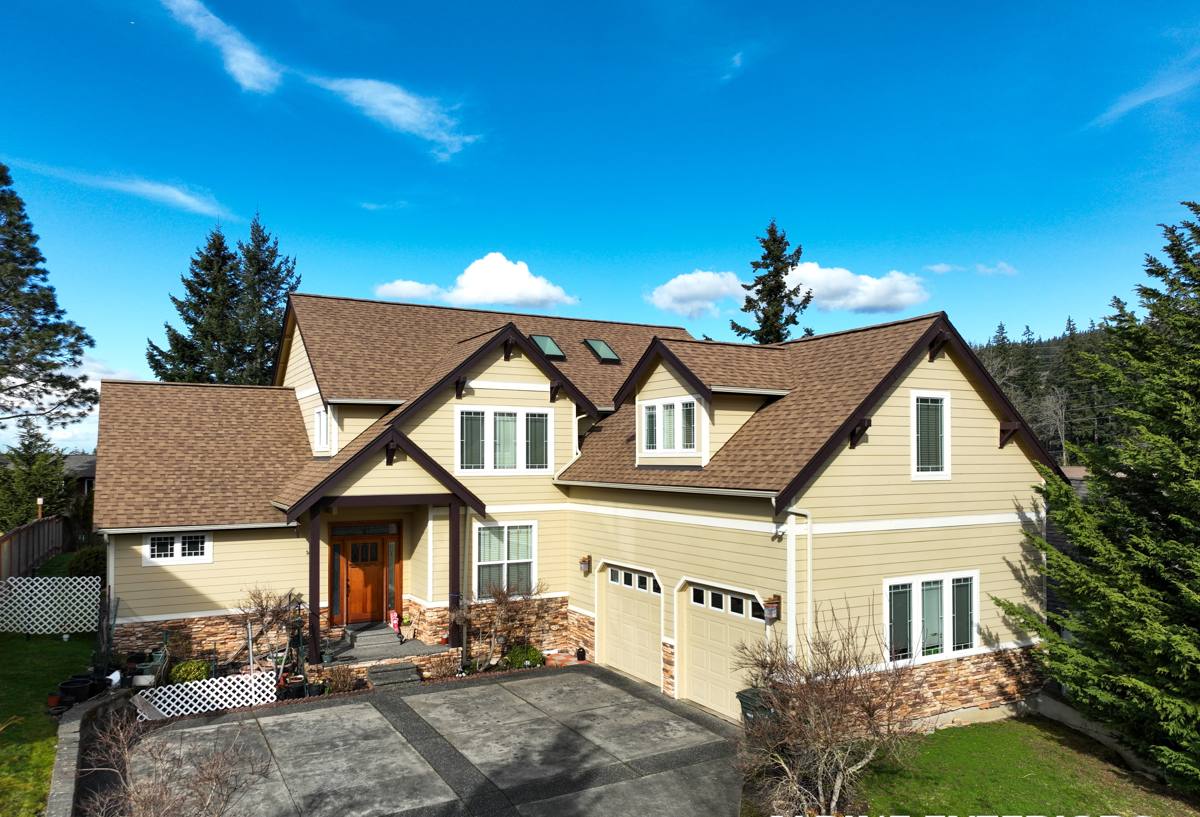
New-Construction vs. Replacement: Why the Install Method Is Different
New-construction windows have a nailing fin built into the frame, which gets fastened directly to the wall sheathing before siding and trim go on. That's different from a replacement or "pocket" window, which fits into an existing frame after the siding is already in place. Because new construction happens before the building envelope is closed up, it's actually the easier scenario to get right — but only if the sequencing with the weather-resistive barrier, flashing, and siding trades is followed correctly. Skip a step here and it's hidden behind siding for years before it causes a problem.
For a California Creek build, that sequencing matters more than it would in a drier climate. Wind-driven rain doesn't just fall straight down — it gets pushed sideways and up under trim and flashing laps that would be fine in a calmer inland location. The installation order and the shingle-lap direction of every flashing piece has to account for that.
What a Correct Installation Actually Involves
A proper new-construction window install in a marine environment like this isn't just "set it in the hole and nail the fin." The steps that actually determine whether a window stays dry for decades are mostly invisible once the siding goes on:
- Weather-resistive barrier lapped correctly around the rough opening before the window ever arrives on site
- Sill pan flashing installed to shed any water that gets past the window back out and away from the sheathing
- Corner flashing patches (or a properly cut and folded WRB) at all four corners of the opening, since corners are where most concealed leaks start
- Window set plumb, level, and square in the opening — not just fastened tight
- Nailing fin fastened per the manufacturer's schedule, not just "enough nails to hold it"
- Head flashing installed last, lapping over the WRB above the window so water is directed out over the siding, not behind it
- Backer rod and a quality exterior sealant at the trim-to-siding joint, sized and tooled correctly rather than just caulked over a gap
Any one of these steps done wrong won't show up on move-in day. It shows up in year three or four, usually during the wettest stretch of a Birch Bay winter, as a soft spot in the drywall or a musty smell in a closet on an exterior wall.
Choosing a Window and Frame Material for This Climate
Not every window product handles salt air and constant damp the same way. For a new build in California Creek, the frame material matters as much as the glass package. Here's how the common options actually perform in this specific environment, based on how they hold up over time rather than how they're marketed:
| Frame Material | Salt Air / Coastal Performance | Maintenance Over Time |
|---|---|---|
| Vinyl | Handles salt air well; won't corrode or oxidize like bare metal | Low — occasional cleaning, no repainting |
| Fiberglass | Excellent — very stable dimensionally in temperature and moisture swings | Low — factory finish holds up well long-term |
| Wood-clad | Good if the cladding and joints are sealed correctly; interior wood still needs protection from condensation | Moderate — watch cladding seams and interior sills |
| Bare aluminum | Prone to pitting and corrosion in salt-laden air over years | Higher — needs monitoring for corrosion at coastal distances like this |
We don't install bare aluminum-frame windows on new builds this close to the water as a matter of our own standard — not because the product can't be made to work somewhere else, but because the long-term corrosion risk in a salt-air environment isn't worth the maintenance headache for the homeowner down the road. Vinyl and fiberglass are our default recommendations for California Creek new construction, with glass packages selected for both moisture performance and the wind exposure common to this stretch of the bay.
Glass and Gas-Fill Considerations
Double-pane, argon-filled, low-E glass is the practical standard for new construction in this climate — it manages condensation risk on cold, damp Birch Bay mornings and cuts down on heat loss during the wetter, windier months. Triple-pane is worth discussing for north- or west-facing openings that catch the brunt of weather off the water, but it's not automatically necessary for every window on the house — that's a room-by-room conversation, not a blanket upgrade.
Our Process for New-Construction Window Installs
On a new build, we coordinate directly with the general contractor or the homeowner acting as their own GC, since window installation sits right in the middle of the framing, WRB, and siding sequence. Our process:
- Review rough openings against the window schedule and manufacturer specs before delivery — undersized or out-of-square openings get flagged and corrected before install day, not after
- Confirm the WRB is installed and lapped correctly around each opening prior to window set
- Install sill pan flashing and corner flashing at every opening, regardless of which elevation of the house it's on
- Set each window plumb, level, and square, shimming as needed rather than forcing the frame to the opening
- Fasten the nailing fin per manufacturer schedule and install head flashing over the WRB
- Install and seal exterior trim once siding crews are ready, using backer rod and sealant sized to the actual joint width
- Final walk-through checking operation, weep holes, and seal continuity before we consider the opening complete
We sequence around the other trades on site rather than working in isolation, since a window installed correctly but out of order with the siding or trim crew can still end up with a gap in the weather barrier.
Where Leaks Actually Start on New Construction
Most leaks that show up years after a new build wasn't caused by the window itself failing — it's a gap in the flashing detail around it. Corners are the number one culprit, followed by the head flashing lap and the sill pan. In a climate that gets sustained wind-driven rain off the water, water finds any shortcut in the flashing sequence eventually. That's why we treat flashing detail as the actual product being installed, with the window itself as one component of it.
Moss, Salt Film, and What Long-Term Maintenance Looks Like
Birch Bay's long moss season affects more than roofs and siding — moss and organic buildup on trim, sills, and the area just above window heads holds moisture against the building longer than it would in a drier climate. Combined with salt film from onshore air, this is why exterior trim material and finish matter as much as the window unit itself. Fiber-cement or properly sealed composite trim resists this buildup better than bare wood over time, and keeping gutters and downspouts clear so water doesn't sheet down over window heads is a simple maintenance habit that pays off for the life of the windows.
A rinse-down of exterior trim and glass once or twice a year removes salt film and organic buildup before it has a chance to etch glass or hold moisture against seals — a small habit that meaningfully extends the life of a new-construction window installation in this environment.
Cost Factors for New-Construction Window Installation
Every new build is different, but the factors that move the price on a California Creek job are consistent:
| Factor | Why It Affects Cost |
|---|---|
| Window count and size | More openings and larger units mean more flashing detail and labor time |
| Frame material chosen | Vinyl, fiberglass, and wood-clad carry different material costs |
| Wall height / elevation access | Second-story and vaulted openings require additional staging or lift time |
| Glass package | Standard low-E vs. upgraded or triple-pane glass on exposed elevations |
| Coordination complexity | Tight sequencing with framing/siding crews on a compressed build schedule |
We give a firm number after walking the plans or the framed openings — not a per-window average pulled from a national price list, since coastal flashing detail work takes more time than a basic inland install.
A Practical Checklist Before You Finalize Your Window Order
- Confirm frame material is rated for coastal/marine exposure, not just a standard residential grade
- Ask whether sill pan flashing is included in the install scope, not just the window unit
- Check that the glass package accounts for condensation risk on cold, damp mornings
- Verify exterior trim material choice can handle a long wet, mossy season without repainting every year or two
- Make sure whoever installs the windows is coordinating directly with your siding and trim crew, not working blind
Why It Matters That We Already Work California Creek
A crew that's worked new construction elsewhere in Whatcom County but not specifically along this stretch of Birch Bay doesn't necessarily know how exposed a given lot is to wind off the water, or how quickly moss establishes on north-facing trim here. We've handled window installs on new builds in and around California Creek and Birch Bay, and that means fewer surprises — we know which elevations need extra flashing attention, which trim materials actually hold up through the moss season, and how to sequence with the other trades on a coastal build without slowing the schedule down.
If you're planning new construction in California Creek and want windows installed correctly the first time, we're happy to walk the plans or the framed openings with you and put together a straightforward, no-pressure estimate using the form below.