 Birch Bay Siding
 Why Decks in Marietta Wear Out Differently Than Inland Decks
Marietta sits close to the water along Whatcom County's shoreline, and that location changes how a deck ages compared to one a few miles inland. Salt-laden air carries moisture and corrosive minerals that settle into fasteners, hardware, and end grain, even on decks that never get rained on directly. Combine that with the driving rain that comes off the water during fall and winter storms, and you get wood that stays damp longer than it should between dry spells.
Then there's moss. Whatcom County's long, mild, wet season is ideal for moss and algae growth on any horizontal wood surface that doesn't get much direct sun or airflow — which describes a lot of decks tucked against a house or shaded by trees. Moss holds moisture against the decking boards and framing underneath, and that moisture doesn't just sit on the surface; it works into fastener holes, board ends, and the joints where decking meets the house.
None of this means a deck in Marietta is doomed. It means the materials, fasteners, and drainage details matter more here than they would in a drier climate, and a deck built without those details in mind will show problems years before it should.
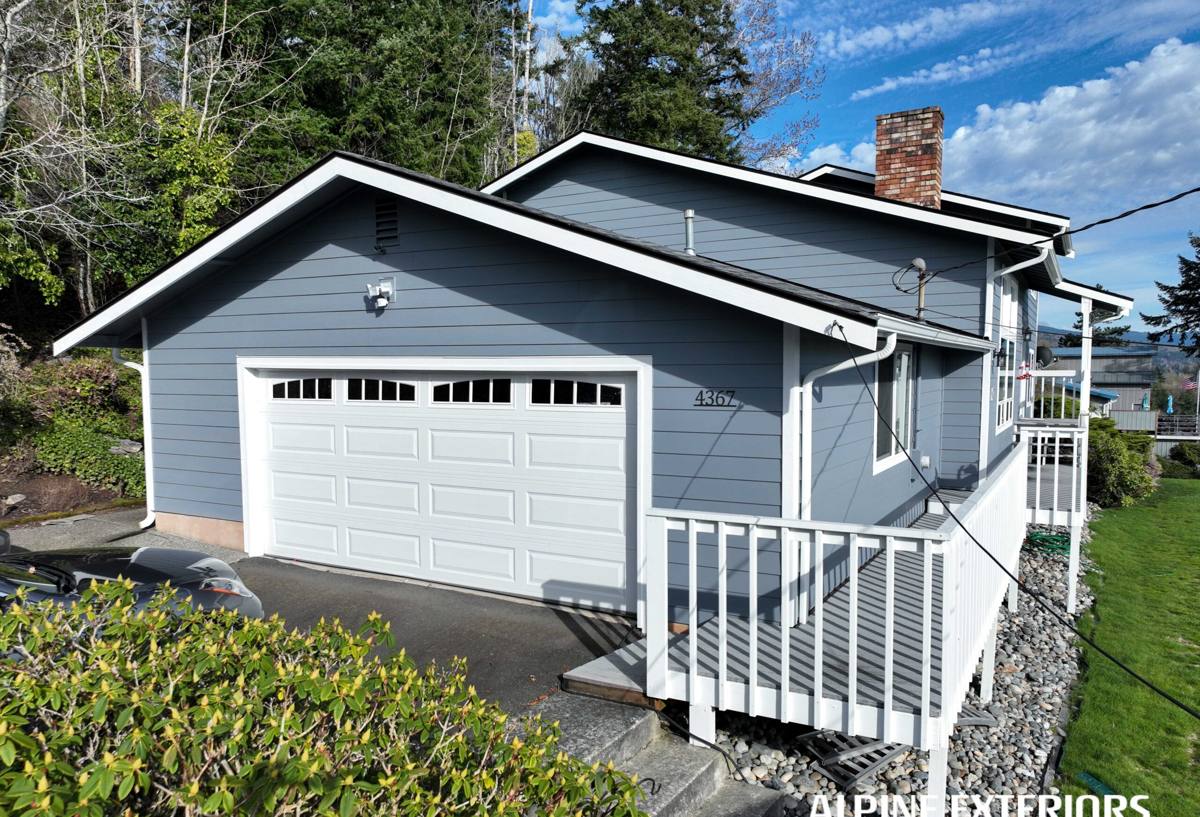
Signs Your Deck Is Due for Replacement, Not Just Repair
A lot of decks get patched for years past the point where patching still makes sense. Here's what tells us a full replacement is the honest recommendation rather than another round of spot repairs:
- Soft or spongy spots in the decking boards, especially near the house or in shaded corners
- Popped or rust-streaked fastener heads across multiple boards, not just one or two
- Visible rot, dark staining, or a hollow sound when you tap the ledger board where the deck attaches to the house
- A railing that flexes or wobbles more than it used to, especially at the posts
- Gaps between boards that have widened noticeably, or boards that have cupped or crowned
- Persistent moss or dark green growth that comes back within weeks of cleaning
- Any visible sag in the deck surface or in the framing underneath
- Footings or posts that shift, sink, or show cracking at ground level
Any one of these on its own might be a repair. Several together, especially rot at the ledger board or framing, usually means the structure has been compromised long enough that patching around it isn't a responsible fix.
What a Correct Deck Replacement Actually Involves
Starting With What's Underneath
The decking boards are the part everyone sees, but the framing, ledger connection, and footings are what actually determine whether the deck lasts. A replacement done right starts by tearing out the old decking and railing, then inspecting every piece of structural framing underneath — joists, beams, posts, and especially the ledger board where the deck ties into the house.
The ledger board deserves particular attention in a climate like this one. It's the single most common failure point on decks near the water, because it sits directly against the house siding or sheathing and is exposed to whatever water runs down the wall above it. If the original flashing was missing, undersized, or improperly lapped, water has likely been getting behind the ledger for years. We replace ledger flashing as a matter of course on every deck rebuild, tying it into the house's water-shedding layers correctly rather than just caulking over the old gap.
Hardware and Fasteners That Match the Environment
Standard galvanized hardware corrodes faster near salt air than most homeowners expect. We use stainless steel or heavy hot-dip galvanized joist hangers, screws, and structural connectors rated for coastal exposure. It costs more up front than mismatched hardware-store hangers, but replacing rusted-through hangers in eight years costs far more than the difference.
Footings and Framing Sized for the Site
Footing depth and size need to match what's actually holding up the structure, not just what was there before. Where drainage around the old footings was poor, we address grading and drainage as part of the rebuild rather than setting new posts on the same compromised base.
Choosing a Decking Material That Holds Up Here
There's no single "best" decking material — there's the right material for your budget, your maintenance appetite, and how exposed your deck is to salt air and shade. Here's how the common options compare for a Marietta-area home:
| Material | Typical Lifespan | Maintenance | Salt Air / Moisture Behavior | Relative Cost |
|---|---|---|---|---|
| Pressure-treated wood | 10-15 years | Annual cleaning, re-sealing every 1-2 years | Prone to checking and fastener corrosion if hardware isn't matched | Lowest |
| Cedar | 15-20 years with upkeep | Regular sealing/staining, moss cleaning | Naturally rot-resistant but still needs sealed end grain | Moderate |
| Composite decking | 25-30 years | Occasional washing, no sealing/staining | Doesn't absorb moisture or rot; some early composites had moisture issues at cut ends if not capped | Moderate-High |
| PVC decking | 25-30+ years | Minimal; occasional washing | Fully moisture-resistant, no organic material for moss to grip | Highest |
For a shaded, moss-prone deck near the water, we usually steer homeowners toward capped composite or PVC boards, not because wood is a bad product, but because the maintenance schedule wood needs to stay ahead of moss and moisture in this climate is more than most people actually keep up with. If you prefer the look and feel of real wood and are willing to stay on top of sealing and cleaning, cedar remains a solid, honest choice — we'll tell you straight what the upkeep commitment looks like either way.
What Drives the Cost of a Deck Replacement
Every deck quote is different, but the same handful of factors move the price up or down. Understanding them helps you see why two decks the same size can come in at very different numbers:
| Cost Factor | Why It Matters |
|---|---|
| Decking material chosen | Composite and PVC cost more per board than pressure-treated wood, but need far less upkeep over time |
| Framing and footing condition | Rotted joists, a failed ledger, or undersized footings add rebuild scope beyond just the surface |
| Deck height and stairs | Elevated decks and stair structures require more framing, railing, and code work than a low ground-level deck |
| Railing style | Cable, glass, and composite railing systems cost more than basic wood or metal baluster railing |
| Site access | Waterfront and hillside lots with limited equipment access can add labor time |
| Permit and inspection requirements | Elevated decks and structural changes typically require permitting, which adds time but protects you |
Permits and Code Requirements
Deck replacements that involve structural changes — new footings, a rebuilt ledger connection, or a change in height or footprint — generally require a permit through Whatcom County. Guardrails are required at a set height once a deck reaches a certain elevation above grade, stair stringers and rise/run have specific tolerances, and ledger attachment has its own fastening requirements when the deck carries a house connection. We handle the permit process as part of the job rather than leaving it for the homeowner to sort out, and we build to pass inspection the first time, not to squeak by.
Our Deck Replacement Process
- On-site assessment — we inspect the existing deck, ledger connection, framing, and footings to determine what's actually failing versus what's just cosmetic wear
- Material and design consultation — we walk through decking options, railing choices, and layout, with honest tradeoffs for your budget and exposure
- Permit handling — we prepare and submit what's needed through Whatcom County before work starts
- Demolition and disposal — full removal of the old decking, railing, and any compromised framing
- Structural rebuild — new or repaired framing, corrosion-resistant hardware, and properly flashed ledger connection
- Decking and railing installation — installed to the manufacturer's spacing and fastening specs, with drainage in mind
- Final walkthrough and cleanup — we go over the finished deck with you and leave the site clean
Why a Crew That Already Works in Marietta Matters
A deck built by someone unfamiliar with waterfront exposure often looks fine for the first couple of years and then starts showing the same failures the old deck had — because the same conditions that wore out the original deck are still there. A crew that regularly works Marietta and the surrounding Birch Bay area already knows which fastener grades hold up, which framing details prevent ledger rot in this specific climate, and how much drainage and airflow a deck needs to keep moss from taking over a shaded corner.
That familiarity also means fewer surprises during the job. We're not guessing at how Whatcom County's permitting process works or what inspectors here expect to see — we've been through it. And because siding and exterior water-management is our core trade, we treat the ledger-to-house connection with the same care we'd give any other place where a structure meets the building envelope, which is exactly where deck failures near the water tend to start.
Get a Straight Answer About Your Deck
If your deck is showing soft spots, rot at the ledger, or just isn't holding up the way it used to, it's worth getting an honest, no-pressure look before deciding between repair and full replacement. We'll tell you what we actually see and what it would take to fix it right. Fill out the form below for a free estimate.