 Birch Bay Siding
 Board & Batten on Lummi Island: A Different Set of Conditions
Lummi Island sits out in the water, which means every house on it deals with a version of the Whatcom County climate that's a notch more aggressive than what you'll find a few miles inland. Salt-laden air off the water, wind-driven rain that hits siding sideways instead of straight down, and a long, damp moss season that starts in fall and doesn't really let go until late spring. Board and batten siding — with its vertical boards, exposed battens, and strong shadow lines — is a popular look on the island because it reads as coastal and substantial. But that same profile has more seams, more fastener penetrations, and more places for water to find a way in than a flat lap siding does. Done right, it holds up beautifully. Done wrong, or done in the wrong material, it becomes a maintenance headache within a handful of years.
This page covers what board and batten siding needs to actually perform on Lummi Island, what a correct installation looks like, and why we only install it in James Hardie fiber cement — never vinyl, LP SmartSide, or primed wood — on this island or anywhere else we work.
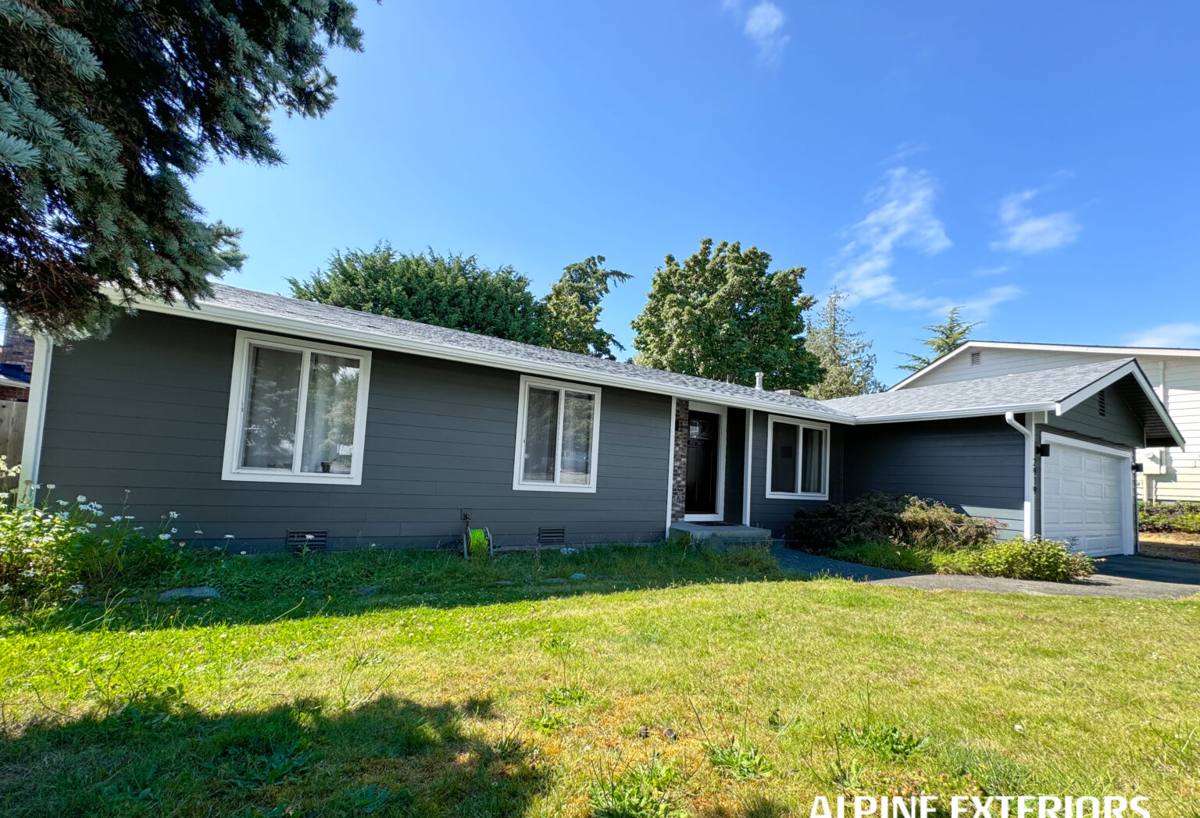
What Salt Air, Driving Rain, and Moss Actually Do to Siding
These three conditions don't act alone — they compound each other, and board and batten's extra seams give them more places to work.
Salt Air
Airborne salt is corrosive to exposed metal fasteners and flashing, and it accelerates the breakdown of anything not built to shed moisture cleanly. Over years, salt exposure also dulls and chalks lower-grade paint finishes faster than the same product would fade a few miles inland.
Driving Rain
Water hitting siding at an angle, rather than falling straight down, gets pushed up and under battens, into butt joints, and around fastener heads far more aggressively than in a sheltered valley location. Any gap or under-caulked seam becomes an entry point.
Moss and Sustained Dampness
Board and batten's vertical battens create narrow shadowed strips that stay damp longer after a storm than a flat wall does. Combined with tree cover common on the island, that's exactly the environment moss and mildew prefer. Moss holds moisture against the siding surface, and sustained dampness is what breaks down wood-based products and compromises paint bonds over time.
None of this means board and batten is a bad choice for Lummi Island — it means the material, the fastening details, and the water-management layer behind the boards all have to be right for the look to survive out here long-term.
Why We Only Install James Hardie for This Application
Board and batten is one of the styles where material choice matters most, because the profile itself concentrates water at the joints and battens. We don't install vinyl board and batten, LP SmartSide, primed spruce, or cedar battens on Lummi Island jobs, and that's a deliberate standard, not a preference:
- Vinyl expands and contracts significantly with temperature swings, which on a vertical board-and-batten profile can telegraph as visible waviness at the battens over time, and it doesn't hold paint if a homeowner ever wants to change the color.
- Wood-based products (LP SmartSide, primed spruce, cedar) are engineered or milled wood at their core. In a climate with this much sustained moisture and salt exposure, the failure point is almost always the cut edges and fastener penetrations — the places where the factory coating is broken and raw wood is exposed to weather. Board and batten has far more of those edges than lap siding.
- James Hardie fiber cement is non-combustible, dimensionally stable in wet-dry cycling, and comes with a factory-applied ColorPlus finish that's baked on rather than field-brushed, which matters enormously on a profile with this many exposed batten faces to maintain.
Hardie's HZ5 product line is engineered for this kind of freeze-thaw and moisture-cycling climate, and the ColorPlus warranty covers finish performance in exactly the conditions Lummi Island produces — salt air and long wet seasons — better than a field-painted or vinyl alternative.
What a Correct Board & Batten Installation Involves
The look of board and batten is simple — vertical boards with battens covering the seams — but the assembly behind it is what determines whether it lasts fifteen years or fifty.
Rainscreen Gap
A drainage gap behind the siding, created with vertical furring strips, lets any water that does get past the outer layer drain and dry instead of sitting against the wall sheathing. On a driving-rain site like Lummi Island, this is not optional — it's the single biggest factor in long-term wall performance.
Weather-Resistive Barrier and Flashing
A correctly lapped weather barrier behind the siding, with proper flashing at every window, door, and horizontal transition, is what actually keeps water out of the wall assembly. The siding itself is the first line of defense, not the only one.
Fastening Pattern
Board and batten needs a specific nailing schedule through both the boards and the battens, hitting framing consistently, with fasteners set to manufacturer spec — not overdriven, which crushes the fiber cement and opens a path for water at the fastener head.
Joint and Batten Spacing
Butt joints in the boards need to be flashed or backed properly, and battens need consistent spacing and reveal so the wall both looks right and sheds water evenly instead of channeling it toward weak points.
Caulking and Sealant Details
Only the joints Hardie's install spec calls for should be caulked — over-caulking traps moisture behind boards just as reliably as under-caulking lets it in. Getting this balance right takes experience with the product, not guesswork.
Material Comparison for Island Conditions
| Factor | James Hardie Fiber Cement | Vinyl Board & Batten | Wood-Based (LP/Cedar) |
|---|---|---|---|
| Salt air resistance | Strong — factory finish engineered for coastal exposure | Fair — doesn't corrode, but finish can chalk and fade | Weak — exposed edges and fasteners are vulnerable |
| Driving rain / moisture | Stable; dimensionally consistent wet or dry | Stable but seams can loosen with expansion cycling | Most vulnerable point — swelling, checking at cut edges |
| Moss / sustained dampness | Resists moisture absorption into the substrate | Doesn't feed moss, but traps moisture behind panels | Can absorb moisture, feeding rot and mildew growth |
| Fire rating | Non-combustible | Combustible | Combustible |
| Finish / repaint needs | ColorPlus factory finish, 15-year finish warranty | Color molded in; cannot be repainted if faded | Field-painted; repaint cycle every 5-8 years typical |
Our Process for Lummi Island Jobs
We're a Birch Bay-based crew, and Lummi Island is part of our regular service area — this isn't a one-off trip for us. A few things that matter specifically for island jobs:
Scheduling Around the Ferry
Getting a crew, equipment, and material onto the island means working around a ferry crossing, so we plan material delivery and crew days in blocks rather than piecemeal trips. That's part of why an estimate for island work includes realistic timeline expectations up front — we're not guessing at logistics we've never dealt with before.
Weather Windows
Board and batten installation requires dry substrate and dry working conditions for the weather barrier and flashing steps to go in correctly. We watch the marine forecast and schedule island work around real weather windows rather than pushing through wet conditions that compromise the install.
Full-Wall Assembly, Not Just Boards
Every quote includes the rainscreen furring, weather-resistive barrier, and flashing work — not just the visible Hardie boards and battens. On a site with this much rain and salt exposure, the hidden assembly is what determines whether the visible siding actually lasts.
Homeowner Checklist Before You Get Quotes
- Ask whether the quote includes a rainscreen gap or furring strips, not just direct-to-sheathing installation
- Confirm the fastening schedule follows James Hardie's published specs for board and batten
- Ask how window, door, and horizontal transitions will be flashed — get specifics, not just "we'll seal it up"
- Check that the crew has done island or coastal work before, not just inland siding jobs
- Get the ColorPlus warranty documentation in writing, not just a verbal mention
- Ask about realistic timeline given ferry logistics and weather-dependent install steps
Maintenance After Installation
A correctly installed Hardie board and batten system on Lummi Island is low-maintenance, not no-maintenance. A yearly rinse-down to knock off salt residue and any early moss growth, especially on shaded north-facing walls, keeps the ColorPlus finish looking like it did on install day. Because the color is baked into the board rather than field-applied, there's no repaint cycle to plan for — just periodic cleaning and an eye out for any caulk joints that need attention after a decade or more of service.
Why a Crew That Already Works Lummi Island Matters
Board and batten's biggest risk isn't the material — it's installation shortcuts that don't show up until years later, once the drainage plane has been failing quietly behind the boards. A crew that already handles the ferry logistics, already reads the marine weather patterns correctly, and already knows how salt air and driving rain behave on this specific stretch of Whatcom County water is going to make fewer of those hidden mistakes than a crew doing its first island job. We've built our scheduling, material staging, and install sequencing around exactly these conditions because it's the area we work.
If you're planning a board and batten project on Lummi Island, we're happy to walk the site, talk through the assembly details specific to your home's exposure, and put together a straightforward, no-pressure estimate — no upsell, no pressure, just what the job actually needs. The form below gets you started.