 Birch Bay Siding
 Why Decks in the Bellingham Area Wear Out Faster Than You'd Expect
Bellingham sits close enough to the water and the coastal fog line that decks here take on a different kind of abuse than decks further inland. Salt-laden air corrodes fasteners and hardware faster than most homeowners expect, driving rain gets pushed sideways into ledger boards and railing joints, and the long stretch of grey, wet months between fall and spring gives moss and algae months at a time to take hold on any surface that doesn't dry out quickly. None of this means a deck is doomed — it means a deck built or repaired without that climate in mind will fail years before it should.
We see the same failure patterns over and over on decks throughout Whatcom County: fasteners that have rusted and stained the wood around them, ledger connections that stayed damp against the house all winter, and boards that look fine on top but are soft or spongy underneath because moisture got trapped and never had a chance to dry. Deck repair here isn't just about swapping a bad board — it's about understanding why that board went bad in the first place and making sure the fix doesn't just repeat the problem.
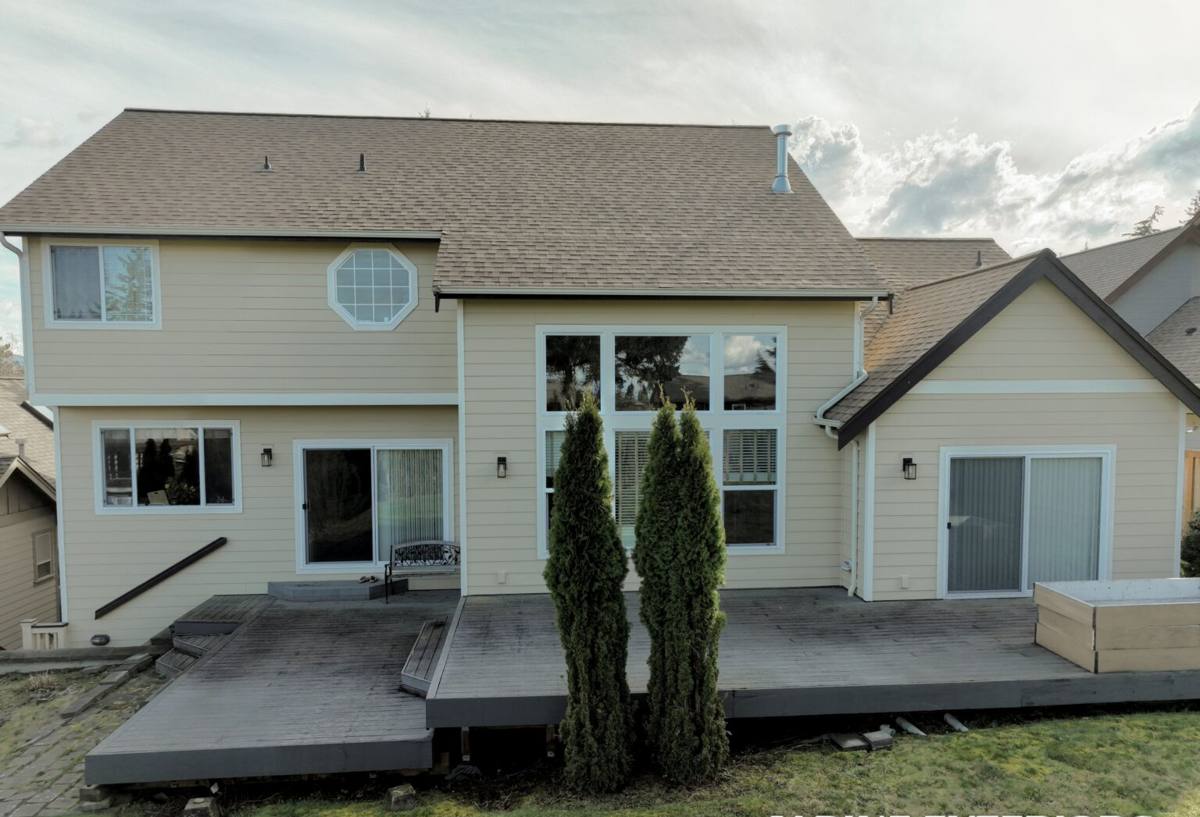
Signs a Bellingham Deck Needs Repair
Most deck damage doesn't announce itself with a dramatic collapse. It shows up as small changes that are easy to write off until they aren't.
What to Look For
- Boards that feel spongy, springy, or noticeably softer than the boards around them
- Dark staining around screws or nails, or fasteners that have visibly rusted or backed out
- Green or black film on the deck surface that returns quickly after cleaning — a sign the wood is staying damp longer than it should
- Gaps, wobble, or movement where the deck attaches to the house (the ledger board)
- Railings or posts that flex more than they used to when you lean on them
- Visible cracking, splitting, or checking in structural framing members, not just the surface boards
- A musty smell coming from underneath the deck, especially after rain
Any one of these on its own might just mean a board or two needs attention. Several of them together, especially around the ledger or support posts, usually means it's worth having someone look at the structure before deciding what level of repair is actually needed.
Repair vs. Replacement
Not every damaged deck needs to come down. If the framing and posts are sound and the damage is limited to surface boards, railings, or stairs, targeted repair is usually the right call and the more affordable one. If the ledger connection has been compromised, if multiple support posts show rot at the base, or if the damage has been ignored long enough that it's spread through the structure, replacement of those sections — or in some cases the whole deck — is the safer and often cheaper path over the long run than repeatedly patching a structure that keeps failing.
What a Correct Deck Repair Actually Involves
A repair that just replaces the board you can see, without addressing why it failed, tends to fail again in the same spot within a few years. A correct repair in this climate means a few things happen every time, regardless of how small the visible damage looks.
Diagnosing Past the Surface
We check under and around the visible damage, not just at it. A soft board near a ledger often means the connection behind it has been holding moisture, and replacing the board without addressing the flashing or the connection just resets the clock on the same failure.
Matching Fasteners to the Environment
Given how much salt air and driving rain this area sees, hardware matters as much as the wood itself. We use fasteners and connectors rated for coastal and wet-climate exposure rather than standard-grade hardware that will corrode and stain the deck again within a few seasons.
Restoring Drainage and Airflow
A huge share of deck rot in this region traces back to water that had nowhere to go. Part of a proper repair is making sure boards are spaced to shed water, that the area underneath the deck can breathe, and that flashing at the house connection is actually doing its job instead of channeling water behind the siding.
Deck Materials We Repair and How They Hold Up Here
What the deck is built from changes both how it fails and how it should be repaired. Here's how the common options behave under Bellingham's rain, salt air, and moss season.
| Material | Typical Failure Pattern Locally | Repair Considerations |
|---|---|---|
| Pressure-treated wood | Rot at ground contact, fastener corrosion, moss buildup on shaded sections | Sectional board and post replacement is usually straightforward if framing is sound; needs periodic sealing to keep performing |
| Cedar | Surface graying, softening where debris collects, splitting at fastener points | Repairs blend well if matched to weathered tone; benefits from cleaning and re-sealing on a regular cycle |
| Composite decking | Moisture wicking at cut edges, mold/algae film in shaded or low-airflow areas | Damaged boards typically need full-length replacement rather than patching; edge sealing at cuts prevents repeat issues |
| Deck framing (any surface material) | Rot at ledger connection, post bases, and joist hangers where water collects | Often the real source of a "surface" problem; addressing flashing and hardware here prevents repeat failures above |
Whatever the surface material, the framing underneath is almost always the part that determines whether a repair holds for years or needs revisiting soon. That's where we spend the most diagnostic time, even when the visible complaint is a soft board on top.
Our Deck Repair Process
1. On-Site Assessment
We walk the whole deck, not just the spot you called about — soft boards near the ledger, rot at post bases, and railing movement often show up together, and catching them in one visit saves you from repeat trips.
2. Honest Scope
We tell you plainly whether you're looking at a board-level repair, a structural fix, or something closer to a rebuild, and why. If a smaller repair is genuinely the right call, we'll say so rather than upselling a bigger job.
3. Repair Work
We remove and replace only what's actually compromised, matching materials and fastening methods appropriate to coastal Whatcom County conditions, and correcting the underlying moisture or drainage issue that caused the damage in the first place.
4. Final Check
Before we consider the job done, we check that railings are solid, boards are properly spaced and secured, and connections at the house are sealed and flashed correctly — the details that determine whether the repair lasts.
What Drives the Cost of a Deck Repair
Deck repair costs vary a lot based on what's actually wrong, which is exactly why we assess in person rather than quoting off a phone description. In general terms, costs are driven by:
| Factor | Why It Matters |
|---|---|
| Extent of damage | A handful of surface boards costs far less than framing or ledger repair, which involves more labor and structural work |
| Accessibility | Decks that are hard to get underneath or that require removing railings/stairs to reach damage take more time |
| Material match | Matching existing decking (especially discontinued composite lines or weathered cedar) can add cost or require a broader repair area |
| Root cause work | Fixing the drainage, flashing, or ventilation issue that caused the damage is additional work, but skipping it just invites a repeat repair |
Broadly, small board and railing repairs tend to be a modest expense, while structural repairs involving framing, posts, or the ledger connection cost more because they involve more labor and more careful sequencing. We'll always walk you through what's driving the number before any work starts.
Keeping a Repaired Deck Solid Through the Next Wet Season
A well-executed repair still needs some basic upkeep in a climate like this one. A few habits go a long way toward protecting the work:
- Keep leaves and debris cleared from between boards, especially heading into fall
- Rinse or lightly scrub moss and algae film off the surface before it gets established
- Check the area under the deck once a year for standing water or blocked drainage
- Re-seal or re-stain wood decking on the schedule the product calls for, not just when it looks faded
- Have railings and stair connections checked periodically, since these take the most daily stress
Why Hiring a Crew That Already Works Bellingham Matters
Deck repair looks different in coastal Whatcom County than it does in drier parts of the state, and a crew that hasn't worked this specific combination of salt air, sustained rain, and moss season can miss the details that actually determine how long a repair lasts. We already work on homes throughout the Bellingham and Birch Bay area, so we're familiar with the drainage patterns, exposure levels, and construction habits typical of decks in this region — and we know which shortcuts show up as callbacks two winters later.
If your deck has soft spots, moss that won't quit coming back, or railings that feel less solid than they used to, we're happy to take a look and give you a straight assessment of what it actually needs. Reach out for a free, no-pressure estimate using the form below.