 Birch Bay Siding
 Building a Deck That Holds Up in Nooksack's Climate
Nooksack sits close enough to Birch Bay and the Strait of Georgia that homes here deal with the same coastal weather pattern the rest of Whatcom County fights every year: salt-laden air blowing in off the water, long stretches of driving rain from fall through spring, and a moss season that seems to start earlier and last longer with each passing winter. A deck built without those conditions in mind will look fine for a year or two and then start showing problems — cupped boards, rusted fasteners, slick green film on the walking surface, soft spots where water has been sitting against the framing. A deck built for this specific climate is a different project from the start, and that's the difference we bring to every Nooksack job.
This page covers what a Nooksack deck actually needs, what correct construction looks like from the ground up, and how our process works when you hire a crew that already knows this area.
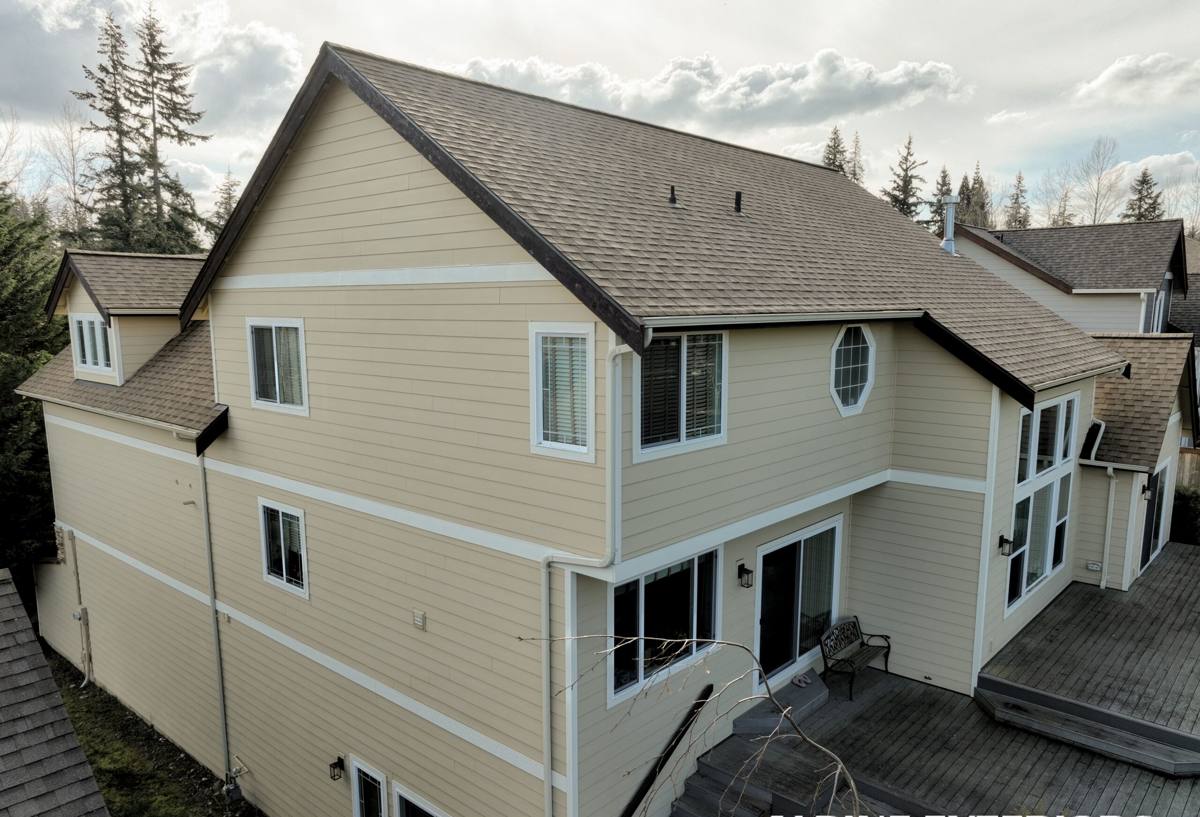
What Nooksack's Climate Actually Does to a Deck
Salt Air and Metal Fasteners
Even a few miles inland from the bay, airborne salt finds its way into every exposed metal component on a structure. Standard fasteners and hardware corrode faster here than they would in a dry inland climate. Corroded fasteners don't just look bad — they lose holding strength, and a deck's structural integrity depends entirely on its connections staying tight. This is one of the first things we address differently on a Nooksack build.
Driving Rain and Water Intrusion
Whatcom County rain doesn't just fall straight down — wind-driven rain gets pushed sideways into ledger connections, under rail posts, and into any gap where end grain is exposed. Wood that stays wet longer takes longer to dry between storms, and repeated wet-dry cycling is what causes boards to cup, twist, and eventually rot from the inside out.
Moss and Surface Buildup
A long, damp shoulder season means moss and algae get a real foothold on any deck surface that doesn't drain and dry quickly. Beyond the appearance issue, a mossy deck surface is a slip hazard, and moss holds moisture directly against the board, accelerating the same rot problems driving rain causes.
What a Correctly Built Deck Includes
Given all of the above, a deck built to hold up in Nooksack isn't just about picking a nice-looking decking material. It's a system, and every part of that system has to work together.
- Corrosion-resistant, code-rated fasteners and structural connectors throughout — not just at the ledger, but at every joist hanger, post base, and rail connection
- A properly flashed ledger board where the deck attaches to the house, so water is directed away from the wall framing rather than trapped behind it
- Joist tape or a comparable moisture barrier on top of framing lumber, protecting the wood where fasteners penetrate and water tends to pool
- Adequate slope and gapping in the decking surface so water sheds off instead of sitting
- Ventilation underneath the deck so the framing can actually dry out between rain events
- Decking material chosen and installed with this specific climate in mind, not just aesthetics
- Footings sized and placed correctly for the soil conditions and frost depth in this part of Whatcom County
Skip any one of these and you haven't saved money — you've just moved the cost down the road to a repair bill.
Choosing the Right Decking Material for This Area
There's no single "correct" decking material for every homeowner — it depends on budget, maintenance tolerance, and how the deck will be used. What matters is understanding the honest trade-offs of each option under Nooksack's specific conditions.
| Material | How It Handles Salt Air & Rain | Moss/Algae Resistance | Maintenance |
|---|---|---|---|
| Pressure-treated wood | Holds up well if fasteners and flashing are correct; end cuts need re-sealing | Needs regular cleaning and treatment | Annual cleaning, periodic staining/sealing |
| Cedar | Naturally rot-resistant but still needs sealing in this climate | Moderate — still needs cleaning | Regular sealing to maintain resistance |
| Composite decking | Doesn't absorb water like wood; core and fastening system still matter | Better resistance, but surface film can still form and needs washing | Occasional washing, no staining/sealing |
| PVC/cellular decking | Fully water-resistant surface material | Best surface resistance to moss growth | Lowest — periodic washing only |
Whichever material a homeowner chooses, we're honest about what it needs going forward. A composite or PVC deck still needs proper substructure ventilation and flashing — the surface material doesn't fix a poorly built frame underneath it. And a wood deck isn't a bad choice as long as the homeowner understands the maintenance commitment that comes with it in a climate this wet.
Substructure and Framing: Where Most Deck Failures Actually Start
Homeowners tend to focus on the decking surface because that's what they see and walk on, but the framing underneath is where the majority of failures actually originate. A deck can have beautiful, expensive decking boards on top of a frame that's already rotting because the ledger flashing was skipped or the joists were never protected from standing water. We build every Nooksack deck with the assumption that water will eventually reach the framing — the question is whether the structure is set up to shed it and dry out, or whether it's set up to trap it.
This means correct beam and post sizing for the actual span and load, joist spacing that meets code for the decking material chosen, and hardware rated for exterior and coastal-adjacent use. It also means thinking about drainage at the ground level — a deck built low to grade with poor drainage underneath will stay damp far longer than one with proper clearance and airflow.
Attaching to the House Correctly
The ledger board — where the deck ties into the house — is the single most failure-prone connection on most decks, and it's also the connection most likely to cause damage beyond the deck itself if it's done wrong. Water that gets behind an improperly flashed ledger doesn't just rot the ledger board; it can work its way into the house's wall framing and sheathing. In a climate with as much driving rain as this one, ledger flashing isn't an optional upgrade — it's the difference between a deck project and a future siding and framing repair project.
Railings, Stairs, and Code Requirements
Railings and stairs are where a lot of deck safety issues show up, and they're also code-regulated for good reason. Beyond meeting height and baluster spacing requirements, railing posts need to be attached with hardware that won't loosen over time — a wobbly rail post is almost always a sign of a connection that was never properly through-bolted or blocked. Stair stringers need the same rot protection as the rest of the frame, since stairs sit close to grade and catch more splash-back moisture than the main deck surface.
Our Process for Nooksack Deck Projects
- On-site assessment — we look at the site conditions specific to the property: sun and shade exposure, drainage slope, distance from the water, existing structure if it's a replacement or repair
- Material and design discussion — an honest conversation about decking material trade-offs, layout, and what fits the budget without cutting corners on the parts that actually protect the structure
- Permitting — decks typically require a permit in this area, and we handle that process rather than leaving it to the homeowner
- Framing and flashing — built to the standards outlined above, with attention to ledger flashing, hardware, and ventilation before a single decking board goes down
- Decking installation — proper gapping, fastening, and finishing appropriate to the material chosen
- Final walkthrough — going over the finished deck with the homeowner, including basic maintenance expectations for the material installed
Why Hiring a Crew That Already Works in Nooksack Matters
A contractor who mostly builds decks in drier inland climates isn't necessarily going to think about salt-air corrosion or moss-driven slip hazards unless they're prompted to. A crew that regularly works Nooksack, Birch Bay, and the surrounding Whatcom County coastline builds these considerations in automatically, because we've seen what happens when they're skipped. That local familiarity also means a more accurate read on site-specific issues — drainage patterns, prevailing wind and rain direction, and how a particular lot tends to hold moisture — without having to guess.
Maintaining Your Deck Once It's Built
Even a well-built deck needs some ongoing attention in this climate. A short seasonal checklist goes a long way toward protecting the investment:
- Sweep debris off the deck surface regularly, especially in fall when leaves and organic matter accelerate moss growth
- Wash the surface periodically to remove algae and moss film before it becomes established
- Check railing posts and stair connections annually for any looseness
- Inspect ledger flashing and the area where the deck meets the house for any signs of water staining
- Re-seal or re-stain wood decking on the schedule appropriate to the product used
- Confirm underneath ventilation isn't blocked by stored items or overgrown landscaping
Staying ahead of these small items is far cheaper than dealing with structural repairs later.
Get a Free Estimate
If you're planning a new deck or need to replace one that's showing its age in Nooksack or the surrounding Birch Bay area, we're happy to come take a look and give you an honest, no-pressure estimate. Use the form below to get started.