 Birch Bay Siding
 Building a Deck That Belongs on This Coastline
Point Whitehorn sits close enough to the water that every exterior structure on a home there is doing double duty: it has to look good and it has to survive conditions that inland Whatcom County decks never see. Salt-laden air, wind-driven rain coming off the Strait, and a moss season that can run from October well into May all put steady pressure on wood, fasteners, and finishes. A deck built the way a contractor might frame one in Bellingham's south hill or out toward Lynden isn't automatically wrong, but it's rarely right for Point Whitehorn without some deliberate changes to material choice, hardware, and drainage detailing.
We build custom decks specifically for Birch Bay and Point Whitehorn properties, and the difference shows up in the parts you don't notice until they fail — the fastener that corrodes in year three, the ledger flashing that lets water track back into the rim joist, the low spot that never quite dries out and grows moss by December. Getting those details right the first time is cheaper than fixing them later, and it's the whole reason a "custom" deck project here means more than picking a board color.
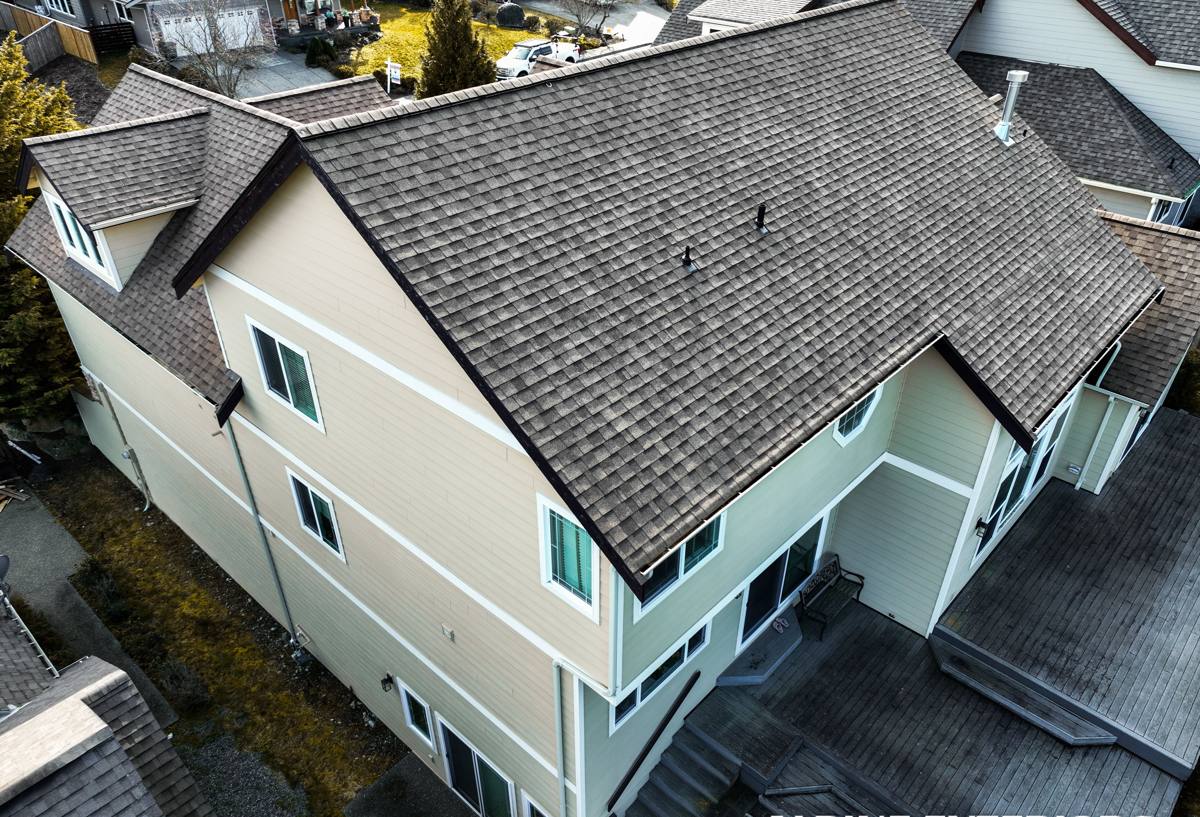
What Point Whitehorn's Climate Actually Does to a Deck
Salt Air
Proximity to Semiahmoo Bay and the Strait of Georgia means airborne salt reaches structures well back from the shoreline, not just waterfront lots. Salt accelerates corrosion on any fastener, bracket, or fixture that isn't rated for it, and it speeds up the breakdown of lower-grade metal hardware faster than most homeowners expect.
Driving Rain
Storms here don't just fall straight down — wind pushes rain sideways into ledger boards, under railings, and into any gap in the decking pattern. That means flashing and water management matter as much as the decking material itself. A deck that would be fine in a calmer climate can trap moisture here simply because it wasn't detailed for horizontal rain.
Long Moss Season
Whatcom County's wet, mild fall-through-spring stretch gives moss and algae months to establish on any shaded or poorly drained deck surface. Moss holds moisture against the board, which accelerates rot in real wood and can make composite surfaces slick and stained if they're not cleaned. Deck orientation, gap spacing, and board choice all affect how much moss becomes a problem versus a minor nuisance.
What a Correctly Built Deck Includes
A deck that's going to hold up in this environment isn't defined by one product — it's a set of decisions that work together. Here's what we look at on every Point Whitehorn project:
- Ledger attachment and flashing that keeps water out of the house band joist, not just off the deck surface
- Corrosion-resistant fasteners and structural connectors rated for coastal or treated-lumber exposure
- Joist spacing and blocking sized for the actual decking material chosen, not a generic minimum
- Drainage slope away from the house and clear airflow underneath to discourage moss and rot
- Railing and stair details that meet current code and hold up to wind and moisture cycling
- A decking surface matched to the home's sun/shade exposure and the owner's tolerance for upkeep
Framing and Structure: The Part You Don't See
The substructure is where a coastal deck earns its lifespan. We use fasteners and structural hardware rated for high-corrosion environments — this isn't an upsell, it's the baseline for anything built this close to salt air. Standard galvanized hardware can start showing surface corrosion within a few seasons here; stainless or heavy-coated coastal-rated fasteners cost more upfront but avoid a hidden failure point that's expensive to diagnose once decking is already down.
Ledger flashing gets particular attention. The ledger board — where the deck attaches to the house — is the single most common source of hidden rot on any deck, coastal or not, and driving rain makes the risk worse here. We flash it so water sheds away from the house structure rather than tracking behind the board, and we don't rely on caulk alone to do that job long-term.
Choosing a Decking Material for This Environment
There's no single "best" decking material — there's a best fit for a given home, budget, and how much maintenance the owner wants to do. Here's how the common options actually perform under salt air, driving rain, and heavy moss pressure:
| Material | Moisture & Salt Behavior | Moss/Algae Resistance | Maintenance |
|---|---|---|---|
| Pressure-treated wood | Good if sealed regularly; end grain and fastener holes are vulnerable points | Needs periodic cleaning and resealing to resist moss staining | Annual inspection, resealing every 2-3 years |
| Cedar | Naturally decay-resistant but still needs sealing near salt air | Moderate — still needs cleaning in shaded areas | Sealing every 1-2 years for best appearance |
| Composite decking | Doesn't absorb moisture like wood; performs well in wet coastal conditions | Better resistance, but can still stain in deep shade if never washed | Periodic washing, no sealing required |
| PVC/capped polymer | Fully moisture-resistant surface layer | Best resistance among common options | Occasional washing, higher upfront cost |
We're honest with homeowners about trade-offs rather than pushing one product. Real wood costs less upfront and can look great, but it asks for consistent upkeep to keep moss and rot at bay in a climate like this one. Composite and PVC cost more initially but shift the long-term burden away from sealing and staining — a fair trade for owners who don't want a recurring maintenance task. The right call usually comes down to budget, how shaded the deck site is, and how much upkeep the owner actually wants to do — not which material is fashionable.
Fasteners and Hardware — Where Budget Jobs Fail First
It's worth saying plainly: the fastener grade is not a place to cut cost on a Point Whitehorn deck. Standard interior-grade screws and brackets corrode faster in salt air than most homeowners realize, and once staining or streaking shows up on the decking surface, it's a sign the hardware underneath is already compromised. We spec coastal-rated fasteners and connectors as standard, not as an add-on.
Railings, Stairs, and Code
Any deck above a certain height needs code-compliant railings and stair construction, and Whatcom County inspectors check for guard height, baluster spacing, and proper attachment. Beyond passing inspection, railing hardware is one of the most exposed parts of a deck — it takes wind and rain directly and shows corrosion first if the wrong materials are used. We detail railing posts and connections the same way we do the deck framing: rated hardware, proper flashing where posts penetrate the deck surface, and attention to how water sheds off the top rail.
How We Build Your Deck
1. On-Site Assessment
We walk the property, look at sun and shade exposure, existing drainage patterns, and how close the site is to prevailing wind and moisture. Point Whitehorn lots vary — some are more sheltered, some take weather more directly — and that changes the material and detailing recommendations.
2. Design and Material Selection
We go over decking material options, railing style, and layout against your budget and how much maintenance you want to take on. No pressure toward the most expensive option — just an honest rundown of what each choice actually costs you over time.
3. Permitting
Most new decks and significant rebuilds in Whatcom County require a permit. We handle that process so the structure is inspected and compliant, which also matters for resale and insurance down the line.
4. Construction
Framing, flashing, and hardware installation come first and matter more to the deck's lifespan than the decking material itself. We don't skip steps to save a day on the schedule.
5. Final Walkthrough
We go over the finished deck with you, including basic care guidance specific to the material installed and this climate.
Keeping a Point Whitehorn Deck in Good Shape
Whatever material you choose, a little seasonal attention goes a long way in this climate:
- Sweep debris and standing leaves off the surface before fall rains set in
- Rinse or scrub shaded areas where moss tends to establish, especially late winter into spring
- Check fastener heads and railing connections annually for early corrosion signs
- Reseal real wood decking on the schedule appropriate to the product — don't wait until it looks dry and gray
- Keep gutters and downspouts near the deck clear so runoff isn't adding extra moisture to the structure
- Confirm drainage underneath the deck hasn't become blocked by plant growth or debris
Why Local Experience in Point Whitehorn Matters
A contractor who mostly builds decks inland doesn't necessarily know how much faster salt air corrodes standard hardware, or how a shaded north-facing deck in this specific pocket of Whatcom County holds moss longer than the same layout a few miles away. We work Birch Bay and Point Whitehorn regularly, which means the fastener grade, flashing details, and material recommendations we bring to your project are based on what actually holds up here — not a generic build sheet.
If you're planning a new deck or replacing one that's showing its age, we're glad to take a look and give you a straightforward assessment of what your property needs. Reach out for a free, no-pressure estimate using the form below.