 Birch Bay Siding
 Building Decks That Actually Hold Up Near Birch Bay
Lynden sits inland from the water but still gets the same wet, gray stretch of weather that defines this corner of Whatcom County, and homes closer to Birch Bay itself deal with salt-laden air on top of it. A deck built here isn't a summer accessory — it's an outdoor structure that sits under moss-growing shade, soaks up months of driving rain, and in the bay-adjacent lots takes on airborne salt that speeds up corrosion on anything metal. We build custom decks for this specific set of conditions, not a generic deck plan pulled from a catalog meant for a dry climate.
A deck that looks fine the first summer but starts trapping water, growing moss on the boards, or bleeding rust streaks from hidden fasteners by year three isn't a bargain — it's a redo. Our approach is to get the framing, drainage, fastener selection, and decking material right the first time, matched to whether a property is closer to open water or further inland toward Lynden's farmland and residential streets.
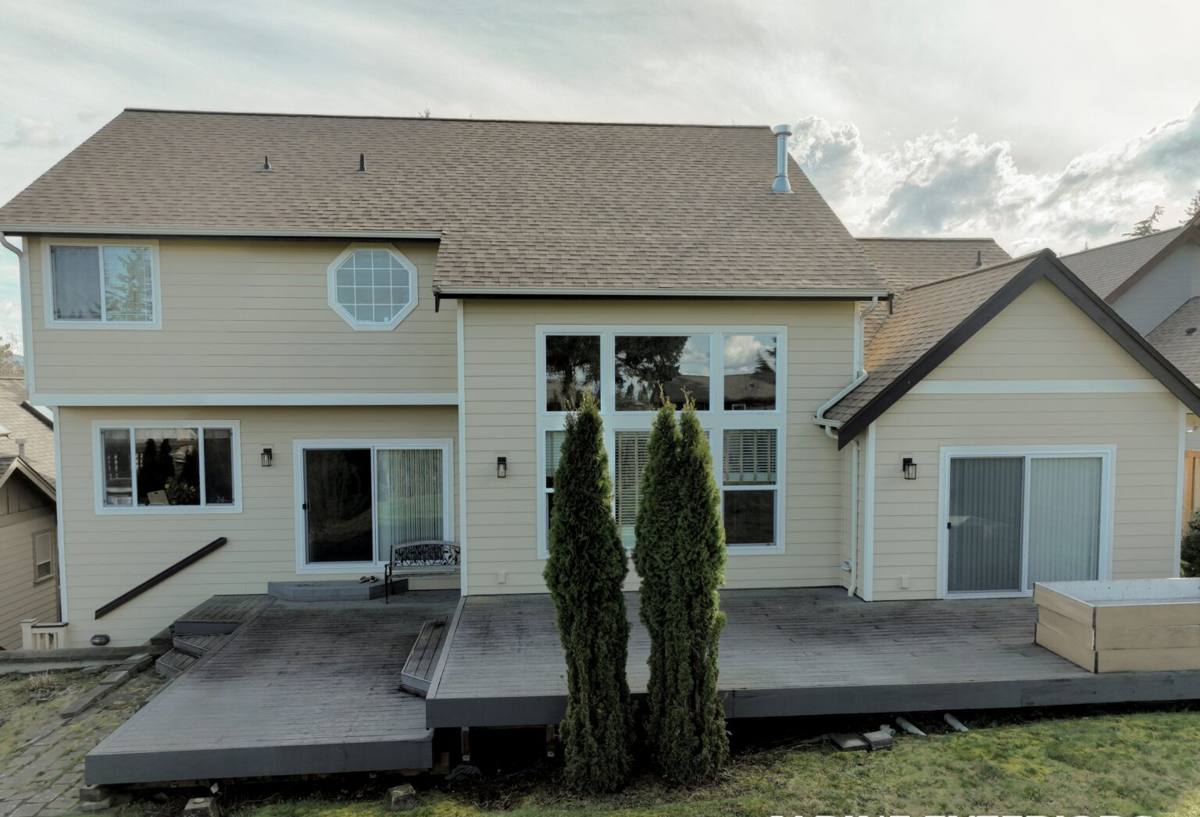
What Lynden and Birch Bay Homes Need From a Deck
Rain Volume and Drainage
Whatcom County gets a long, steady rain season rather than short intense downpours, which is actually harder on a deck in some ways — water has more time to find its way into joints, fastener holes, and end grain. A deck built without deliberate drainage planning will hold moisture against the framing for days at a stretch through the wet months, which is exactly the condition that rots joists and posts from the inside out before anything looks wrong on the surface.
Moss and Shade
Between the tree cover common on Lynden lots and the region's overcast stretches, moss isn't an occasional nuisance here — it's a season. Moss holds moisture against decking boards, and on smooth or grooved-face boards it can get a foothold fast in shaded corners or under furniture that never moves. Board selection, gapping, and airflow underneath the deck all affect how much moss you'll actually be scraping off come spring.
Salt Air Near the Bay
The closer a property sits to Birch Bay, the more that salt-tinged air becomes a factor in what fasteners, connectors, and hardware we spec. Standard galvanized hardware can start showing corrosion faster in a salt-air environment than it would a few miles inland, which is why hardware choice for bay-adjacent builds gets treated differently than it does for a Lynden lot set back from the water.
Framing: The Part You Won't See Again
Everything visible on a deck — the boards, the railing, the stair treads — gets replaced or refinished eventually. The framing underneath is buried the day it's built and has to be right, because fixing it later means tearing the deck apart. For our area that means:
- Pressure-treated framing lumber rated for ground contact where posts meet or come near soil, not just above-ground rated stock
- Joist tape or a flashing membrane on top of joists so decking screws don't create an open path for water into the wood
- Stainless or coated structural connectors sized for our moisture exposure, not the minimum-cost hardware option
- Footings set to local frost depth and soil conditions, not eyeballed
- Proper slope away from the house on the ledger connection so water sheds instead of pooling against the siding
A ledger board bolted to the house is one of the most common failure points we see on older decks in this area — if it wasn't flashed correctly when built, water works its way behind the siding and rots both the ledger and the wall framing behind it. On any deck attached to the house, correct ledger flashing isn't optional.
Decking Material: What Actually Works Here
There's no single "best" decking material — there's a best fit for how a homeowner wants to maintain it and what budget makes sense. Here's how the common options actually perform under Whatcom County's rain-and-moss cycle:
| Material | How it handles our climate | Maintenance reality |
|---|---|---|
| Pressure-treated wood | Solid performer if sealed and maintained; absorbs moisture if neglected | Needs cleaning and a fresh sealer coat every 1-2 years to resist moss and graying |
| Cedar | Naturally rot-resistant and handles moisture well; needs upkeep to keep its look | Regular cleaning and re-oiling or staining to prevent silvering and moss buildup |
| Composite decking | Resists moisture absorption and moss gets less of a foothold on capped boards | Periodic washing; no staining or sealing, but board spacing still matters for drainage |
| PVC decking | Fully moisture-resistant surface, good choice for shaded, damp areas | Lowest ongoing maintenance; higher upfront material cost |
For heavily shaded Lynden lots or anything within moss-prone reach of tree cover, we lean toward capped composite or PVC when budget allows, simply because moss has a much harder time establishing on a non-porous surface. For homeowners who want the look and feel of real wood and are willing to keep up with sealing, cedar or treated lumber still make a good deck when it's detailed and maintained correctly.
Hardware and Fasteners: Where Cheap Decks Fail First
The fastener aisle at any hardware store has a wide range of prices for a reason. On a deck exposed to this region's rain and, for bay-adjacent homes, salt air, the difference between standard coated deck screws and a proper stainless or premium coated fastener shows up as rust streaking down the boards within a couple of seasons. We spec fasteners and structural hardware based on proximity to the water and expected moisture exposure — not a flat standard applied to every job regardless of location. This is a small line item on the estimate that prevents a visible, permanent problem later.
Our Process for a Custom Deck Build
1. On-Site Assessment
We walk the property, look at drainage patterns, sun and shade exposure, existing grade, and how close the site is to Birch Bay's salt-air influence versus a more sheltered Lynden lot. This determines material and hardware recommendations before we ever talk final design.
2. Design and Material Selection
We talk through layout, size, railing style, and decking material with honest trade-offs for each option — cost, maintenance, and how it'll actually perform in this climate, not just how it looks in a showroom.
3. Permitting
Deck permitting requirements vary by jurisdiction and by deck height and attachment method. We handle what's required for the project so the homeowner isn't the one tracking down permit paperwork.
4. Framing and Structural Work
Footings, posts, beams, joists, ledger flashing, and structural connectors get built to the standard described above — this is the stage that determines how the deck ages, and it's the stage most likely to get rushed by a lower-cost crew.
5. Decking, Railing, and Finish Work
Board installation with correct spacing for drainage and airflow, railing installation, stair build-out, and any finish work like sealing or staining if the material calls for it.
6. Final Walkthrough
We go over the finished deck with the homeowner, including basic maintenance guidance specific to the material chosen, so there are no surprises about upkeep down the road.
Cost Factors for a Lynden-Area Deck
Every deck is priced around its own size, material, and site conditions, so we won't quote a number without seeing the property — but these are the factors that move the price up or down on jobs in this area:
| Factor | Why it affects cost |
|---|---|
| Decking material choice | Composite and PVC cost more upfront than wood but reduce long-term maintenance |
| Height off grade | Taller decks need deeper footings, more bracing, and stair complexity |
| Site access and grading | Sloped or hard-to-access lots increase excavation and footing labor |
| Proximity to Birch Bay's salt air | Bay-adjacent builds may call for upgraded corrosion-resistant hardware |
| Railing style and material | Custom or metal railing systems cost more than standard wood balusters |
| Permit and inspection requirements | Height and attachment method can trigger additional engineering or inspection steps |
Why Hire a Crew That Already Works This Area
A deck built to a generic regional standard, without accounting for how much rain this area sees over a full year, how aggressively moss establishes in shaded yards, or how salt air near Birch Bay affects hardware, is a deck that's going to show problems earlier than it should. We build decks in Lynden and the surrounding Birch Bay area regularly enough to know which details actually matter here versus which ones are just upsells. That means the ledger flashing gets done right, the fastener spec matches the site's exposure, and the material recommendation is based on how the yard actually sits — sun, shade, tree cover, and distance from the water — not a one-size-fits-all deck package.
A few things worth checking before hiring anyone for a deck build in this region:
- Do they flash the ledger board where the deck attaches to the house, not just bolt it on?
- Do they explain hardware and fastener choices, or just build to the cheapest code-minimum spec?
- Can they speak specifically to drainage and moss prevention, not just "we'll seal it"?
- Do they pull the required permits, or leave that step to the homeowner?
- Will they walk the actual site and adjust the plan to its sun, shade, and moisture exposure?
Let's Look at Your Property
If you're planning a new deck or replacing an aging one in Lynden or anywhere around Birch Bay, we're glad to come out, walk the site, and put together a straightforward plan built for how this climate actually treats a deck. The estimate is free, there's no pressure, and you'll get honest input on materials and cost before you decide anything. Use the form below to get started.