 Birch Bay Siding
 Why Cherry Point Homes Need a Different Approach to Siding
Cherry Point sits on open water along the Whatcom County shoreline, and that exposure shapes everything about how siding should be installed here. A siding job that would hold up fine a few miles inland — tucked behind trees, away from direct wind and salt spray — can fail years early on a shoreline lot near Birch Bay. The framing, the underlayment, the flashing details, and the material itself all need to account for salt-laden air, wind-driven rain, and a moss season that runs longer here than it does in drier parts of the county.
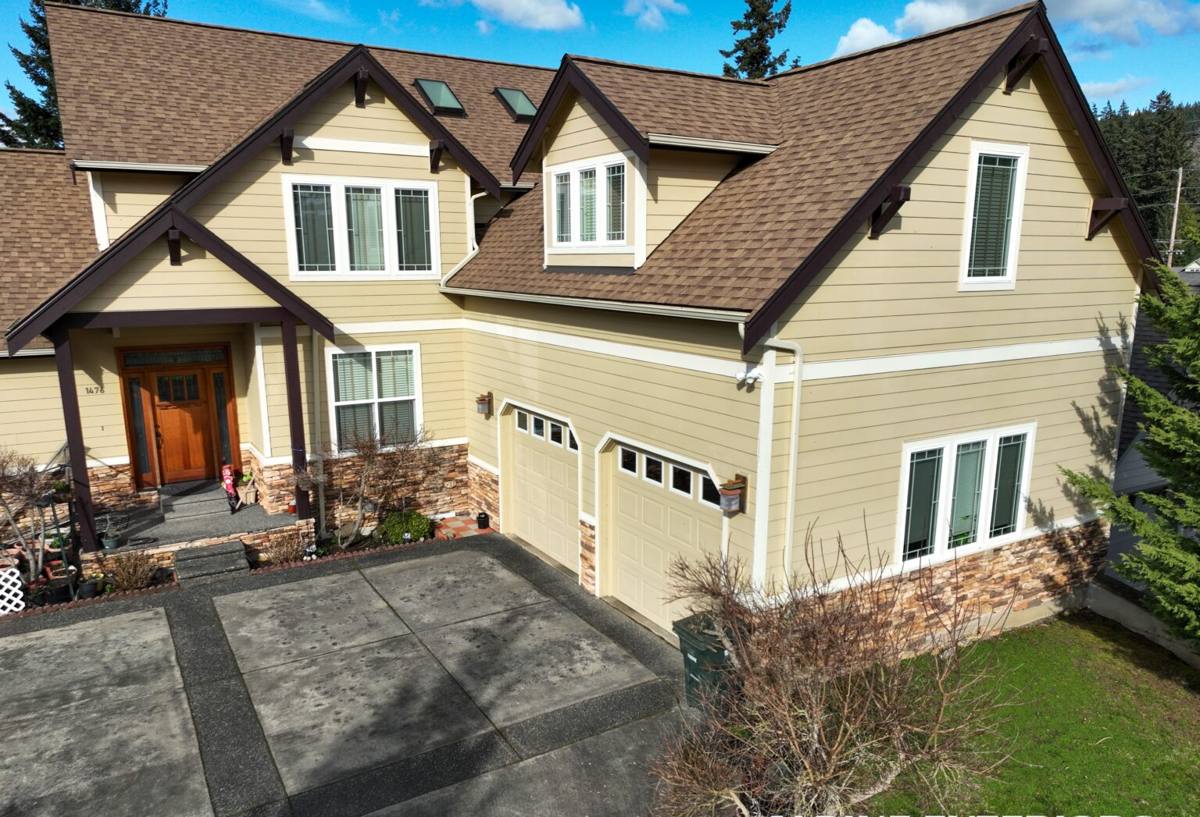
This page is about one job in one place: installing siding correctly on a Cherry Point home. Not a generic overview of siding in general, but what actually matters when the house you're covering sits exposed to the water and the weather that comes with it.
The Climate Cherry Point Siding Has to Survive
Salt Air and Corrosion
Homes close to the water pick up airborne salt even when there's no visible spray hitting the walls. Over years, that salt settles on siding surfaces, on fasteners, and on any exposed metal trim or flashing. It accelerates corrosion in the wrong fasteners, breaks down cheap coatings faster than inland exposure would, and leaves a film that holds moisture against the wall longer than plain rainwater does.
Wind-Driven Rain
Birch Bay and the surrounding Whatcom County shoreline get rain that doesn't just fall — it's pushed sideways into walls by wind coming off the water. That matters because most siding failures aren't caused by rain hitting the face of the siding; they're caused by rain being driven up and under laps, around trim, and into gaps that would stay dry in a calmer climate. A siding system built for average conditions elsewhere can be under-built for what a Cherry Point wall actually faces during a fall or winter storm.
Moss, Mildew, and the Long Wet Season
The extended damp season here means siding surfaces — especially on shaded, north-facing, or tree-covered walls — stay wet longer between dry spells. That's ideal growing conditions for moss and mildew, which don't just look bad; sustained moisture and organic growth on a wall surface keeps the substrate behind it wetter for longer, which is exactly the condition that leads to hidden rot if the water-resistive barrier and flashing underneath aren't doing their job.
What Correct Siding Installation Actually Involves
None of the climate factors above are solved by the siding material alone. They're solved by how the whole wall assembly is built, with the siding as the visible last step over several layers that most homeowners never see once the job is done.
Weather-Resistive Barrier and Drainage Plane
Every wall needs a continuous weather-resistive barrier behind the siding, lapped correctly so water sheds down and out rather than working its way behind a seam. On a shoreline property, we treat this layer as the actual first line of defense — the siding is the second. A rainscreen gap (a small drainage space between the barrier and the siding) is worth the extra step on exposed walls, since it lets any water that does get past the siding drain and dry out instead of sitting against the sheathing.
Flashing and Sealing Details
Windows, doors, deck ledgers, and any wall penetration are where wind-driven rain finds its way in. Correct flashing — installed in the right order, lapped the right direction, tied into the weather-resistive barrier rather than just caulked over it — is what actually keeps a Cherry Point wall dry through a real storm. Sealant has a place, but it's a backup to good flashing, not a substitute for it.
Fastening and Field Cuts
Fastener choice and placement matter more in a salt-air environment than most homeowners realize. Corrosion-resistant fasteners, driven at the correct depth and spacing, keep the siding secured without splitting or over-driving that opens a path for water. Every cut edge — around windows, corners, and penetrations — needs to be sealed per the manufacturer's specification before it's installed, not after someone notices a gap.
- Continuous, correctly lapped weather-resistive barrier behind the siding
- Drainage gap on exposed or shaded elevations where moisture lingers
- Flashing installed in proper sequence at every window, door, and penetration
- Corrosion-resistant fasteners at manufacturer-specified spacing and depth
- Sealed field cuts and factory-primed or -finished cut edges
- Correct clearance at grade, decks, and roof lines so water doesn't wick into the bottom course
Material Choice for a Marine Climate
We install James Hardie fiber cement siding exclusively, and on a shoreline property like this, the reasoning is practical rather than a matter of preference. Fiber cement doesn't rot, doesn't provide a food source for the mildew and moss that thrive in this climate the way wood-based products can, and it holds a factory-applied finish that's built to handle sun and salt exposure without the homeowner having to recoat it every few years. Hardie also engineers specific product lines for different climate exposures, so a Cherry Point install can use a formulation matched to a wetter, more corrosive climate zone rather than a generic version made for drier regions.
| Cherry Point Climate Factor | What It Does to Siding | What the Installation Needs to Address |
|---|---|---|
| Airborne salt | Accelerates fastener and coating breakdown | Corrosion-resistant fasteners, durable factory finish |
| Wind-driven rain | Forces water sideways under laps and around trim | Proper flashing sequence, continuous drainage plane |
| Long moss/mildew season | Keeps wall surfaces damp for extended periods | Rainscreen drainage gap, moisture-resistant substrate |
| Sun/salt cycling on finish | Fades or degrades weak coatings over time | Factory-applied finish engineered for UV and moisture exposure |
Our Installation Process, Start to Finish
Assessment and Sheathing Check
We start by walking the exterior and checking what's actually happening behind the existing siding wherever it's practical to do so — soft spots, past water staining, and areas where trim or flashing has clearly failed. On a shoreline home, we pay particular attention to north-facing and shaded walls where moss and moisture tend to concentrate, and to any area near grade where splash-back or standing water could have already caused damage.
Removal and Prep
Old siding comes off cleanly, and we inspect the sheathing underneath before anything new goes on. Any damaged sheathing gets replaced — installing new siding over compromised sheathing just hides a problem that will resurface. This is also when the weather-resistive barrier and flashing get installed or replaced correctly, since that work is invisible once the siding goes up.
Install and Inspection
Siding goes on to manufacturer specification — spacing, fastening, and clearances — with extra attention on this coastline to the details that matter most in wind-driven rain: window and door flashing, corner details, and the bottom course at grade. We walk the finished job before we consider it done, checking the details that don't show up in a quick glance but determine how the wall performs over the next storm season.
Cost Factors for a Cherry Point Siding Job
Every home is different, so we don't quote a number without seeing the house, but the factors that move the price on a shoreline property here are fairly consistent.
| Cost Factor | Why It Matters Here |
|---|---|
| Home size and wall complexity | More corners, penetrations, and trim mean more flashing detail work |
| Condition of existing sheathing | Moisture damage from prior water intrusion may require repair before install |
| Removal of old siding | Type and condition of existing material affects tear-off time |
| Site exposure and access | Shoreline lots can have wind, slope, or access considerations that affect labor |
| Trim and accessory scope | Corner boards, fascia, and trim replacement alongside the siding itself |
Maintenance After Installation
Fiber cement siding installed correctly needs far less upkeep than wood-based alternatives, but "less" isn't "none," especially in this climate. A periodic rinse to clear salt residue and organic buildup, particularly on shaded or north-facing walls, keeps moss from getting a foothold. Keeping gutters clear and vegetation trimmed back from the walls helps the siding dry out between the rain events that are routine for this part of Whatcom County. Beyond that, a correctly installed system with a durable factory finish is not something you need to actively manage — it's built to be left alone.
Why Local Experience in Cherry Point Matters
A contractor who's worked shoreline properties around Birch Bay knows which elevations take the worst of the wind-driven rain, how long the moss season actually runs here, and where a standard installation detail needs to be upgraded for a site this exposed. That's not something you learn from a manufacturer's install manual alone — it comes from doing the work on homes that face the same conditions yours does. It's also why we don't treat every siding job the same regardless of location; a house set back from the water gets a different level of attention to drainage and flashing than one facing the Strait directly.
If you're planning a siding project for a Cherry Point home, we're happy to take a look and walk you through what your specific property needs — no pressure, no obligation. A free estimate gives you a clear, honest picture of the scope and cost before you decide anything.