 Birch Bay Siding
 Why Composite Decking Makes Sense on the Cherry Point Shoreline
Cherry Point sits right up against the Strait of Georgia in Whatcom County, and that location shapes everything about how a deck holds up out here. Homes get a steady dose of marine air, wind-driven rain off the water, and a moss season that can stretch from early fall well into spring. A wood deck in that environment is a maintenance project that never really ends — sanding, sealing, staining, and eventually replacing boards that have taken on water they never got the chance to shed.
Composite decking was built for exactly this kind of exposure. It doesn't absorb water the way solid wood does, it doesn't need an annual coat of sealer to keep from graying and cracking, and it holds its color and structure through a wet Pacific Northwest winter far better than natural lumber. That doesn't mean it's maintenance-free — nothing on a coastline is — but the workload drops enough that it's worth taking seriously for anyone building or replacing a deck in this area.
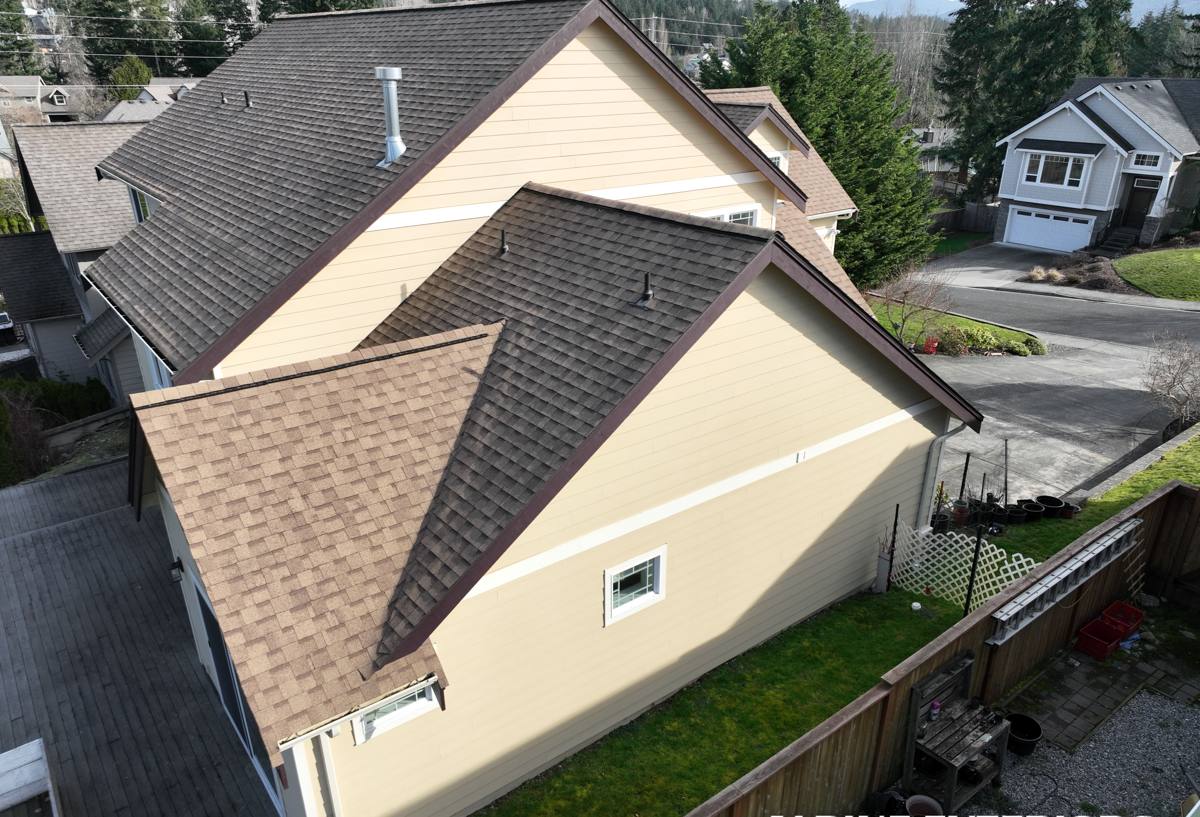
What Salt Air, Rain, and Moss Actually Do to a Deck
It helps to understand the specific ways this climate wears a deck down, because it changes what "doing the job right" actually means here.
Salt Air and Corrosion
Marine air carries salt further inland than most people expect, and that salt attacks metal well before it does anything visible to wood or composite boards. Fasteners, joist hangers, railing brackets, and post hardware corrode faster near the water than they would a few miles inland. A deck that looks fine on the surface can have hardware quietly failing underneath if the wrong fastener grade was used to begin with.
Driving Rain
Rain that comes in sideways off the water doesn't just fall on the deck surface — it hits fascia boards, rim joists, railing posts, and the wall where the deck ties into the house. Those are the spots where water finds its way behind a finish or into a seam that wasn't properly flashed, and it's where deck failures usually start, not on the open deck field.
The Long Moss Season
Shaded areas, north-facing decks, and spots with poor airflow underneath stay damp for long stretches through fall and winter. That's exactly the environment moss and algae need to take hold. On wood, that moisture sits in the grain. On a poorly ventilated composite deck, it sits on the surface and in any gaps that were cut too tight, which is why board spacing and airflow underneath the structure matter as much as the decking material itself.
Composite Decking Materials: What We Install and Why
Not all composite decking is built the same, and the difference matters more here than it would in a dry inland climate. Older-style composite boards are essentially wood fiber and plastic blended straight through, with no protective shell. They handle moisture better than solid wood, but the exposed fiber at cut ends and on the board surface can still absorb water over time, leading to swelling, staining, or surface flaking — especially at stair edges and board ends where water sits.
Capped composite decking wraps that same core in a solid polymer shell on all sides. It's the standard we install for homes in this climate because that shell is what actually keeps salt-laden moisture from working into the board over years of exposure. It costs more up front than uncapped composite, but for a deck that's going to face this much rain and salt air for the next 20-plus years, it's the honest recommendation, not just the upsell.
| Material | Moisture & Salt-Air Resistance | Maintenance Needed | Typical Lifespan Here |
|---|---|---|---|
| Pressure-treated wood | Fair — needs sealed finish to perform | Annual cleaning, sealing/staining every 1-2 years | 10-15 years with upkeep |
| Uncapped composite | Good, but cut ends and surface can absorb moisture | Periodic washing; watch cut edges and fastener holes | 15-20 years |
| Capped composite | Best — sealed shell resists salt and moisture on all faces | Routine washing only, no sealing/staining | 25+ years |
Color and Board Profile
Darker boards aren't the heat problem here that they'd be in a hot, sunny climate, but color still matters for how well a deck hides pollen, organic debris, and the light surface staining that shows up during moss season. Streaked or multi-tonal board colors do a better job of hiding that between cleanings than a flat, solid color does — worth factoring in when you're picking a board, not just going with whatever looks best in a small sample chip.
What a Correct Composite Deck Installation Involves
Composite decking is forgiving in some ways and unforgiving in others. The board itself resists moisture well, but everything underneath and around it still has to be built for this climate, or the deck fails from the structure up, not from the surface down.
Substructure and Fasteners
Composite decking generally needs tighter joist spacing than solid wood — often 16 inches on center, sometimes closer for picture-frame borders or diagonal patterns, per the manufacturer's span tables. We use fastener and hardware grades rated for both coastal exposure and contact with modern treated lumber, which corrodes standard fasteners faster than older treatment chemicals did. Mixing the wrong fastener with treated framing near saltwater is a slow, hidden way to shorten a deck's life.
Ledger Flashing
Where the deck attaches to the house is the single most common point of failure on a coastal deck, composite or not. That ledger board needs to be flashed so it sheds water away from the house's wall assembly instead of trapping it against the framing. It's not glamorous work, and it's completely hidden once the deck is finished, but it's the difference between a deck that lasts and one that causes rot damage to the house itself.
Drainage and Airflow Underneath
Composite boards need a small gap for expansion and contraction, and the space underneath the deck needs to breathe. Skirting that traps moisture, vegetation growing up against the framing, or grading that pools water under the deck all feed the moss and mildew problem this climate already sets up. Getting the airflow right at install time is a lot cheaper than fighting a chronically damp deck for the next twenty years.
Hidden Fasteners and Edge Details
We install with hidden fastener systems where the product supports it, both for the cleaner look and because it means fewer exposed metal points for salt air to attack. A picture-frame border using breaker boards to cap the cut ends of the field boards also matters more here than in a dry climate — it protects the one part of a composite board (the cut end) that's most vulnerable to moisture intrusion.
Our Process, Start to Finish
- On-site assessment — we look at the existing structure if there is one, the ledger connection, footing condition, and how exposed the site is to wind and rain off the water.
- Material and layout selection — choosing board profile, color, and orientation based on the site's sun and wind exposure, not just what looks good in a showroom.
- Permitting — we handle the paperwork with Whatcom County where a permit applies, so you're not the one navigating that process.
- Demolition and structural prep — removing the old deck if needed and confirming footings and framing meet current code before anything new goes on top.
- Framing and flashing — the structural work and ledger flashing that determines whether the deck holds up long-term.
- Decking installation — boards, hidden fasteners, and border details installed to manufacturer spec.
- Railing and trim — finish work, including hardware rated for the coastal exposure.
- Final walkthrough — we go over the finished deck with you and clean up the site before we call it done.
Permits and Site Conditions Around Cherry Point
Whatcom County generally requires a permit for a new or rebuilt deck attached to a house, with specifics depending on the deck's height, size, and whether it's a full replacement or a repair. Properties closer to the shoreline can also fall under additional review depending on their exact location relative to the water. None of this is meant to be a DIY research project for a homeowner — it's something we sort out as part of the estimate, so you know upfront what's required before work starts, not partway through.
Footings also need to be set to the correct depth for this area's soil and frost conditions, and on older properties we sometimes find footings that were undersized or set too shallow for current code. Part of a proper deck rebuild is catching that before new decking goes down on top of a structure that won't support it long-term.
Maintenance Composite Decking Still Needs in This Climate
Composite decking cuts the workload dramatically compared to wood, but "low maintenance" isn't "no maintenance," especially with this much rain and organic debris in the air. A little regular attention keeps a composite deck looking and performing the way it should for its full lifespan.
- Rinse or sweep the deck periodically to clear pollen, needles, and leaf debris before they trap moisture against the surface
- Wash shaded or north-facing sections more often — they stay damp longest and are where moss and mildew show up first
- Keep gutters and downspouts directing roof water away from the deck rather than onto or under it
- Check railing posts and hardware once a year for early signs of corrosion from salt exposure
- Make sure skirting or underdeck areas stay clear of vegetation and debris so air can keep circulating underneath
- Address any standing water or blocked drainage near the deck before it becomes a moss problem
Why Hire a Crew That Already Works in Cherry Point and Birch Bay
A lot of what determines whether a composite deck holds up here isn't the brand of board — it's whether the crew installing it understands the site conditions. That means knowing how much wind and driving rain a given exposure actually sees, what fastener and flashing details hold up against salt air over time, and what Whatcom County actually requires for permitting on a shoreline-adjacent property before you're halfway through a project and find out otherwise.
It also means being around after the job is finished. A composite deck built right should need very little from you for decades, but if a question comes up — a warranty item, a fastener that needs a look, advice on cleaning a shaded section — it matters that the crew who installed it is still working in this area and easy to reach, not a company that moved on to the next region after the invoice was paid.
If you're planning a new deck or replacing one that hasn't held up to Birch Bay's weather, we're happy to take a look and give you a straightforward, no-pressure estimate. Use the form below to get started.