 Birch Bay Siding
 Why California Creek Siding Wears Differently
California Creek sits close enough to the water that homes here take on a steady diet of salt-laden air, wind-driven rain, and long stretches of shade and dampness that most inland Washington neighborhoods never see. Siding failure in this part of Birch Bay rarely comes from one dramatic storm. It comes from years of small, repeated exposure — salt film settling into seams and fastener heads, rain pushed sideways by wind finding its way past caulk that's done its job for a decade and is finally giving out, and moss quietly working its way into any surface that stays damp and shaded through the fall and winter.
That combination changes what "siding repair" actually means out here. A repair that would hold up fine in a drier climate — a bead of caulk, a painted-over patch — often fails again within a season or two in a marine environment like this. Doing it right means understanding how water and salt move through a wall system in this specific setting, not just matching color and calling it done.
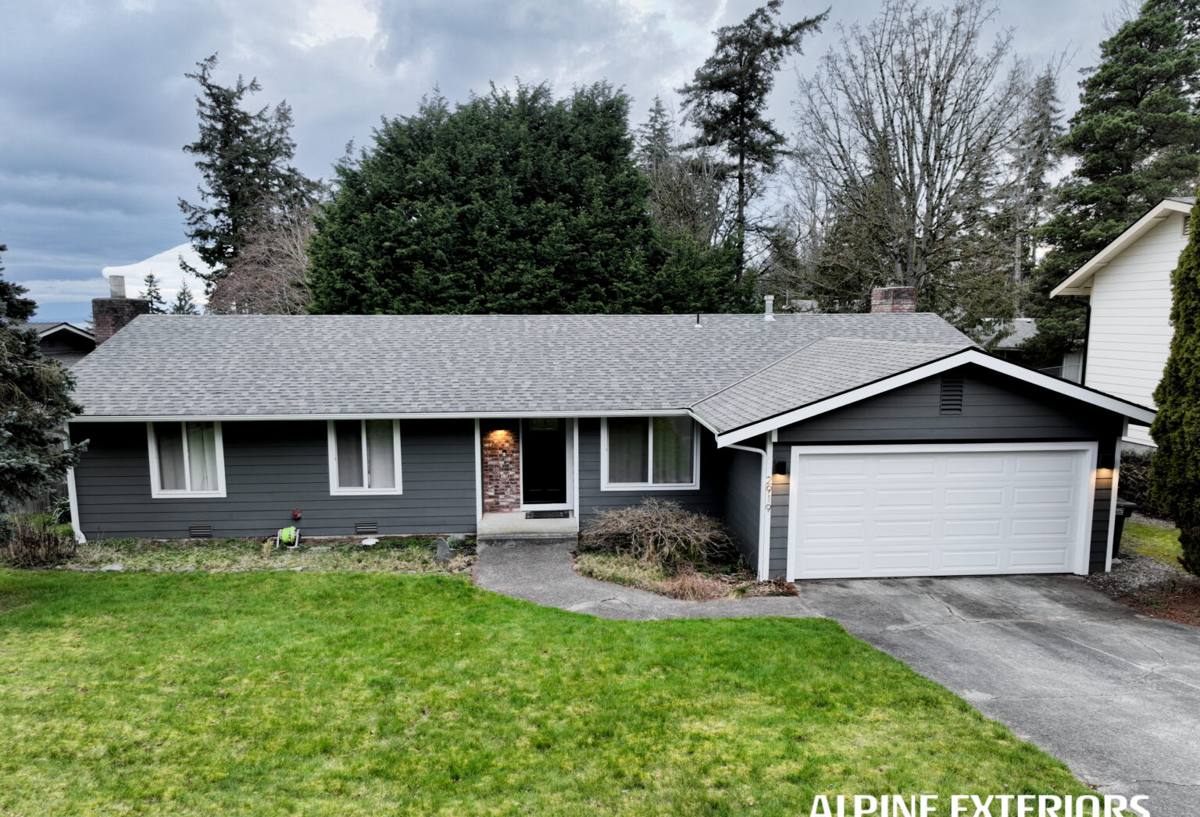
Signs a California Creek Home Needs Repair, Not Just Touch-Up Paint
Homeowners usually notice one of a handful of warning signs before calling. None of them are dramatic on their own, which is exactly why they get ignored until the damage spreads.
- Soft or spongy siding when pressed near the bottom edge of a wall or below a window
- Dark staining or streaking that comes back within weeks of being cleaned
- Moss or algae holding on to shaded, north-facing walls even after a dry stretch
- Visible cracking, checking, or splitting along panel edges or seams
- Paint that's bubbling or peeling in a localized area rather than uniformly across the wall
- Trim or panel edges that have separated slightly from the wall since last winter
Any one of these can be a simple fix. Several of them together, especially clustered near a corner, a downspout, or a window head, usually mean water has been getting behind the siding for a while — and that changes the scope of the job.
What a Correct Siding Repair Actually Involves
A repair that's done right isn't just about replacing what's visibly damaged. It's about confirming why that section failed and making sure the fix doesn't just cover the same problem back up.
Checking for Hidden Moisture Damage
Damaged siding is often a symptom, not the whole problem. Before any new material goes up, the sheathing, house wrap, and flashing behind the damaged section need to be checked. If water has been tracking behind the siding for months, the sheathing underneath can be soft or delaminating even when the siding itself looks only mildly affected. Replacing siding over compromised sheathing just resets the clock on the same failure.
Matching Existing Siding vs. Replacing a Full Section
Fiber cement siding is manufactured in batches, and factory-applied color coatings can shift slightly between production runs over the years. On a small, hidden repair, an exact match usually isn't critical. On a wall facing the street, we're honest with homeowners about when a patch will be visible versus when replacing a full course or full wall section will actually look better and hold up better long-term.
Flashing and Drainage Details
Most of the repeat failures we see trace back to flashing — around windows, at butt joints, above trim boards, or where a deck or porch roof meets the wall. A repair that doesn't correct the flashing detail that let water in the first time is a repair that will need to be done again.
Repair vs. Replacement: How We Decide
| Factor | Points Toward Repair | Points Toward Replacement |
|---|---|---|
| Extent of damage | Isolated to one panel or small section | Spread across multiple walls or courses |
| Sheathing condition | Dry, solid when probed | Soft, delaminating, or stained |
| Age of existing siding | Well within its expected service life | Nearing or past the age where failures recur |
| Color/finish match | Hidden wall or minor visual impact | Prominent street-facing wall |
| Underlying cause | One-time event (impact, isolated flashing gap) | Systemic moisture pattern across the house |
We walk through this with the homeowner on-site rather than quoting from a photo. What looks like a small patch job from the driveway sometimes turns out to need more once we're actually checking behind the panel — and we'd rather tell you that up front than have it come back on you in two years.
Why We Repair With James Hardie Fiber Cement — Not Vinyl or Wood Patches
We only install and repair with James Hardie fiber cement siding. That's a deliberate standard, not a default, and it matters especially for repair work in a place like California Creek.
Vinyl siding can be patched, but it expands and contracts with temperature swings, and matching an aged panel's color and profile gets harder every year the product's been on the wall — vinyl fades unevenly and isn't refinished, it's replaced. Wood and primed spruce trim repairs look fine the day they're painted, but in a marine climate with this much sustained moisture, painted wood needs ongoing maintenance to keep water out at every seam, and a missed repaint cycle is exactly how rot gets started again. We're not saying those products can't be repaired at all — we're saying that for a wall that's already shown it can't fully shed the water and salt exposure out here, we don't think patching with a product that has the same moisture vulnerabilities is doing the homeowner any favors.
James Hardie fiber cement is non-combustible, holds its factory ColorPlus finish without repainting for years, and its HZ product lines are engineered specifically for climates with sustained moisture exposure — which describes Whatcom County's coastline about as well as anywhere in Washington. When we replace a damaged section, the new material is built to hold up under the same conditions that damaged the original siding, backed by a transferable manufacturer warranty.
How Our California Creek Repair Process Works
- On-site inspection. We look at the damaged area and probe the sheathing behind it, not just the visible siding.
- Honest scope and quote. We tell you plainly whether this is a contained repair or something that's grown into a larger job, and what each option costs.
- Correct the cause, not just the symptom. Flashing, house wrap, and drainage details get fixed as part of the repair, not left as-is under new siding.
- Match or replace to the right scope. We match existing panels where it will hold up visually, and recommend a fuller section replacement where a patch would just look patched.
- Clean finish. Caulking, trim, and paint lines get finished so the repaired section reads as part of the wall, not an obvious add-on.
Why a Crew That Already Works Birch Bay Matters Here
Siding repair in a marine-exposed neighborhood isn't the same trade as siding repair fifty miles inland. A crew that works Birch Bay and the surrounding Whatcom County coastline regularly already knows which wall orientations take the worst of the wind-driven rain, how aggressively moss establishes itself on shaded siding through a Pacific Northwest winter, and which flashing shortcuts show up as recurring failures a few years down the road. That's not something you can fully substitute with a general contractor doing one job in the area and moving on. It shows up in smaller ways too — knowing what a normal repair timeline looks like around here, and being straightforward about it if weather pushes a schedule.
A Homeowner's Siding Repair Checklist for California Creek
- Walk the exterior after the first hard windstorm each fall and note any new gaps, cracks, or loose trim
- Press gently on siding near ground level and below windows — sponginess means it's time for an inspection, not a repaint
- Ask any contractor whether they'll check the sheathing behind damaged siding, not just replace what's visible
- Get a clear answer on whether a patch will visually match, or whether a fuller section replacement makes more sense
- Confirm what's actually backed by warranty — the material, the labor, or both
- Address moss on north-facing walls before it spreads into seams and trim joints, not just for appearance
Protecting the Repair Afterward
A correct repair should last, but California Creek's climate doesn't let anyone fully coast on maintenance. A yearly walk-around to check caulking at trim and window edges, rinsing accumulated salt film off the siding rather than letting it sit through a dry summer, and keeping vegetation trimmed back from shaded walls all go a long way toward making sure a repair stays a repair — not the start of a repeat visit in a few years.
If you're seeing staining, soft spots, or persistent moss on your siding in California Creek or elsewhere in Birch Bay, we're happy to take a look and give you a straight answer on what it actually needs. Reach out for a free, no-pressure estimate using the form below.