 Birch Bay Siding
 Why Birch Bay Village Siding Wears Differently
Birch Bay Village sits close enough to the water that homes here take on a different kind of weather load than siding thirty miles inland in Bellingham or Ferndale. Salt-laden air off the bay works into seams, fastener heads, and any exposed wood fiber, accelerating corrosion and finish breakdown in ways drier inland air doesn't. Add Whatcom County's long, wet fall-through-spring stretch of driving rain, often pushed sideways by wind off the Strait of Georgia, and you get siding that stays damp for days at a time instead of drying out between storms.
Then there's moss. The combination of shade from mature evergreens, persistent moisture, and mild temperatures gives moss and algae a long growing season in this part of Whatcom County — longer than most of the state gets. On the wrong siding material, that turns into staining, surface degradation, and a maintenance cycle that never really ends. On the right material, installed correctly, it's mostly a cosmetic issue you can manage.
This page is about one job in one neighborhood: fiber cement siding installation for Birch Bay Village homes, and what it actually takes to get it right given what this specific stretch of coastline throws at a house.
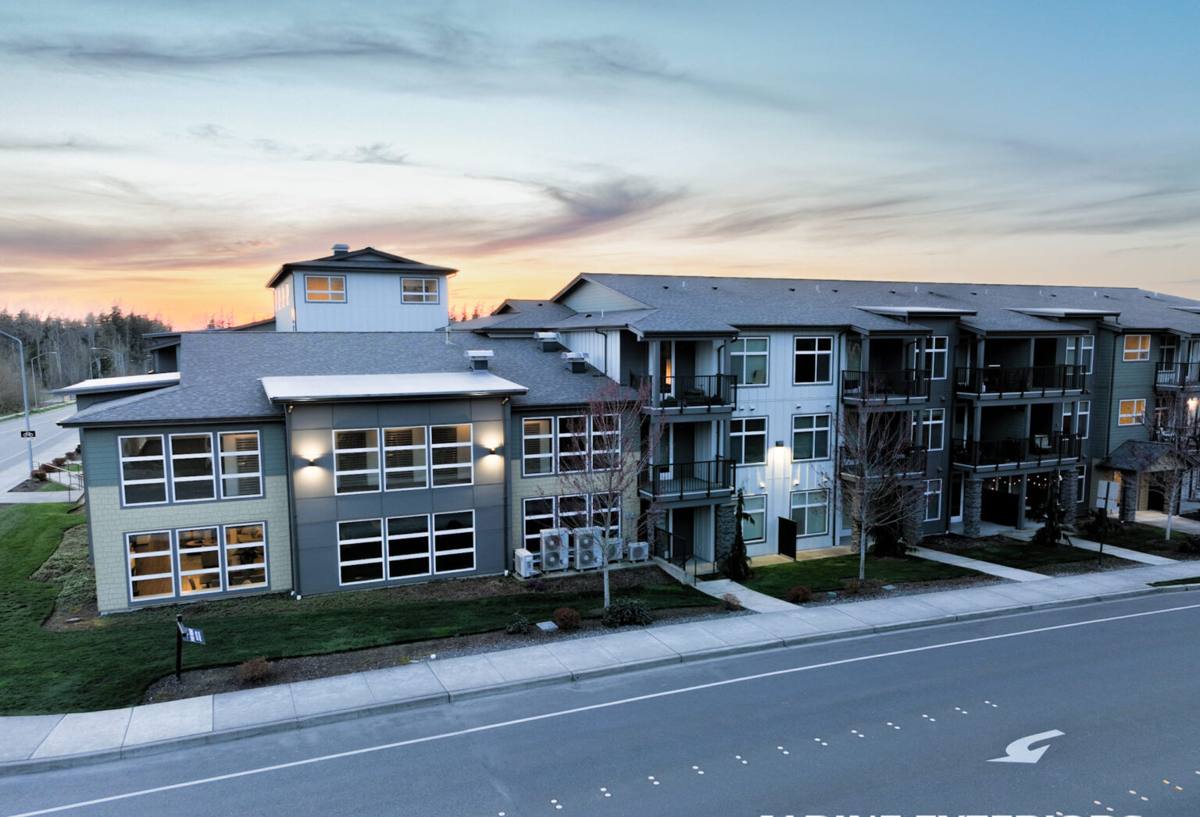
What This Climate Actually Demands From Siding
Before talking product or process, it helps to be specific about what "coastal-durable" needs to mean here:
- Moisture resistance that holds up over years, not just a season — repeated wet-dry cycling is what breaks down inferior materials, not a single storm.
- Dimensional stability — siding that swells, cups, or warps when saturated opens gaps at seams and fastener points, which is exactly where salt air and rain do the most damage.
- A factory finish that doesn't rely on the homeowner repainting on a schedule — field-applied paint fails faster in this kind of salt and moisture exposure than a baked-on factory finish.
- Surface chemistry that doesn't feed moss and algae growth — some siding materials are more hospitable to organic growth than others once they're damp for extended periods.
- Fastener and flashing details that account for wind-driven rain, not just vertical rainfall.
Every material we're asked about — vinyl, primed wood, engineered wood — gets measured against that list. It's why we standardized on one product system rather than offering several.
Why We Only Install James Hardie Fiber Cement
We don't install vinyl, cedar, primed spruce, or other engineered wood siding, and we're upfront about why: none of them hold up as consistently against sustained salt air and moss-season moisture as properly installed James Hardie fiber cement. Vinyl can warp and lose color faster under UV and temperature swings, and its seams give wind-driven rain more chances to get behind the panel. Untreated or primed wood needs a maintenance commitment — regular repainting, caulking, and moisture checks — that most homeowners underestimate until the siding is already showing rot at the bottom courses. Fiber cement without a factory finish puts the same burden back on the homeowner.
James Hardie fiber cement is non-combustible, dimensionally stable when wet, and comes with ColorPlus Technology — a factory-applied, baked-on finish that resists fading and chipping far better than field-applied paint. It's engineered in specific HardieZone formulations for different climates, and the Pacific Northwest falls under the HZ5 zone, built specifically for high-moisture, freeze-thaw-adjacent conditions like this coastline sees. That's a product built for exactly the problem Birch Bay Village siding actually has, not a generalist product we're stretching to fit.
Material Comparison for This Climate
| Factor | James Hardie Fiber Cement | Vinyl | Untreated/Primed Wood |
|---|---|---|---|
| Salt air / corrosion exposure | Stable; factory finish resists breakdown | Can chalk, fade, and become brittle over time | Vulnerable without diligent maintenance |
| Wind-driven rain at seams | Engineered lap and joint details, rain-screen compatible | Seams and panel flex can let moisture track behind | Joints need ongoing caulk maintenance |
| Moss / algae resistance | Dense, low-absorption surface | Can trap moisture behind panels where moss thrives unseen | Porous surface feeds growth if damp |
| Finish maintenance | Factory ColorPlus finish, no repainting for years | No repainting, but fading/chalking is permanent | Repaint every few years in this climate |
| Fire resistance | Non-combustible | Combustible | Combustible |
This isn't a knock on every use case for vinyl or wood — they have their place. It's why they're not the right fit for what Birch Bay Village homes are up against, and why they're not what we put on a house.
What a Correct Fiber Cement Install Looks Like Here
Fiber cement is only as good as the installation behind it. In a coastal, wind-driven-rain environment, a handful of details matter more than they would inland:
Weather-Resistive Barrier and Rain Screen
A properly lapped weather-resistive barrier goes down first, and on exposures that see the most wind-driven rain, a rain screen gap behind the siding gives any moisture that does get past the cladding a path to drain and dry instead of sitting against the sheathing.
Flashing at Every Penetration
Windows, doors, hose bibs, vents, and deck ledgers all need correctly lapped flashing — installed so water sheds outward at every layer, not just caulked over. Caulk is a backup, not a strategy, and caulk-only detailing is one of the most common shortcuts we see on jobs we're asked to repair.
Fastener Placement and Spacing
Hardie panels and lap siding have specific fastener patterns and clearances from panel edges. Placed wrong, fasteners can split the material or create a stress point where moisture works in over time — especially relevant where salt air accelerates any metal fastener corrosion.
Joint and Seam Treatment
Butt joints get flashed or backed per Hardie's installation specs, not just caulked face-to-face. This is one of the most common places we find failures on inspections of other contractors' work — it's a fast shortcut that looks fine for the first year or two and then opens up.
Clearance From Grade and Hard Surfaces
Minimum clearance from soil, decking, and paved surfaces keeps splash-back moisture and standing water away from the bottom courses, which is where we see the most moss buildup and the earliest signs of moisture-related wear.
Our Process for Birch Bay Village Jobs
- On-site assessment — we walk the exterior, check existing siding and sheathing condition, and look specifically for moisture history: staining, soft spots, moss lines, and any past repair patches.
- Scope and product selection — full tear-off versus sections needing replacement, trim and flashing needs, and the right Hardie product line and profile for the home.
- Written estimate — square footage, prep work, trim carpentry, and finish selection laid out clearly, no surprise add-ons buried in vague line items.
- Weather-window scheduling — we plan installation around Whatcom County's rain patterns so sheathing and barrier work aren't left exposed longer than necessary.
- Installation to spec — barrier, flashing, fastening, and joint treatment done to Hardie's published installation requirements, not a shortcut version of them.
- Final walkthrough — we go over the finished work with you before calling the job done.
Cost Factors for a Birch Bay Village Project
Every home is different, so we don't quote a number without seeing the house — but these are the factors that actually move the price, in order of how much they typically matter:
| Factor | Why It Affects Cost |
|---|---|
| Tear-off vs. new construction | Removing and disposing of old siding, plus repairing any sheathing damage found underneath, adds labor |
| Home size and wall complexity | More corners, gables, and dormers mean more cutting, flashing, and trim work per square foot |
| Trim and accent detailing | Board-and-batten sections, shakes, or accent colors add labor beyond plain lap siding |
| Sheathing or framing repair | Moisture-damaged sheathing found during tear-off needs to be replaced before new siding goes up |
| Site access | Tight lot lines, slopes, or landscaping close to the house can slow staging and scaffolding |
| Product line and finish | Different Hardie profiles and ColorPlus finish options carry different material costs |
Living With Fiber Cement Through Moss Season
Even the right material benefits from a little homeowner attention. Fiber cement isn't maintenance-free, it's low-maintenance — there's a difference. A short annual routine keeps it looking like a new install for years:
- Rinse the siding once a year, ideally before the heaviest fall rains start, to clear pollen, dust, and early moss spores before they take hold.
- Keep gutters clear so overflow isn't running down the siding face during heavy rain.
- Trim back vegetation and tree canopy that keeps sections of the wall shaded and damp longer than the rest of the house.
- Check caulking at trim and penetrations every couple of years — caulk is the one component that ages faster than the siding itself.
- Address any moss or algae buildup early with a gentle wash rather than pressure-washing, which can drive water behind panels and damage the finish.
Why a Crew That Already Works This Neighborhood Matters
Birch Bay Village's exposure isn't uniform — a home a block off the water deals with different wind and salt loading than one further back, and lots with more tree cover fight moss differently than open, sun-exposed sites. A crew that's worked this specific stretch of Whatcom County knows what to check for before the tear-off starts, understands local permitting requirements, and isn't guessing at how this microclimate behaves. That local knowledge shows up in fewer surprises mid-project and a finished install that's actually built for where it sits, not a generic coastal spec.
If you're planning a siding replacement in Birch Bay Village, we're happy to walk the property, look at what your current siding is telling us, and put together a straightforward, no-pressure estimate for a James Hardie fiber cement install built for this exact climate. Fill out the form below to get started.