 Birch Bay Siding
 Why Bellingham Roofs Wear Differently Than Roofs Inland
A roof in Bellingham does a different job than a roof forty miles inland. It's not just rainfall totals — it's the combination of near-constant moisture, salt-laden air blowing in off the Strait of Georgia and Bellingham Bay, and long stretches of shade and dampness that never quite dry out between storms. Add in the freeze-thaw swings we get most winters, and you've got a set of conditions that will find every weak point in a shingle roof faster than a drier climate would.
Asphalt shingles are still the right call for most homes here — they're durable, affordable, and easy to repair in sections when something does go wrong. But "the right product" and "the right installation" are two different things. A shingle roof installed the same way you'd install one in Spokane or Boise won't hold up the same way in Whatcom County. The details that matter here are underlayment choice, ventilation, flashing, and how the roof handles moss and algae over time.
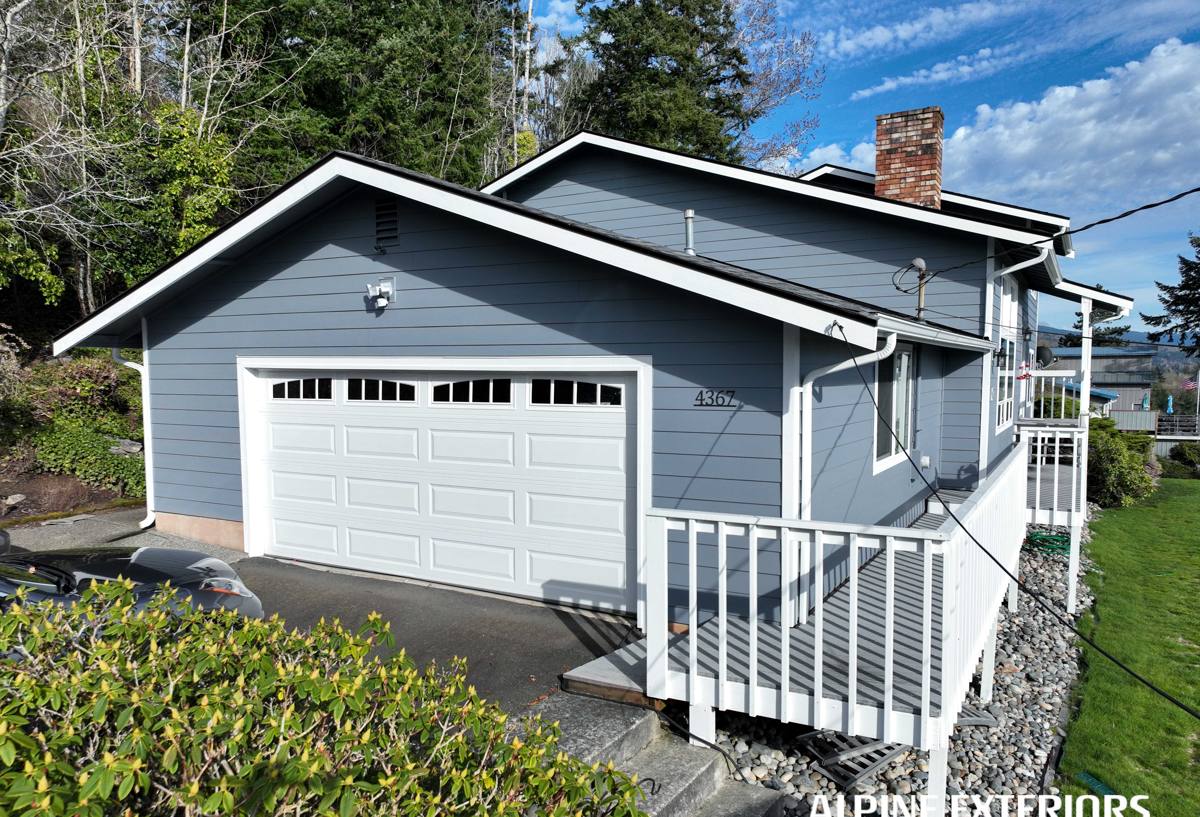
What a Bellingham Roof Actually Needs
Moisture Management Starts Below the Shingles
The shingles themselves are the visible layer, but the underlayment and flashing underneath do most of the real work of keeping water out. In our climate, we treat ice-and-water shield and high-quality synthetic underlayment as standard, not upgrades — especially along eaves, valleys, and anywhere two roof planes meet. Bellingham doesn't get the sustained deep freezes some regions do, but we do get enough cold snaps combined with heavy rain that ice damming and wind-driven water intrusion are real risks along the coast.
Ventilation Matters More Than Homeowners Expect
A roof that can't breathe traps moisture in the attic, which shortens the life of the shingles from underneath — you never see it happening from the ground. Proper intake and exhaust ventilation keeps attic temperatures and humidity closer to outdoor conditions, which reduces condensation, protects the roof deck, and helps the shingles hit their expected lifespan instead of failing early.
Flashing Is Where Roofs Actually Fail
Most leaks don't come from the shingle field — they come from flashing around chimneys, skylights, plumbing vents, and wall intersections. In a climate with this much sustained rain, flashing needs to be properly stepped, sealed, and integrated with the underlayment, not just caulked over. This is one of the areas where cutting corners doesn't show up for a year or two, then shows up as a stain on a ceiling.
Moss, Algae, and Salt Air: The Long Game
Whatcom County's combination of shade, moisture, and mild temperatures is close to ideal growing conditions for moss and algae. Left alone, moss holds moisture against the shingle surface, lifts shingle edges, and accelerates granule loss — which is the beginning of the end for an asphalt shingle roof. Homes closer to the water also deal with salt air, which can accelerate corrosion on exposed metal flashing, fasteners, and vents if lower-grade materials are used.
None of this means asphalt shingles are a poor choice for Bellingham — it means the roof needs to be built and maintained with these specific pressures in mind from day one, rather than treated as an afterthought once moss shows up.
Our Installation Process
Inspection and Tear-Off
We start by getting on the roof, not just looking at it from the ground. That means checking the deck for soft spots, evaluating existing ventilation, and looking at flashing conditions around every penetration. Full tear-off to the deck lets us actually see what we're working with instead of covering up problems with a second layer.
Deck Repair and Underlayment
Any soft, delaminated, or water-damaged decking gets replaced before anything else goes down — installing new shingles over a compromised deck just delays a bigger repair. From there, ice-and-water shield goes in at eaves, valleys, and vulnerable transitions, followed by synthetic underlayment across the rest of the roof.
Shingle Installation and Flashing
Shingles go down according to manufacturer specifications for nailing pattern, exposure, and starter courses — details that directly affect wind resistance and warranty validity. New flashing is installed at all penetrations and roof-to-wall intersections rather than reusing old flashing, which is one of the most common shortcuts that leads to early leaks.
Final Inspection and Cleanup
Once the roof is complete, we walk it again to check ridge lines, flashing seals, and ventilation components, and do a magnetic sweep of the property to catch stray nails and debris. You should be able to walk your yard the same day without worrying about what's on the ground.
Choosing the Right Shingle for a Bellingham Home
Not every asphalt shingle product performs the same way in a wet, mossy, coastal climate. Here's how the common options compare for homes in this area:
| Shingle Type | Typical Lifespan Here | Moss/Algae Resistance | Best For |
|---|---|---|---|
| 3-Tab Standard | 15–20 years | Low unless treated | Budget-conscious projects, secondary structures |
| Architectural (Laminate) | 25–30 years | Moderate, better with algae-resistant granules | Most Bellingham homes; better wind and impact durability |
| Algae-Resistant Architectural | 25–30 years | High — copper/zinc granules slow growth | Shaded lots, homes with existing moss history |
For most homes in and around Bellingham, we steer people toward architectural shingles with algae-resistant granules. The upfront cost difference over standard 3-tab is modest, and given how much moss pressure this area has, it's one of the better long-term value decisions a homeowner can make on a roof.
What Affects the Cost of a Shingle Roof Here
Every roof is priced individually, but these are the main factors that move the number up or down on a typical Bellingham project:
| Factor | Why It Matters |
|---|---|
| Roof pitch and access | Steeper or harder-to-access roofs take longer and require more safety equipment |
| Number of existing layers | Tear-off of multiple old layers adds labor and disposal cost |
| Deck condition | Rotted or soft decking found during tear-off requires repair before shingles go on |
| Ventilation upgrades | Adding or improving intake/exhaust vents protects the new roof's lifespan |
| Flashing and penetrations | Chimneys, skylights, and multiple roof planes all add flashing work |
| Shingle grade selected | Standard vs. algae-resistant vs. impact-rated products carry different material costs |
Repair or Replace? Signs Worth Checking
Not every roof issue in Bellingham means a full replacement. But a few warning signs are worth having looked at before they turn into interior damage:
- Granules collecting in gutters or at the base of downspouts
- Visible moss growth along ridges, valleys, or north-facing slopes
- Curling, cracking, or missing shingles after a windstorm
- Dark streaking that doesn't wash off with light cleaning
- Daylight visible through the attic roof deck
- Soft spots or sagging felt when walking the roofline from a ladder
- Water stains on interior ceilings, especially near chimneys or skylights
- A roof approaching or past 20–25 years old with no major work done
If you're seeing one or two of these, a repair or targeted maintenance visit may be all that's needed. Several at once, especially combined with an older roof, usually points toward planning for replacement before a leak forces the decision.
Why a Crew That Already Works This Area Matters
Roofing crews that work Whatcom County regularly already know how local conditions behave — which slopes hold moss longest, how salt exposure near the water affects metal components, and what inspectors and suppliers in the area expect. That familiarity shows up in fewer surprises during a project and in a roof that's built for the conditions it will actually face, not generic conditions from a manufacturer's national spec sheet.
It also matters for warranty support. Manufacturer warranties typically require correct installation per their specifications — proper nailing, ventilation, and underlayment. A crew that installs roofs in this climate every week is less likely to make the kind of installation error that voids coverage down the road, and is easier to reach if a manufacturer warranty claim ever needs documentation from the original installer.
Warranty and Manufacturer Standards
We install according to manufacturer specifications rather than cutting corners to save time, because the workmanship side of most shingle warranties depends on it. That includes proper nailing patterns, correct starter and ridge details, and ventilation that meets minimum requirements. We're upfront when a roof's existing ventilation or deck condition needs correction before new shingles go on — patching over an underlying problem to save a homeowner money upfront usually costs more in the long run once it causes an early failure.
If you're weighing a repair, a full replacement, or just want a straight answer on what your roof actually needs, we're glad to take a look and put together a free, no-pressure estimate using the form below.