 Birch Bay Siding
 Roofing in Sandy Point Has Its Own Set of Problems
Sandy Point sits close enough to the water that its roofs deal with a different combination of stresses than homes further inland in Whatcom County. It's not just rain — it's salt-laden air moving off the water, wind-driven rain that gets pushed sideways under flashing and shingle tabs, and a moss season that runs longer here than in drier parts of the state. Any one of those on its own is manageable. Together, over years, they wear on a roof in ways that aren't always obvious from the ground.
We work on roofs throughout Birch Bay and the surrounding Whatcom County shoreline, and Sandy Point roofs consistently show a specific pattern of wear: corrosion on exposed metal fasteners and flashing before the rest of the roof looks old, moss colonies that get a head start in shaded, damp-holding areas, and water intrusion at transitions — chimneys, vents, valleys — rather than in the open field of the roof. Knowing that pattern in advance is what makes a repair actually fix the problem instead of just patching the symptom.
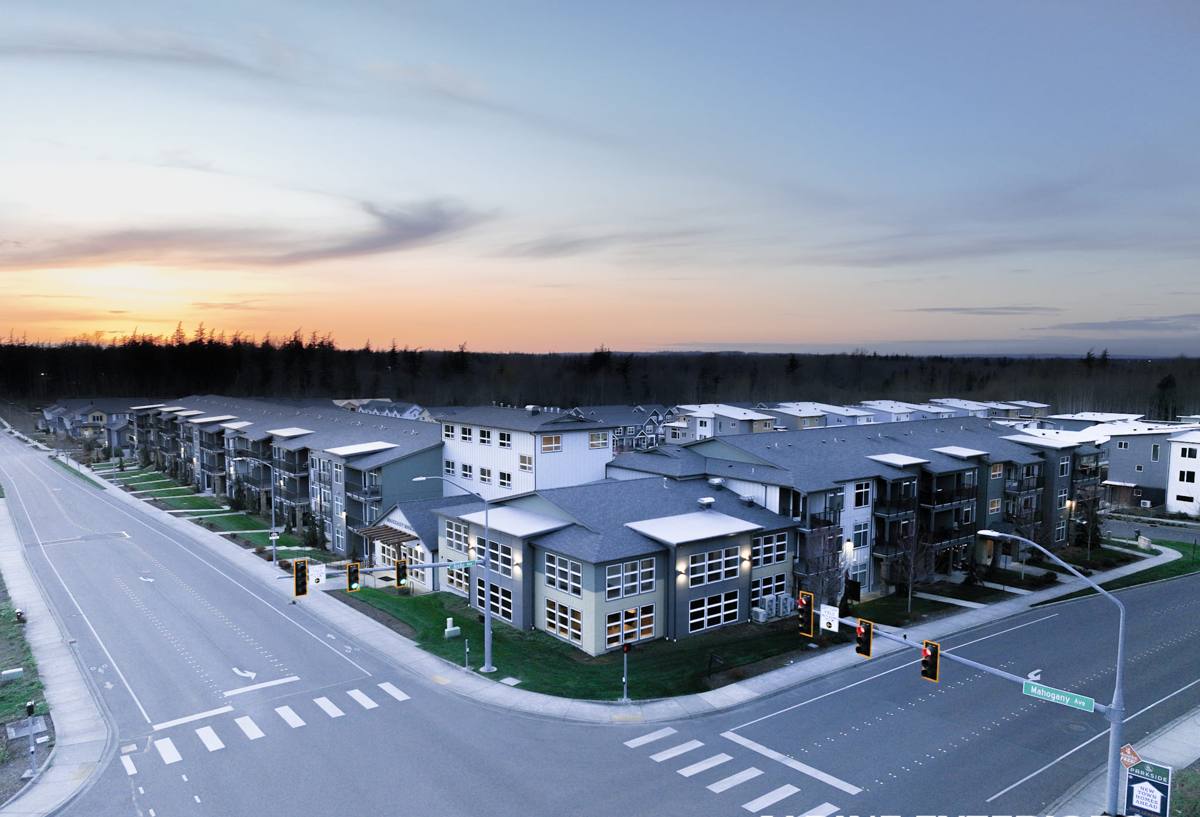
What Salt Air and Coastal Weather Do to a Roof Over Time
Salt Air and Metal Components
Salt in the air accelerates corrosion on anything metal — nail heads, flashing, drip edge, vent boots with metal collars, and gutter hardware. Once corrosion starts on a fastener, it loses holding strength and can back out or fail well before the surrounding shingle material would normally need attention. This is one of the most common reasons we find isolated leaks on roofs that are otherwise in decent shape: it's not the shingles, it's a corroded flashing seam or fastener that's opened a path for water.
Driving Rain and Wind-Driven Moisture
Birch Bay's exposure means rain doesn't always fall straight down — wind off the water pushes it sideways and upward under shingle edges, around chimney flashing, and into any gap that a calmer climate would never test. A repair that would hold up fine in a sheltered inland yard can fail here if it wasn't detailed for wind-driven moisture. That's why sealant alone is rarely the right fix for a coastal leak — it needs proper flashing geometry and underlayment that accounts for water trying to move sideways or upward, not just down.
Moss, Shade, and Slow-Drying Surfaces
Whatcom County's moss season is long, and Sandy Point's mix of tree cover and marine humidity keeps roof surfaces damp longer after a rain than you'd see a few miles inland. Moss holds moisture against the roofing material, works its way under shingle tabs as it grows, and lifts edges — which then gives wind-driven rain an easier way in. Left alone, a moss problem doesn't stay cosmetic; it becomes a moisture problem and eventually a structural one.
Common Repair Issues We See in Sandy Point Homes
- Corroded or lifted flashing around chimneys, skylights, and roof-to-wall transitions — often the actual source of a leak that shows up as a stain somewhere else in the attic or ceiling.
- Moss-lifted shingle tabs along shaded roof planes and north-facing slopes, especially near overhanging trees.
- Failed or brittle pipe boots where the rubber collar around plumbing vents has hardened and cracked from years of sun and salt exposure.
- Valley wear where two roof planes meet and funnel a disproportionate amount of water, debris, and moss growth.
- Fastener backout from corrosion, allowing shingles to shift or lift in wind.
- Gutter and edge issues where clogged or corroded gutters cause water to back up under the first course of shingles.
What a Correct Roof Repair Actually Involves
A roof repair that's done right starts with figuring out where the water is actually getting in — which is not always where the stain shows up inside the house. Water can travel along rafters or sheathing for several feet before it drips somewhere visible. Guessing at the leak location and just re-sealing the nearest visible gap is the single most common reason repairs fail to hold.
Our repair process
- Roof and attic inspection. We look at the roof surface itself, but also the attic or crawlspace where accessible, tracing water staining, discoloration, or damp sheathing back toward its actual entry point.
- Identify the real cause. A leak is a symptom — the cause might be a corroded flashing seam, a cracked pipe boot, moss-lifted shingles, or a clogged valley. We tell you which one it is and why, not just "there's a leak here."
- Remove and replace, not just seal over. Damaged shingles, deteriorated underlayment, and corroded flashing get removed and replaced. Sealant has a role in a proper repair, but it's a finishing detail, not the fix itself.
- Reflash transitions correctly. Chimneys, vents, and valleys get flashing installed with proper overlap and step-flashing technique so water sheds correctly even under wind-driven rain, not just under calm conditions.
- Match materials for the surrounding roof. We use materials and fastener types suited to coastal exposure so the repaired section doesn't become the next weak point in a few years.
- Verify before we leave. We check the completed repair and, where relevant, the interior area that was showing damage, so you're not left wondering if it actually worked.
Repair vs. Replacement: How We Help You Decide
Not every roof problem in Sandy Point needs a full replacement, and not every leak can be permanently solved with a patch. The honest answer depends on the roof's age, how widespread the wear is, and whether the damage is isolated or systemic. Here's the general framework we use when we're standing on your roof:
| Factor | Leans Toward Repair | Leans Toward Replacement |
|---|---|---|
| Age of roofing material | Roof is under 15-20 years old relative to its material's typical service life | Roof is near or past its expected lifespan |
| Extent of damage | Isolated to one flashing point, valley, or small shingle area | Widespread moss lift, multiple leak points, or granule loss across large areas |
| Underlayment condition | Underlayment beneath the damaged area is still intact | Underlayment is compromised in multiple areas, not just under the visible damage |
| Decking condition | Sheathing is dry and solid | Soft, delaminated, or water-stained decking found during inspection |
| History of repeat repairs | First repair needed in this area | Same section has needed repair more than once |
We'll give you a straight answer on which side of that table your roof falls on, and why — including if the honest answer is that a repair will hold for years and replacement isn't warranted yet.
Why Hiring a Crew That Already Works Sandy Point Matters
A roof repair contractor who mostly works drier, inland areas will still know how to replace a shingle or reseal a flashing joint. What they're less likely to have built into their habits is designing for salt exposure and wind-driven rain as a matter of course — using corrosion-resistant fasteners by default, detailing flashing with extra attention to lateral water movement, and recognizing moss patterns that are specific to shaded coastal roof lines. That's the difference between a repair that holds for years and one that reopens the first time a real coastal storm rolls through.
We also know the practical side of working in this area — what access looks like on Sandy Point's lots, how tree cover affects moss patterns on different roof faces, and what materials perform reliably given the marine environment. None of that replaces a good inspection, but it does mean fewer surprises and a repair that's built for the conditions it actually has to survive.
Moss and Debris: A Homeowner's Maintenance Checklist
Between repairs, there's a fair amount homeowners can do to slow down the wear that salt air and moss cause. None of this replaces a professional inspection, but it extends the life of a repair and can help you catch a problem early.
- Clear leaves, needles, and debris from valleys and gutters at least twice a year — more often if you have overhanging trees.
- Keep tree branches trimmed back from the roofline to reduce shade and let surfaces dry faster after rain.
- Watch for dark streaking or green growth on shaded roof planes — early moss is far easier to deal with than an established colony that's already lifted shingle tabs.
- Check attic spaces periodically for damp insulation, discoloration on sheathing, or a musty smell — these often show up before a ceiling stain does.
- Avoid pressure washing a roof yourself — it can drive water under shingles and strip protective granules, causing more harm than the moss it removes.
- Have flashing and pipe boots checked every few years, since these fail well before shingles typically do in a salt-air environment.
Signs You Need a Repair Now, Not Later
Some roof issues can wait for a seasonal check-up. Others shouldn't. If you're seeing any of the following, it's worth getting a look sooner rather than later:
- An active ceiling stain, especially one that grows or darkens after rain.
- Visible daylight through the roof deck from inside the attic.
- Shingle tabs that are curling, cracked, or missing after a windstorm.
- Moss thick enough that you can see it lifting shingle edges, not just discoloring the surface.
- Rust streaking below metal flashing or vent stacks.
- Sagging in any part of the roofline, which can point to deck or structural damage beneath the surface.
Waiting on any of these rarely makes the fix cheaper — a small flashing repair today is a much smaller job than the sheathing and interior repair that can follow a season or two of unaddressed water intrusion.
What to Expect When You Call Us
We start with a straightforward roof inspection — no pressure toward a bigger job than what's actually needed. If it's a contained repair, we'll explain what we found, what caused it, and what the fix involves in plain terms. If the roof's condition points toward replacement being the smarter long-term move, we'll say so and explain why, including the tradeoffs, rather than patching something that's going to keep failing. Either way, you'll get a clear explanation before any work happens, not just an invoice after the fact.
If you're dealing with a leak, moss buildup, or storm damage on a Sandy Point roof, we're happy to take a look and give you an honest read on what it needs. Reach out for a free, no-pressure estimate using the form below.