 Birch Bay Siding
 Point Whitehorn's Roofs Work Harder Than Most
Point Whitehorn sits close enough to the water that homes here take a different kind of weather beating than a house ten miles inland in Whatcom County. Salt-laden air rides in off the Strait, wind-driven rain comes in sideways more often than straight down, and the tree cover that gives the area its character also means shade, damp, and a moss season that can run most of the year. A roof that would hold up fine in a drier, more sheltered part of the county can start showing problems here years ahead of schedule.
That combination — salt, moisture, and shade — is exactly the environment metal roofing was built to handle, when it's specified and installed correctly. It's also exactly the environment where a rushed or generic installation falls apart fastest. This page is about what a metal roof needs to actually deliver on that promise for a Point Whitehorn home, not a general pitch for the product.
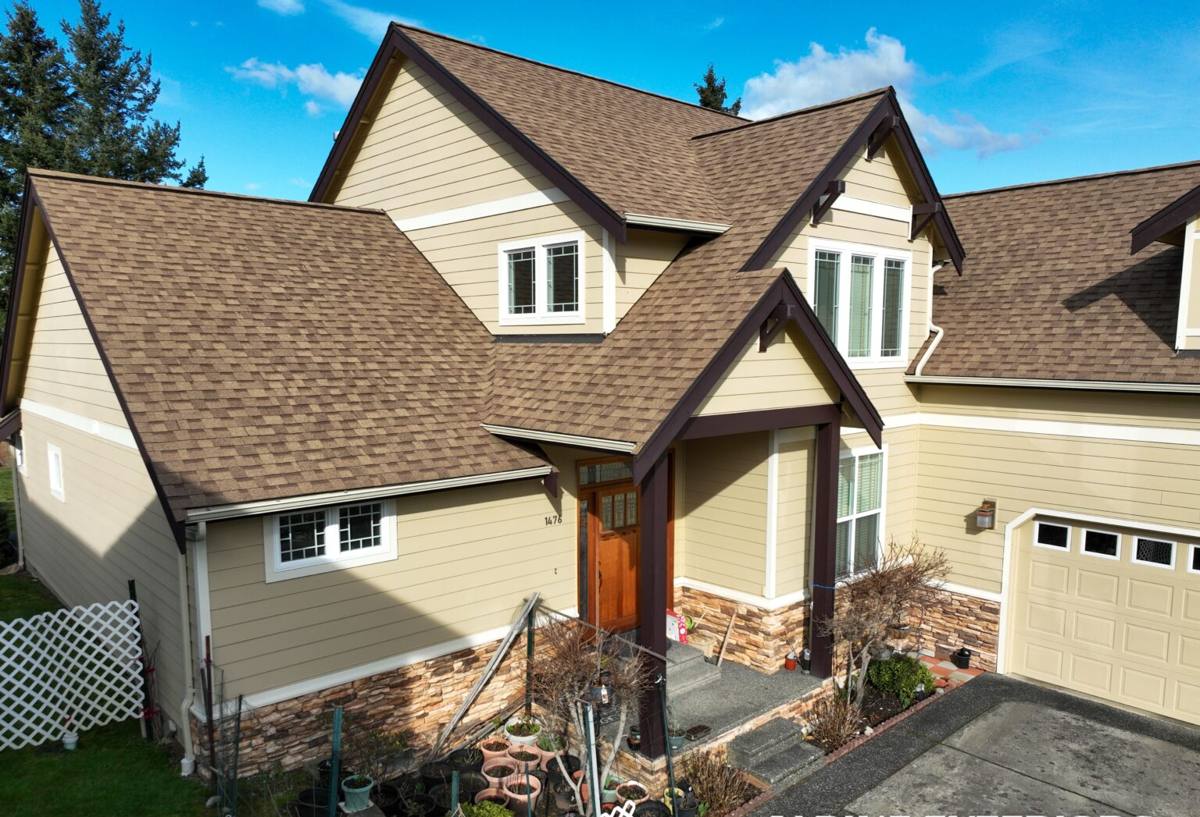
What Salt Air, Rain, and Moss Actually Do to a Roof
Each of these stressors attacks a roof differently, and understanding the mechanism matters when you're choosing materials and details.
Salt air and corrosion
Airborne salt accelerates corrosion on any exposed metal — fasteners, flashing edges, cut panel ends. It doesn't take a beachfront lot; homes set back from the water still pick up salt in the air, especially with onshore wind patterns common around Birch Bay. Bare or poorly coated metal, and especially mismatched metals in contact with each other, corrode faster in this air than they would inland.
Driving rain
Wind-driven rain doesn't just fall on a roof — it gets pushed sideways and upward under laps, around penetrations, and into any gap a fastener or flashing detail leaves open. A roof spec that works fine under calm, vertical rainfall can leak here if the laps, seams, and flashing aren't built for wind-driven water specifically.
Moss and prolonged moisture
Shaded, damp roof sections stay wet longer after every rain, and that's exactly where moss and algae take hold. Moss holds moisture against roofing material, works into laps and fastener heads, and on absorbent materials it can trap enough water to cause rot in the decking underneath. On a metal roof, moss is mostly a surface and drainage issue rather than a structural one — but only if the panel profile and slope are set up to shed water and debris instead of trapping it.
Why Metal Roofing Makes Sense Here
Metal isn't the right choice for every roof, but for a coastal, moss-prone property in Point Whitehorn, it solves more problems than it creates.
Standing seam vs. exposed-fastener panels
Standing seam panels use concealed clips and interlocking seams with no exposed screws through the panel face. That matters directly in this environment: every exposed fastener is a future corrosion point and a potential leak path once its seal ages. Exposed-fastener panels cost less up front and can be a reasonable option on secondary structures like sheds or shops, but on a primary residence exposed to salt air and driving rain, we lean toward standing seam for the reduced number of penetrations and the longer-term maintenance picture.
Slope and panel profile
Steeper slopes and panel profiles with a clean, low-friction surface shed rain and moss debris faster than shallow-pitch or heavily textured surfaces. On shaded sections of a roof, that drainage speed is often the difference between a roof that stays clean with occasional rinsing and one that grows moss within a couple of seasons no matter what you do.
The Details That Actually Prevent Failures
Most metal roof problems in this area don't come from the panel material itself — they come from the details around it. This is where we spend the most attention.
Fastener and metal compatibility
Mixing incompatible metals — the wrong fastener alloy against the wrong panel material — sets up galvanic corrosion that can eat through a connection years before the panel itself would fail. We match fastener and flashing metals to the panel system for that reason, not as an upsell, but because it's the difference between a roof that lasts and one that starts leaking at every screw within a decade.
Flashing at valleys, walls, and penetrations
Driving rain finds its way to whatever detail is weakest, and on most roofs that's a valley, a wall-to-roof transition, a chimney, or a vent penetration. Flashing at these points needs to be sized and lapped for wind-driven rain, not just gravity drainage — a detail that's adequate in a sheltered inland yard can be undersized for what Point Whitehorn's exposure delivers.
Underlayment as backup, not decoration
A quality synthetic or self-adhered underlayment underneath the panels is cheap insurance against the rare event where wind-driven water gets past the panel laps. We don't treat it as an afterthought — it's the layer that protects the decking if anything upstream ever underperforms.
Our Process on a Point Whitehorn Metal Roof
- On-site assessment — we walk the roof, check the existing decking condition, note shade patterns and moss history, and identify any valleys or wall intersections that need extra attention.
- Spec and material selection — panel profile, gauge, coating, and fastener/flashing metal are chosen together as a system suited to the site's exposure, not picked separately.
- Decking repair as needed — any rot or soft decking found during tear-off gets addressed before new material goes down; installing over a compromised deck just hides the problem.
- Underlayment and flashing installation — this is where most of the long-term performance is actually decided, and it's done before a single panel goes on.
- Panel installation — laid and fastened to spec for wind and rain exposure, with attention to lap direction relative to prevailing wind and rain patterns on the site.
- Final walk-through — we review the finished roof with you, including what routine maintenance it will and won't need.
Metal Roofing Compared to Other Options for This Environment
| Factor | Standing Seam Metal | Asphalt Shingles | Cedar/Wood Shake |
|---|---|---|---|
| Salt air / corrosion resistance | High, with correct fastener/flashing metal | Moderate — granule loss accelerates in salt air over time | Not a factor, but moisture is |
| Moss and moisture resistance | High — sheds water and debris quickly | Moderate — moss can lift and hold granules | Low — absorbs moisture, moss risk is significant |
| Wind-driven rain performance | High with proper laps and flashing | Moderate, depends on installation and age | Moderate, depends on maintenance |
| Typical lifespan (well installed) | 40-plus years | 20-25 years | 20-30 years with upkeep |
| Ongoing maintenance | Low — periodic rinse and inspection | Moderate — moss and granule monitoring | High — treatment, cleaning, replacement of damaged shakes |
None of this means asphalt or wood can't work in Whatcom County — plenty of homes do fine with either, especially on less exposed sites. It's about matching the roof to the specific exposure of a given property, and Point Whitehorn's combination of salt air, wind-driven rain, and shade tends to favor metal's lower maintenance and longer service life.
Maintenance That Actually Keeps a Metal Roof Performing
A correctly installed metal roof in this environment doesn't need much, but "not much" isn't "nothing."
- Clear gutters and downspouts before the fall rains — clogged drainage backs water up under lower panel edges.
- Rinse off accumulated debris and moss growth on shaded sections once or twice a year rather than letting it build up.
- Trim back overhanging branches where practical — less leaf litter and less shade means less moss pressure.
- Check flashing at valleys and penetrations after major storms for any shifted or lifted sections.
- Avoid pressure-washing directly at panel seams or fasteners — a soft rinse is enough and won't force water where it doesn't belong.
- Have a professional look at the roof every few years, even with no visible problems, to catch anything developing early.
Why Local Experience in Point Whitehorn Matters
A crew that mostly works dry, inland roofs will size flashing and choose fasteners based on assumptions that don't hold up on this stretch of coastline. We work siding and roofing throughout Birch Bay and the surrounding Whatcom County shoreline, which means we've already worked through the fastener corrosion, the wind-driven rain details, and the moss patterns specific to properties like this one. That's not a marketing line — it shows up in which details get extra attention on your roof and which corners never get cut, because we've already seen what happens when they are.
If you're weighing a metal roof for a Point Whitehorn property, or trying to figure out why a current roof is underperforming in this exposure, we're glad to take a look. We offer a free, no-pressure estimate — walk the roof with you, talk through what your specific site needs, and give you a straight answer, whether that's metal or something else. The form below is the easiest way to get that conversation started.